
The question of “how much are Bitcoins worth in US dollars?” is perhaps one of the most frequently asked in the financial world today. It’s a question that, while seemingly straightforward, carries a profound complexity, as Bitcoin’s value is not static but a constantly fluctuating entity determined by a myriad of global factors. Unlike traditional fiat currencies whose values are backed by governments and central banks, Bitcoin, the world’s first and largest cryptocurrency, operates on a decentralized network, deriving its worth from market demand, scarcity, and perceived utility. For individuals, investors, and businesses alike, understanding this dynamic valuation is crucial to navigating the burgeoning digital asset landscape. This article delves into the intricate mechanisms that determine Bitcoin’s price in US dollars, exploring the forces that drive its volatility, the resources available for tracking its value, and its multifaceted role as an investment asset.
Understanding Bitcoin’s Dynamic Valuation
Bitcoin’s worth in US dollars is not set by a single authority but is an aggregation of prices across numerous cryptocurrency exchanges worldwide. This real-time, global marketplace ensures a highly dynamic and often volatile valuation. To grasp “how much are Bitcoins worth in US dollars,” one must first comprehend the underlying forces at play.
The Basics of Bitcoin Price Discovery
The price of Bitcoin, like any other commodity or asset in a free market, is primarily determined by supply and demand. On cryptocurrency exchanges, buyers place bids (offers to buy) and sellers place asks (offers to sell). When a bid and an ask meet at a particular price, a trade is executed, and that price becomes the latest market price. This continuous process across hundreds of exchanges creates a fluid, ever-changing valuation. Liquidity, the ease with which an asset can be converted into cash without affecting its market price, also plays a significant role. Highly liquid markets tend to have tighter spreads and more stable prices, though Bitcoin’s volatility can still be pronounced.
Factors Influencing Bitcoin’s Price
Numerous elements contribute to Bitcoin’s price fluctuations against the US dollar. These factors often interact in complex ways, making precise predictions challenging.
-
Market Sentiment (Fear & Greed Index): Investor psychology profoundly impacts asset prices. Periods of widespread optimism (“greed”) can drive prices up, while fear, panic selling, or negative news (“fear”) can lead to sharp declines. Tools like the Crypto Fear & Greed Index attempt to quantify this sentiment.
-
Supply & Demand Dynamics: Bitcoin has a hard cap of 21 million coins, making it a scarce asset. Events like “halving” (which reduces the rate at which new Bitcoins are mined) create supply shocks that historically have preceded significant price increases. Conversely, increased institutional or retail demand pushes prices higher.
-
Regulatory Developments: Government stances on cryptocurrency—whether it’s outright bans, favorable legislation, or the approval of new financial products like spot Bitcoin ETFs—can significantly impact market confidence and, consequently, price. Positive regulatory news tends to boost prices, while restrictive measures can cause drops.
-
Macroeconomic Factors: Global economic conditions, such as inflation rates, interest rate policies by central banks (e.g., the US Federal Reserve), geopolitical instability, and the performance of traditional markets, can influence Bitcoin’s appeal as a safe haven asset or a speculative investment. For example, high inflation in fiat currencies can drive investors towards Bitcoin as a perceived hedge.
-
Technological Developments and Network Upgrades: While Bitcoin’s core protocol is largely stable, continuous improvements and scaling solutions (like the Lightning Network) can enhance its utility and adoption, indirectly influencing its value. Security breaches or vulnerabilities, though rare for Bitcoin itself, could have negative impacts.
-
Media Coverage & Public Perception: High-profile endorsements, negative news stories, or increased general media attention can sway public opinion and drive either buying or selling pressure, directly affecting Bitcoin’s dollar value.
Navigating Bitcoin Price Data and Resources
Given its dynamic nature, knowing where and how to accurately track “how much are Bitcoins worth in US dollars” is essential for anyone involved in the crypto space. A variety of platforms and metrics exist to provide this crucial information.
Reliable Price Tracking Platforms
Several reputable websites and applications aggregate price data from multiple exchanges, offering a comprehensive view of Bitcoin’s current and historical value in USD.
-
CoinMarketCap and CoinGecko: These are two of the most popular platforms, providing real-time prices, market capitalization, trading volumes, and historical data for thousands of cryptocurrencies, including Bitcoin. They typically show an average price derived from numerous exchanges.
-
Major Cryptocurrency Exchanges: Platforms like Coinbase, Binance, Kraken, and Gemini display their own specific Bitcoin/USD trading pair prices. While generally similar, slight variations can occur due to differing liquidity and trading volumes on each exchange.
-
Financial News Outlets: Reputable financial news sources (e.g., Bloomberg, Wall Street Journal, Reuters) often integrate real-time Bitcoin price feeds into their reporting, offering another reliable source.
Understanding Different Exchange Prices
It’s important to recognize that the price of Bitcoin can vary slightly from one exchange to another. These minor discrepancies arise from differences in trading volumes, order book depths, and regional demand on individual platforms. While arbitrageurs typically quickly smooth out significant price differences, small variations are common. When you see a single “Bitcoin price,” it’s often an average or the price from a particularly liquid exchange.
Historical Performance and Volatility
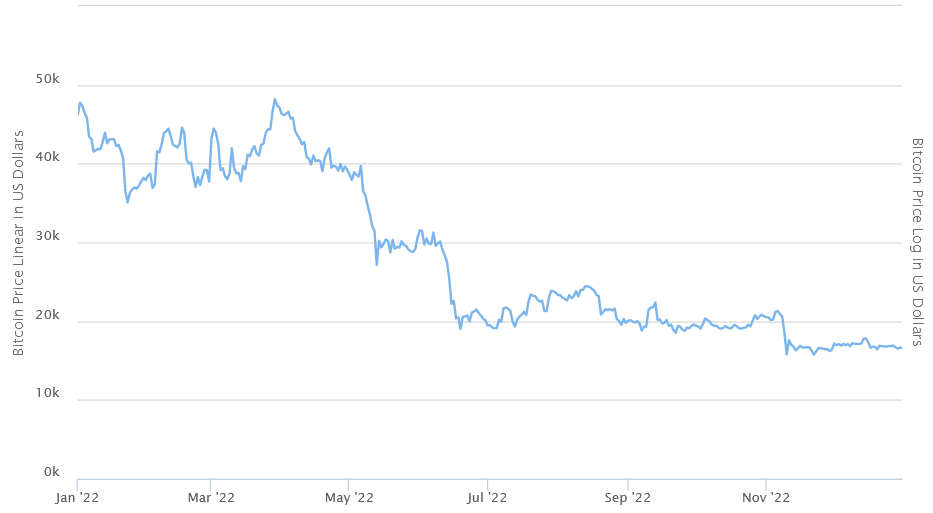
Bitcoin’s journey from a niche digital experiment to a global financial asset has been marked by extreme volatility. Its price has surged from fractions of a dollar to tens of thousands, experiencing multiple bull and bear cycles. Understanding this historical performance, characterized by rapid gains followed by significant corrections, helps contextualize its current valuation and the inherent risks. Volatility is a defining characteristic, offering both substantial opportunities and considerable risks.
Market Capitalization and Dominance
Beyond the individual price per Bitcoin, two other key metrics provide insight into its overall standing:
-
Market Capitalization: Calculated by multiplying the current price of one Bitcoin by the total number of Bitcoins in circulation. This figure represents Bitcoin’s total dollar value as an asset class and is a common way to compare the size of different cryptocurrencies.
-
Bitcoin Dominance: This metric represents Bitcoin’s market capitalization as a percentage of the total cryptocurrency market capitalization. A higher dominance suggests Bitcoin holds a stronger position relative to altcoins, often indicative of capital flowing into Bitcoin as a perceived “safer” crypto asset during uncertain times, or leading a broader market rally.

Bitcoin as an Investment Asset
For many, the question “how much are Bitcoins worth in US dollars?” is fundamentally about its potential as an investment. Bitcoin has carved out a unique position in the investment landscape, attracting both retail and institutional capital, but not without its inherent challenges.
Why Investors Consider Bitcoin
Bitcoin’s appeal as an investment asset stems from several compelling characteristics:
-
Digital Gold Narrative: Many investors view Bitcoin as “digital gold”—a scarce, decentralized store of value that can act as a hedge against inflation and economic uncertainty, similar to physical gold.
-
Decentralization and Censorship Resistance: Its independence from central banks and governments appeals to those seeking an asset free from traditional financial controls and potential confiscation.
-
Potential for High Returns: Historically, Bitcoin has delivered returns that significantly outperform traditional asset classes, attracting investors willing to take on higher risk for potentially higher rewards.
-
Global Accessibility: Its ability to be sent and received anywhere in the world with an internet connection offers a unique value proposition for cross-border transactions and financial inclusion.
Risks Associated with Bitcoin Investment
Despite its allure, investing in Bitcoin carries significant risks that every potential investor must understand:
-
Extreme Price Volatility: Bitcoin’s price swings can be dramatic and unpredictable, leading to substantial gains or losses in short periods. This volatility makes it unsuitable for risk-averse investors.
-
Regulatory Uncertainty: The regulatory landscape for cryptocurrencies is still evolving globally. Sudden policy shifts or restrictive legislation in major economies could negatively impact Bitcoin’s value.
-
Security Risks: While Bitcoin’s network is highly secure, individual investors face risks from exchange hacks, phishing scams, and losing private keys, which can result in irreversible loss of funds.
-
Technological Risks: Although Bitcoin’s core protocol is robust, any unforeseen technological vulnerabilities or major disruptions to internet infrastructure could theoretically impact its functionality and value.
Investment Strategies and Considerations
For those looking to invest, certain strategies can help manage the risks associated with Bitcoin’s volatility:
-
Dollar-Cost Averaging (DCA): This strategy involves investing a fixed amount of money at regular intervals (e.g., weekly or monthly) regardless of Bitcoin’s price. This helps average out the purchase price over time and reduces the risk of buying at a market peak.
-
Long-Term Holding (HODL): Many Bitcoin investors adopt a “HODL” (a purposeful misspelling of “hold”) strategy, buying Bitcoin with the intention of holding it for several years, riding out short-term price fluctuations in anticipation of long-term appreciation.
-
Risk Management: Never invest more than you can afford to lose. Diversifying your investment portfolio beyond just Bitcoin is crucial, ensuring that a significant downturn in crypto doesn’t jeopardize your overall financial health.
-
Tax Implications of Bitcoin: In the US, the IRS classifies Bitcoin and other cryptocurrencies as property for tax purposes. This means transactions like selling Bitcoin for profit, using it to purchase goods/services, or exchanging it for other cryptocurrencies can trigger capital gains or losses, which must be reported. Understanding your local tax regulations is paramount.
The Future Outlook for Bitcoin’s USD Value
Predicting the future worth of Bitcoin in US dollars is speculative, but several trends and developments offer insights into its potential trajectory and how its value might evolve.
Institutional Adoption and Mainstream Integration
The increasing involvement of institutional investors, such as hedge funds, asset managers, and even corporate treasuries, signifies a maturing market. The approval of spot Bitcoin ETFs in major markets allows a broader range of traditional investors to gain exposure to Bitcoin without directly holding the asset, potentially leading to increased demand and price stability. As more established financial entities integrate Bitcoin, its perceived legitimacy and value could grow.
Regulatory Clarity and Global Acceptance
Greater regulatory clarity from governments worldwide could significantly de-risk Bitcoin for both retail and institutional investors. Clear frameworks for custody, trading, and taxation could foster wider adoption and reduce market uncertainty. Conversely, fragmented or overly restrictive regulations could impede growth. The trend towards greater regulatory understanding, rather than outright prohibition, bodes well for its long-term integration into the global financial system.
Technological Advancements and Scalability
While Bitcoin’s core blockchain is robust, ongoing development in areas like the Lightning Network aims to improve its scalability, speed, and cost-effectiveness for everyday transactions. Enhanced utility and user experience could drive broader adoption as a medium of exchange, reinforcing its value proposition beyond just a store of value.
Bitcoin’s Role in a Digital Economy
Looking ahead, Bitcoin’s future worth in US dollars could be shaped by its evolving role in an increasingly digital economy. It could solidify its position as a global, decentralized reserve asset, a primary peer-to-peer digital cash system, or an integral component of emerging Web3 applications. The ability of Bitcoin to adapt and find new use cases will be critical to its long-term valuation.
In conclusion, “how much are Bitcoins worth in US dollars?” is a question with a complex answer that changes every second. Its value is a dynamic interplay of market forces, investor sentiment, global economics, and technological evolution. While it presents significant investment opportunities due to its scarcity and potential for high returns, it also comes with substantial risks, primarily its renowned volatility. For anyone considering Bitcoin, a thorough understanding of these dynamics, coupled with a commitment to informed decision-making and robust risk management, is absolutely essential in navigating this innovative yet unpredictable financial frontier.
aViewFromTheCave is a participant in the Amazon Services LLC Associates Program, an affiliate advertising program designed to provide a means for sites to earn advertising fees by advertising and linking to Amazon.com. Amazon, the Amazon logo, AmazonSupply, and the AmazonSupply logo are trademarks of Amazon.com, Inc. or its affiliates. As an Amazon Associate we earn affiliate commissions from qualifying purchases.