
In the fast-paced world of digital finance, the question of how much a Bitcoin is worth is rarely answered with a single, static number. Because Bitcoin trades 24 hours a day, seven days a week, across hundreds of global exchanges, its price is in a state of perpetual motion. To understand the value of Bitcoin at any given moment, one must look beyond the ticker symbol and delve into the macroeconomic forces, market liquidity, and investor sentiment that drive its valuation.
For the modern investor, Bitcoin represents more than just a digital currency; it is a unique asset class that has challenged traditional notions of “store of value.” Whether you are looking at the price to enter a new position or simply tracking the health of your portfolio, understanding the mechanics behind Bitcoin’s price discovery is essential for navigating the complexities of the current financial landscape.
The Mechanics of Real-Time Bitcoin Pricing
The price of Bitcoin is determined by the basic economic principle of supply and demand. Unlike a centralized stock exchange where a single entity might govern the “official” price, Bitcoin’s price is decentralized. This means the value is derived from the last executed trade on any given exchange. Because of this, you may notice slight discrepancies between platforms like Coinbase, Binance, or Kraken. This phenomenon is known as a price spread, and it is usually kept in check by arbitrageurs—traders who buy on one exchange and sell on another to profit from the difference, effectively leveling the price across the global market.
Market Capitalization vs. Individual Unit Price
While the price per Bitcoin is the most common metric cited, institutional investors often look at the market capitalization. Market cap is calculated by multiplying the current price by the total number of Bitcoins in circulation (roughly 19.7 million at current counts). This figure provides a clearer picture of Bitcoin’s dominance within the broader financial ecosystem compared to gold, silver, or major tech stocks. When we ask “how much is Bitcoin,” we are essentially asking what the collective global market believes the entire network is worth at that specific microsecond.
The Impact of Liquidity and Volume
The stability of the “right now” price depends heavily on trading volume. In periods of high liquidity—where many buyers and sellers are active—the price tends to move more fluidly. In contrast, during low-volume periods, a single large trade (often referred to as a “whale” move) can cause significant price slippage. For the personal investor, this means that the price you see on a tracker might not be the exact price you receive when executing a large order, highlighting the importance of using limit orders rather than market orders during periods of high volatility.
Key Drivers Influencing Bitcoin’s Current Value
Bitcoin does not exist in a vacuum. Its price is sensitive to a variety of internal and external catalysts that can cause double-digit percentage swings within hours. Understanding these drivers is the difference between speculative gambling and informed investing.
The Role of Institutional Adoption and Spot ETFs
Perhaps the most significant shift in Bitcoin’s valuation in recent years has been the arrival of Spot Bitcoin ETFs (Exchange-Traded Funds). Previously, Bitcoin was primarily a retail-driven asset. With the approval of ETFs by major financial institutions like BlackRock and Fidelity, billions of dollars in institutional capital have flowed into the market.
These ETFs allow pension funds, 401(k) holders, and corporate treasuries to gain exposure to Bitcoin’s price movements without the technical hurdles of managing private keys. This “institutionalization” of Bitcoin creates a floor for the price but also links it more closely to the movements of the traditional stock market, particularly the S&P 500 and the Nasdaq.
Scarcity and the Halving Cycle
Unlike fiat currencies, which can be printed at will by central banks, Bitcoin has a hard cap of 21 million coins. This programmed scarcity is enforced through an event known as “the halving.” Roughly every four years, the reward given to Bitcoin miners is cut in half, effectively reducing the rate at which new supply enters the market. Historically, the periods leading up to and following a halving have been associated with significant price appreciation. Investors closely monitor the “Stock-to-Flow” model, which evaluates Bitcoin’s value based on its diminishing supply, treating it more like a digital version of gold than a traditional currency.
Macroeconomic Trends and Interest Rates
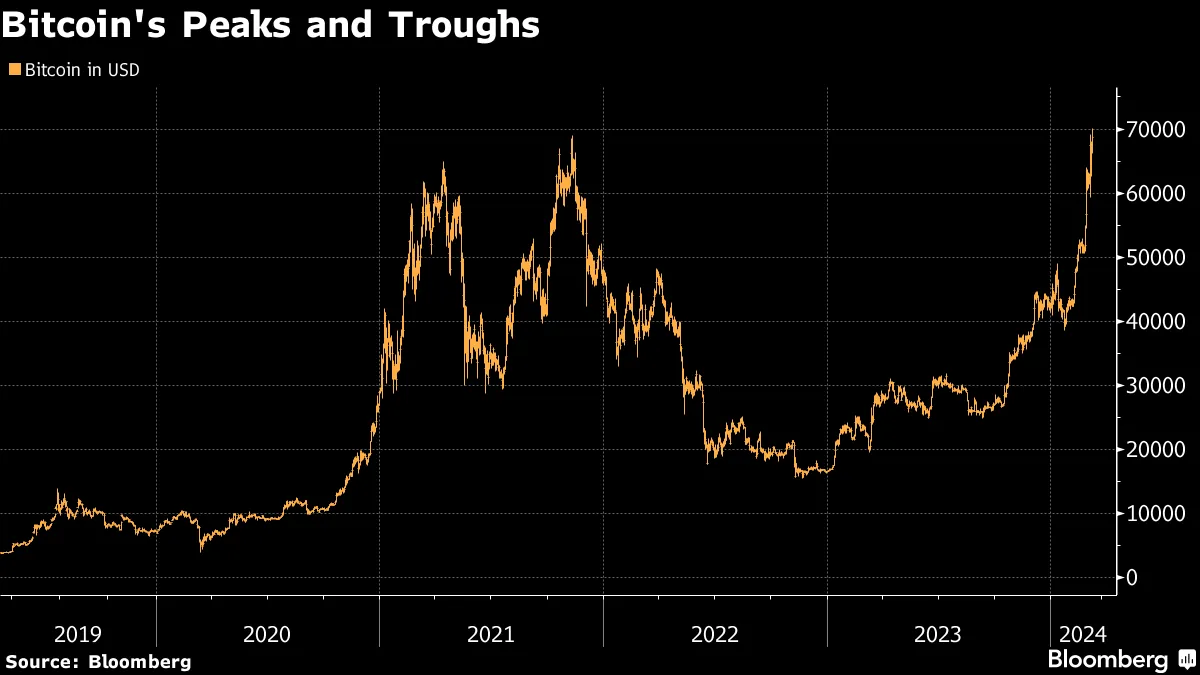
Bitcoin is often categorized as a “risk-on” asset. This means its price is highly sensitive to the monetary policy of the Federal Reserve. When interest rates are low and liquidity is high, investors tend to seek higher returns in speculative assets like Bitcoin. Conversely, when the Fed raises interest rates to combat inflation, “expensive” money often flows out of crypto and back into “safe” havens like U.S. Treasury bonds. Consequently, the answer to “how much is Bitcoin” is often tied to the latest Consumer Price Index (CPI) report or the Federal Open Market Committee (FOMC) meetings.
Strategic Approaches to Investing in Bitcoin
Given Bitcoin’s volatility, determining the “right” time to buy based on the current price can be a daunting task for the average person. Financial professionals typically advocate for strategies that mitigate the risk of market timing.
Dollar Cost Averaging (DCA)
One of the most effective ways to build a Bitcoin position without succumbing to the stress of daily price fluctuations is Dollar Cost Averaging. This involves investing a fixed amount of money at regular intervals (e.g., $100 every month) regardless of the price. By doing this, you buy more Bitcoin when the price is low and less when the price is high. Over time, this lowers your average cost basis and eliminates the emotional pitfalls of trying to “catch the bottom.”
Technical vs. Fundamental Analysis
For those looking to engage more actively with the market, two primary schools of thought exist:
-
Fundamental Analysis: This focuses on the health of the Bitcoin network, including hash rate (computational power), active wallet addresses, and regulatory developments. If the network is growing but the price is stagnant, a fundamental analyst might see a buying opportunity.
-
Technical Analysis (TA): This involves studying historical price charts and using indicators like the Relative Strength Index (RSI) or Moving Averages to predict future price movements. TA helps traders identify “support” levels (where price tends to stop falling) and “resistance” levels (where price struggles to climb higher).
Risk Management and Portfolio Allocation
Bitcoin should rarely constitute 100% of an individual’s financial portfolio. Because of its volatility, most financial advisors suggest a modest allocation—ranging from 1% to 5% for conservative investors, and perhaps higher for those with a longer time horizon and higher risk tolerance. The goal is to capture the upside of Bitcoin’s growth while ensuring that a sudden price drop does not jeopardize one’s overall financial security.
Navigating the Challenges of High Volatility
The current price of Bitcoin is a reflection of the market’s collective psychology. Fear and greed are powerful drivers that can push the price far beyond its intrinsic value in either direction.
The Fear of Missing Out (FOMO)
When Bitcoin’s price starts to climb rapidly, the “FOMO” effect often takes hold. Retail investors, seeing headlines about record highs, rush into the market at the peak. This surge in demand drives the price even higher, creating a bubble. Understanding that Bitcoin moves in cycles is crucial; what goes up quickly often undergoes a “correction” as early investors take profits.
Regulatory Uncertainty
Government intervention remains one of the largest “wild cards” in Bitcoin’s valuation. Positive regulatory clarity—such as the classification of Bitcoin as a commodity—typically drives the price up by inviting more business integration. On the other hand, threats of bans or restrictive tax laws in major economies like the U.S., China, or the EU can cause the price to plummet instantly. Monitoring the legal landscape is as important as monitoring the price ticker.

Conclusion: The Evolving Value of Bitcoin
Asking “how much are Bitcoins right now” is the beginning of a much deeper conversation about the future of money. While the number on the screen tells you the cost of entry today, it does not tell the whole story of the asset’s potential. Bitcoin has evolved from a niche experiment into a multi-trillion-dollar asset that sits at the intersection of technology and global finance.
For the investor, the current price is merely a data point in a broader trend toward the digitalization of value. By focusing on long-term fundamentals, employing disciplined investment strategies like DCA, and staying informed on macroeconomic shifts, you can move beyond the “right now” and build a financial strategy that accounts for both the volatility and the unprecedented opportunity that Bitcoin presents. Whether the price is at a cyclical low or an all-time high, the key to success in the Bitcoin market is not just knowing the price, but understanding the value of what that price represents.
aViewFromTheCave is a participant in the Amazon Services LLC Associates Program, an affiliate advertising program designed to provide a means for sites to earn advertising fees by advertising and linking to Amazon.com. Amazon, the Amazon logo, AmazonSupply, and the AmazonSupply logo are trademarks of Amazon.com, Inc. or its affiliates. As an Amazon Associate we earn affiliate commissions from qualifying purchases.