
Tesla (TSLA) has long been a centerpiece of the modern investment landscape, serving as a bellwether for both the electric vehicle industry and the broader growth-tech sector. For retail investors and institutional fund managers alike, tracking the capital structure of Elon Musk’s flagship company is essential for understanding its valuation and market accessibility. One of the most significant corporate actions a company can take to manage its share price and investor base is the stock split.
As of early 2024, Tesla has split its stock a total of two times. These events were pivotal moments in the company’s financial history, each reflecting a period of intense valuation growth and a strategic desire to remain accessible to a diverse range of investors. Understanding these splits is not merely a matter of historical record; it provides deep insight into how Tesla manages its market presence and how investors can interpret future corporate announcements.
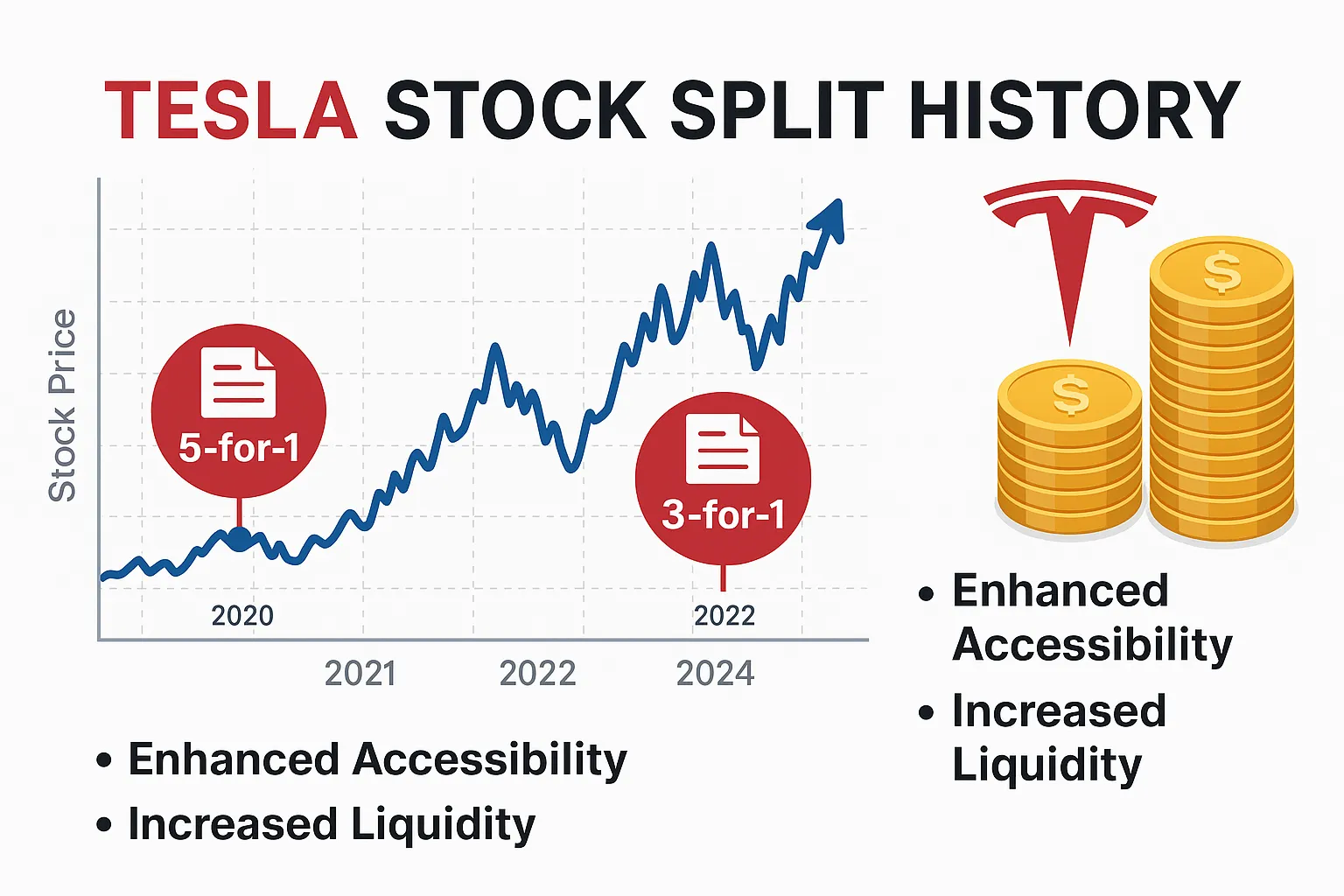
A Detailed Timeline of Tesla’s Stock Split History
Tesla’s journey from a niche automaker to a trillion-dollar market cap giant involved astronomical gains in share price. To prevent the price per share from becoming prohibitively expensive for retail investors, the board of directors opted for two strategic splits within a two-year window.
The First Split: August 2020 (5-for-1)
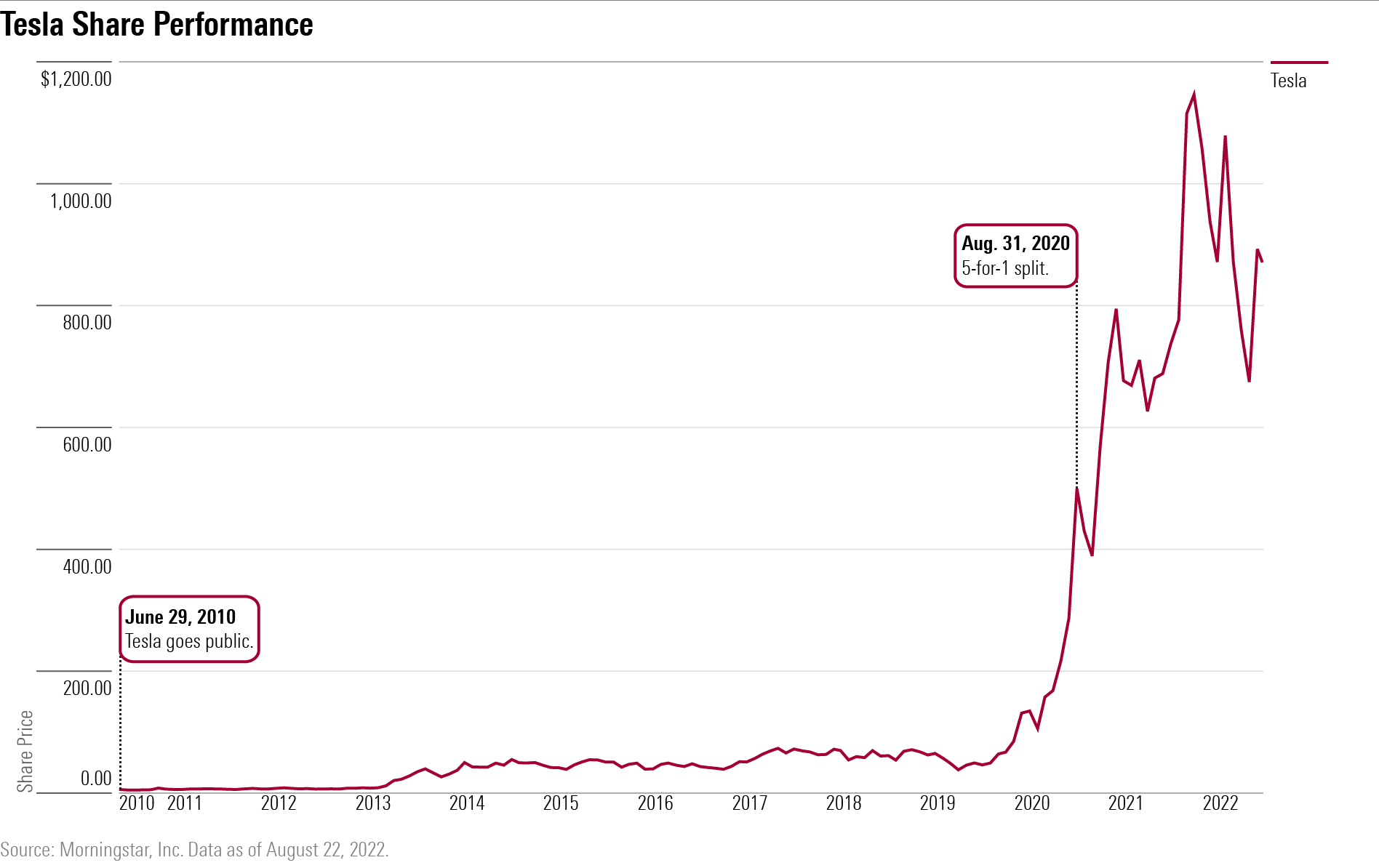
In August 2020, Tesla announced its first-ever stock split. At the time, the stock was trading near the $2,000 mark, driven by a massive rally following consecutive profitable quarters and the anticipation of its inclusion in the S&P 500 index. The 5-for-1 split meant that for every one share an investor owned, they received four additional shares.
While the total value of the investor’s holding remained the same, the price per share was reduced to approximately $400. This move was widely viewed as a catalyst for further retail participation. The psychology of a lower share price often invites a surge in demand from individual investors who may be deterred by a four-figure price tag, even if fractional shares are available through many modern brokerages.
The Second Split: August 2022 (3-for-1)
Almost exactly two years later, Tesla performed its second stock split. By mid-2022, despite broader market volatility and macroeconomic headwinds, Tesla’s share price had once again climbed toward the $1,000 level. On August 25, 2022, the company executed a 3-for-1 split.
Investors received two additional shares for every one they held, effectively bringing the trading price down into the $300 range. This split occurred during a period when other tech giants, such as Amazon and Alphabet (Google), were also executing splits, signaling a broader market trend toward enhancing liquidity and making high-growth stocks more manageable for the average brokerage account.
The Financial Logic: Why Companies Like Tesla Choose to Split
To the uninitiated, a stock split may seem like an arbitrary accounting maneuver. However, from a corporate finance perspective, it is a calculated strategic move designed to optimize the stock’s performance in the secondary market.
Enhancing Liquidity and Market Participation
The primary driver behind Tesla’s stock splits is liquidity. Liquidity refers to the ease with which shares can be bought or sold without significantly affecting the market price. When a stock price reaches $1,000 or $2,000, the “bid-ask spread”—the difference between what buyers are willing to pay and what sellers are asking—can widen. By lowering the share price through a split, the company increases the number of shares outstanding and encourages a higher volume of daily trades. This higher volume generally leads to tighter spreads and a more efficient market for the stock.
Psychological Pricing and Retail Accessibility
Retail investors play a disproportionately large role in Tesla’s market dynamics compared to more traditional automotive or industrial stocks. While institutional investors focus on market capitalization and fundamentals, retail investors often look at “unit price.” A $300 share feels more attainable than a $1,000 share, even if the underlying value of the company is identical. By keeping the share price in a “sweet spot”—typically between $100 and $400—Tesla ensures that it remains a favorite among retail traders and those utilizing automated investment apps.
Employee Compensation and Retention
Tesla, like many high-growth technology companies, uses stock-based compensation as a primary tool for attracting and retaining top-tier talent. Managing an employee stock purchase plan (ESPP) or granting Restricted Stock Units (RSUs) is significantly easier when the share price is lower. It allows for more granular distribution of equity. For example, it is easier to reward a mid-level engineer with a specific dollar value of equity when the share price is $200 than when it is $1,000, as it allows for better precision in total compensation packages.
The Impact on Shareholder Value and Portfolio Strategy
For the individual investor, a stock split is a “zero-sum game” in terms of immediate value, but its secondary effects on a portfolio can be profound. It is essential to distinguish between the nominal change in share count and the actual fundamental value of the investment.
Understanding the “Split Rally” Phenomenon
Historically, Tesla’s stock has experienced what many analysts call a “split rally.” This is a period of upward price momentum that occurs between the announcement of the split and the date the split actually takes effect. This rally is often driven by hype and the anticipation of increased retail demand once the price drops.
Investors often use these announcements as a signal of management’s confidence in the company’s future growth. A board of directors rarely authorizes a split if they anticipate a significant downturn in the share price; rather, a split suggests they expect the price to continue its upward trajectory, eventually necessitating another split in the future.
Adjusting the Cost Basis
From a bookkeeping perspective, a stock split requires investors to adjust their “cost basis” per share. If an investor purchased one share of Tesla at $1,000 and the stock underwent a 5-for-1 split, their new cost basis would be $200 per share. This is a critical calculation for tax purposes, especially when determining capital gains or losses upon the eventual sale of the asset. Most modern brokerage platforms handle this adjustment automatically, but investors should verify these changes to ensure their performance tracking remains accurate.
Options Trading and Delta
For sophisticated investors who utilize options, stock splits have a massive impact. Each standard options contract represents 100 shares of the underlying stock. When a stock price is $1,000, a single call option controls $100,000 worth of equity, making the “premium” (the cost of the option) very high. By splitting the stock and lowering the price, Tesla makes its options market much more accessible. This increases the “gamma” and “delta” activity in the market, which can contribute to the stock’s overall volatility but also provides more tools for hedging and income generation through covered calls.
Analyzing Post-Split Performance: Trends and Market Sentiment
While the immediate reaction to a stock split is often positive, the long-term performance of Tesla post-split is dictated by fundamentals—deliveries, margins, AI developments, and regulatory environments—rather than the split itself.
The 2020 Post-Split Trajectory
Following the 2020 split, Tesla’s stock continued its meteoric rise. This was bolstered by the company’s first full year of profitability and its eventual inclusion in the S&P 500 in December 2020. In this instance, the split served as a bridge that allowed the stock to transition from a speculative growth play to a foundational holding for institutional portfolios. The lower price point allowed for massive inflows of capital from index-tracking funds.
The 2022 Market Context
The 2022 split faced a more challenging macroeconomic environment. Rising interest rates and concerns over global supply chains pressured the entire tech sector. Unlike the 2020 rally, the 2022 split was followed by a period of consolidation and heightened volatility. This serves as a reminder to investors that a stock split is not a guarantee of immediate gains. It is a structural adjustment, and the “real” value of the shares will always revert to the company’s earnings power and growth prospects.
Future Outlook: Will Tesla Split Its Stock Again?
Given Tesla’s history, the question for many investors is not if the stock will split again, but when. The company’s leadership has shown a clear preference for keeping the share price accessible to its loyal base of retail supporters.
Identifying the Thresholds for a New Split
Typically, Tesla management considers a split when the share price consistently trades above the $600 to $800 range for a prolonged period. If Tesla’s advancements in Full Self-Driving (FSD) technology, the Cybertruck rollout, or their energy storage business drive the stock back toward the $1,000 mark, a third stock split becomes highly probable.
Strategic Timing and Board Decisions
The decision to split is ultimately made by the Board of Directors and must often be approved by shareholders at the annual meeting (as was the case with the 2022 split). Investors should keep a close eye on proxy statements and annual shareholder meetings for any language regarding “authorized shares.” An increase in the number of authorized shares is often a precursor to a future split.

Conclusion for the Modern Investor
Tesla’s two historical stock splits (5-for-1 in 2020 and 3-for-1 in 2022) have been instrumental in making the company one of the most widely held stocks in the world. For the investor, these events are opportunities to reassess their position and take advantage of increased liquidity. While the number of shares in your portfolio may change, the core strategy remains the same: focusing on Tesla’s ability to innovate and dominate the future of transport and energy. By understanding the mechanics and history of these splits, investors can better navigate the volatility and capitalize on the long-term growth of the EV giant.
aViewFromTheCave is a participant in the Amazon Services LLC Associates Program, an affiliate advertising program designed to provide a means for sites to earn advertising fees by advertising and linking to Amazon.com. Amazon, the Amazon logo, AmazonSupply, and the AmazonSupply logo are trademarks of Amazon.com, Inc. or its affiliates. As an Amazon Associate we earn affiliate commissions from qualifying purchases.