
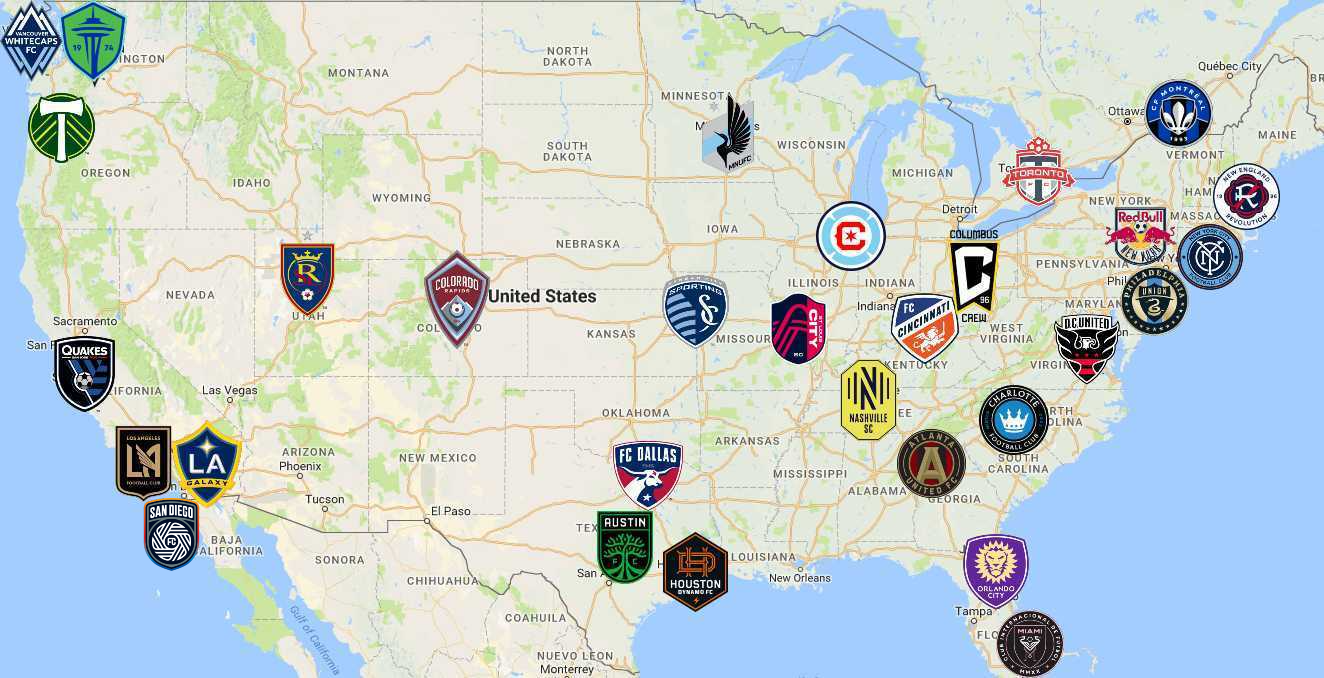
Major League Soccer (MLS) has transformed from a struggling experimental league in the late 1990s into one of the most significant financial success stories in North American professional sports. When discussing the question of “how many teams are in MLS,” one isn’t just counting sports franchises; they are tracking a multi-billion-dollar business expansion strategy. As of the current season, Major League Soccer consists of 29 teams, with a 30th team, San Diego FC, slated to begin play in 2025.
This rapid growth—increasing from just 10 teams in 2004 to 30 within two decades—is a masterclass in corporate scaling, asset valuation, and strategic market positioning. From a financial perspective, the number of teams in the league is a direct reflection of investor confidence and the rising price of “buy-ins” in the American soccer landscape.
The Financial Blueprint of MLS Expansion
The sheer volume of teams in MLS is driven by a unique business model that differs significantly from European soccer. In the United States, MLS operates as a “single-entity” structure, meaning the league owns all the teams and player contracts, while individual “owners” are actually investor-operators. This structure is designed to mitigate financial risk and ensure long-term sustainability.
The Surge in Expansion Fees
The most telling metric of MLS’s financial health is the cost of an expansion fee. In 2007, Toronto FC joined the league for a fee of $10 million. Fast forward to 2023, and the ownership group for San Diego FC paid an eye-watering $500 million to secure the 30th spot.
This 5,000% increase in entry price highlights why the league is eager to expand. Expansion fees provide the league with immediate liquidity, which is often distributed among existing owners or reinvested into league-wide infrastructure. For investors, the escalating price of entry signals that a “seat at the table” is a high-growth asset. Even as the number of teams grows, the demand for franchises remains high because the scarcity of professional sports licenses in North America creates an inherent “moat” around the investment.
Strategic Market Placement and ROI
The decision of where to place the next team is a calculated financial move. MLS does not expand randomly; it targets high-growth metropolitan areas with favorable demographics—specifically younger, tech-savvy, and diverse populations that appeal to modern advertisers.
The successful integration of teams in cities like Atlanta, Seattle, and Charlotte has proven that “non-traditional” soccer markets can generate massive Return on Investment (ROI). For example, Atlanta United consistently draws crowds exceeding 40,000 fans, generating matchday revenue that rivals top-tier European clubs. By expanding the number of teams, MLS increases its geographic footprint, which in turn enhances its leverage when negotiating national broadcasting rights and league-wide sponsorships.
Franchise Valuation and the Wealth of Owners
When looking at the 29 currently active teams, the financial story is one of unprecedented appreciation. In the world of business finance, few assets have outperformed MLS franchises over the last decade.
From Millions to Billions: The Rapid Appreciation of Teams
According to recent financial reports, the average MLS team is now valued at over $500 million, with several clubs crossing the $1 billion threshold. Los Angeles FC (LAFC) was the first to hit the billion-dollar valuation, followed closely by the likes of Inter Miami CF and Atlanta United.
This appreciation is driven by more than just ticket sales. It is fueled by the “closed league” model. Unlike the English Premier League, where a team can be relegated to a lower division and lose 75% of its value overnight, MLS teams are guaranteed their spot in the top flight. This lack of “downside risk” makes the franchises incredibly attractive to private equity firms and billionaire investors who view these teams as “trophy assets” with steady, predictable growth curves.
The Impact of Individual Star Power on Team Equity
The number of teams in the league provides a canvas for massive “capital injections” through star players. The most prominent example is Inter Miami CF following the signing of Lionel Messi. Within a year of his arrival, the club’s valuation skyrocketed, and revenue was projected to double.
From a money perspective, this creates a “rising tide lifts all boats” effect. When one team increases its global brand equity, the collective value of the league’s single-entity structure rises. Investors are not just buying into a local team; they are buying a 1/30th share of the entire MLS enterprise, including its future media rights and commercial ventures.
Revenue Streams Fueling the 30-Team Vision
Expanding to 30 teams is a strategic move to maximize inventory. In the media business, “inventory” refers to the number of games available to be broadcast. More teams mean more matches, more ad spots, and more data to monetize.
The Apple TV Media Rights Deal
The financial backbone of the current 29-team (soon to be 30) structure is the landmark 10-year, $2.5 billion partnership with Apple. This deal changed the financial landscape of the league by moving away from traditional local TV deals to a global streaming model.
The “MLS Season Pass” on Apple TV relies on a high volume of content. By increasing the number of teams, the league ensures a constant stream of live programming across multiple time zones. This global reach allows the league to tap into international markets, moving beyond North American borders to capture subscription revenue from fans in South America, Europe, and Asia. For the investor-operators, this deal provides a guaranteed baseline of annual revenue, reducing the pressure on ticket sales and local sponsorships.
Commercial Sponsorships and Matchday Income
As the league reaches 30 teams, its ability to secure premium corporate sponsorships grows. National brands like Adidas, Target, and Continental Tires value the “coast-to-coast” coverage that a 30-team league provides.
Furthermore, the “soccer-specific stadium” movement has revolutionized matchday income. In the early days, teams played in cavernous, borrowed NFL stadiums where they didn’t control the revenue. Today, most MLS teams own or operate their own stadiums. This allows them to keep 100% of concessions, parking, and premium seating revenue, while also booking the venues for concerts and other events during the off-season. This diversification of income streams makes the teams much more resilient to economic downturns.
The Future Financial Outlook: Is There a Ceiling?
With the league reaching 30 teams in 2025, many financial analysts are asking: what is the limit? In the business of professional sports, there is a fine balance between growth and dilution.
Comparing MLS Financial Structures to Global Leagues
Most major North American leagues (NFL, NBA, MLB) hover around 30 to 32 teams. This number is generally considered the “sweet spot” for maintaining high-quality play while maximizing market coverage. MLS is now entering this elite bracket.
From a financial standpoint, stopping at 30 or 32 teams creates a “supply cap.” When the league stops adding new teams, the only way to acquire a team is to buy an existing one. This transition from an “expansion-fee-led” economy to a “secondary-market-led” economy usually leads to a massive spike in franchise prices. We have seen this in the NBA, where teams that were bought for $300 million a decade ago are now selling for $3 billion to $4 billion.

Sustainability and the Risk of Market Saturation
While the growth has been impressive, investors must remain vigilant about market saturation. The financial success of the 29-team league depends on continued interest from the “casual” sports fan. If the league expands too quickly into markets that cannot support professional soccer, it risks diluting the product and straining the shared revenue pool.
However, the current financial indicators remain bullish. With the 2026 FIFA World Cup being hosted in North America, the 30 teams of MLS are positioned to benefit from a massive surge in interest and investment. The influx of corporate sponsorship and the potential for increased domestic media rights after the World Cup suggest that the valuation of these 30 franchises is nowhere near its ceiling.
In conclusion, “how many teams in MLS” is a question that serves as a barometer for the league’s economic power. Each new team represents hundreds of millions of dollars in committed capital and a vote of confidence in the future of the sport in North America. For the 29 current and one future ownership group, the 30-team milestone is not just about soccer; it’s about the successful scaling of a multi-billion-dollar asset class.
aViewFromTheCave is a participant in the Amazon Services LLC Associates Program, an affiliate advertising program designed to provide a means for sites to earn advertising fees by advertising and linking to Amazon.com. Amazon, the Amazon logo, AmazonSupply, and the AmazonSupply logo are trademarks of Amazon.com, Inc. or its affiliates. As an Amazon Associate we earn affiliate commissions from qualifying purchases.