
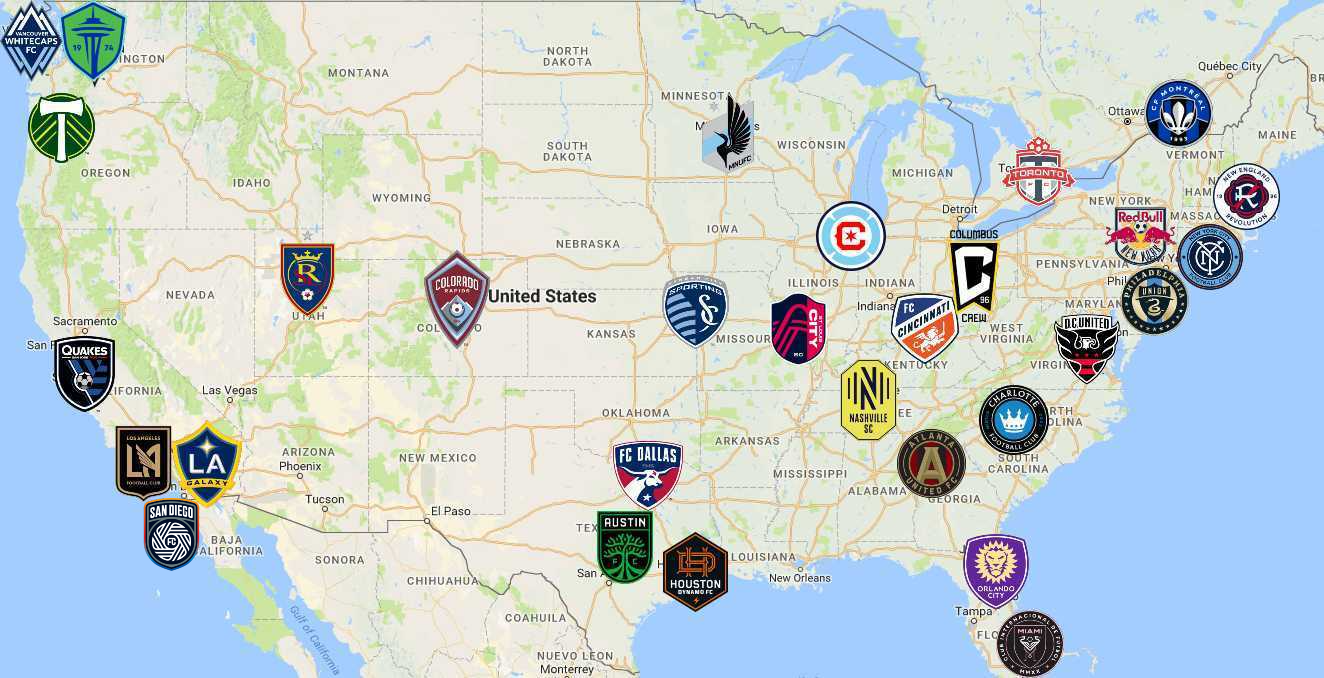
Major League Soccer (MLS) has undergone a remarkable transformation since its inception, evolving from a nascent league into a significant player in the global sports landscape. As of the 2024 season, MLS comprises 29 teams, with plans already firmly in place for San Diego FC to join in 2025 as the 30th club. This steady and strategic expansion is not merely a testament to the league’s growing popularity but is a critical driver of its financial success, influencing everything from franchise valuations and investor appeal to local economic development and overall business sustainability. Understanding the numerical growth of MLS teams requires a keen focus on the intricate financial mechanisms and strategic business decisions that underpin this rapid ascent.
The Economics of MLS Expansion: Driving Growth and Valuations
The decision to expand a professional sports league is always rooted in a complex financial calculus. For MLS, each new team represents not just another market entered but a significant injection of capital and an expansion of its economic footprint. The league’s calculated growth strategy has fundamentally reshaped its financial profile, making it an increasingly attractive investment vehicle.
Soaring Franchise Fees and Valuation Growth
One of the most direct financial impacts of MLS expansion is the dramatic increase in franchise fees. When the league began, expansion fees were nominal. However, as the league matured and proved its viability, these fees have skyrocketed. Recent expansion bids have reportedly commanded fees in the hundreds of millions of dollars, with the San Diego FC entry fee rumored to be around $500 million. This monumental figure serves several critical financial purposes:
- Revenue for the League and Existing Owners: A substantial portion of expansion fees typically goes to the league, which is then distributed among existing owners. This provides a direct financial return on their initial investment and contributes to the league’s operational budget and strategic initiatives.
- Validation of Market Value: The willingness of sophisticated ownership groups to pay such high fees validates the perceived market value and future potential of an MLS franchise. It signals robust investor confidence in the league’s growth trajectory and its ability to generate significant returns.
- Barrier to Entry and Exclusivity: High expansion fees create a significant barrier to entry, ensuring that only well-capitalized and committed ownership groups can join. This exclusivity enhances the prestige and perceived value of existing franchises, contributing to their own individual valuation increases.
The cumulative effect of these rising fees is a substantial increase in the valuation of all MLS clubs. Even without a direct sale, the price paid for new franchises provides a benchmark for the appreciating asset value of existing teams, transforming them into highly valuable sports properties.
Attracting Diverse and Savvy Investor Capital
The strategic expansion of MLS has been instrumental in attracting a diverse array of sophisticated investors, from seasoned sports magnates and real estate developers to high-net-worth individuals and institutional funds. These investors are drawn not only by the league’s increasing popularity but also by a compelling business proposition:
- Long-Term Asset Appreciation: Ownership of a professional sports team is increasingly viewed as a robust long-term asset, akin to prime real estate or a blue-chip stock. MLS teams, with their increasing valuations and growing revenue streams, offer significant potential for capital appreciation over time.
- Media Rights and Sponsorship Growth: As the league expands its reach and audience, the value of its media rights and sponsorship deals naturally increases. Major league-wide agreements, such as the Apple TV partnership, demonstrate the scale of these revenue streams, which are shared by all clubs.
- Real Estate Development Opportunities: Many MLS ownership groups are involved in wider real estate development, often building state-of-the-art stadiums and surrounding entertainment districts. These projects create additional revenue streams from concessions, events, retail, and residential components, turning the club into a central pillar of a larger, diversified investment portfolio.
The influx of such capital and expertise not only fortifies the financial base of the league but also brings innovative business strategies and a deeper financial acumen to the table, further professionalizing the league’s operational and commercial aspects.
The Economic Impact on Host Cities and Local Economies
Each new MLS team is more than just a sports franchise; it is a significant economic engine for its host city. The decision to grant an expansion team is often intertwined with comprehensive proposals that detail the profound economic benefits a new club can bring, extending far beyond the pitch.
Local Market Development and Revenue Streams
A new MLS club often serves as a catalyst for substantial local economic development. The construction and ongoing operation of a modern soccer-specific stadium alone represent a significant investment and source of economic activity:
- Stadium Construction and Infrastructure: Building a new stadium generates thousands of construction jobs, stimulating local industries and supporting a network of suppliers. Beyond construction, the development often includes associated infrastructure improvements, such as public transport links and road upgrades.
- Direct and Indirect Spending: On game days, fans spend money on tickets, concessions, merchandise, parking, and transportation. This direct spending circulates through the local economy, supporting local businesses. Indirect spending comes from the team’s operational needs, such as local suppliers for equipment, catering, and administrative services.
- Tourism and Hospitality: For cities without major league sports or those looking to boost their tourism, an MLS team can attract visitors from out of town for games, creating demand for hotels, restaurants, and local attractions. This is particularly true for rivalry games or playoff matches.
The establishment of a new team injects fresh revenue streams into local coffers through various taxes, including property taxes on the stadium and surrounding developments, sales taxes on game-day purchases, and potentially bed taxes from tourism.
Job Creation and Urban Revitalization
Beyond immediate spending, an MLS team creates a diverse range of employment opportunities, contributing significantly to local labor markets:
- Direct Employment: Teams employ a substantial staff, including players, coaches, medical personnel, front-office executives, marketing professionals, groundskeepers, and stadium operations staff. These are often well-paying, stable jobs.
- Indirect and Induced Employment: The economic activity generated by the team supports jobs in ancillary businesses, such as local restaurants, bars, retail stores, and transportation services. Furthermore, the increased income among directly and indirectly employed individuals leads to additional spending, creating further jobs in other sectors (induced employment).
- Catalyst for Urban Revitalization: Many MLS stadiums are strategically located in urban core areas or former industrial sites, acting as anchors for large-scale urban revitalization projects. These developments can transform neglected areas into vibrant entertainment districts, driving property value appreciation and attracting further private investment into the surrounding neighborhoods. This holistic approach to development ensures that the team’s presence generates enduring economic benefits for the community.
The Business Model of an MLS Club: Revenue Generation and Cost Structures
The financial health of the overall league is intrinsically linked to the viability and profitability of individual clubs. Each of the 29 (soon to be 30) teams operates under a robust business model designed to maximize revenue while managing significant operational costs.
Diversified Revenue Generation
MLS clubs employ a multi-faceted approach to revenue generation, ensuring diverse income streams that mitigate reliance on any single source:
- Ticketing and Season Passes: Core revenue comes from ticket sales for home matches, with season passes forming a crucial foundational component, guaranteeing upfront income and fostering loyal fan bases. Premium seating options, such as luxury suites and club seats, command significantly higher prices.
- Merchandise Sales: Team-branded apparel, accessories, and memorabilia are significant revenue generators. This extends beyond stadium sales to online stores and retail partnerships, capitalizing on fan identity and loyalty.
- Sponsorships and Advertising: Local, regional, and national brands invest heavily in sponsoring MLS clubs. This includes jersey sponsorships, stadium naming rights, perimeter advertising, and various promotional partnerships. These deals can be highly lucrative, especially for successful teams in major markets.
- Media Rights and League Revenue Sharing: While the league negotiates major media rights deals (like the one with Apple TV), a portion of this revenue is distributed to individual clubs. Additionally, clubs may have local broadcast partnerships for specific games or ancillary programming.
- Non-Matchday Events: Modern MLS stadiums are often multi-purpose venues, hosting concerts, festivals, corporate events, and other sporting competitions on non-match days. This diversified use generates additional rental income and boosts concession sales.
Managing Player Acquisition and Salary Structures
While revenue generation is paramount, managing significant cost structures, particularly player salaries, is critical to a club’s financial performance. MLS operates under a single-entity structure, which centralizes many aspects of player acquisition and contracts to ensure financial stability and competitive balance across the league.
- Salary Cap and Designated Player Rule: The league employs a salary cap to control player wages and promote competitive parity. However, the Designated Player (DP) rule allows clubs to sign a limited number of high-profile players whose salaries exceed the cap, partially paid by the club. This rule enables teams to attract global talent and boost commercial appeal without disrupting the league’s overall financial structure.
- Transfer Fees and Academy Development: Clubs invest in acquiring players through transfer fees paid to other clubs, both domestically and internationally. Increasingly, MLS teams are also investing heavily in youth academies, which serve as a long-term strategy for developing talent and, potentially, generating revenue through player sales to European clubs.
- Operational and Administrative Costs: Beyond player-related expenses, clubs face significant operational costs including stadium maintenance, game-day staffing, travel, marketing, and extensive front-office administrative expenses. Efficient management of these costs is essential for profitability.
Future Financial Trajectories and Challenges for a 30+ Team League
With 29 teams and a 30th on the horizon, MLS is entering a new phase of maturity. The financial trajectory remains positive, but future growth will involve navigating new challenges and capitalizing on emerging opportunities.
Sustainability Amidst Continued Growth
The league’s rapid expansion raises questions about the long-term sustainability of the current growth model. Finding the optimal number of teams that balances market saturation with competitive quality and financial viability will be crucial. Future expansion decisions will likely be even more stringent, focusing on markets with robust soccer cultures, strong corporate bases, and highly committed ownership groups. Maintaining competitive balance across an ever-larger league also becomes more complex, requiring sophisticated financial mechanisms to ensure smaller markets can still compete effectively against larger ones.
Global Competitiveness and Broadcast Rights
As MLS continues to grow, its financial aspirations extend to global competitiveness. This means attracting more world-class talent, improving the quality of play, and enhancing its international reputation. A significant aspect of this is the negotiation of future broadcast rights. As the league’s audience expands and its demographic appeal strengthens, the value of these rights will continue to escalate, forming an increasingly critical revenue pillar for all clubs. Leveraging digital platforms and international streaming capabilities will be key to unlocking even greater financial potential.
In conclusion, the question of “how many teams are there in MLS” is far more than a simple headcount. It is a gateway to understanding the sophisticated financial strategies, significant investment flows, and profound economic impacts that characterize one of the fastest-growing professional sports leagues in the world. Each expansion team is a deliberate financial commitment, driving up valuations, spurring local economies, and continually reshaping the league’s ambitious business model.
aViewFromTheCave is a participant in the Amazon Services LLC Associates Program, an affiliate advertising program designed to provide a means for sites to earn advertising fees by advertising and linking to Amazon.com. Amazon, the Amazon logo, AmazonSupply, and the AmazonSupply logo are trademarks of Amazon.com, Inc. or its affiliates. As an Amazon Associate we earn affiliate commissions from qualifying purchases.