
When investors talk about “the market,” they are often referring to one of two major indices: the Dow Jones Industrial Average or the Nasdaq. While the Dow represents a narrow slice of 30 blue-chip companies, the Nasdaq is a sprawling ecosystem of innovation, growth, and technological advancement. For anyone looking to master their personal finance or build a robust investment portfolio, understanding the sheer scale and composition of the Nasdaq is essential.
But the question “how many stocks are in the Nasdaq?” is more complex than it first appears. The answer depends on whether you are looking at the Nasdaq Stock Market as an exchange or the specific indices that track its performance. Currently, there are approximately 3,400 to 3,700 companies listed on the Nasdaq Stock Market, while the most famous index, the Nasdaq-100, focuses on a much smaller subset.
Understanding the Composition of the Nasdaq
To understand how many stocks are in the Nasdaq, we must first distinguish between the exchange itself and the indices derived from it. The Nasdaq is the second-largest stock exchange in the world by market capitalization, trailing only the New York Stock Exchange (NYSE). Unlike the NYSE, which still maintains a physical trading floor, the Nasdaq has been entirely electronic since its inception in 1971.
The Nasdaq Composite Index vs. The Nasdaq Stock Market
The Nasdaq Composite Index is a broad market index that includes almost all stocks listed on the Nasdaq Stock Exchange. If a company is listed on the Nasdaq, it is likely part of the Composite. As of late 2023 and early 2024, this index typically fluctuates between 3,300 and 3,700 constituent stocks.
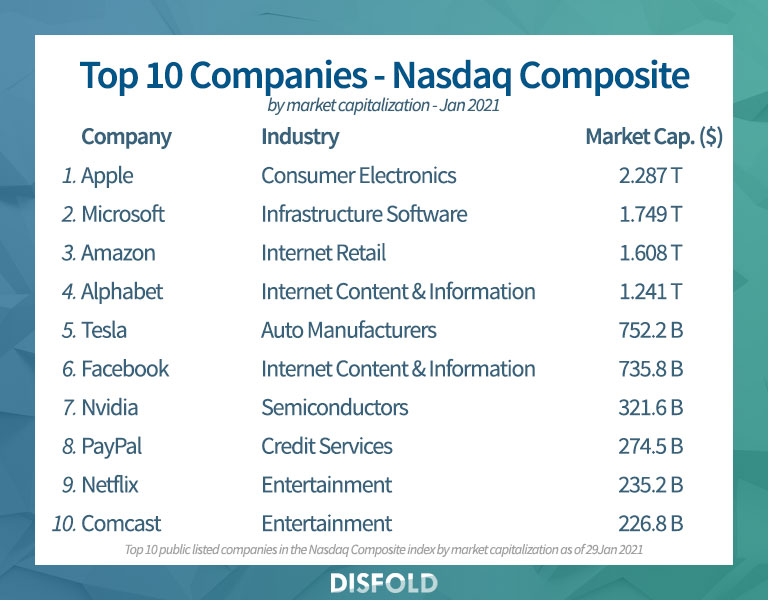
The Composite is often used by economists and financial analysts as a barometer for the technology sector and growth-oriented companies. Because it is market-capitalization-weighted, the largest companies—such as Apple, Microsoft, and Alphabet—have a disproportionate impact on its daily movements. When you hear a news anchor say, “The Nasdaq is up 2% today,” they are almost always referring to the Nasdaq Composite.
The Dynamic Nature of Listing Numbers
The exact number of stocks in the Nasdaq is never static. It changes weekly due to the “churn” of the public markets. New companies enter the exchange through Initial Public Offerings (IPOs) or SPAC (Special Purpose Acquisition Company) mergers. Conversely, companies leave the exchange due to mergers, acquisitions, bankruptcies, or failure to meet the exchange’s stringent listing requirements (such as maintaining a minimum share price).
For a Money-focused investor, this churn represents the lifecycle of business finance. The Nasdaq is often the destination for “high-growth” startups that have graduated from venture capital funding to the public markets, making it a critical area to watch for those interested in long-term wealth accumulation.
The Core Benchmarks: Nasdaq-100 vs. The Rest
While the Composite provides the big picture, most institutional and retail investors focus their capital on a much tighter group of stocks known as the Nasdaq-100. If the Composite is the entire ocean, the Nasdaq-100 is the Gulf Stream—the powerful current that drives the most significant movement.
The Tech Giants and the Power of the “Magnificent Seven”
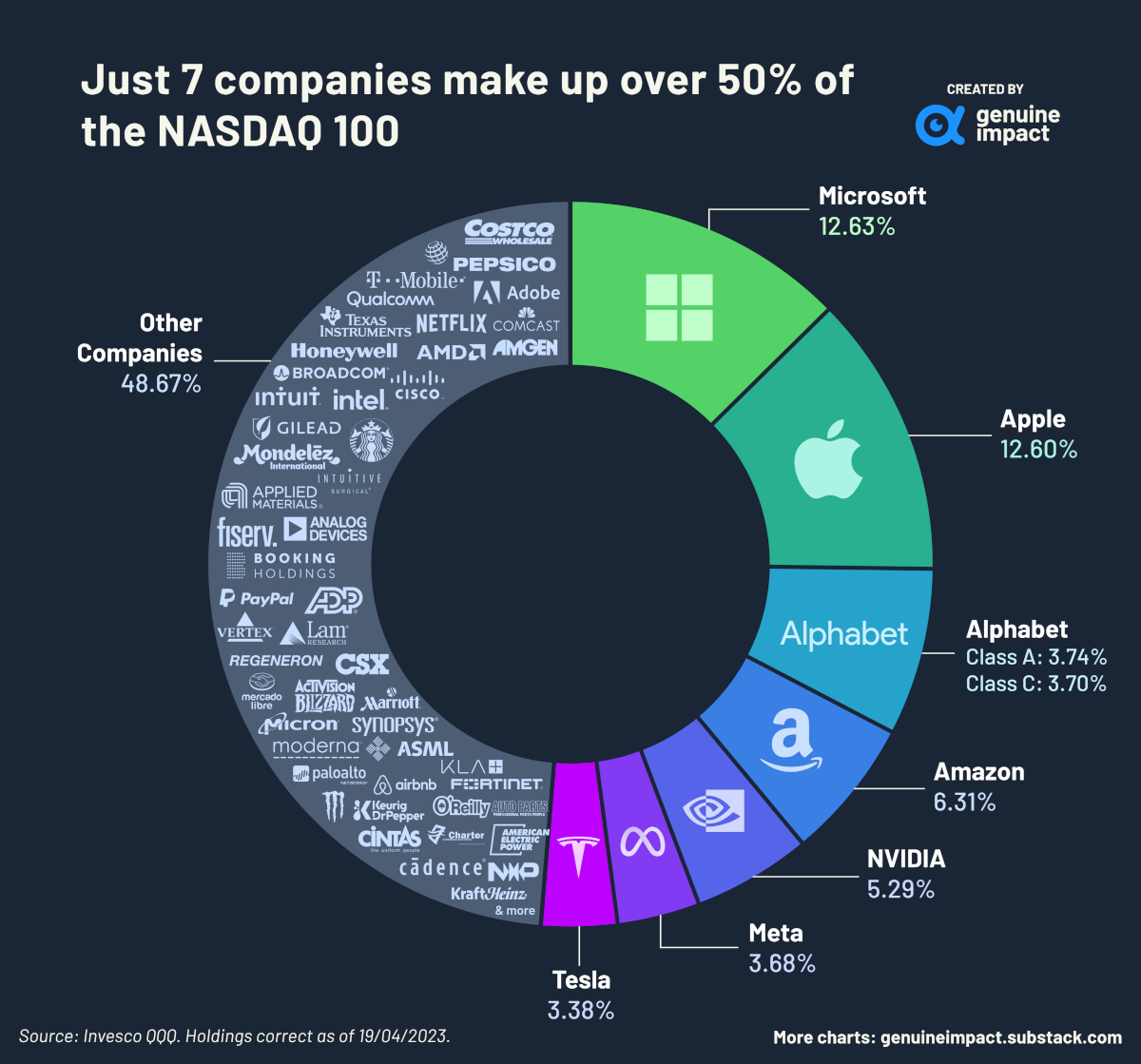
The Nasdaq-100 consists of the 100 largest non-financial companies listed on the Nasdaq. This index is the home of the “Magnificent Seven”—Apple, Microsoft, Alphabet, Amazon, Meta, Nvidia, and Tesla. These seven stocks alone often account for a massive percentage of the index’s total value.
In terms of portfolio management, this concentration is a double-edged sword. On one hand, these companies have historically provided exceptional returns, driven by their dominance in software, AI, and cloud computing. On the other hand, it means that an investor in the Nasdaq-100 is highly exposed to the “Tech” sector, even if the index technically includes other industries.
Beyond Tech: The Diversification of the Nasdaq-100
A common misconception in personal finance is that the Nasdaq is exclusively a technology index. While tech makes up about 50% of the index, the Nasdaq-100 also includes major players in:
- Consumer Services: Amazon, Starbucks, and Booking Holdings.
- Health Care: Amgen, Gilead Sciences, and Moderna.
- Retail/Wholesale: Costco and Dollar Tree.
- Industrials: PACCAR and Old Dominion Freight Line.
By understanding that the Nasdaq contains more than just software companies, an investor can better assess their “Money” strategy. Diversification within the Nasdaq allows for exposure to modern retail and biotech trends, not just the latest smartphone releases.
How Companies Get Listed (and De-listed) on the Nasdaq
The Nasdaq doesn’t just let any company join its ranks. To be one of the ~3,500 stocks, a business must meet rigorous financial, liquidity, and corporate governance standards. This is where business finance meets regulatory oversight.
Financial Requirements and Listing Tiers
The Nasdaq is divided into three distinct tiers, each with its own set of requirements:
- The Nasdaq Global Select Market: This is the “elite” tier. It has the highest entry requirements in the world for any exchange, focusing on large-cap companies with consistent financial performance.
- The Nasdaq Global Market: A mid-cap tier for companies with a global reach but slightly less market capitalization than the Global Select group.
- The Nasdaq Capital Market: Formerly known as the “SmallCap” market, this tier is for early-stage companies looking to raise capital.
For a stock to be listed, it must generally have a minimum number of publicly traded shares, a minimum share price (often $4.00), and a certain number of “market makers” to ensure liquidity.
The Risks of De-listing
From an investing perspective, watching companies move out of the Nasdaq is as important as watching them move in. If a company’s share price falls below $1.00 for 30 consecutive business days, the Nasdaq issues a deficiency notice. If the company cannot rectify the price, it is de-listed to the “Over-the-Counter” (OTC) markets, often referred to as the Pink Sheets. For the personal investor, de-listing is a massive “red flag” that usually results in a significant loss of capital and liquidity.
Why the Number of Stocks Matters to Individual Investors
You might wonder why the specific count of 3,500 stocks matters to your bank account. In the world of business finance, the “breadth” of the market—how many stocks are actually participating in a rally—is a key indicator of economic health.
Market Capitalization Weighting Explained
Because the Nasdaq is market-cap weighted, a few massive stocks can mask the struggles of the other 3,400+ companies. For example, if Apple and Microsoft have a great day, the Nasdaq index might go up even if 2,000 smaller stocks are losing value. This is known as “narrow breadth.”
Sophisticated investors look at the “Advance-Decline Line” of the Nasdaq. If the index is hitting new highs, but the number of advancing stocks is declining, it suggests the market rally is fragile. This insight is vital for anyone managing their own retirement accounts or brokerage portfolios.
Volatility and Growth Potential
With over 3,000 stocks, the Nasdaq offers a higher “beta” (volatility) than the NYSE. Smaller stocks on the Nasdaq Capital Market offer the potential for 10x or 100x returns, but they also carry a much higher risk of total loss. In a well-balanced personal finance plan, the Nasdaq often represents the “Growth” engine of a portfolio, while bonds or NYSE-listed value stocks represent the “Stability” engine.
Investment Strategies: How to Trade the Nasdaq
Knowing how many stocks are in the Nasdaq is the first step; the second is knowing how to gain exposure to them. Most individuals do not buy all 3,500 stocks individually; they use financial tools designed to track the index.
ETFs and Index Funds
The most popular way to invest in the Nasdaq is through Exchange-Traded Funds (ETFs).
- QQQ: The Invesco QQQ Trust tracks the Nasdaq-100. It is one of the most traded funds in the world.
- QQQM: A lower-cost version of QQQ designed for long-term “buy and hold” investors.
- ONEQ: The Fidelity Nasdaq Composite ETF, which seeks to track the entire 3,000+ stock universe of the Nasdaq Composite.
For someone focused on “Online Income” or passive investing, these ETFs provide an “all-in-one” solution that rebalances automatically.
Direct Stock Picking vs. Broad Market Exposure
For those who enjoy the “Business Finance” aspect of research, the Nasdaq is a treasure trove of individual opportunities. However, stock picking requires a deep dive into earnings reports, P/E ratios, and revenue growth. Most financial advisors suggest that for the average person, the bulk of their “Money” should be in broad index funds, with a small percentage (perhaps 5–10%) reserved for individual Nasdaq stocks they feel strongly about.

Conclusion
The Nasdaq is far more than just a list of tech companies; it is a massive, shifting landscape of over 3,500 public entities ranging from trillion-dollar titans to small-cap innovators. Whether you are looking at the broad Nasdaq Composite or the concentrated Nasdaq-100, understanding the “how many” and “what” of this exchange is fundamental to modern investing. By keeping an eye on the listing tiers, market breadth, and available financial tools like ETFs, you can leverage the power of the Nasdaq to build a more secure and prosperous financial future.
aViewFromTheCave is a participant in the Amazon Services LLC Associates Program, an affiliate advertising program designed to provide a means for sites to earn advertising fees by advertising and linking to Amazon.com. Amazon, the Amazon logo, AmazonSupply, and the AmazonSupply logo are trademarks of Amazon.com, Inc. or its affiliates. As an Amazon Associate we earn affiliate commissions from qualifying purchases.