
The intersection of individual wealth and corporate governance has rarely seen a more prominent figure than Elon Musk. As the CEO of Tesla, Musk’s financial destiny is inextricably linked to the performance of the world’s most valuable electric vehicle manufacturer. For investors, financial analysts, and market observers, the exact number of shares Musk holds is not merely a curiosity; it is a critical metric that influences market volatility, corporate decision-making, and the overall valuation of the company. Understanding the nuances of his ownership requires a deep dive into stock options, legal challenges, and the strategic maneuvers of a billionaire whose net worth is almost entirely tied to the success of his industrial empire.
The Breakdown of Musk’s Current Ownership Stake
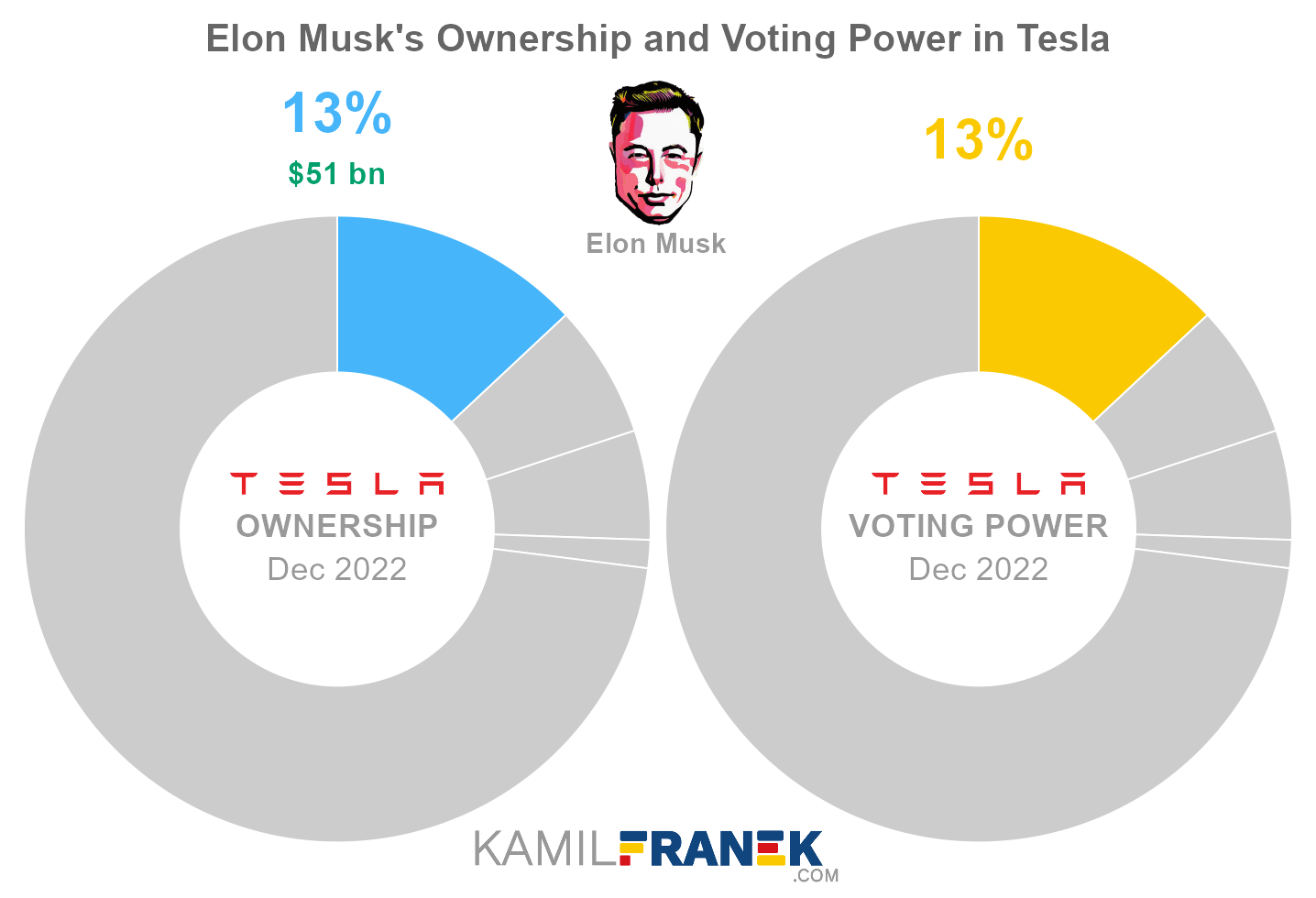
As of the most recent filings and public disclosures, Elon Musk owns approximately 411 million shares of Tesla. This represents roughly 13% of the company’s outstanding common stock. However, this figure is a moving target, often subject to the exercising of stock options and the fallout from various legal proceedings regarding his compensation.
Common Stock vs. Exercisable Options
To understand Musk’s stake, one must distinguish between common stock and exercisable options. The 13% figure primarily reflects the shares he owns outright. However, when accounting for the stock options granted under his massive 2018 CEO Performance Award, his potential ownership stake could rise significantly higher—closer to 20.5% if all vested options are included. These options allow him to purchase shares at a fraction of their current market price, provided the company hits specific milestones related to market capitalization and operational growth.
The Impact of the Twitter (X) Acquisition
The landscape of Musk’s Tesla holdings changed dramatically in 2022 and 2023 following his $44 billion acquisition of the social media platform then known as Twitter. To finance the purchase, Musk sold billions of dollars worth of Tesla shares. These sales were a point of contention for many Tesla investors, as the massive influx of supply into the market put downward pressure on the stock price. Furthermore, the liquidation of these shares meant that Musk’s personal “skin in the game” was reduced, leading to questions about his long-term focus and the diversification of his financial interests.
The 2018 Performance Award and Legal Volatility
Perhaps no single financial instrument has more impact on Musk’s ownership than the 2018 CEO Performance Award. This was a compensation package unlike any other in corporate history, eschewing a traditional salary or cash bonuses in favor of a 12-tranche stock option plan.
The Scale of the $56 Billion Package
The package was designed to reward Musk only if Tesla achieved astronomical growth. At the time of its inception, the targets were viewed by many as nearly impossible, requiring the company to reach a market cap of $6500 billion and significant revenue milestones. Tesla eventually met all these goals, making the package worth approximately $56 billion at peak valuation. This package is the primary reason Musk’s potential ownership stake hovers near the 20% mark.
The Delaware Court Ruling
In early 2024, a Delaware judge invalidated this pay package, siding with a shareholder who argued that the board of directors was not sufficiently independent and that the disclosure to shareholders was inadequate. This ruling created a massive financial vacuum for Musk. Without these options, his ownership stake remains stuck at the 13% level, and his net worth—on paper—dropped by tens of billions of dollars. Tesla has since moved to re-ratify this package through shareholder votes, arguing that the milestones were met and the “contract” should be honored to maintain Musk’s incentive to stay with the company.
The Quest for 25% Control: Strategic and Financial Implications
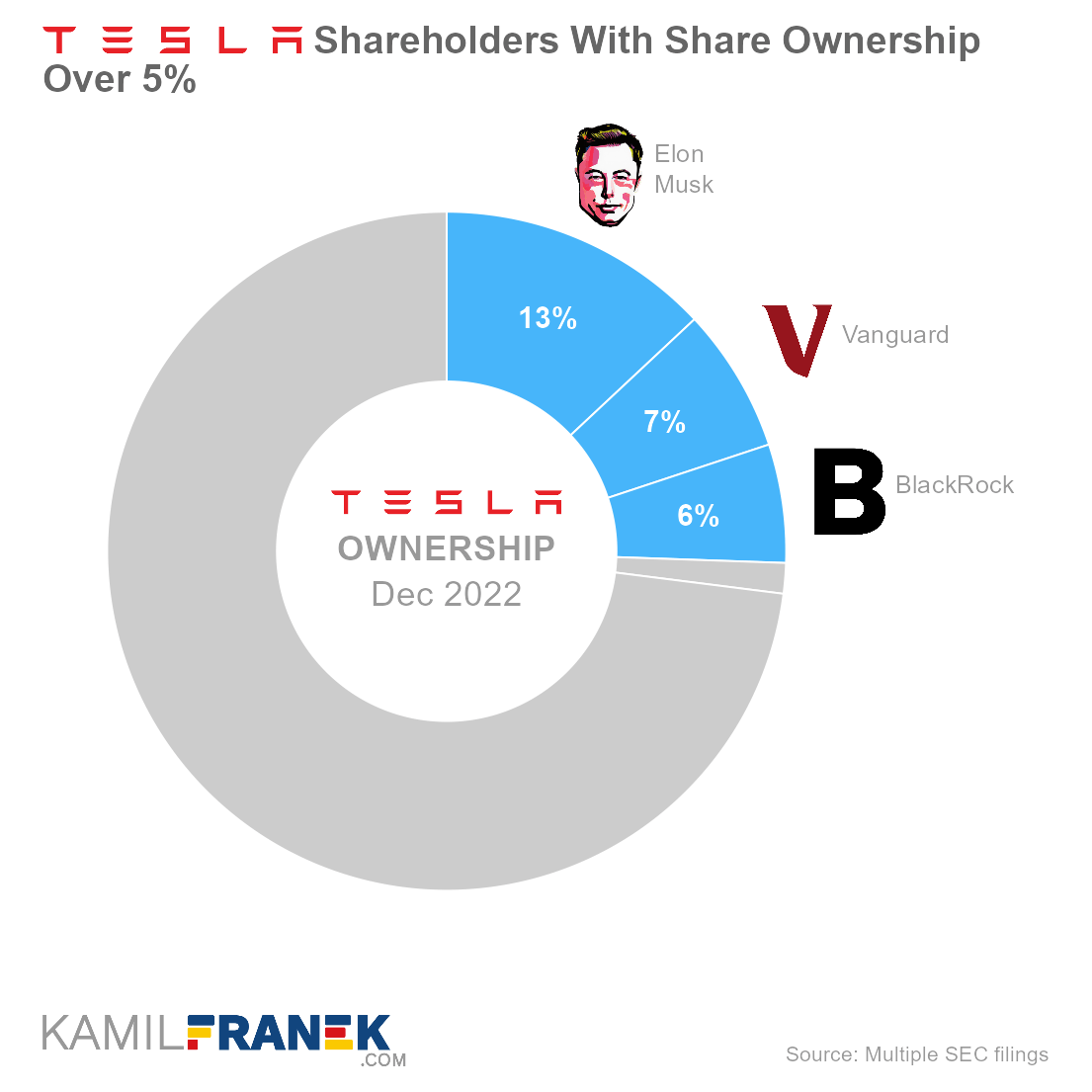
Elon Musk has publicly stated that he is uncomfortable expanding Tesla’s lead in Artificial Intelligence (AI) and robotics unless he has approximately 25% voting control. This demand has sparked a significant debate in the world of business finance and corporate governance.
Voting Power vs. Equity Ownership
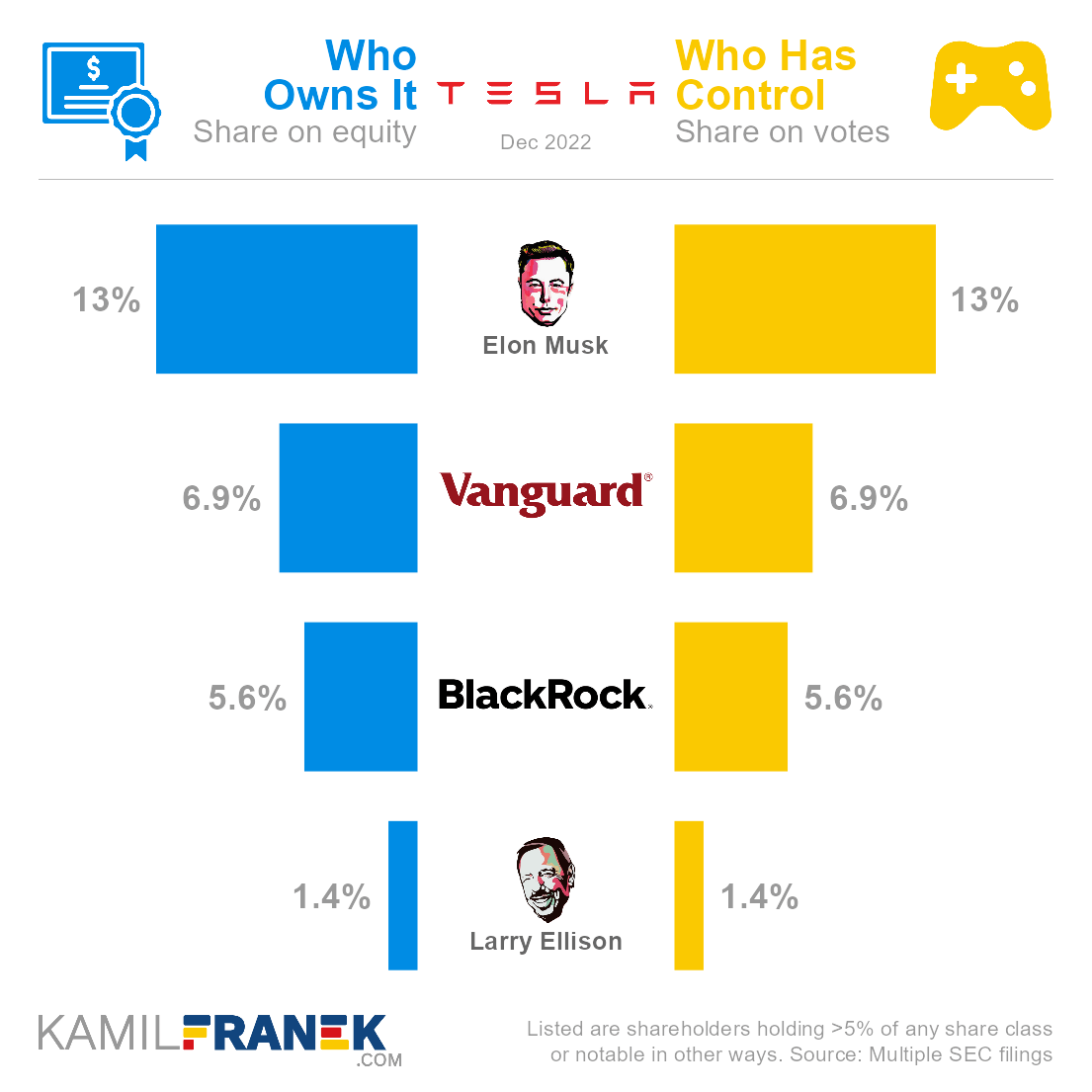
The distinction between equity ownership and voting power is crucial. Musk argues that a 25% stake is enough to be influential but not so much that he cannot be overruled. From a financial perspective, achieving this 25% mark would require either a massive new grant of shares or the reinstatement of his 2018 package plus additional incentives. For investors, this creates a dilemma: diluting existing shares to give Musk more control versus the risk of him moving AI development to one of his other private companies, like xAI.
Key Man Risk and Institutional Sentiment
Institutional investors, such as Vanguard and BlackRock, closely monitor Musk’s ownership levels because of “Key Man Risk.” In finance, this refers to the risk that an organization’s success is overly dependent on one individual. If Musk’s stake drops too low, he may lose the financial incentive to prioritize Tesla over his other ventures (SpaceX, Neuralink, X, xAI). Conversely, if his ownership is too concentrated, it can lead to governance issues where the board fails to provide adequate oversight of the CEO’s actions.
Market Reaction and the “Musk Premium”
The financial markets price Tesla stock with a “Musk Premium.” This means the stock often trades at a higher price-to-earnings (P/E) ratio than traditional automakers because investors are betting on Musk’s vision and execution.
Selling Pressure and Stock Liquidity
Whenever Musk needs cash—whether for taxes on exercised options or to fund other ventures—he must sell Tesla shares. Because he is an insider, these sales must be scheduled and disclosed. However, even scheduled sales can trigger a bearish sentiment. The market looks at these sales as a signal; if the founder is selling, retail investors often wonder if the stock has peaked. Understanding the volume of shares he still holds helps investors gauge his confidence in the company’s future “moonshot” projects, such as the Robotaxi and the Optimus humanoid robot.
Collateral and Margin Loans
Musk has historically used his Tesla shares as collateral for personal loans. This is a common strategy among the ultra-wealthy to maintain liquidity without triggering capital gains taxes through sales. From a systemic risk perspective, if Tesla’s stock price were to drop precipitously, it could trigger “margin calls,” forcing Musk to sell more shares to cover his loans, which would then drive the price even lower. This feedback loop is something that large-scale institutional investors analyze when calculating the risk profile of a Tesla position.
The Future of Musk’s Stake in the AI Era
As Tesla transitions from being seen as a “car company” to an “AI and Robotics company,” the value of Musk’s shares is no longer tied solely to vehicle delivery numbers. The financial community is now valuing his holdings based on the potential of autonomous driving software (FSD) and energy storage solutions.
Long-term Retention Incentives
To keep Musk engaged for the next decade, the board is likely to propose new financial structures. These could include “super-voting” shares or performance-based milestones tied to AI milestones. For the average investor, this means continued dilution is a possibility, but it is often viewed as a necessary trade-off for the potential 10x growth that Musk’s leadership might provide.
Conclusion for Investors
Elon Musk’s ownership of Tesla is the heartbeat of the company’s financial identity. While his current ownership of roughly 13% of common stock is significant, the true narrative lies in the unvested options, legal battles over compensation, and his strategic desire for 25% control. For those navigating the world of personal finance and investing, monitoring Musk’s share count is not just about tracking a billionaire’s wealth; it is about understanding the stability, risk, and future trajectory of one of the most influential companies in the global economy. As the legal dust settles on his pay packages, the fluctuations in his ownership will continue to be a primary driver of Tesla’s market sentiment and financial health.
aViewFromTheCave is a participant in the Amazon Services LLC Associates Program, an affiliate advertising program designed to provide a means for sites to earn advertising fees by advertising and linking to Amazon.com. Amazon, the Amazon logo, AmazonSupply, and the AmazonSupply logo are trademarks of Amazon.com, Inc. or its affiliates. As an Amazon Associate we earn affiliate commissions from qualifying purchases.