
Securing capital is often the most significant hurdle for small businesses, whether they’re just starting or aiming to expand. Traditional bank loans can be challenging to obtain, particularly for newer ventures or those without substantial collateral. This is where Small Business Administration (SBA) loans come into play, offering a lifeline to countless entrepreneurs across the United States. Far from being a direct handout from the government, SBA loans are actually loans issued by conventional lenders (banks, credit unions, non-profit organizations) but partially guaranteed by the SBA. This government guarantee reduces the risk for lenders, making them more willing to provide financing to small businesses that might not otherwise qualify. Understanding how to navigate the application process for an SBA loan is crucial for any business owner seeking favorable terms, lower interest rates, and longer repayment periods to fuel their growth and operational stability.
Understanding SBA Loans: More Than Just Government Guarantees
Many mistakenly believe that an SBA loan means borrowing directly from the government. In reality, the SBA acts as a guarantor for a portion of the loan, mitigating risk for participating lenders. This fundamental distinction is vital for applicants to grasp, as it shapes the entire application process, from lender selection to documentation requirements. The primary goal of the SBA is to support small businesses, stimulate economic growth, and create jobs by making capital more accessible.
What is an SBA Loan?
An SBA loan is a type of small business loan that is partially guaranteed by the U.S. Small Business Administration. This guarantee incentivizes lenders to provide financing to small businesses that might otherwise be considered too risky. Because the government shoulders some of the risk, lenders can offer more attractive terms, such as lower interest rates, longer repayment schedules, and smaller down payments, compared to conventional loans. The SBA does not lend money directly to small businesses, except in specific disaster relief scenarios. Instead, it sets the guidelines for loans, which are then issued by its network of approved lenders. This ensures a standardized process and level of oversight while leveraging the private sector’s lending infrastructure.
Key Benefits of SBA Loans
The advantages of an SBA loan can be transformative for a small business. Firstly, they typically come with lower interest rates than conventional loans, often tied to the prime rate plus a small margin. This reduces the overall cost of borrowing, making repayment more manageable. Secondly, longer repayment terms are a hallmark of SBA loans, extending up to 10 years for working capital and up to 25 years for real estate. This dramatically improves cash flow for businesses by spreading out payments over a more extended period. Thirdly, the down payment requirements are often lower, preserving crucial capital for business operations. Finally, and perhaps most importantly, SBA loans make accessible capital available to businesses that might not meet stringent conventional lending criteria, including startups or businesses in underserved communities.
Types of SBA Loans
The SBA offers several loan programs, each tailored to different business needs:
-
7(a) Loan Program: This is the SBA’s most common and flexible loan program, suitable for a wide range of uses, including working capital, equipment purchases, real estate acquisition, and business acquisition. Loan amounts can go up to $5 million.
-
504 Loan Program: Designed for fixed asset financing, such as purchasing or constructing real estate, or acquiring heavy machinery. It involves a partnership between the borrower, a certified development company (CDC), and a third-party lender. These loans offer long-term, fixed-rate financing.
-
Microloan Program: Provides smaller loans, up to $50,000, primarily for working capital or to purchase inventory, supplies, furniture, fixtures, and equipment. These loans are often administered through non-profit community-based lenders with experience in assisting startups and underserved communities.
-
SBA Disaster Loans: While the SBA generally doesn’t lend directly, it does so in the event of declared disasters (physical and economic injury). These loans help businesses and homeowners recover from natural disasters.
Understanding which program best fits your needs is the first step in a successful application journey.
Are You Eligible? Meeting the SBA’s Requirements
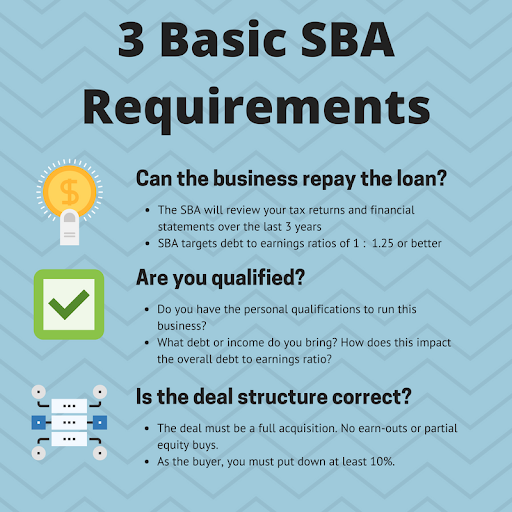
Before embarking on the detailed application process, it’s critical to assess whether your business meets the SBA’s fundamental eligibility criteria. While the specific requirements can vary slightly between loan programs and lenders, general standards apply across the board. The SBA aims to support legitimate, operational small businesses that contribute positively to the economy.
General Eligibility Criteria
To be considered for an SBA loan, your business must generally meet the following conditions:
-
Operate for profit: The business must be for-profit, located in the U.S., and conduct business in the U.S. or its possessions.
-
Small Business Definition: It must qualify as a “small business” as defined by the SBA (more on this below).
-
Owner Equity: The business owners must have invested their own equity into the business.
-
Unable to Obtain Credit Elsewhere: The business must be unable to obtain financing on reasonable terms through conventional lenders without the SBA guarantee. This doesn’t mean you must be rejected by a bank; rather, it implies that the desired terms (e.g., lower interest rate, longer term) are only available with the SBA guarantee.
-
Good Character: Business owners must demonstrate good character, typically through a clean personal credit history and lack of serious criminal offenses.
-
Sound Business Purpose: The loan proceeds must be used for a sound business purpose (e.g., working capital, equipment, real estate, debt refinancing) and not for speculative investments or illegal activities.
Business Size Standards
What constitutes a “small business” for the SBA isn’t a one-size-fits-all definition. Instead, it’s determined by specific size standards that vary by industry. These standards are typically based on:
-
Number of employees: For most manufacturing and mining industries, and some services.
-
Annual receipts (revenue): For most service industries, retail trades, and some construction.
-
Tangible net worth and average net income: For some financial industries.
You can use the SBA’s Size Standards Tool on their website to determine if your business qualifies. It’s crucial to verify your eligibility early, as it underpins the entire application.
Common Reasons for Ineligibility
Several factors can render a business ineligible for an SBA loan. These often include:
-
Speculative businesses: Such as those primarily involved in real estate speculation.
-
Lending institutions: Banks, credit unions, and other financial businesses.
-
Passive businesses: Those that primarily derive income from passive investments without operational activity.
-
Businesses engaged in illegal activities: Or activities considered morally questionable (e.g., gambling, adult entertainment).
-
Pyramid schemes: Or multi-level marketing businesses where income is derived from recruitment rather than product sales.
-
Businesses that discriminate: Based on race, gender, religion, national origin, or disability.
-
Owners with a history of default on government debt: Or those with unresolved felony convictions may also face significant hurdles.
Understanding these exclusions is just as important as knowing the inclusion criteria, preventing wasted effort on an ineligible application.
Preparing Your Application: Gathering the Essentials
The cornerstone of a successful SBA loan application lies in meticulous preparation. Lenders require a comprehensive and well-organized package of documents that paints a clear picture of your business’s viability, financial health, and management capabilities. Skimping on this stage can lead to delays or outright rejection.
The Critical Business Plan
More than just a formality, your business plan is the narrative that sells your vision and strategy to a lender. It demonstrates your understanding of your industry, market, and operational challenges. A robust business plan should include:
-
Executive Summary: A concise overview of your business, its mission, products/services, and growth potential.
-
Company Description: What your business does, its legal structure, and its history.
-
Market Analysis: In-depth research on your target market, competition, and industry trends.
-
Organization and Management: Details about your management team, their experience, and legal structure.
-
Service or Product Line: A description of what you offer and its competitive advantages.
-
Marketing and Sales Strategy: How you plan to reach customers and generate revenue.
-
Financial Projections: Detailed forecasts of income statements, balance sheets, and cash flow statements for the next 3-5 years, often presented with both best-case and worst-case scenarios. This section is especially critical for showing how you plan to repay the loan.
-
Funding Request: A clear explanation of how much money you need and exactly how you plan to use it.

Financial Documentation
This is perhaps the most scrutinized section of your application, providing concrete evidence of your business’s and your personal financial health. Be prepared to provide:
-
Personal Financial Statement: A summary of your assets, liabilities, and net worth.
-
Personal Tax Returns: For the past two to three years, for all principal owners (20% or more ownership).
-
Business Tax Returns: For the past three years (if applicable).
-
Business Financial Statements:
-
Profit & Loss (Income) Statements: Current and for the past three fiscal years.
-
Balance Sheets: Current and for the past three fiscal years.
-
Cash Flow Statements: Projecting future cash flow, especially important for startups.
-
-
Bank Statements: Business and personal, for the past 12 months.
-
Debt Schedule: A list of all outstanding business debts, including creditor, original amount, current balance, and payment terms.
-
Projections: Detailed 1-2 year projections for profit & loss, balance sheets, and cash flow.
Legal and Business Documentation
These documents establish the legality and operational framework of your business:
-
Business Licenses and Permits: Any state, local, or federal licenses required for your industry.
-
Articles of Incorporation/Organization: Or partnership agreements, showing the legal structure of your business.
-
Leases: Commercial leases for your business premises.
-
Résumés of Principals: Demonstrating the experience and qualifications of your management team.
-
Franchise Agreements: If applicable.
-
Copies of Contracts: Significant contracts with customers or suppliers.
Collateral and Guarantees
While an SBA guarantee reduces the need for extensive collateral compared to conventional loans, it doesn’t eliminate it entirely. Lenders will still look for assets to secure the loan.
-
Collateral: This can include real estate, equipment, inventory, or accounts receivable. The SBA generally requires that all available collateral be pledged.
-
Personal Guarantees: All owners with 20% or more ownership in the business are typically required to provide an unconditional personal guarantee, meaning they are personally responsible for repaying the loan if the business defaults. Spouses of owners are often also required to sign some documents, especially if joint assets are involved.
Navigating the Application Process: Step-by-Step
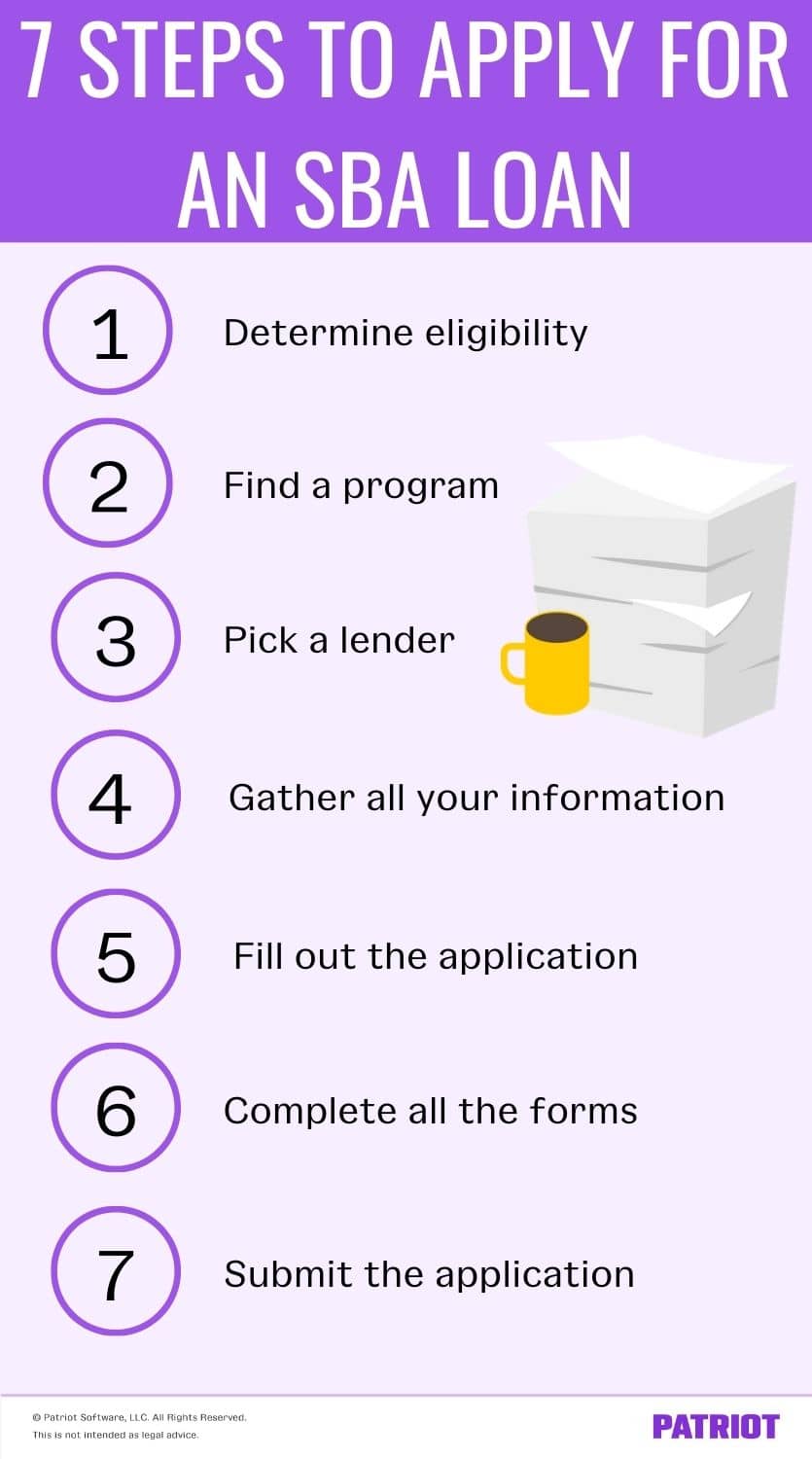
With your documentation meticulously organized and your eligibility confirmed, the next phase involves actively engaging with lenders and submitting your application. This can be a multi-step process requiring patience and diligence.
Finding the Right Lender
Not all banks offer SBA loans, and among those that do, their experience levels and preferred industries can vary.
-
SBA Lender Match: The SBA provides a “Lender Match” tool on its website, allowing businesses to connect with participating lenders in their area.
-
Local Banks and Credit Unions: These institutions often have dedicated small business lending departments familiar with the SBA process. Building a relationship with a local bank can be beneficial.
-
Non-Bank Lenders: Some non-traditional lenders specialize in SBA loans, particularly for microloans or specific programs.
It’s wise to contact multiple lenders to compare terms, understand their specific requirements, and assess their responsiveness and expertise. Ask about their experience with SBA loans, their typical turnaround times, and any fees associated with the application.
The Application Submission
Once you’ve chosen a lender, they will guide you through their specific application forms, which will integrate the documentation you’ve prepared. You’ll typically fill out SBA forms (like Form 1920 – Lender Application for Loan Guaranty) in conjunction with the bank’s own application. Be prepared to explain your business and projections in detail during meetings with loan officers. This is your opportunity to build rapport and demonstrate your commitment and understanding. Ensure all forms are filled out accurately and completely to avoid delays.
Underwriting and Approval
After submission, the lender’s underwriting team will thoroughly review your entire application package. They will assess your creditworthiness, the viability of your business plan, your capacity to repay the loan, the adequacy of collateral, and the character of the owners.
-
Timeline: The underwriting process can take anywhere from a few weeks to several months, depending on the loan program, the lender’s efficiency, and the completeness of your application.
-
Lender’s Evaluation: The lender is primarily focused on their own risk assessment, even with the SBA guarantee. They will scrutinize your financials, market analysis, and management team to ensure the loan is a sound investment.
-
SBA Review: Once the lender approves your application internally, they submit it to the SBA for final approval of the guarantee. The SBA conducts its own review to ensure compliance with its program guidelines.
Closing the Loan
Upon approval from both the lender and the SBA, you’ll enter the loan closing phase. This involves signing numerous legal documents, including the promissory note, security agreements, and personal guarantees. It’s crucial to read and understand all terms and conditions before signing. Any outstanding conditions (e.g., obtaining a specific insurance policy) must be met before funds are disbursed. Once everything is finalized, the loan proceeds will be disbursed to your business, typically into your business bank account.
Post-Approval and Loan Management: Ensuring Success
Receiving an SBA loan is a significant achievement, but it’s just the beginning. Effective management of the loan and strategic utilization of the funds are paramount to your business’s long-term success and your ability to fulfill your repayment obligations.
Responsible Loan Repayment
Adhering to the loan’s repayment schedule is non-negotiable. Missing payments can severely damage your credit, lead to penalties, and potentially result in default.
-
Adhering to Terms: Understand your interest rate, payment due dates, and any prepayment penalties.
-
Managing Cash Flow: Develop robust cash flow forecasts and management practices to ensure you always have sufficient funds to cover your loan payments, even during leaner periods.
-
Communication with Lender: If you anticipate any difficulty in making a payment, communicate proactively with your lender. They may be able to offer solutions or temporary relief, though this is not guaranteed.
Utilizing Funds Strategically
The funds from your SBA loan are meant to fuel your business’s growth and stability, as outlined in your business plan.
-
Growth Initiatives: Invest in expansion, new product development, or market penetration strategies.
-
Working Capital: Use funds to manage day-to-day operations, cover payroll, purchase inventory, or manage seasonal fluctuations.
-
Equipment and Real Estate: Acquire necessary assets that enhance productivity or provide long-term value.
-
Avoid Misuse: Do not use loan funds for personal expenses, speculative investments, or purposes not approved by the lender and SBA. Misuse can lead to serious legal and financial repercussions.
Seeking Ongoing Support
The SBA’s commitment to small businesses doesn’t end with loan approval. They offer a wealth of resources designed to help entrepreneurs succeed.
-
SBA Resources: Utilize the SBA’s extensive online resources, workshops, and training programs.
-
SCORE Mentors: Connect with SCORE, a non-profit organization partnered with the SBA, which provides free mentorship and business advice from experienced volunteers.
-
Small Business Development Centers (SBDCs): These centers, also supported by the SBA, offer free counseling and low-cost training to small businesses, covering areas like business planning, marketing, and financial management.
-
Women’s Business Centers (WBCs): Similar to SBDCs, WBCs focus on assisting women entrepreneurs.
By responsibly managing your SBA loan and leveraging the available support, you can significantly increase your chances of sustained growth and contribute to the vibrant ecosystem of small businesses that power the economy. The journey to securing an SBA loan may be detailed, but with diligent preparation and a clear understanding of the process, it’s a highly achievable and rewarding path to business financing.
aViewFromTheCave is a participant in the Amazon Services LLC Associates Program, an affiliate advertising program designed to provide a means for sites to earn advertising fees by advertising and linking to Amazon.com. Amazon, the Amazon logo, AmazonSupply, and the AmazonSupply logo are trademarks of Amazon.com, Inc. or its affiliates. As an Amazon Associate we earn affiliate commissions from qualifying purchases.