
The question “how many shares are there of Apple?” might seem straightforward, but its answer is far from a static number. For investors, financial analysts, and market enthusiasts, understanding the share structure of a behemoth like Apple Inc. (AAPL) is critical. It’s a dynamic figure influenced by complex corporate actions, directly impacting everything from a company’s valuation to its earnings per share and overall investment appeal. This article delves into the intricacies of Apple’s share count, explaining its significance within the broader financial landscape and what it means for those looking to invest in one of the world’s most valuable companies.
Decoding Apple’s Share Structure: The Significance of “Shares Outstanding”
At the heart of the question lies the concept of “shares outstanding.” This fundamental financial metric represents the total number of a company’s shares currently held by all its shareholders, including institutional investors, retail investors, and company insiders. It excludes shares that the company has repurchased and holds in its treasury. For a company as large and actively traded as Apple, this number is a crucial data point that fluctuates over time due to various corporate strategies.
Defining Shares Outstanding
Shares outstanding are essentially the pieces of ownership that have been distributed to the public and are actively traded in the market. Each share represents a fractional ownership in the company and confers certain rights, such as voting rights on corporate matters and the right to receive dividends. When you buy a share of Apple, you are acquiring one piece of this total number of outstanding shares.
It’s important not to confuse shares outstanding with “authorized shares” or “issued shares.” Authorized shares represent the maximum number of shares a company is legally permitted to issue, as outlined in its corporate charter. Issued shares are the total number of shares that a company has ever distributed, including those held in treasury. Shares outstanding, however, specifically refer to the actively circulating shares that are in the hands of investors.
Where to Find This Crucial Data
For a publicly traded company like Apple, the number of shares outstanding is readily available and regularly updated. Investors can typically find this information in several reliable sources:
- Financial Reports: Apple’s quarterly (10-Q) and annual (10-K) reports filed with the U.S. Securities and Exchange Commission (SEC) are the most authoritative sources. These documents provide detailed financial statements, including the number of shares outstanding for different periods.
- Investor Relations Sections: Apple’s official investor relations website typically provides up-to-date information, including key financial metrics and investor presentations.
- Financial Data Providers: Platforms like Bloomberg, Refinitiv, Yahoo Finance, Google Finance, and other financial news websites aggregate this data from official filings, making it easily accessible to the public.
As of early 2024, Apple’s shares outstanding have generally hovered around 15.5 billion shares. However, this number is a moving target, constantly being adjusted by the company’s capital allocation strategies.
The Dynamic Nature of Apple’s Share Count: A History of Corporate Actions
The journey to Apple’s current share count is a testament to its long history as a publicly traded company, marked by significant corporate actions designed to manage its capital structure and enhance shareholder value. The two most impactful actions in this regard are stock splits and share buybacks.
The Impact of Stock Splits
Stock splits are corporate actions that increase the number of a company’s shares by dividing each existing share into multiple new shares. While the number of shares increases, the total market capitalization of the company remains the same immediately after the split, and thus the value of an individual investor’s holding does not change. For example, in a 2-for-1 split, if an investor owns 100 shares worth $200 each, they would then own 200 shares worth $100 each.
Apple has a notable history of stock splits, each designed to make its stock more accessible and liquid for a broader range of investors:
- June 21, 2000: A 2-for-1 split.
- February 28, 2005: Another 2-for-1 split.
- June 9, 2014: A substantial 7-for-1 split, significantly increasing the share count and making the stock more affordable after a period of strong growth.
- August 31, 2020: A 4-for-1 split, further reducing the per-share price and enhancing its appeal, particularly to retail investors and for inclusion in various market indexes.
Each of these splits dramatically increased Apple’s shares outstanding at the time they occurred, without diluting the overall value of the company or an investor’s total holding. They are primarily cosmetic actions aimed at improving market perception and liquidity.
The Power of Share Buybacks (Stock Repurchases)
In stark contrast to stock splits, share buybacks actively reduce the number of shares outstanding. When a company repurchases its own shares from the open market, these shares are often retired or held as treasury stock, effectively decreasing the total number of shares available to the public.
Apple has been a particularly aggressive proponent of share buybacks, executing one of the largest capital return programs in corporate history. The rationale behind buybacks is multi-faceted:
- Return Value to Shareholders: Instead of paying dividends, companies can return capital to shareholders by reducing the share count, which can indirectly boost the value of remaining shares.
- Boost Earnings Per Share (EPS): With fewer shares outstanding, the company’s net income is divided among a smaller number of shares, leading to a higher EPS. This often makes the company appear more profitable on a per-share basis.
- Signal of Undervaluation: Management might initiate buybacks if they believe the company’s stock is undervalued in the market, signaling confidence in its future prospects.
- Offset Dilution: Buybacks can also be used to offset the dilutive effect of employee stock options or other share-based compensation.
Apple’s consistent and massive share repurchase programs over the past decade have significantly counteracted the increases from stock splits, steadily driving down the overall shares outstanding despite the company’s immense growth. This strategy has been a key factor in supporting its stock price and enhancing shareholder returns.
Other Influencing Factors
While stock splits and buybacks are the primary drivers, other factors can also influence the share count, albeit to a lesser extent for a mature company like Apple:
- Employee Stock Options and Restricted Stock Units (RSUs): As employees exercise options or RSUs vest, new shares are issued, which can slightly increase the outstanding count.
- Convertible Securities: While not typically a major factor for Apple, companies sometimes issue convertible bonds or preferred stock that can be converted into common shares, potentially increasing the share count.
Why Apple’s Share Count is Crucial for Investors
Understanding Apple’s share count is not merely an academic exercise; it has profound implications for how investors analyze the company and make investment decisions. The number of shares outstanding directly influences key financial metrics and valuation models.
Impact on Earnings Per Share (EPS)
Perhaps the most direct and significant impact of a changing share count is on Earnings Per Share (EPS). EPS is calculated by dividing a company’s net income by its shares outstanding. When Apple engages in share buybacks, reducing its share count, its EPS will mechanically increase, assuming net income remains constant or grows. This “financial engineering” can make the company appear more profitable on a per-share basis, even if its total net income growth is modest. For investors, a consistently growing EPS is often a strong indicator of financial health and potential for stock price appreciation.
Valuation Metrics
The shares outstanding figure is integral to calculating a company’s market capitalization (Market Cap), which is the total value of all its outstanding shares (Share Price × Shares Outstanding). Market Cap is a primary metric used to size up a company.
Furthermore, per-share valuation metrics like the Price-to-Earnings (P/E) ratio, Price-to-Sales (P/S) ratio, and Price-to-Book (P/B) ratio rely on the share count or per-share figures derived from it. When shares outstanding decrease, it can potentially lead to more attractive per-share valuations, making the stock appear more appealing to value investors.
Dividend Payouts
Apple is known for its consistent dividend payments. While the total cash outflow for dividends is determined by the company’s board, the dividend per share is directly affected by the number of shares outstanding. If Apple decides to maintain a consistent total dividend payout while reducing shares outstanding, the dividend per share will increase, benefiting existing shareholders with a higher yield on their investment.
Shareholder Dilution and Concentration
When a company issues new shares (e.g., through a secondary offering or significant employee stock compensation without offsetting buybacks), it can lead to shareholder dilution, meaning each existing share represents a smaller percentage of ownership. Conversely, share buybacks concentrate ownership among existing shareholders, giving each remaining share a slightly larger claim on the company’s earnings and assets. For Apple, its aggressive buyback strategy has largely mitigated dilution from employee compensation and served to concentrate ownership.
Beyond the Numbers: Who Holds Apple’s Billions of Shares?
While knowing the exact number of shares is crucial, understanding who holds these shares provides additional insights into Apple’s ownership structure and market dynamics. The vast majority of Apple’s shares are held by large institutional investors, though retail investors also play a significant role.
Institutional Ownership vs. Retail Investors
Institutional investors—such as mutual funds, pension funds, hedge funds, and sovereign wealth funds—typically account for a substantial portion of ownership in large, publicly traded companies like Apple. These entities manage vast sums of money on behalf of their clients and often hold large blocks of shares, influencing the stock’s stability and trading volume.
Retail investors, individual shareholders who buy and sell stocks for their personal portfolios, also collectively hold a significant portion. Their decisions, often driven by a combination of market sentiment, personal financial goals, and individual research, contribute to the daily trading activity of Apple stock.
Major Institutional Holders
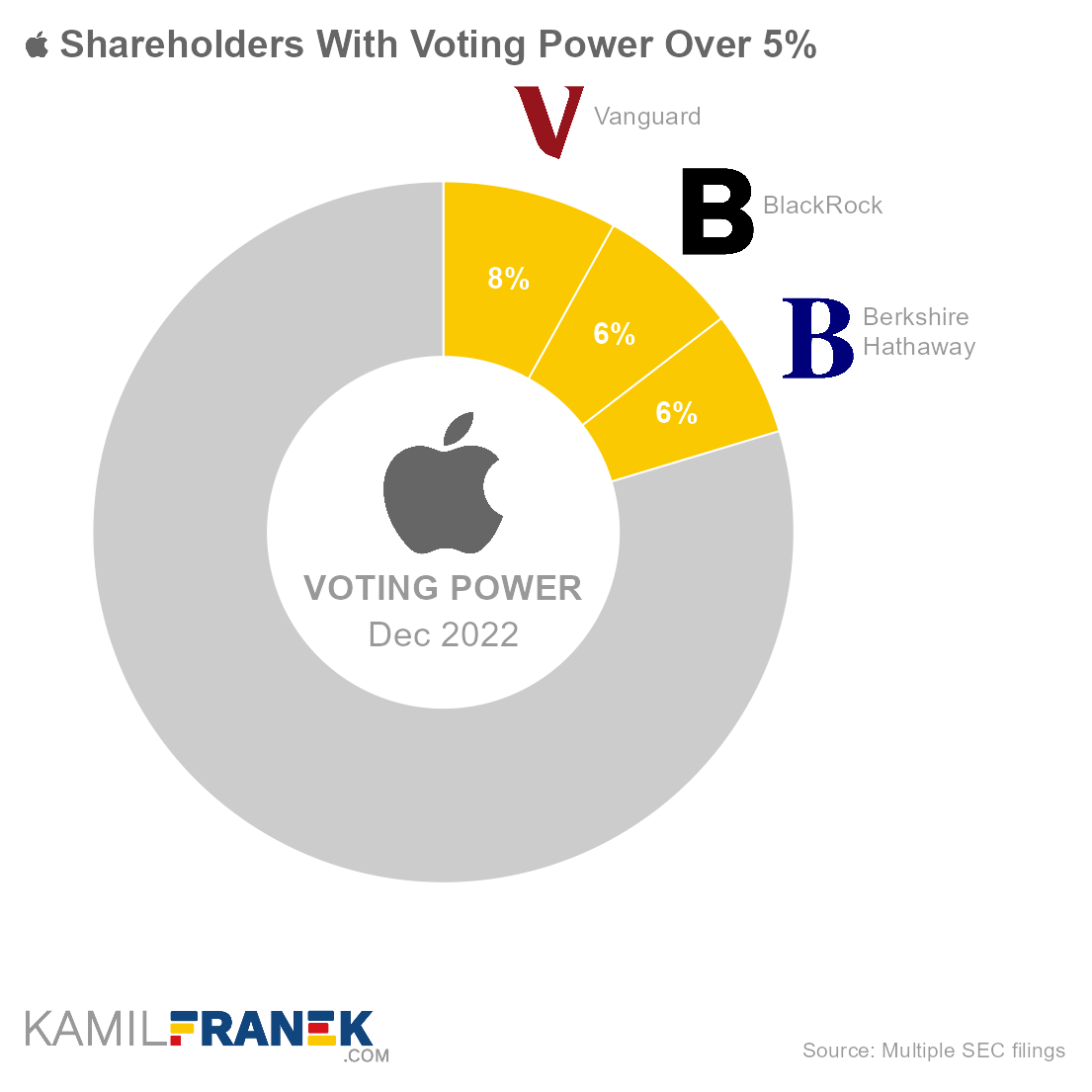
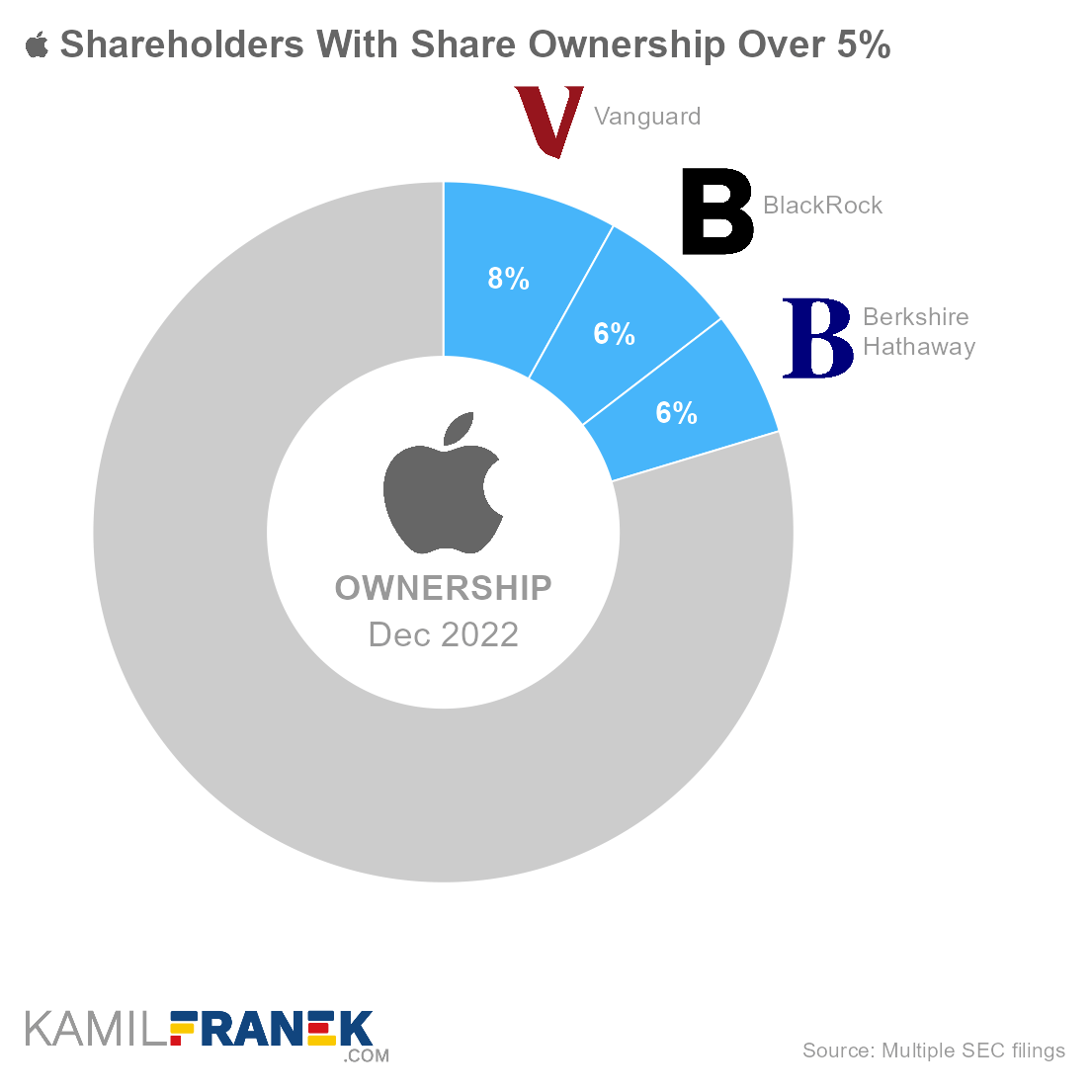
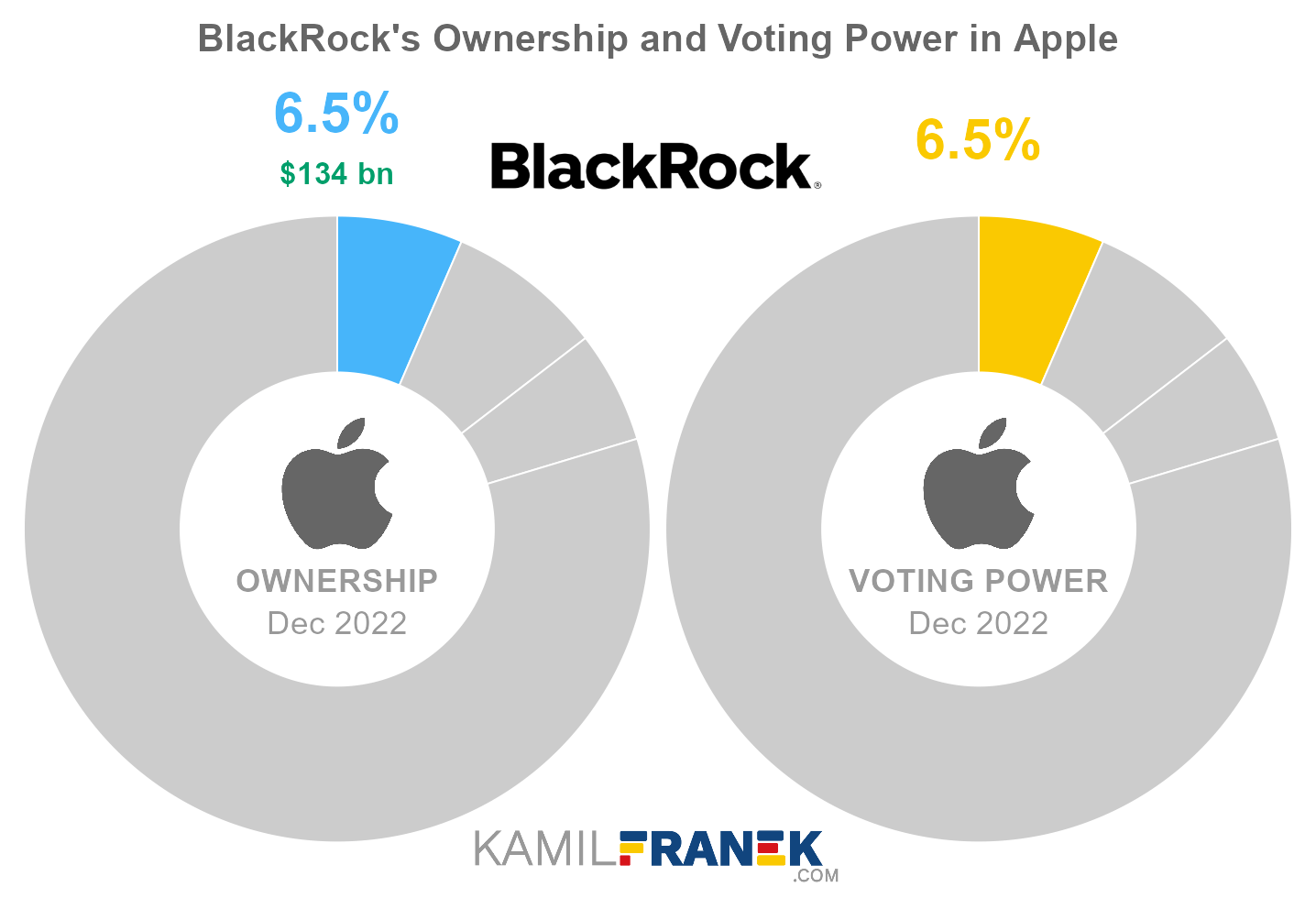
Some of the world’s largest asset managers are consistently among Apple’s top shareholders. For instance, firms like Vanguard Group, BlackRock, and Berkshire Hathaway (Warren Buffett’s conglomerate) routinely appear as major holders. Their large positions reflect their belief in Apple’s long-term value and stability. Berkshire Hathaway, for example, has famously built a multi-billion dollar stake in Apple, making it one of its largest holdings, a strong endorsement from one of the most respected investors in history. These institutional holdings provide a significant layer of stability and long-term investment conviction for the stock.
The Role of Insiders
Company insiders—executives, board members, and significant employees—also hold a portion of Apple’s shares. Their ownership aligns their interests with those of other shareholders, incentivizing them to make decisions that enhance shareholder value. While their percentage ownership may be small compared to institutional investors, their direct involvement in the company’s operations makes their holdings noteworthy.
The Future Trajectory of Apple’s Share Count and Its Market Implications
Apple’s share count is not a static historical record but an ongoing narrative with implications for its future market performance and investor strategy. The company’s consistent approach to capital allocation suggests a clear path forward.
Continuation of Buyback Programs
Given Apple’s massive free cash flow generation and robust balance sheet, it is highly probable that the company will continue its substantial share buyback programs. Each quarter, Apple typically announces billions of dollars allocated to repurchases, signaling its commitment to returning capital to shareholders through this mechanism. This continued reduction in shares outstanding will likely remain a key driver for enhancing EPS and supporting per-share metrics.
Market Dynamics and Valuation
A shrinking share count, when combined with sustained earnings growth, can create a powerful tailwind for a company’s stock price. By reducing the denominator in the EPS calculation, Apple can potentially show higher EPS growth rates than its net income alone would suggest. This, in turn, can support higher valuation multiples (like P/E ratios) as investors perceive the company to be more efficient and shareholder-friendly. For a company of Apple’s size, where exponential growth becomes challenging, managing the share count is a sophisticated strategy to continue delivering value to investors.
Investor Strategy in a Dynamic Landscape
For investors, monitoring Apple’s shares outstanding is an essential part of their due diligence. It provides insights into management’s capital allocation philosophy, its confidence in the company’s future, and the underlying drivers of per-share financial performance. A declining share count, especially when supported by healthy revenue and profit growth, can be a positive indicator for long-term investors. Conversely, unexpected share dilution without clear strategic benefits could be a cause for concern.
In conclusion, the question “how many shares are there of Apple?” opens a window into the complex financial engineering and capital management strategies employed by one of the world’s most influential companies. From historical stock splits to aggressive share buybacks, every action taken regarding Apple’s share structure reverberates through its financial statements, valuation metrics, and ultimately, its appeal to the millions of investors who own a piece of this tech giant. Understanding these dynamics is crucial for anyone navigating the intricate world of financial markets and aiming to make informed investment decisions concerning Apple.
aViewFromTheCave is a participant in the Amazon Services LLC Associates Program, an affiliate advertising program designed to provide a means for sites to earn advertising fees by advertising and linking to Amazon.com. Amazon, the Amazon logo, AmazonSupply, and the AmazonSupply logo are trademarks of Amazon.com, Inc. or its affiliates. As an Amazon Associate we earn affiliate commissions from qualifying purchases.