
Amazon’s digital storefront has redefined retail, transforming how consumers shop, businesses operate, and investors evaluate market potential. At the heart of its colossal influence lies a question that encapsulates its ambition and scale: How many products does Amazon sell? While an exact, real-time figure remains elusive and constantly in flux, the answer, in essence, is “hundreds of millions.” This staggering number is not merely a testament to logistical prowess; it represents the financial bedrock of a global empire, a multifaceted engine driving revenue, fostering diverse business models, and reshaping the economic landscape for countless stakeholders. To understand the true financial implications of Amazon’s vast catalog, we must delve beyond the simple count into the intricate money mechanisms it underpins.
The Astounding Scale of Amazon’s Digital Shelves and Its Financial Foundation
The sheer volume of products available on Amazon is a critical financial asset, distinguishing it from traditional retailers and fueling its “everything store” mantra. This expansive inventory is not just about convenience for customers; it’s a calculated financial strategy that optimizes market penetration, customer loyalty, and long-term profitability.
Unpacking the “Millions”: The Ever-Expanding Catalog as a Financial Lever
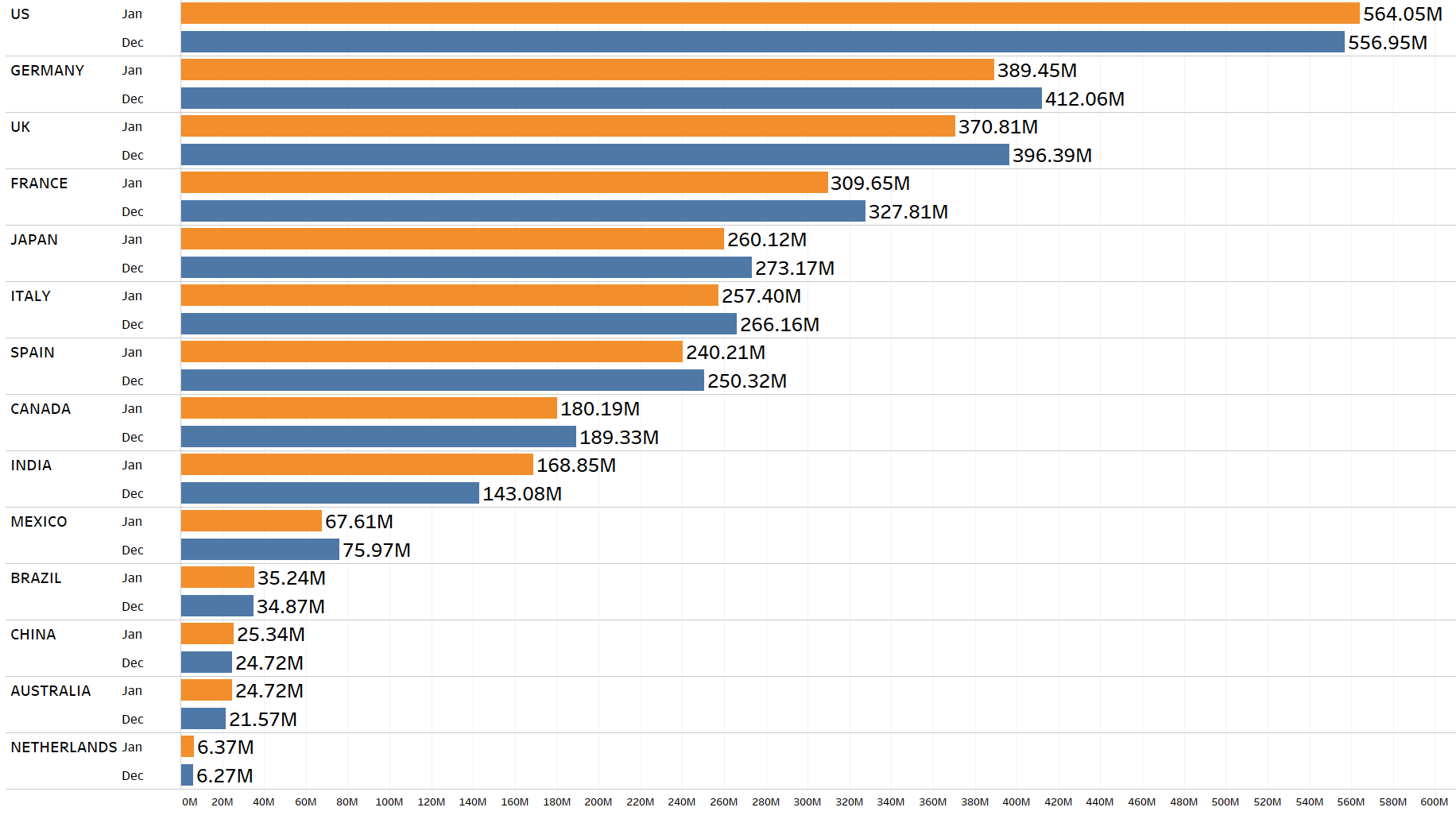
Estimates suggest that Amazon.com alone offers well over 350 million unique products, often referred to as ASINs (Amazon Standard Identification Numbers), not including media variations like different formats for books or music. When considering its global marketplaces (Amazon.co.uk, Amazon.de, Amazon.in, etc.), this figure escalates dramatically into the billions. This immense catalog represents a staggering pool of potential transactions, each contributing, however minutely, to Amazon’s top line. From a financial perspective, this breadth provides multiple advantages: it reduces the risk associated with reliance on a few best-selling items, diversifies revenue streams across countless niches, and creates an unparalleled network effect where more products attract more customers, which in turn attracts more sellers, compounding its financial power.
The constant addition of new products, driven by both Amazon’s own retail operations and its vast network of third-party sellers, ensures an ever-growing inventory that acts as a perpetual motion machine for sales. This expansive offering minimizes “stock-outs” for consumers and maximizes the probability that a customer will find what they’re looking for, reducing bounce rates and increasing conversion rates – direct metrics that impact revenue. For investors, this ever-expanding inventory signifies a company with limitless growth potential, capable of entering new markets and fulfilling previously unmet demands, thereby sustaining financial momentum.
The Data-Driven Engine: Inventory as a Financial Optimizer
Managing hundreds of millions of products is an extraordinary logistical and financial undertaking. Amazon’s sophisticated data analytics and machine learning capabilities are not just for recommendation engines; they are critical financial optimizers. By meticulously tracking sales patterns, search queries, inventory levels, and customer behavior across its colossal catalog, Amazon can make highly informed financial decisions. It identifies trending products to prioritize inventory acquisition, optimizes pricing strategies for maximum profit margins, and manages logistics to minimize warehousing costs and delivery times.
This data-driven approach allows Amazon to identify profitable product categories, forecast demand with remarkable accuracy, and allocate resources efficiently. It enables dynamic pricing strategies that maximize revenue for first-party sales and optimize commission rates for third-party sales. Moreover, understanding the financial performance of each product, even obscure ones, allows Amazon to continuously refine its offerings and weed out underperforming items, ensuring that its vast inventory remains a financially productive asset rather than a costly liability. This intelligent management of its product catalog directly contributes to Amazon’s impressive revenue growth and robust profit margins in an intensely competitive retail environment.
Monetizing the ‘Everything Store’: Diverse Revenue Streams
The financial genius of Amazon’s “everything store” model isn’t just in the sheer number of products; it’s in the multifaceted ways it monetizes this vast inventory. Amazon has skillfully engineered multiple revenue streams, each contributing significantly to its overall financial health and market dominance.
First-Party Sales: The Traditional Retail Profit Engine
At its core, Amazon operates as a colossal retailer, purchasing products from manufacturers and selling them directly to consumers. These “first-party sales” are the most straightforward revenue stream, where Amazon buys low and sells high, pocketing the difference as gross profit. The sheer volume of its catalog means that even small margins across millions of products translate into astronomical revenue. In this model, Amazon controls pricing, inventory, and fulfillment, allowing it to leverage its immense purchasing power for bulk discounts and favorable terms, further enhancing its profitability.
The financial health of this segment relies on efficient supply chain management, competitive pricing strategies, and effective marketing to drive sales velocity. Its vast product selection ensures that it caters to a broad spectrum of consumer needs, minimizing the impact of seasonal fluctuations or shifts in demand for specific product categories. This diversified revenue base from its direct retail operations provides a stable and significant income stream that acts as a foundation for its more innovative financial ventures.
Third-Party Marketplace: Fueling Seller Income and Amazon’s Margins
Perhaps one of Amazon’s most impactful financial innovations is its third-party marketplace. Instead of selling every product itself, Amazon allows millions of independent sellers to list their own products on its platform. This model exponentially expands Amazon’s product catalog without the direct inventory risk or capital investment required for first-party sales. Amazon monetizes this through a combination of referral fees (commissions on each sale, typically 8-15%), monthly subscription fees for professional sellers, and fulfillment fees for its Fulfilled by Amazon (FBA) service.
This ecosystem is a powerful financial engine for both Amazon and its sellers. For Amazon, it’s a high-margin business: it leverages its existing infrastructure (website, payment processing, customer service, logistics via FBA) to generate revenue without owning the inventory. For third-party sellers, it represents an unparalleled opportunity for online income, providing access to Amazon’s massive customer base and sophisticated logistics. Many small and medium-sized businesses (SMBs) derive a substantial portion, if not all, of their income from selling on Amazon, demonstrating the platform’s profound economic impact beyond its own direct revenue. This symbiotic relationship not only swells Amazon’s product count but also creates a vibrant, financially interdependent community that drives significant economic activity.
Amazon Web Services (AWS) and Advertising: The High-Margin Complement
While not directly “products” in the retail sense, AWS and Amazon’s burgeoning advertising business are profoundly intertwined with its vast product ecosystem and represent its highest-margin revenue streams. AWS, the company’s cloud computing division, provides the backbone infrastructure that powers Amazon’s e-commerce operations, but also generates immense revenue by selling computing power, storage, and databases to millions of businesses worldwide. The scale and reliability required to manage Amazon’s hundreds of millions of products directly contributed to the development and robustness of AWS, which now dwarfs the profitability of its retail segment.
Similarly, Amazon’s advertising business thrives because of its product catalog. As millions of sellers compete for visibility among hundreds of millions of products, Amazon offers sponsored product ads, brand ads, and display ads. These advertising services allow sellers to pay Amazon to prominently feature their products in search results and on product pages, generating substantial high-margin revenue for Amazon. The more products, the more competition, and thus the more demand for advertising, creating a self-reinforcing financial loop where the vast catalog directly feeds Amazon’s most profitable ventures.
The Economic Ripple Effect: Impact on Stakeholders
The sheer number of products Amazon sells has far-reaching economic consequences, influencing everything from individual entrepreneurs to global financial markets. It creates new opportunities, shifts consumer spending patterns, and significantly shapes Amazon’s own valuation and market dominance.
Empowering Entrepreneurs: The Seller Economy
The vast Amazon marketplace has democratized entrepreneurship, providing a platform for millions of individuals and small businesses to generate online income. From artisans selling handcrafted goods to tech startups launching innovative gadgets, Amazon’s hundreds of millions of product slots offer a global stage. Many sellers have built multi-million dollar businesses primarily, if not exclusively, through Amazon. The availability of FBA services further simplifies logistics, allowing sellers to focus on product development and marketing rather than warehousing and shipping. This ecosystem represents a significant source of income and wealth creation for millions globally, underscoring Amazon’s role as a powerful economic catalyst beyond its direct employment figures. The ability to list countless products allows for highly specialized niches to thrive, catering to demands that traditional retail could never economically justify.
Consumer Value and Financial Behavior: Beyond Price
For consumers, Amazon’s extensive product catalog offers unparalleled choice, convenience, and often, competitive pricing. This has fundamentally altered financial behavior, making online shopping the default for many and driving a shift away from brick-and-mortar retail. The ability to compare hundreds of similar products, read countless reviews, and receive items quickly has become a standard expectation, influencing how and where people spend their money. This convenience can also lead to increased discretionary spending, as the ease of purchase removes friction. From a financial perspective, Amazon cultivates a loyal customer base whose continuous spending habits contribute directly to its consistent revenue growth and profitability. The sheer volume of choices also creates a “lock-in” effect, as consumers find it increasingly difficult to find comparable selection and service elsewhere.
Amazon’s Market Valuation: A Reflection of Product Power
Amazon’s market capitalization, which often fluctuates in the trillions of dollars, is a direct reflection of its underlying business strength, heavily influenced by its expansive product catalog and the financial models it supports. Investors assess Amazon not just on current earnings but on its immense potential for future revenue and profit generation. The vastness of its product offerings signals resilience, market reach, and the ability to capture an ever-larger share of global consumer spending. The financial markets view Amazon’s “everything store” as a perpetual growth engine, capable of adapting to market trends by simply adding new product categories or enhancing its existing ones. This translates into investor confidence, a high stock price, and the ability to raise capital cheaply for further expansion, all directly tied to the foundation of hundreds of millions of products it makes available.
Navigating the Financial Labyrinth: Challenges and Future Outlook
While the sheer number of products Amazon sells is a colossal financial advantage, it also presents significant financial and operational challenges. Maintaining this vast ecosystem requires continuous investment and strategic maneuvering in an ever-evolving market.
Inventory Management and Supply Chain Costs: A Logistical Tightrope
Managing hundreds of millions of unique products across global fulfillment centers is an unprecedented logistical and financial challenge. Holding inventory incurs costs (warehousing, insurance, potential obsolescence), and shipping it efficiently is a massive undertaking. Amazon invests billions annually in its supply chain, including robotics, AI-driven sorting systems, and a vast network of warehouses and transportation fleets. From a financial perspective, optimizing these operations to minimize costs while maximizing speed and reliability is crucial for maintaining profitability. Errors in forecasting demand for even a small percentage of its vast product range can lead to significant financial write-offs or missed sales opportunities. The constant balancing act of maintaining an exhaustive catalog while controlling operational expenditure is a key financial challenge that Amazon continually addresses through technological innovation and strategic investments.
Market Saturation and Competition: Sustaining Growth
The very success of Amazon’s vast product catalog has inspired fierce competition. Other e-commerce giants, niche online retailers, and even traditional brick-and-mortar stores are continuously upping their game, striving to offer competitive selection and service. This intense rivalry puts downward pressure on pricing, squeezing profit margins for both Amazon’s first-party sales and its third-party sellers who compete on the platform. Sustaining growth and profitability amidst such saturation requires constant innovation, whether through new product categories, enhanced customer experience, or further diversification into high-margin areas like advertising. Financially, this means Amazon must continue to out-innovate and out-execute competitors to maintain its market share and deliver robust returns to shareholders.

The Evolving Financial Landscape: New Avenues for Growth
Looking ahead, Amazon’s financial strategy related to its product catalog will likely continue to evolve. This includes deeper integration of AI to personalize product offerings, leveraging augmented reality for a more immersive shopping experience, and expanding into new verticals such as healthcare, groceries, and services. Each new product or service category represents an additional revenue stream and another opportunity to deepen customer engagement. The future financial outlook for Amazon is inextricably linked to its ability to not only maintain its existing “hundreds of millions” of products but to intelligently expand and refine this offering, ensuring that each addition strategically contributes to its overarching financial goals. The sheer scale of its current product base provides an unparalleled platform for testing, learning, and expanding into virtually any market where a financial opportunity exists.
In conclusion, the question of “how many products does Amazon sell?” transcends a simple numerical answer. It reveals the financial architecture of a global behemoth built on scale, diversification, and technological prowess. The hundreds of millions of products are not just items on a shelf; they are the financial assets that generate revenue across multiple business models, empower a vast seller economy, reshape consumer spending, and underpin Amazon’s multi-trillion-dollar valuation. Understanding this profound financial impact is key to comprehending Amazon’s enduring dominance in the global economy.
aViewFromTheCave is a participant in the Amazon Services LLC Associates Program, an affiliate advertising program designed to provide a means for sites to earn advertising fees by advertising and linking to Amazon.com. Amazon, the Amazon logo, AmazonSupply, and the AmazonSupply logo are trademarks of Amazon.com, Inc. or its affiliates. As an Amazon Associate we earn affiliate commissions from qualifying purchases.