
In the sprawling landscape of modern commerce, few entities command as much attention and market influence as Amazon. Central to its dominance is Amazon Prime, a subscription service that has transcended mere convenience to become a bedrock of consumer expectation and, critically, a colossal financial engine for the tech giant. The question, “how many Prime members are there?”, is not merely a curiosity; it’s a profound inquiry into the health, valuation, and future trajectory of one of the world’s most valuable companies. For investors, business analysts, and those tracking the ebb and flow of global finance, understanding the scale and impact of Prime membership is paramount. It offers a unique lens through which to gauge Amazon’s strategic prowess, its market penetration, and its long-term financial stability.

The Elusive Numbers: Why Prime Membership Data Matters to Investors
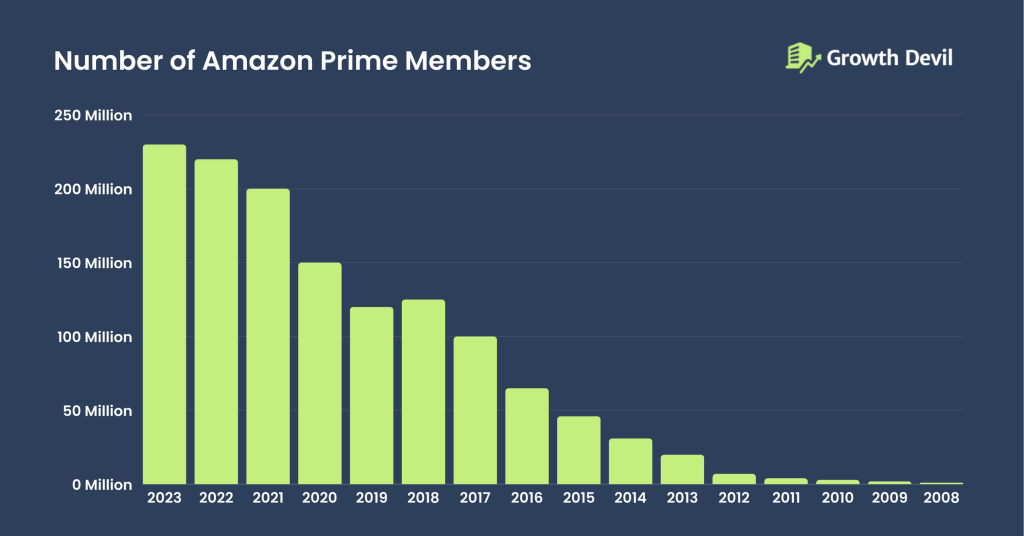
Amazon, known for its vast data collection, maintains a tight grip on specific, up-to-the-minute figures for its global Prime membership. This strategic withholding of precise, current numbers speaks volumes about the competitive advantage and proprietary insights such a metric provides. The last official global disclosure came in April 2021, when Amazon announced it had surpassed 200 million Prime members worldwide. Since then, the company has chosen not to update this global figure, leading to a landscape of educated guesses, analyst estimates, and industry speculation. However, even without exact real-time data, the trends and estimates derived from various sources — including regional reports, consumer surveys, and financial modeling — paint a clear picture: Prime’s financial significance to Amazon is immense and continues to grow.
Amazon’s Secrecy and Strategic Disclosure
The decision to limit the frequency and granularity of Prime membership disclosures is a calculated strategic move. For Amazon, Prime is far more than a revenue stream; it’s a foundational pillar that underpins its entire ecosystem. Revealing precise, current numbers too often could provide competitors with valuable intelligence regarding market saturation, growth rates in specific regions, or the impact of pricing changes. By maintaining a degree of secrecy, Amazon forces analysts and competitors to work with less complete information, safeguarding its competitive edge. However, when Amazon does choose to disclose an updated figure, as it did in 2021, it is often to highlight a significant milestone that underscores its dominant market position and growth momentum, thereby reinforcing investor confidence and market valuation. The financial community understands that such disclosures are strategic signals rather than routine transparency.
Prime as a Bellwether for Amazon’s Growth and Market Penetration
Despite the infrequency of official updates, Prime membership figures serve as an indispensable bellwether for Amazon’s overall growth and market penetration. A rising Prime count signifies not only an increase in subscription revenue but, more importantly, a deepening of customer engagement within the Amazon ecosystem. Each Prime member represents a more valuable customer than a non-member, exhibiting higher purchase frequency, greater average spend, and increased loyalty across Amazon’s diverse offerings. Therefore, even estimates of Prime’s growth become critical inputs for financial analysts modeling Amazon’s future revenues, profitability, and cash flow. These figures help investors assess Amazon’s ability to attract and retain high-value customers, its success in expanding into new geographies, and its capacity to fend off emerging competition in both e-commerce and digital services.
Prime’s Multilayered Financial Impact: Beyond Subscription Fees
While the annual or monthly subscription fee is the most direct financial contribution of a Prime member, it represents only a fraction of their true economic value to Amazon. The strategic brilliance of Prime lies in its ability to fundamentally alter consumer behavior, creating a powerful flywheel effect that boosts revenue across multiple Amazon segments. The actual subscription income, estimated to be in the tens of billions annually, is significant, but it pales in comparison to the additional spending Prime members generate and the vast ecosystem benefits they unlock.
Boosting Retail Spend: The True Value of a Prime Member
The primary financial benefit of Prime is its profound impact on retail spend. Members, having paid a subscription fee, are psychologically incentivized to maximize the value of their membership. This translates into increased purchasing frequency and higher average order values. Data consistently shows that Prime members spend significantly more on Amazon’s platform than non-Prime customers – often two to four times more annually. The promise of free, fast shipping removes a major friction point, encouraging members to choose Amazon for a broader range of purchases, from groceries and electronics to apparel and household goods. This enhanced retail activity directly drives Amazon’s core e-commerce revenue, boosting gross merchandise volume (GMV) and reinforcing its dominant position in online retail. For investors, this increased purchasing power per customer is a key indicator of Amazon’s operational leverage and customer lifetime value.
Expanding Amazon’s Ecosystem: AWS, Advertising, and More
Prime members are not just e-commerce customers; they are gateway users to Amazon’s expansive ecosystem, indirectly bolstering other high-margin businesses. While AWS (Amazon Web Services) primarily serves businesses, Prime’s market dominance and data collection indirectly support its innovation and scale. More directly, Prime membership drives engagement with Amazon’s burgeoning advertising business. The massive traffic generated by Prime members shopping on Amazon’s site creates valuable real estate for advertisers, making Amazon a formidable player in the digital advertising market. Prime also introduces members to Amazon Music, Prime Video, Twitch, Audible, and other digital services, deepening their integration into the Amazon brand. Even if these services are included as perks, the data gathered from member usage provides Amazon with invaluable insights for personalization, product development, and targeted marketing, all of which contribute to long-term financial growth and competitive advantage.
Enhancing Customer Loyalty and Lifetime Value
Perhaps the most critical, yet often unquantified, financial impact of Prime is its unparalleled ability to foster customer loyalty and dramatically increase customer lifetime value (CLTV). Once a customer is a Prime member, they are less likely to shop elsewhere due to the perceived value and convenience they already pay for. This “stickiness” reduces churn and creates a highly predictable revenue stream for Amazon. Loyalty also translates into positive word-of-mouth and reduced customer acquisition costs over time. From a financial perspective, a high CLTV allows Amazon to invest more aggressively in member benefits, knowing that these investments will yield substantial returns over the long haul through continued engagement and spending. This robust loyalty base also provides Amazon with a powerful foundation for cross-selling and up-selling new products and services, creating an expanding financial moat around its business.
Valuing the Prime Portfolio: A Key Driver of Amazon’s Market Cap
For financial analysts and institutional investors, the Amazon Prime subscriber base is a central component in their valuation models. It’s not just about the direct subscription revenue; it’s about the synergistic effects across Amazon’s entire financial portfolio. The sheer scale and growth potential of Prime members significantly contribute to Amazon’s multi-trillion-dollar market capitalization, reflecting investor confidence in its enduring business model and future profitability.
Analyst Projections and Valuation Models
In the absence of frequent official updates, financial analysts rely on a combination of proprietary research, third-party data, and regional disclosures to project Prime membership numbers. These projections are then plugged into sophisticated valuation models, such as discounted cash flow (DCF) analyses, to estimate Amazon’s intrinsic value. The number of Prime members directly influences assumptions about future retail sales growth, advertising revenue, and even the cost efficiencies Amazon can achieve through scale. Prime’s consistent growth and high retention rates often lead to premium valuations compared to companies with less stable customer bases. Analysts recognize that the network effects created by Prime – more members attracting more sellers, which attracts more products, and further enhances member value – create a powerful, self-reinforcing financial engine.
Global Expansion: Fueling Future Financial Growth
While the U.S. remains Prime’s largest and most mature market, a significant portion of Prime’s future financial growth is projected to come from international expansion. Amazon has strategically invested heavily in rolling out Prime benefits in emerging markets across Europe, Asia, and Latin America. Each new region represents a vast, untapped pool of potential subscribers, capable of replicating the financial success seen in established markets. As these international markets mature, the cumulative effect of millions of new Prime members, each contributing to subscription fees and increased retail spend, promises to be a powerful catalyst for Amazon’s global revenue and profitability. Investors closely watch Amazon’s international progress, viewing it as a key indicator of the company’s long-term financial growth runway.
The Competitive Landscape: Prime as a Moat
In a fiercely competitive digital economy, a company’s ability to maintain a sustainable competitive advantage – often referred to as an “economic moat” – is crucial for long-term financial success. Amazon Prime serves as a formidable moat, making it exceptionally difficult for rivals to unseat Amazon’s market position. The combination of shipping speed, exclusive content, vast product selection, and value-added services creates a powerful incentive for members to stay. This strong customer lock-in reduces customer acquisition costs and increases switching costs, making it financially challenging for competitors to lure away Prime members. From an investor’s perspective, this moat translates into greater earnings predictability, lower business risk, and a more resilient financial performance, all of which contribute positively to Amazon’s market valuation.
The Future of Prime Membership: Sustaining Financial Momentum
The question of “how many Prime members are there” will continue to evolve, reflecting not just organic growth but Amazon’s strategic adaptations to an ever-changing economic and technological landscape. Sustaining Prime’s financial momentum requires continuous innovation, vigilant retention strategies, and an acute awareness of macroeconomic factors.
Innovations and Value Proposition Expansion
To keep Prime membership numbers growing and financially robust, Amazon must continually enhance its value proposition. This means investing in faster shipping options, expanding the library of Prime Video content, introducing new exclusive deals and services, and integrating emerging technologies like AI to personalize the member experience. Innovations in areas like Prime Air (drone delivery) or advanced logistics infrastructure are not just about convenience; they are strategic investments aimed at increasing the perceived value of Prime, justifying price increases, and attracting new demographics. Each successful innovation serves to reinforce the financial incentive for consumers to remain Prime members, safeguarding Amazon’s revenue streams.
Addressing Churn and Maximizing Retention
While Amazon boasts high Prime member retention rates, managing churn remains a critical financial imperative. Even a small percentage increase in churn can translate into billions in lost revenue over time. Amazon employs sophisticated data analytics to identify members at risk of canceling and deploys targeted retention strategies, from personalized offers to showcasing underutilized Prime benefits. The focus is always on demonstrating the overwhelming financial value of the subscription, ensuring that members perceive they are getting significantly more back than they pay. Maximizing retention is inherently more cost-effective than constant new member acquisition, directly impacting Amazon’s profitability and financial efficiency.

Economic Headwinds and Member Sensitivity
The future growth and stability of Prime membership are also sensitive to broader economic conditions. During periods of economic downturn or inflation, consumers may scrutinize their subscription services more closely. Price increases for Prime, while often necessary to offset rising operational costs, risk alienating price-sensitive segments of the membership base. Amazon’s financial strategy must therefore balance value provision with pricing, ensuring that Prime remains an undeniable deal even as household budgets tighten. The ability of Prime to weather economic headwinds and maintain its subscriber base will be a crucial test of its long-term financial resilience and its enduring value proposition.
In conclusion, while the precise, current number of Amazon Prime members may often remain a closely guarded secret, its financial significance is unequivocally clear. Prime is not merely a service; it is the linchpin of Amazon’s financial empire, driving retail spend, fueling its ecosystem, enhancing customer loyalty, and ultimately underpinning a significant portion of its colossal market capitalization. For anyone invested in or analyzing the dynamics of global commerce, understanding the magnitude and financial implications of Prime membership is essential to comprehending the powerhouse that is Amazon.
aViewFromTheCave is a participant in the Amazon Services LLC Associates Program, an affiliate advertising program designed to provide a means for sites to earn advertising fees by advertising and linking to Amazon.com. Amazon, the Amazon logo, AmazonSupply, and the AmazonSupply logo are trademarks of Amazon.com, Inc. or its affiliates. As an Amazon Associate we earn affiliate commissions from qualifying purchases.