
In the fast-paced world of global finance, few metrics capture the public imagination quite like the Dow Jones Industrial Average (DJIA). Whether you are a seasoned institutional investor or someone just beginning to build a retirement portfolio, the question “How many points is the Dow up today?” is often the first inquiry made when assessing the health of the economy. However, the number itself—whether it represents a gain of 50 points or a surge of 500—is only the surface of a much deeper financial story. To truly understand what daily fluctuations mean for your money, you must look beyond the headline figure and into the mechanics of the market, the weighting of the index, and the psychological drivers of price action.

The Anatomy of a Point: Why Daily Gains Matter
When news anchors report that the Dow is “up,” they are referring to a price-weighted average of 30 significant stocks traded on the New York Stock Exchange (NYSE) and the Nasdaq. Unlike other indices that might be more comprehensive, the Dow serves as a concentrated pulse check on the American industrial and corporate landscape.
The Mechanics of the Price-Weighted Index
One of the most critical aspects to understand about the Dow is that it is price-weighted. This means that stocks with a higher share price have a greater influence on the index’s total point movement than stocks with a lower share price. For instance, a $5 move in a stock trading at $200 will have a much more significant impact on the Dow’s total point count than a $5 move in a stock trading at $50.
This structure is unique compared to the S&P 500, which is market-capitalization-weighted. Because the Dow is focused on price, it provides a different perspective on market momentum. When you ask how many points the Dow is up, you are essentially asking about the collective price strength of 30 of the most influential companies in the world, ranging from technology giants like Microsoft and Apple to healthcare leaders like UnitedHealth Group.
Percentage vs. Points: A Historical Perspective
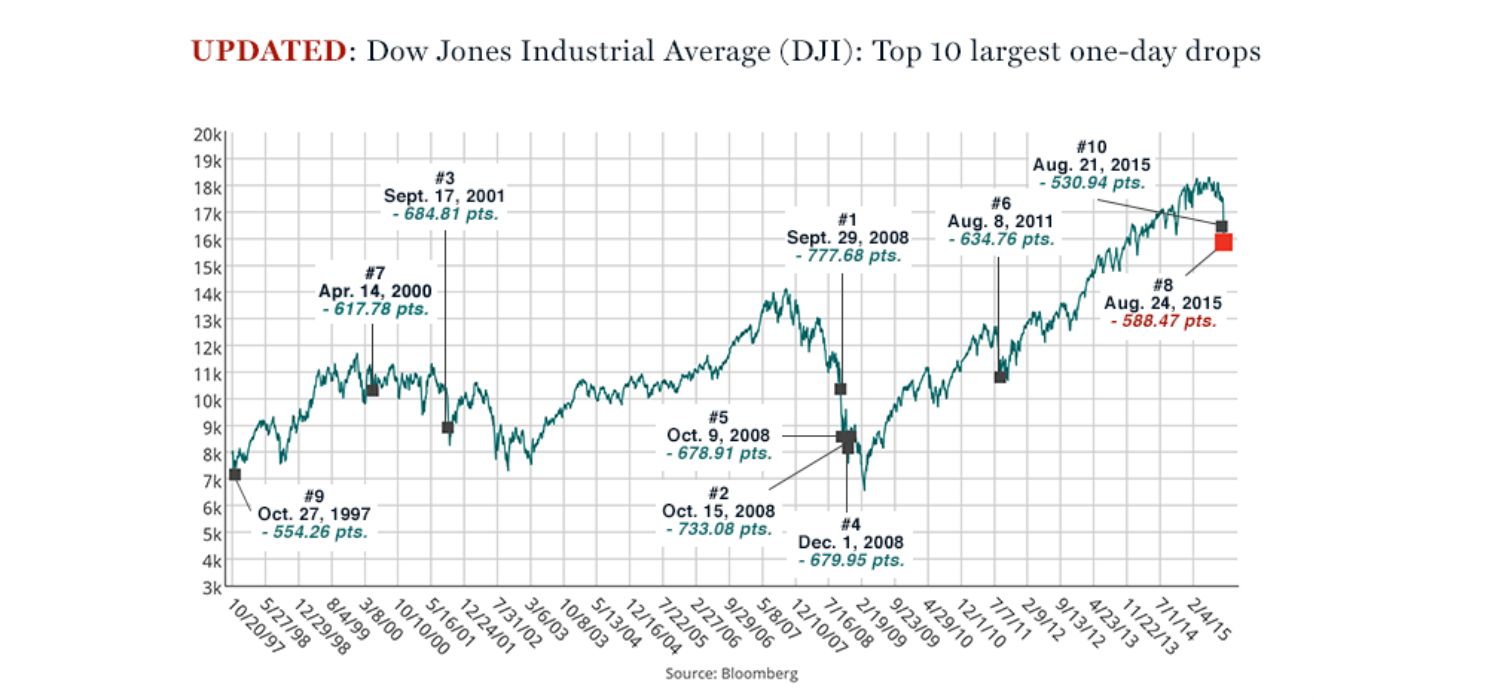
As the Dow has climbed to historic highs over the decades, the significance of a “point” has shifted. In the 1980s, a 100-point gain would have been a monumental, record-breaking event. Today, with the index hovering at much higher altitudes, a 100-point move might represent less than a 0.3% change.
Savvy investors have learned to translate points into percentages to maintain perspective. A 1% gain is a solid day for the market regardless of whether the index is at 10,000 or 40,000. Understanding this distinction prevents the emotional volatility that often comes with seeing large triple-digit point swings in the daily headlines.
The Engines of the Market: What Moves the Dow?
The Dow does not move in a vacuum. Every point gained or lost is a reaction to a complex web of data, sentiment, and global events. When the Dow is up significantly, it is usually the result of several converging factors that give investors confidence in corporate profitability.
Macroeconomic Indicators and the Federal Reserve
The most consistent driver of daily market movement is macroeconomic data. Reports on inflation (such as the Consumer Price Index or CPI), employment numbers, and GDP growth are the primary catalysts for volatility.
The Federal Reserve’s stance on interest rates is perhaps the single most influential factor. When the Fed signals a pause in rate hikes or a potential cut, the Dow often reacts with a sharp upward move. Lower interest rates reduce the cost of borrowing for corporations and consumers alike, fueling the growth that drives stock prices higher. Conversely, when the Dow is “down,” it is often because investors fear that persistent inflation will force the Fed to keep rates higher for longer, potentially cooling the economy too much.
Corporate Earnings Season
Four times a year, the companies within the Dow report their quarterly earnings. Because the index only contains 30 companies, a single “beat” or “miss” by a heavyweight member can swing the entire index. If a company like Goldman Sachs or Caterpillar reports record profits and raises its forward-looking guidance, the resulting surge in its stock price can contribute dozens of points to the Dow’s daily total. Earnings season provides the fundamental “proof” that supports the prices investors are willing to pay.
Geopolitical Stability and Trade
As a collection of multinational corporations, the Dow is sensitive to international relations. Trade agreements, foreign policy shifts, and global stability all play a role. When the Dow is up on a day without major domestic news, it is often a reflection of easing tensions abroad or a strengthening global supply chain. For the “Blue Chip” companies that make up the index, the ability to operate across borders without friction is essential for maintaining their valuation.
The Dow Jones vs. Other Indices: The Broader Financial Context
While “the Dow” is the most cited name in financial news, it is rarely the only index an investor should watch. To understand if the points gained today represent a true market rally or just a narrow bounce, one must compare the Dow’s performance with its peers.
The S&P 500 and the Nasdaq
The S&P 500 is often considered a better representation of the overall U.S. economy because it includes 500 companies and covers approximately 80% of the available market capitalization. If the Dow is up 300 points but the S&P 500 is flat, it suggests that the rally is concentrated in a few specific industrial sectors rather than being a broad-based market gain.
Similarly, the Nasdaq Composite is the go-to index for technology and growth-oriented investors. Because the Dow is relatively light on high-growth, speculative tech compared to the Nasdaq, there are many days where the Dow may be up while the Nasdaq is down, or vice versa. This “divergence” is a key indicator of where money is flowing—whether investors are seeking the safety of established value stocks (the Dow) or the high-reward potential of tech (the Nasdaq).
Sector Rotation
Observing the Dow’s daily points also allows investors to see “sector rotation” in real-time. On days when the Dow is outperforming other indices, it often signifies a “flight to quality.” Investors may be moving their capital out of riskier assets and into the stable, dividend-paying giants that characterize the Industrial Average. This movement is a vital signal for anyone managing their own business finance or personal investment strategy.
Navigating the Noise: Using Daily Data for Long-Term Wealth
For the individual investor, the daily point total of the Dow can be a double-edged sword. While it provides immediate feedback on the state of the market, it can also incite emotional reactions that lead to poor financial decisions.
The Psychology of “Up” Days
When the market is up, the “Fear of Missing Out” (FOMO) can drive investors to buy into the market at peak prices. A 400-point gain feels like a green light, but in the world of investing, the best opportunities often come when the Dow is down. Professional wealth management involves recognizing that a “green” day is a good time to review your holdings, but not necessarily the best time to chase a rally.
Implementing a Disciplined Strategy
Rather than reacting to how many points the Dow is up today, successful investors use the data to inform a long-term strategy such as Dollar-Cost Averaging (DCA). By investing a fixed amount of money at regular intervals, the daily “points” become less relevant. You end up buying more shares when the Dow is down and fewer when it is up, effectively lowering your average cost over time.
The Importance of Rebalancing
Significant upward moves in the Dow can shift your portfolio’s asset allocation. If your goal is to have 60% of your wealth in stocks and 40% in bonds, a prolonged period of “up” days for the Dow might push your stock exposure to 70%. Monitoring the daily movements helps you identify the right moments to rebalance—selling some of your gains to buy into other asset classes, thereby locking in profits and maintaining your desired risk profile.

The Future of Market Tracking
As financial technology evolves, the way we consume data about the Dow is changing. Real-time tracking apps and AI-driven sentiment analysis allow us to see not just how much the Dow is up, but why it is moving in a matter of seconds.
However, the core principle remains the same: the Dow Jones Industrial Average is a barometer. A rising barometer suggests fair weather for corporate America, but it does not guarantee that every individual stock will shine. By understanding the components of the Dow, the impact of price-weighting, and the macroeconomic forces at play, you can transform a simple daily headline into a powerful tool for building and protecting your financial future.
Whether the Dow is up 500 points or down 500 points today, the most important number is not the one on the screen—it is the progress you are making toward your own long-term financial goals through disciplined, informed investing.
aViewFromTheCave is a participant in the Amazon Services LLC Associates Program, an affiliate advertising program designed to provide a means for sites to earn advertising fees by advertising and linking to Amazon.com. Amazon, the Amazon logo, AmazonSupply, and the AmazonSupply logo are trademarks of Amazon.com, Inc. or its affiliates. As an Amazon Associate we earn affiliate commissions from qualifying purchases.