
The New York Stock Exchange (NYSE), often dubbed the “Big Board,” stands as a titan in the global financial landscape. For centuries, it has been the quintessential symbol of American capitalism and a primary engine for capital formation worldwide. Investors, analysts, and business enthusiasts frequently ponder a fundamental question: how many companies are listed on this iconic exchange? While the answer isn’t a static figure, understanding the dynamics behind this number offers profound insights into the health of the economy, investment opportunities, and the ever-evolving nature of corporate finance.
The precise count of companies listed on the NYSE is a constantly fluctuating metric, subject to daily changes driven by initial public offerings (IPOs), delistings, mergers and acquisitions (M&A), and various corporate actions. However, broadly speaking, the NYSE typically hosts around 2,400 to 2,800 companies at any given time. This range represents a vast array of industries, market capitalizations, and global origins, making the NYSE a microcosm of the global economy itself. To fully appreciate this number, one must delve into the history, operational mechanisms, and profound financial implications of this venerable institution.
The NYSE’s Enduring Legacy and Scale
The New York Stock Exchange is not merely a marketplace; it is an institution steeped in history, critical to understanding the fabric of modern finance. Its scale and influence are unparalleled, reflecting centuries of economic evolution and innovation.
A Brief History of the “Big Board”
The origins of the NYSE trace back to the Buttonwood Agreement of 1792, where 24 stockbrokers and merchants signed an agreement under a buttonwood tree on Wall Street. This informal pact laid the groundwork for what would become the world’s largest stock exchange. From its humble beginnings, facilitating the trade of early American securities like bank stocks and government bonds, the NYSE grew in tandem with the American economy. It survived wars, financial panics, and technological revolutions, consistently adapting to remain at the forefront of global capital markets.
The “Big Board” moniker emerged from its physically imposing trading floor and the large, established companies it traditionally listed. For generations, a listing on the NYSE was the ultimate validation of a company’s stature and financial strength, providing unparalleled access to capital and liquidity. While electronic trading has largely replaced the clamor of the trading floor, the NYSE’s prestige and market depth remain undiminished.
What Defines a Company Listed on the NYSE?
Gaining a listing on the NYSE is a rigorous process, reserved for companies that meet stringent criteria designed to ensure stability, transparency, and investor protection. These requirements typically include:
- Financial Metrics: Companies must demonstrate significant earnings, revenue, or cash flow over a specified period. Minimum share prices and market capitalization thresholds are also mandated to ensure a certain level of financial robustness.
- Shareholder Base: A minimum number of publicly held shares and a dispersed shareholder base are required to ensure adequate liquidity and prevent undue concentration of ownership.
- Corporate Governance: Companies must adhere to high standards of corporate governance, including having independent directors, audit committees, and transparent financial reporting practices.
- Ethical Standards: The NYSE requires companies to comply with ethical conduct guidelines and legal regulations, upholding the integrity of the market.
These stringent standards are a key reason why NYSE-listed companies are often perceived as mature, well-established, and financially sound entities, attracting both institutional and retail investors seeking stability and growth.
The Dynamic Nature of Listing Numbers
The number of companies on the NYSE is far from static. It’s a dynamic figure constantly shaped by broader economic trends and individual corporate strategies:
- Initial Public Offerings (IPOs): When a private company decides to “go public” and offer its shares to the general public for the first time, it becomes an IPO. Successful IPOs add new companies to the NYSE’s roster, often reflecting periods of economic growth and investor optimism.
- Delistings: Companies can be delisted for various reasons. They might fail to meet continued listing standards (e.g., falling share price, insufficient market cap), face bankruptcy, or undergo a privatization process.
- Mergers and Acquisitions (M&A): When one listed company acquires another, or two listed companies merge, it can result in one of the listings being removed as the combined entity continues under a single listing. Conversely, a spin-off can create a new listed entity.
- Transfers: Companies sometimes transfer their listing between exchanges (e.g., from NYSE to Nasdaq or vice-versa) based on strategic considerations like trading costs, visibility, or target investor base.
This constant flux ensures that the NYSE list remains current, reflecting the ever-changing landscape of global business.
Quantifying the Listings: A Current Snapshot
While the exact number fluctuates, understanding the typical range and the factors that influence it provides a clearer picture of the NYSE’s immense scale and its role in the financial ecosystem.
The Approximate Number Today
As mentioned, the NYSE typically lists between 2,400 and 2,800 companies. To give a more precise context, recent data often places the number closer to the 2,500-2,600 mark. It’s crucial to note that official numbers from the NYSE itself are usually released periodically, and live counts can vary slightly from financial data providers due to differing methodologies for tracking newly listed or delisted entities. For investors, the exact digit on any given day is less important than the sheer breadth and depth of opportunity this range represents. This vast collection of publicly traded companies offers an unparalleled spectrum of investment choices across almost every conceivable industry.
Why the Exact Number Matters
While small daily fluctuations are minor, the overall trend and the approximate number of listed companies on the NYSE are significant indicators for several reasons:
- Market Breadth and Diversity: A large number of listings signifies a diverse and robust market. It means investors have a wide range of options to build diversified portfolios, mitigating risk across different sectors and company sizes.
- Economic Health Indicator: An increase in IPOs and a stable number of listings often correlate with a healthy and growing economy, indicating business expansion and investor confidence. Conversely, a shrinking number of listings could signal economic contraction or a less favorable environment for public companies.
- Capital Formation: The ability to host thousands of companies demonstrates the NYSE’s crucial role in facilitating capital formation. These companies raise billions of dollars through share offerings, which they then use to invest in research and development, expand operations, create jobs, and drive economic growth.
- Investor Choice: For both institutional and retail investors, a larger pool of listed companies translates to more opportunities to identify value, growth potential, and align investments with personal financial goals and risk tolerance.
Sectoral Diversity Among NYSE-Listed Companies
The NYSE is renowned for its diverse representation across virtually all sectors of the economy. While historically it was home to industrial giants, today it lists a broad spectrum of companies, including:
- Financials: Banks, investment firms, insurance companies, and real estate investment trusts (REITs).
- Industrials: Manufacturing, aerospace, transportation, and engineering firms.
- Consumer Discretionary/Staples: Retailers, automotive, hospitality, food and beverage, and household product companies.
- Energy: Oil & gas producers, refiners, and energy service providers.
- Healthcare: Pharmaceutical companies, medical device manufacturers, and healthcare service providers.
- Technology: While Nasdaq is often associated with tech, the NYSE has increasingly attracted major technology firms, especially those with larger market capitalizations or older, more established profiles.
- Utilities: Electric, gas, and water utility providers.
- Materials: Mining, chemicals, and construction materials companies.

This extensive sectoral representation means that an investor looking to gain exposure to any major industry can likely find suitable investment vehicles listed on the NYSE.
The Economic and Investment Implications of NYSE Listings
The sheer number and quality of companies listed on the NYSE carry profound implications for the global economy and for individual investment strategies.
Market Capitalization and Global Influence
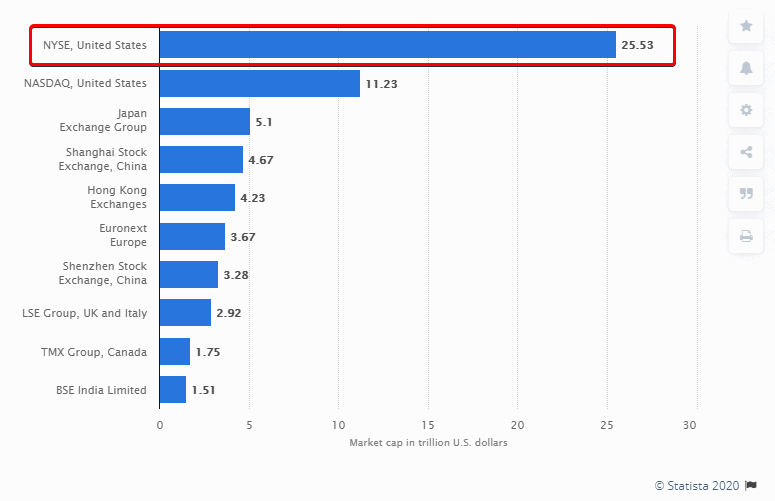
The combined market capitalization of companies listed on the NYSE routinely places it as the largest stock exchange in the world. This massive aggregate value reflects the economic power and global influence of the corporations it hosts. Many of these companies are multinational conglomerates with operations spanning continents, employing millions of people, and generating trillions in revenue. Their performance directly impacts global supply chains, employment rates, and overall economic stability.
For investors, this means that an investment in NYSE-listed companies is often an investment in the global economy. Diversifying across these companies can provide exposure to various economic cycles, international markets, and emerging trends.
Liquidity and Investor Confidence
A high number of actively traded companies contributes significantly to market liquidity. Liquidity refers to the ease with which an asset can be converted into cash without affecting its market price. The NYSE, with its vast trading volumes and numerous participants, offers exceptional liquidity, meaning investors can generally buy or sell shares of listed companies quickly and efficiently. This liquidity is a major draw for both institutional investors, who manage large portfolios, and individual investors, who value the flexibility to enter and exit positions.
High liquidity fosters investor confidence. Knowing that one can liquidate an investment when needed, without significant price distortion, encourages more capital to flow into the market. This, in turn, helps companies raise capital more effectively, creating a virtuous cycle that benefits both businesses and investors.
Benchmarking and Index Performance
Many of the world’s most recognized stock market indices, such as the Dow Jones Industrial Average (DJIA) and the S&P 500, are heavily comprised of NYSE-listed companies.
- Dow Jones Industrial Average (DJIA): While not exclusively NYSE, a significant majority of the 30 large, publicly owned companies included in this index are listed on the NYSE. These are often considered “blue-chip” stocks, representing established leaders in their respective industries.
- S&P 500 Index: This index tracks the performance of 500 of the largest publicly traded companies in the United States, based on market capitalization. A substantial portion of these companies are listed on the NYSE, making it a critical benchmark for the broader U.S. stock market and often seen as a proxy for the health of the American economy.
The performance of these indices, driven largely by NYSE-listed companies, serves as a crucial benchmark for investors to gauge the overall market direction, evaluate portfolio performance, and make informed investment decisions.
Beyond the Number: Factors Influencing Listing Trends
While the count of companies on the NYSE provides a snapshot, understanding the underlying forces that shape these numbers offers a deeper, more strategic perspective for investors and policymakers.
The Role of Global Economics and Geopolitics
Economic cycles profoundly influence listing trends. During periods of robust economic growth, characterized by strong corporate earnings and investor optimism, IPO activity typically surges. Companies find it easier to raise capital at favorable valuations, leading to more listings. Conversely, during economic downturns, recessions, or periods of high uncertainty, IPOs dry up, and delistings (due to bankruptcies or consolidation) may increase.
Geopolitical factors also play a significant role. Trade wars, international conflicts, regulatory changes across borders, and shifts in global power dynamics can impact a company’s decision to list on a U.S. exchange, affect its profitability, and ultimately influence its listing status. For example, increased scrutiny on foreign companies’ financial reporting or data security can deter some from seeking a NYSE listing.
Technological Advancements and Disruptive Sectors
Technological innovation continuously reshapes the corporate landscape and, by extension, the composition of NYSE listings. New technologies create entirely new industries (e.g., AI, biotech, renewable energy) and disrupt established ones. Companies at the forefront of these innovations, once they reach sufficient scale and maturity, often seek a public listing to fuel further growth and provide liquidity to early investors.
While Nasdaq traditionally attracted more tech startups, the NYSE has successfully drawn a significant number of large, established tech companies, particularly as they mature and seek the prestige and broad investor base associated with the “Big Board.” This ongoing shift ensures that the NYSE remains relevant, continually refreshing its roster with companies at the cutting edge of innovation. However, it also means that companies failing to adapt to technological changes might decline and eventually delist.
Regulatory Environment and Compliance Costs
The regulatory framework governing public companies in the U.S. is extensive and complex, primarily driven by institutions like the Securities and Exchange Commission (SEC) and the NYSE itself. While these regulations are designed to protect investors and maintain market integrity, they also impose significant compliance costs and burdens on listed companies.
Factors such as the Sarbanes-Oxley Act (SOX), disclosure requirements, and ongoing reporting obligations can be particularly challenging for smaller companies or those accustomed to less stringent international regulations. The cost of maintaining a public listing, including legal, accounting, and administrative expenses, can be substantial. This can sometimes deter companies from going public or even encourage some to go private, influencing the overall number of NYSE listings. A shifting regulatory environment, either tightening or loosening these requirements, can significantly impact the attractiveness of a NYSE listing.

Conclusion
The question “how many companies nyse” reveals far more than just a number. It provides a gateway to understanding the enduring strength of the world’s most prestigious stock exchange, its critical role in capital formation, and its intricate relationship with the global economy. With typically between 2,400 and 2,800 companies, the NYSE represents a vast, diverse, and dynamic ecosystem of businesses ranging from venerable industrial giants to cutting-edge technology firms.
This constant ebb and flow of listings—driven by IPOs, M&A, delistings, and transfers—reflects the perpetual motion of capitalism itself. For investors, the NYSE offers unparalleled liquidity, a broad spectrum of investment opportunities across nearly every sector, and a benchmark for global economic performance. As the global economy continues to evolve, shaped by technological advancements, geopolitical shifts, and changing regulatory landscapes, the NYSE will undoubtedly continue to adapt, maintaining its position as a cornerstone of the financial world and a vital barometer of corporate health and investor sentiment. Understanding the dynamics behind its impressive roster of companies is, therefore, essential for anyone navigating the complexities of modern finance.
aViewFromTheCave is a participant in the Amazon Services LLC Associates Program, an affiliate advertising program designed to provide a means for sites to earn advertising fees by advertising and linking to Amazon.com. Amazon, the Amazon logo, AmazonSupply, and the AmazonSupply logo are trademarks of Amazon.com, Inc. or its affiliates. As an Amazon Associate we earn affiliate commissions from qualifying purchases.