
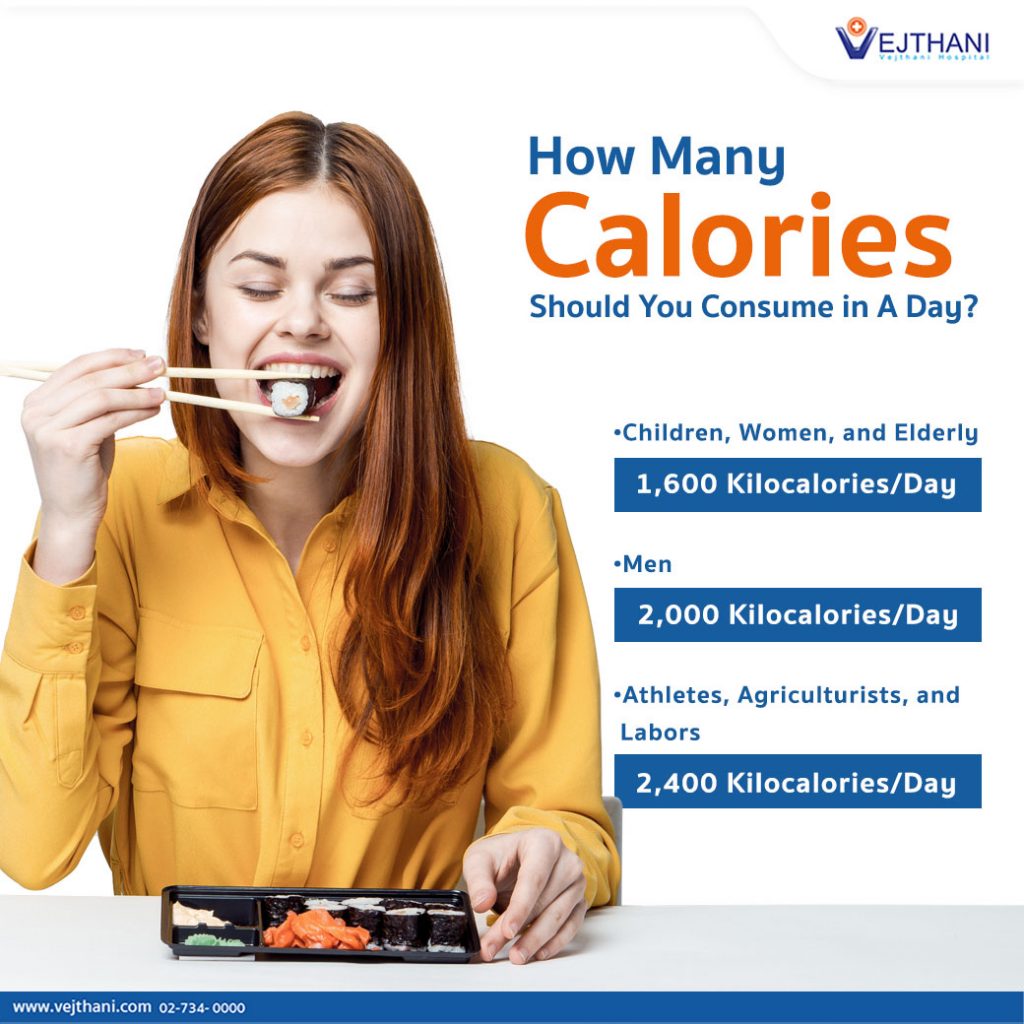
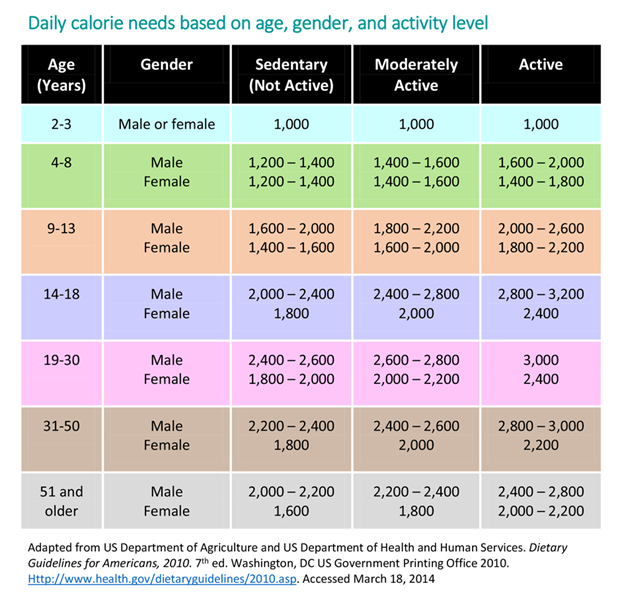
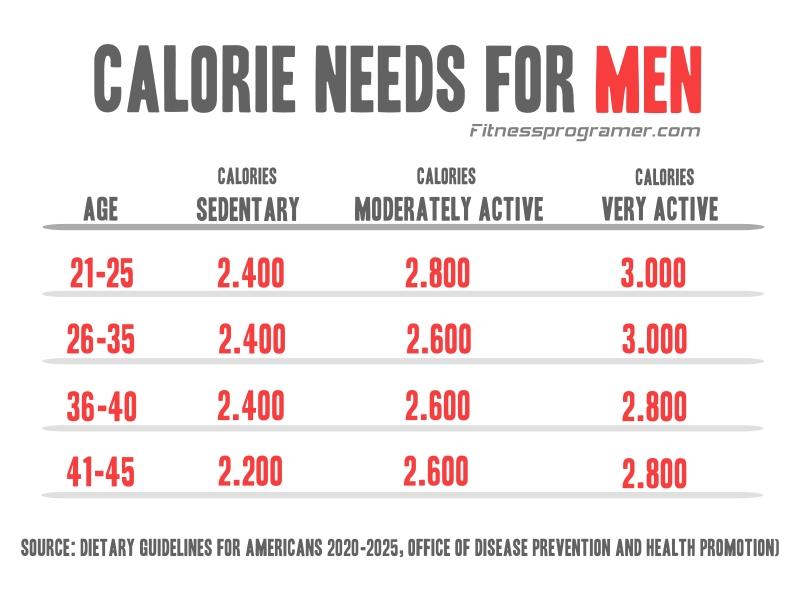
For decades, the answer to the question “how many calories do I need per day?” was derived from static formulas and standardized charts printed on the back of food packaging. The 2,000-calorie-a-day baseline became a global benchmark, but it was always a generalization—a “best guess” for a non-existent average human. Today, the convergence of Artificial Intelligence (AI), wearable sensors, and sophisticated data analytics has transformed caloric estimation from a guessing game into a high-precision digital science.
In the modern tech landscape, determining caloric needs is no longer about math on a napkin; it is about the integration of biological signals into digital ecosystems. This shift represents a broader trend in “HealthTech,” where personalized data overrides generic guidelines to optimize human performance and longevity.
Beyond the Static Equation: The Role of AI in Metabolic Forecasting
The traditional methods for calculating caloric needs—primarily the Harris-Benedict equation and the Mifflin-St Jeor formula—rely on four basic variables: age, sex, weight, and height. While these provide a foundational estimate of Basal Metabolic Rate (BMR), they fail to account for the massive variance in individual metabolic efficiency, hormonal fluctuations, and gut microbiome health.
The Limitations of the Harris-Benedict Formula
From a technical perspective, the Harris-Benedict formula is an analog algorithm. It assumes a linear relationship between body mass and energy expenditure. However, technology has revealed that metabolism is dynamic. Two individuals with identical “specs” (age, height, weight) can have a variance of up to 20% in their daily energy expenditure due to factors the formula cannot see. This “black box” of metabolic variance is where modern software is now focusing its attention.
Machine Learning and Predictive Basal Metabolic Rates
Neural networks are now being trained on massive datasets of Indirect Calorimetry—the gold standard of metabolic testing. By processing thousands of data points from metabolic carts, AI models can now identify patterns that human observation misses. These models look at “metabolic signatures” and use predictive analytics to adjust a user’s caloric needs in real-time. Instead of a static number, software can now offer a “sliding scale” of energy requirements that adapts based on the previous 24 hours of physiological data.
Wearable Ecosystems: Real-Time Monitoring and Bio-Data Integration
The hardware revolution has moved caloric tracking from the laboratory to the wrist. Modern wearables—ranging from smartwatches to biometric rings—serve as the primary data ingestion points for calculating total daily energy expenditure (TDEE).
Smartwatches and Photoplethysmography (PGG)
At the heart of most calorie-tracking wearables is the PPG sensor. By using green light LEDs to measure changes in blood volume at the wrist, these devices calculate heart rate and heart rate variability (HRV). Tech giants like Apple, Garmin, and Samsung use proprietary algorithms to translate these heart rate signals into caloric burn. The sophistication lies in the “activity classifiers”—AI sub-routines that can distinguish between the high-intensity caloric burn of a sprint and the lower-intensity burn of metabolic stress or caffeine consumption, ensuring that “how many calories you need” is balanced against “how many you actually used.”
Integration with Continuous Glucose Monitors (CGMs)
Perhaps the most significant leap in tech-driven nutrition is the consumerization of Continuous Glucose Monitors (CGMs). Originally medical devices for diabetics, companies like Levels and Nutrisense have repositioned them as high-tech performance tools. By providing a real-time stream of blood glucose data to a smartphone via Bluetooth, these sensors show exactly how a body responds to specific caloric inputs. If a “200-calorie” snack causes a massive glucose spike and subsequent crash, the software may recalibrate the user’s daily caloric target to favor different macronutrient ratios, proving that the source of the calorie is as digitally trackable as the calorie itself.
The Software Revolution: Tracking Apps and Digital Nutrition Databases
Hardware provides the output (calories burned), but software manages the input (calories consumed). The evolution of nutrition apps has moved from manual entry to automated, AI-assisted recognition.
Computer Vision and Image Recognition for Food Logging
The friction of manual data entry has historically been the biggest barrier to accurate caloric tracking. To solve this, developers are leveraging computer vision. Modern apps now allow users to take a photo of their plate, which is then processed through a convolutional neural network (CNN). The AI identifies the food items, estimates portion sizes based on spatial depth sensors in modern smartphone cameras (like LiDAR), and cross-references the image with a nutritional database. This tech-driven approach minimizes human error, providing a more accurate denominator in the “calories in vs. calories out” equation.
The API Economy of Nutritional Data
The accuracy of any calorie-tracking tool is only as good as its underlying database. We are seeing the rise of massive, cloud-based nutritional APIs (Application Programming Interfaces) like Nutritionix and Edamam. These platforms aggregate data from millions of grocery items and restaurant menus globally. When a user queries “how many calories are in a medium avocado,” the app isn’t just looking at a static list; it’s querying a dynamic, verified cloud database that updates as food formulations change. This interconnectedness allows for a seamless flow of data across different platforms, from a smart fridge to a fitness tracker.
Digital Security and Privacy in the Health-Tech Space
As we rely more on technology to define our caloric needs, we generate an unprecedented amount of sensitive biometric data. This has elevated the conversation around digital security and the ethics of metabolic data.
Protecting Biometric Sovereignty
The data required to accurately calculate daily caloric needs—heart rate, sleep patterns, weight, and even DNA data—is incredibly personal. Tech companies are now forced to implement “Differential Privacy” and end-to-end encryption to ensure that metabolic profiles are not sold to insurance companies or exploited by advertisers. As we move toward more integrated health tech, the “Security of the Self” becomes as important as the accuracy of the caloric algorithm. Users are increasingly looking for platforms that offer “local processing,” where the AI calculates caloric needs on the device itself rather than sending raw biometric data to the cloud.
The Ethics of Algorithmic Dietary Advice
There is an emerging technical challenge regarding “algorithmic bias” in nutrition software. Most early caloric formulas were based on specific demographic groups. As AI takes over, developers must ensure that the datasets used to train these models are diverse. If an algorithm is trained only on one body type or ethnicity, its caloric recommendations for others will be fundamentally flawed. The next frontier in nutrition tech is “inclusive coding,” where the software accounts for the vast biological diversity of the global population to provide truly personalized caloric targets.
The Future of Caloric Calculation: From Estimation to Simulation
We are rapidly approaching a point where “how many calories needed per day” will be answered by a “Digital Twin.” In this scenario, a digital model of your metabolism exists in the cloud, constantly updated by your wearable sensors, your gut microbiome sequencing, and your continuous glucose data.
Before you even eat a meal, you could run a digital simulation to see how those calories will affect your specific metabolic rate and energy levels for the remainder of the day. This is the ultimate goal of the “Quantified Self” movement: using technology to remove the guesswork from biology. As AI models become more sophisticated and sensors become more non-invasive (such as smart patches or even smart contact lenses), our daily caloric needs will move from a static number to a living, breathing data point that optimizes our health in real-time.
In conclusion, the question of daily caloric needs has transitioned from the realm of general health advice into the domain of high-level information technology. By leveraging AI, wearables, and secure data infrastructures, we are finally unlocking the code of the human metabolism, allowing every individual to power their “human hardware” with the precision of a high-performance machine.
aViewFromTheCave is a participant in the Amazon Services LLC Associates Program, an affiliate advertising program designed to provide a means for sites to earn advertising fees by advertising and linking to Amazon.com. Amazon, the Amazon logo, AmazonSupply, and the AmazonSupply logo are trademarks of Amazon.com, Inc. or its affiliates. As an Amazon Associate we earn affiliate commissions from qualifying purchases.