
In the world of traditional finance, the supply of money is a fluid, often unpredictable variable controlled by central banks. However, in the realm of decentralized finance, Bitcoin stands as a revolutionary anomaly. If you have ever asked, “How many BTC are there?” you aren’t just asking for a number; you are inquiring about the fundamental monetary policy of the most successful digital asset in history.
Unlike the US Dollar or the Euro, which can be printed in response to economic crises, Bitcoin’s supply is governed by immutable code. This transparency is the cornerstone of its value proposition, earning it the title of “Digital Gold.” To understand how many Bitcoins exist today, how many will exist tomorrow, and why that number matters to your portfolio, we must dive into the mechanics of scarcity and issuance.
The Absolute Limit: Why 21 Million Matters
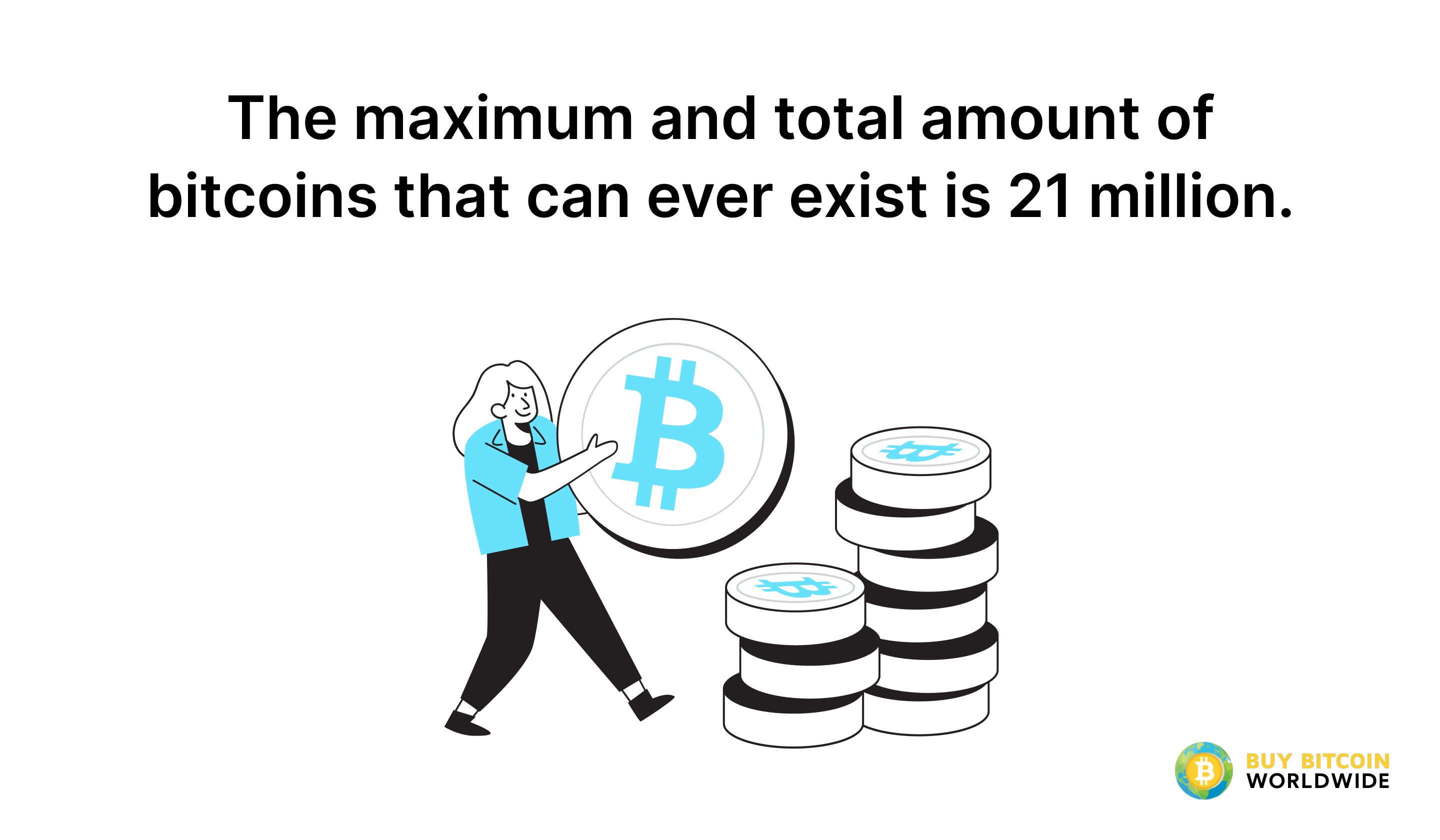
The most famous number in the cryptocurrency space is 21 million. This is the hard cap—the maximum number of Bitcoins that will ever be created. This limit was hard-coded into the Bitcoin protocol by its pseudonymous creator, Satoshi Nakamoto, and it represents a radical departure from the inflationary nature of fiat currency.
Sound Money vs. Fiat Inflation
To appreciate the 21 million cap, one must first understand the concept of “sound money.” Sound money is an asset that is not subject to sudden increases in supply, which typically lead to the erosion of purchasing power. In the traditional financial system, central banks engage in quantitative easing and currency expansion to manage economic cycles. While this provides short-term liquidity, it often results in long-term inflation.
Bitcoin’s 21 million limit provides a predictable, deflationary alternative. Because the supply is fixed, Bitcoin cannot be debased. For investors, this makes BTC a potential “store of value” hedge. When the supply of a currency is infinite but the supply of an asset is capped, the value of the capped asset tends to rise relative to the currency over time.
The Code is Law: How Scarcity is Enforced
You might wonder: “What stops people from simply changing the code to create more Bitcoin?” This is where the beauty of decentralization comes in. Bitcoin’s supply is governed by a consensus mechanism. To change the 21 million limit, a majority of the thousands of independent nodes running the Bitcoin software worldwide would have to agree to the change.
Since the primary value of Bitcoin is derived from its scarcity, the participants in the network—miners, investors, and developers—have no incentive to devalue their own holdings by increasing the supply. This creates a “social contract” backed by mathematics and game theory, ensuring that the 21 million cap remains the most protected number in finance.
The Issuance Schedule: Mining and the Halving
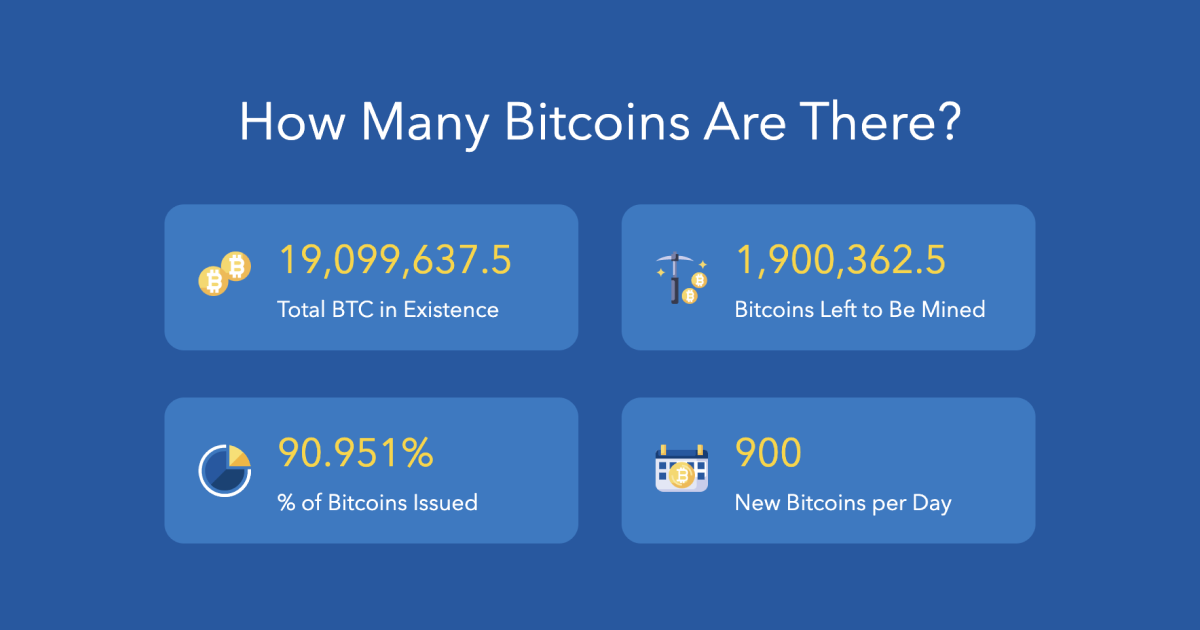
As of mid-2024, there are approximately 19.7 million Bitcoins in circulation. This means that over 93% of all Bitcoin has already been “mined.” However, the remaining 1.3 million coins will not be released all at once. Instead, they are distributed through a controlled issuance schedule designed to mimic the extraction of precious metals.
The Role of Miners in Circulating Supply
New Bitcoins are brought into existence through a process called mining. Miners use powerful computers to solve complex mathematical puzzles that secure the network and verify transactions. As a reward for this work, the network grants the successful miner a specific amount of newly created Bitcoin, known as the “block reward.”
This block reward is the only way new BTC enters the ecosystem. Currently, a new block of transactions is added to the blockchain roughly every 10 minutes. This consistent heartbeat ensures that the supply enters the market at a steady, predictable pace rather than a volatile flood.
The Halving Mechanism: Curbing the Flow
To ensure the 21 million cap is reached gradually, Satoshi Nakamoto implemented a mechanism known as “The Halving.” Every 210,000 blocks (roughly every four years), the reward given to miners is cut in half.
- In 2009, the reward was 50 BTC per block.
- In 2012, it dropped to 25 BTC.
- In 2016, it dropped to 12.5 BTC.
- In 2020, it dropped to 6.25 BTC.
- In 2024, it dropped to 3.125 BTC.
This halving process will continue until approximately the year 2140, when the final satoshi (the smallest unit of Bitcoin) is mined. This decaying issuance rate creates a supply shock: as Bitcoin becomes more widely adopted and demand increases, the rate at which new supply enters the market continues to drop. For the savvy investor, understanding the halving cycles is crucial for timing market trends.
Lost Coins: The Difference Between Circulating and Accessible Supply
While the blockchain may show that nearly 20 million BTC have been issued, the number of Bitcoins actually available for trade or investment is significantly lower. This is a nuance often overlooked by casual observers. In the world of “Money,” liquidity is king, and Bitcoin has a unique “lost coin” problem.
The Legend of Satoshi’s Million
In the early days of Bitcoin, the network was small, and Satoshi Nakamoto was one of the few active miners. It is estimated that Satoshi mined approximately 1.1 million BTC across thousands of different wallets. Remarkably, these coins have never been moved.
Whether Satoshi is a single individual who passed away or a group that chose to remain anonymous and leave the coins as a “burned” sacrifice to the network, these 1.1 million Bitcoins are effectively out of circulation. If Satoshi’s stash remains untouched, the functional supply of Bitcoin is immediately reduced to 19.9 million.
Why Private Keys and “Zombie Coins” Shrink the Market
Unlike a bank account, where you can reset your password, Bitcoin is a “self-custody” asset. If a user loses their private keys (the digital signature required to move funds), those Bitcoins are lost forever. They still exist on the blockchain, but they are inaccessible.
Analytical firms like Chainalysis estimate that between 3 million and 4 million Bitcoins have been lost due to forgotten passwords, discarded hard drives (like the famous case of James Howells), or the death of holders who did not pass on their keys. These “zombie coins” act as a permanent reduction in supply. Consequently, while 21 million is the theoretical limit, the actual number of Bitcoins that will ever be available to the public is likely closer to 15 or 16 million. For an investor, this “accidental” scarcity only intensifies the asset’s value.
The Economic Implications: Bitcoin as a Financial Tool
Understanding the supply of Bitcoin is vital because it dictates how the asset behaves in a global financial portfolio. Because the supply is fixed and known, Bitcoin behaves more like a digital commodity than a currency.
Bitcoin as Digital Gold
The primary reason investors track the number of BTC in existence is to calculate its “Stock-to-Flow” ratio. This ratio compares the existing supply (stock) to the annual production (flow). High stock-to-flow assets, like gold, are used as stores of value because their supply cannot be easily inflated.
With each halving, Bitcoin’s stock-to-flow ratio increases, eventually surpassing that of gold. This makes Bitcoin the rarest liquid asset on the planet. From a personal finance perspective, this suggests that Bitcoin is not just a speculative tool for “quick wins,” but a long-term vehicle for preserving wealth against the systemic devaluation of fiat currencies.
How Supply Constraints Drive Long-term Valuation
Basic economics teaches us that price is a function of supply and demand. In the case of Bitcoin, the supply side of the equation is fixed and declining in growth. This leaves demand as the primary driver of price.
As institutional players—such as BlackRock and Fidelity—enter the market through Spot ETFs, and as corporations like MicroStrategy add BTC to their balance sheets, demand is scaling at an unprecedented rate. When massive institutional capital meets a dwindling, capped supply, the result is often significant upward price pressure. Understanding that there are only 0.002 BTC for every person on Earth highlights the intense “scarcity premium” that could define Bitcoin’s future valuation.
Conclusion: The Path to 2140 and Beyond
So, how many BTC are there? Currently, there are about 19.7 million in existence, with the total forever capped at 21 million. However, when you account for the millions of lost coins and Satoshi’s untouched hoard, the number of Bitcoins you can actually buy is far smaller than it appears.
We are currently in a phase of “price discovery,” where the world is beginning to realize the implications of an absolutely scarce digital asset. As we approach the final mining rewards in the 22nd century, Bitcoin will transition from an inflationary issuance model to a fee-based model, where miners are rewarded solely by transaction fees.
For the modern investor, the limited supply of Bitcoin offers a unique opportunity: the chance to own a piece of a global, decentralized monetary system that cannot be manipulated, inflated, or seized by a central authority. In an era of economic uncertainty, the fixed supply of 21 million Bitcoins stands as a beacon of financial transparency and a testament to the power of digital scarcity.
aViewFromTheCave is a participant in the Amazon Services LLC Associates Program, an affiliate advertising program designed to provide a means for sites to earn advertising fees by advertising and linking to Amazon.com. Amazon, the Amazon logo, AmazonSupply, and the AmazonSupply logo are trademarks of Amazon.com, Inc. or its affiliates. As an Amazon Associate we earn affiliate commissions from qualifying purchases.