
Bitcoin, since its inception, has captivated the world with its revolutionary approach to digital currency. While many understand its basic premise as a decentralized digital asset, a fundamental question often arises for both new entrants and seasoned investors alike: “How many Bitcoins are there?” This seemingly simple query delves into the very core of Bitcoin’s economic model, revealing insights crucial for comprehending its value proposition, investment potential, and long-term viability as a store of value. Unlike traditional fiat currencies that can be printed at will, Bitcoin operates under a strict, predetermined supply schedule, a design choice that profoundly impacts its scarcity and, consequently, its economic characteristics.
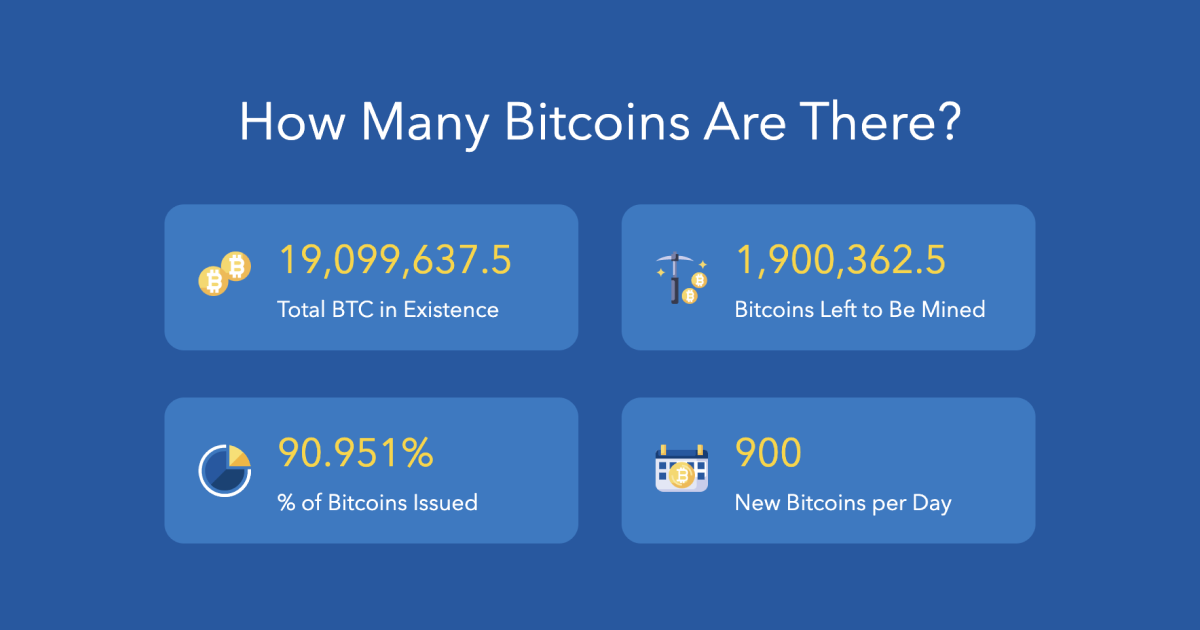
This article will meticulously explore the intricacies of Bitcoin’s supply, from its hard-capped limit to the mechanisms of its generation, the impact of lost coins, and the broader financial implications of its programmed scarcity. Understanding these facets is not merely an academic exercise; it’s essential for anyone seeking to navigate the world of digital assets and make informed financial decisions. We will dissect the technical limitations embedded in its protocol, examine the fascinating process of mining and halving, and discuss how these elements coalesce to position Bitcoin as a unique asset class in the global financial landscape.
The Immutable Genesis: Bitcoin’s Fixed Supply Cap
One of the most defining characteristics that sets Bitcoin apart from conventional currencies is its absolute and unchangeable supply limit. This is not a policy dictated by a central bank or government but rather an inherent feature of its underlying protocol, programmed by its pseudonymous creator, Satoshi Nakamoto. This fundamental design choice is the bedrock of Bitcoin’s economic philosophy and its claim as “digital gold.”
The 21 Million Bitcoin Limit
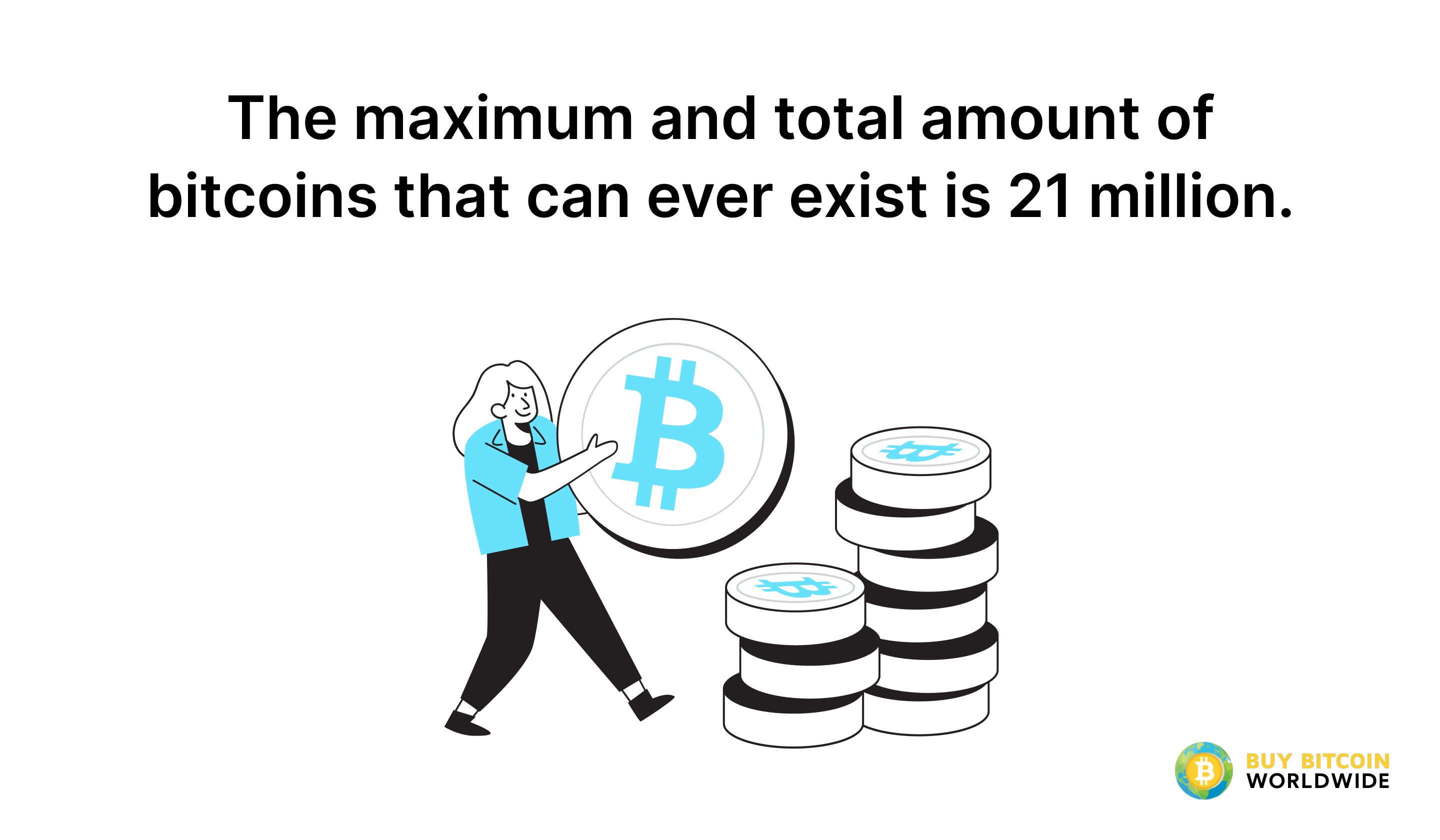
The most critical number in the Bitcoin ecosystem is 21 million. This is the absolute maximum number of Bitcoins that will ever be created. This limit is hardcoded into Bitcoin’s protocol and cannot be altered without a consensus-based change to the entire network, which is extremely unlikely given the decentralized nature and the strong economic incentives for maintaining the scarcity. This fixed cap contrasts sharply with traditional currencies, which central banks can expand through quantitative easing or other monetary policies, leading to inflation and erosion of purchasing power. The certainty of Bitcoin’s ultimate supply is a cornerstone of its appeal, particularly for those concerned about fiat currency debasement. It creates a predictable monetary policy that is transparent and immutable, fostering trust among its users that their holdings will not be diluted by arbitrary decisions.
Satoshi Nakamoto’s Vision of Scarcity
Satoshi Nakamoto’s whitepaper, published in 2008, laid out the blueprint for Bitcoin as “A Peer-to-Peer Electronic Cash System.” Central to this vision was the idea of a currency free from governmental control and inflationary pressures. By programming a finite supply, Satoshi imbued Bitcoin with properties akin to precious metals like gold – a naturally scarce resource. This scarcity is not accidental; it’s a deliberate design choice intended to give Bitcoin intrinsic value, ensuring that its purchasing power is protected over time. Nakamoto foresaw the potential for unchecked monetary expansion in traditional financial systems and engineered Bitcoin as an alternative that mimics the reliable scarcity of physical commodities but in a digital form. This philosophical underpinning is vital to understanding why Bitcoin is often referred to as “sound money” and why its fixed supply is paramount to its long-term investment narrative. The belief is that as demand grows against a fixed supply, its value should appreciate, making it an attractive store of value for the digital age.
The Mechanics of Supply: Mining and Halving
While the ultimate limit is 21 million, Bitcoins are not all released at once. Instead, they are introduced into circulation gradually through a process known as mining, following a precisely engineered schedule. This gradual release mechanism, coupled with periodic reductions in new supply, creates a predictable yet diminishing rate of new Bitcoin generation.
Block Rewards and New Bitcoin Generation
New Bitcoins are generated as a reward to “miners” who validate transactions and add new blocks to the Bitcoin blockchain. Every approximately 10 minutes, a new block is mined, and the successful miner receives a certain amount of newly minted Bitcoin, known as the “block reward,” along with transaction fees. This block reward is the primary mechanism by which new Bitcoins are introduced into the market. It serves as an incentive for miners to dedicate significant computational power to the network, ensuring its security and decentralization. The initial block reward was 50 Bitcoins per block when the network launched in 2009. This system is designed to gradually increase the circulating supply until the 21 million limit is reached. The predictable nature of this issuance schedule is a key differentiator from fiat currencies, where new money can be created at the discretion of central banks, often with little transparency or public input.
The Halving Cycle and Its Economic Impact
One of the most distinctive features of Bitcoin’s supply mechanism is the “halving” event. Approximately every four years, or specifically after every 210,000 blocks are mined, the block reward is automatically cut in half.
- The first halving occurred in 2012, reducing the reward from 50 BTC to 25 BTC.
- The second halving in 2016 brought it down to 12.5 BTC.
- The third in 2020 further decreased it to 6.25 BTC.
- The most recent halving in April 2024 brought the reward to 3.125 BTC.
This halving process is critical for Bitcoin’s long-term scarcity. It steadily decreases the rate at which new Bitcoins enter circulation, making the asset increasingly scarce over time. Historically, halving events have been followed by significant price rallies, as the reduction in new supply, coupled with sustained or increasing demand, tends to create upward pressure on Bitcoin’s market value. Economically, the halving events are similar to a central bank drastically tightening its monetary policy at regular, predictable intervals. This makes Bitcoin inherently disinflationary by design, a direct counterpoint to the inflationary tendencies of fiat currencies. Understanding the halving cycle is crucial for investors attempting to project future supply dynamics and potential price movements.
Current Circulating Supply and Future Projections
As of late 2023/early 2024, there are roughly 19.6 million Bitcoins in circulation. With each halving, the rate of new Bitcoin creation diminishes. The last Bitcoin is projected to be mined around the year 2140. After that, no new Bitcoins will be created, and miners will solely rely on transaction fees for their revenue. This long-term projection highlights Bitcoin’s finite nature and positions it as an asset with a truly fixed future supply. The slow, predictable introduction of new coins into the market allows for organic price discovery and adoption, preventing sudden supply shocks from overwhelming the ecosystem. Investors and analysts closely monitor the circulating supply, as it directly influences market liquidity and the overall supply-demand dynamics that drive Bitcoin’s price action.
The Reality of Available Bitcoin: Lost Coins and Distribution
While the protocol dictates 21 million Bitcoins, the actual number of available Bitcoins for trading or spending is significantly less. Factors such as lost private keys and uneven distribution among holders paint a more nuanced picture of Bitcoin’s effective supply.
Billions in Lost Bitcoin: A Permanent Reduction
A significant portion of the Bitcoins mined over the past decade and a half is effectively lost forever. This occurs primarily when individuals lose access to their private keys, forget their wallet passwords, or dispose of storage devices containing their Bitcoin. Unlike traditional bank accounts, there is no central authority to recover lost Bitcoins. Once a private key is gone, the associated Bitcoins become irrecoverable, permanently removing them from the circulating supply. Estimates vary widely, but it is believed that anywhere from 3 to 6 million Bitcoins, possibly more, have been permanently lost. These lost coins reduce the effective circulating supply, making the asset even scarcer than the 21 million cap suggests. For investors, this permanent reduction of supply further reinforces Bitcoin’s scarcity narrative and can contribute to its long-term value proposition, as fewer coins chase potentially growing demand.
Uneven Distribution: Whales vs. Retail Investors
The distribution of existing Bitcoins is also a critical factor in understanding its market dynamics. A substantial portion of the circulating supply is held by a relatively small number of entities, often referred to as “whales.” These can be early adopters, institutional investors, or large investment funds. While this concentration of holdings might raise concerns about market manipulation or centralization in some circles, it’s also a natural outcome of early adoption and long-term holding strategies. A significant portion of these “whale” holdings are often dormant or held in cold storage, suggesting a long-term investment conviction rather than active trading.
Conversely, millions of smaller retail investors hold smaller fractions of Bitcoin. Understanding this distribution is vital for assessing market liquidity and potential price volatility. While large holders have the capacity to influence prices, the decentralized nature of Bitcoin and the sheer number of participants generally mitigate the risk of sustained, unilateral market manipulation. The ongoing accumulation by retail investors and the increasing entry of institutional players indicate a broadening base of ownership, gradually decentralizing the effective control over the available supply.
Understanding Bitcoin’s Divisibility (Satoshis)
Despite its fixed and relatively small overall supply of 21 million, Bitcoin is incredibly divisible. The smallest unit of Bitcoin is called a “satoshi” (named after Bitcoin’s creator), with 1 Bitcoin equaling 100,000,000 satoshis. This extreme divisibility means that even if Bitcoin were to achieve a very high per-coin value, it can still function as a practical medium of exchange for everyday transactions, with users transacting in fractions of a Bitcoin. This characteristic ensures that scarcity does not equate to impracticality. It allows billions of people to potentially own a piece of Bitcoin, no matter how small, enabling broad participation in the ecosystem. This divisibility is a pragmatic design choice that supports Bitcoin’s long-term utility, ensuring that a high per-coin price does not render it inaccessible or unusable for daily economic activities.
The Economic Implications of Scarcity
The fixed supply and predictable issuance schedule of Bitcoin are not merely technical details; they are the bedrock of its economic model, influencing its role as an asset, its price dynamics, and its potential as a hedge against traditional financial vulnerabilities.
Bitcoin as Digital Gold: Store of Value
Bitcoin’s programmed scarcity is the primary reason it is often likened to “digital gold.” Just like gold, Bitcoin has a finite supply, is costly to produce (mine), and can be easily verified and transferred. These properties make it an attractive store of value, particularly in an era of unprecedented monetary expansion by central banks globally. Investors increasingly turn to Bitcoin as a hedge against inflation and economic uncertainty, seeking to preserve wealth in an asset that cannot be arbitrarily devalued. The narrative of “digital gold” is rooted deeply in the “how many bitcoins” question, as the answer directly underpins its scarcity-driven value proposition. This positions Bitcoin not just as a speculative asset, but as a potential long-term alternative to traditional safe-haven assets.
Supply Shock and Price Dynamics
The interplay between Bitcoin’s fixed supply and fluctuating demand creates unique price dynamics. Halving events, in particular, often lead to “supply shocks” where the rate of new supply is suddenly cut in half, while demand may continue to grow or remain steady. This imbalance frequently results in significant upward price movements post-halving. Beyond halvings, any sustained increase in adoption, institutional investment, or geopolitical uncertainty that drives capital towards non-sovereign assets can create strong demand pressures against the inelastic supply, leading to sharp price increases. Conversely, a significant drop in demand could lead to price corrections, but the fundamental scarcity prevents sustained, long-term dilution of its value from the supply side. Understanding these dynamics is crucial for investors attempting to time market entry and exit points, as the supply schedule creates predictable structural shifts in market equilibrium.
Long-Term Investment Perspective
For many investors, Bitcoin’s finite supply makes it a compelling long-term investment. The conviction is that as global digitalization continues and the appeal of decentralized, inflation-resistant assets grows, Bitcoin’s demand will inevitably rise. Given its hard supply cap, any significant increase in demand will exert substantial upward pressure on its value per coin. This long-term perspective treats Bitcoin less as a transactional currency and more as a generational wealth-preserving asset, akin to real estate or precious metals, but with the added benefits of digital portability and censorship resistance. The “how many bitcoins” question, therefore, morphs into a consideration of how much potential value can be concentrated in a truly limited, global digital asset over time.
Beyond the Count: Why “How Many” Matters
The inquiry into “how many bitcoins” transcends a simple numerical answer; it delves into the core principles that give Bitcoin its value, define its role in the global financial system, and shape its future trajectory. It is an exploration of intentional scarcity and its profound implications.
Scarcity as a Core Value Proposition
The deliberate scarcity of Bitcoin is its single most powerful value proposition. In a world awash with fiat currencies subject to inflationary policies, Bitcoin offers an alternative rooted in mathematical certainty and a fixed supply. This makes it attractive to those seeking an asset that is resistant to governmental or institutional manipulation and that promises to retain its purchasing power over the long term. The answer to “how many bitcoins” directly underpins its perceived value as a finite digital resource, similar to how the limited supply of gold contributes to its millennia-long role as a store of value. It signifies a paradigm shift in monetary philosophy, moving from arbitrary control to algorithmic predictability.
The Anti-Inflationary Nature
By limiting the total supply and programming a decreasing rate of issuance, Bitcoin is inherently anti-inflationary. This contrasts sharply with the expansionary monetary policies often employed by central banks to stimulate economies, which can lead to currency debasement. For individuals and institutions concerned about the erosion of wealth through inflation, Bitcoin offers a potential sanctuary. Its fixed supply ensures that its purchasing power, if adopted widely, cannot be diluted by endless printing. This anti-inflationary characteristic is a key driver for its adoption as a hedge, especially during periods of high inflation or economic instability.

Future of Bitcoin and Its Limited Resource
Looking ahead, the question of “how many bitcoins” will continue to be central to its narrative. As the supply approaches its ultimate limit in 2140, the dynamics of Bitcoin’s economy will shift, with transaction fees becoming the sole incentive for miners. This scarcity will likely fuel ongoing discussions about its role as a global reserve asset, a primary store of value, and a foundational layer for decentralized finance. The limited nature of Bitcoin is not just a present-day reality but a future promise, ensuring its enduring relevance in an increasingly digital and interconnected world. Investors and policymakers alike will continue to grapple with the implications of a truly finite, globally accessible digital resource, shaping how we think about money, value, and scarcity in the 21st century.
In conclusion, understanding “how many bitcoins” is not just about a number; it’s about grasping the fundamental economic principles that govern this groundbreaking digital asset. The 21 million hard cap, the halving cycles, the reality of lost coins, and the power of divisibility all contribute to Bitcoin’s unique position as a scarce, decentralized, and potentially transformative financial instrument. For anyone involved in personal finance, investing, or business finance in the digital age, this understanding is indispensable.
aViewFromTheCave is a participant in the Amazon Services LLC Associates Program, an affiliate advertising program designed to provide a means for sites to earn advertising fees by advertising and linking to Amazon.com. Amazon, the Amazon logo, AmazonSupply, and the AmazonSupply logo are trademarks of Amazon.com, Inc. or its affiliates. As an Amazon Associate we earn affiliate commissions from qualifying purchases.