
The question of how many Bitcoins exist in total is not merely a technical curiosity but a foundational inquiry into the very economic principles that underpin the world’s leading cryptocurrency. Unlike traditional fiat currencies, which can be printed or digitally created at the discretion of central banks, Bitcoin operates on a predetermined, immutable supply schedule. This inherent scarcity is not an accident; it is a core design feature that distinguishes Bitcoin from virtually all other forms of money and forms the bedrock of its investment thesis and long-term value proposition.
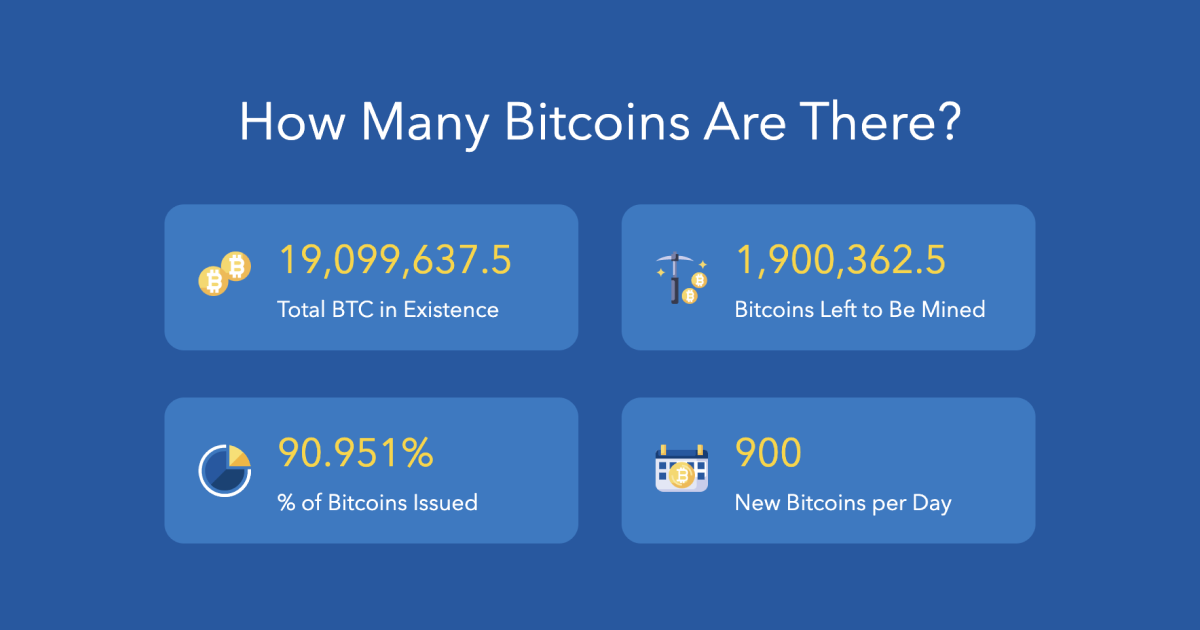
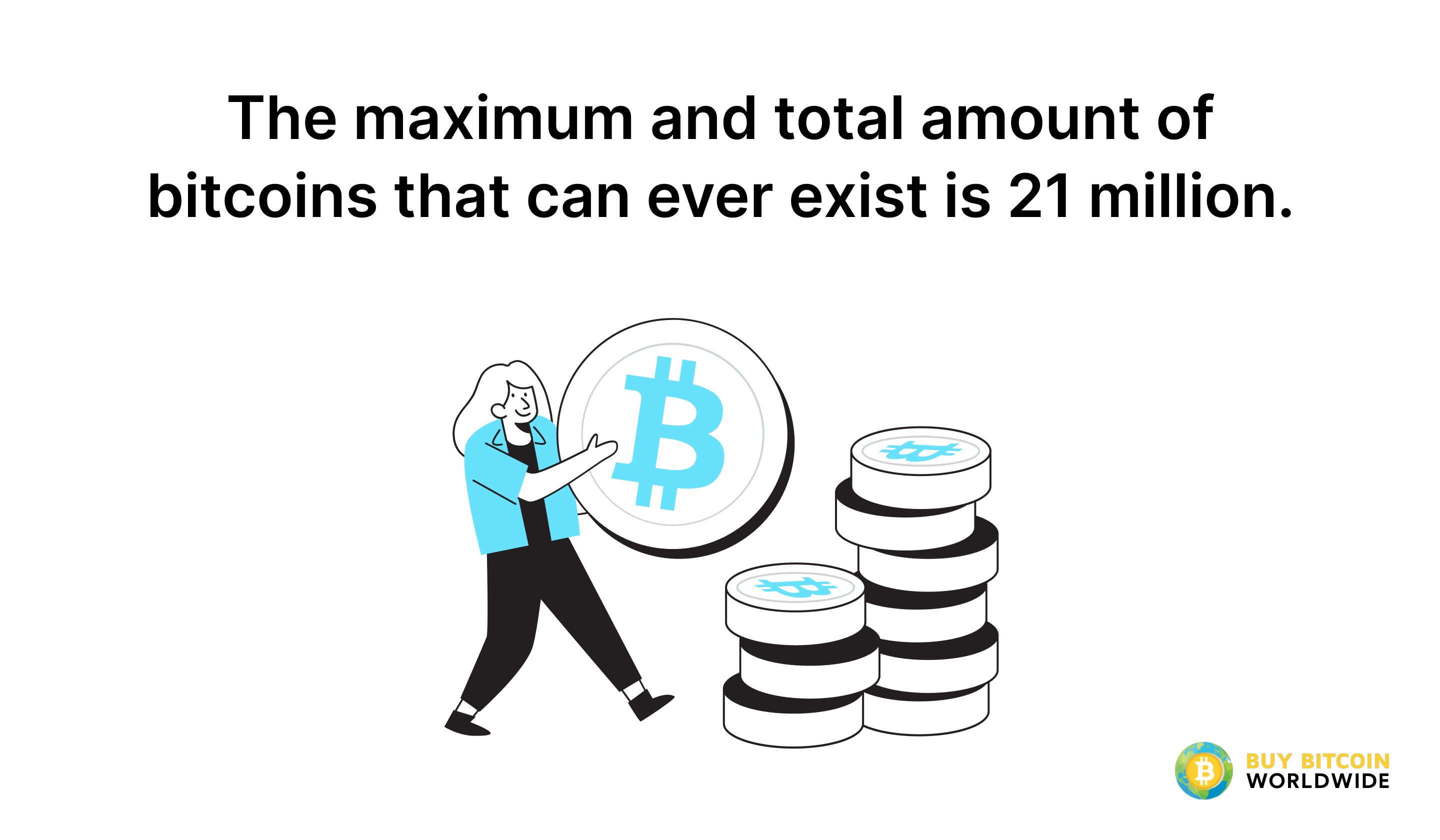
At its core, the answer is simple: there will only ever be a maximum of 21 million Bitcoins. This fixed supply cap is hard-coded into Bitcoin’s protocol by its anonymous creator, Satoshi Nakamoto, and enforced by the global network of nodes and miners. It’s a digital scarcity unprecedented in human history, designed to prevent inflation and create a predictable economic environment for its users. Understanding the mechanics behind this limit, its implications for investors, and its role in shaping Bitcoin’s economic destiny is crucial for anyone engaging with this revolutionary asset. This article delves into the finite nature of Bitcoin’s supply, exploring the mechanisms that govern its issuance, the factors that influence its effective circulating supply, and the profound economic ramifications for personal finance, investment strategies, and the global financial landscape.
The Immutable Supply Cap: A Cornerstone of Bitcoin’s Value
The most defining characteristic of Bitcoin, from an economic perspective, is its fixed supply cap of 21 million coins. This hard limit is not arbitrary; it’s a fundamental aspect of its design, aimed at creating a deflationary asset resistant to the inflationary pressures often associated with traditional fiat currencies. This scarcity mechanism is what lends Bitcoin its “digital gold” narrative and positions it as a potential hedge against economic uncertainty.
Understanding Bitcoin’s Scarcity Mechanism
Satoshi Nakamoto meticulously designed Bitcoin’s protocol to ensure a predictable and finite supply. The 21 million cap is enforced by mathematical rules embedded within the blockchain. Every ten minutes, on average, a new “block” of transactions is added to the blockchain, and with it, a new batch of Bitcoins is issued to the miner who successfully found that block. This issuance, known as the “block reward,” started at 50 Bitcoins per block when Bitcoin launched in 2009.
The critical element of this mechanism is its programmed reduction. Unlike central banks that can increase the money supply, Bitcoin’s protocol dictates a predefined reduction in the block reward over time. This predictable reduction ensures that the total supply will never exceed 21 million. This controlled issuance makes Bitcoin’s monetary policy entirely transparent and impervious to political influence or human error, a stark contrast to the opaque and often unpredictable policies of traditional financial institutions. For investors, this transparency offers a level of certainty regarding future supply that is unparalleled in any other asset class.
The Halving Cycle: Controlled Supply Reduction
The mechanism by which the block reward is reduced is known as “halving” (or “the halving event”). Approximately every four years, or more precisely, every 210,000 blocks, the reward for mining a new block is cut in half.
- Starting at 50 BTC per block (2009)
- First halving: 25 BTC per block (2012)
- Second halving: 12.5 BTC per block (2016)
- Third halving: 6.25 BTC per block (2020)
- Fourth halving: 3.125 BTC per block (2024)
This geometric progression of supply reduction has profound financial implications. Each halving event effectively reduces the rate at which new Bitcoins enter circulation, making the asset increasingly scarce over time. Historically, halving events have been significant catalysts for price appreciation, as the sudden reduction in new supply, coupled with sustained or increasing demand, often creates upward pressure on Bitcoin’s market value. Investors and market analysts closely monitor these cycles, recognizing them as key drivers in Bitcoin’s long-term price trajectory and its narrative as a store of value. The halving schedule is a testament to Bitcoin’s engineered scarcity, making it a truly unique proposition in the realm of financial assets.
Miners and the Issuance Process
Bitcoin miners are crucial to the issuance process, yet they do not control the supply. Instead, they compete to solve complex computational puzzles to validate transactions and add new blocks to the blockchain. The first miner to solve the puzzle earns the block reward, which includes newly minted Bitcoins (the block subsidy) and transaction fees. This reward incentivizes miners to secure the network, ensuring its decentralization and integrity.
The issuance of new Bitcoins is a byproduct of this security process. As miners contribute computational power, they are compensated with newly created coins, introducing them into the circulating supply. This process is entirely automated and governed by the protocol, meaning no single entity can accelerate or decelerate the rate of Bitcoin creation. For investors, understanding this process reinforces confidence in Bitcoin’s predictable monetary policy, knowing that new coins are not arbitrarily created but are earned through a resource-intensive, competitive, and decentralized mechanism. The block subsidy will eventually diminish to zero, at which point miners will be entirely reliant on transaction fees for their revenue, ensuring the network’s continued security even after the final Bitcoin is mined.
Beyond the Cap: Effective Supply and Lost Coins
While the maximum theoretical supply of Bitcoin is 21 million, the reality of its effective circulating supply is more nuanced. Not all Bitcoins that have been mined are available for trade or investment. Various factors contribute to reducing the liquid supply, making the asset even scarcer than the nominal cap suggests. Understanding these dynamics is crucial for investors analyzing Bitcoin’s market capitalization and potential price movements.
The Problem of Lost Bitcoins
One significant factor impacting the effective supply is the phenomenon of lost Bitcoins. Due to the decentralized and self-custodial nature of Bitcoin, users are solely responsible for managing their private keys. If these keys are lost, forgotten, or destroyed, the Bitcoins associated with them become irretrievably inaccessible, effectively removed from the circulating supply forever.
Common scenarios for lost Bitcoins include:
- Forgotten Passphrases/Seeds: Users losing access to the recovery phrases for their wallets.
- Physical Loss of Storage Devices: Hard drives or USB sticks containing wallet files being misplaced, damaged, or discarded.
- Early Mining Mistakes: Bitcoins mined in the early days often ended up in wallets whose keys were not properly backed up, or were lost by individuals who didn’t foresee Bitcoin’s future value.
- Accidental Sends: Sending Bitcoins to incorrect, non-existent, or unspendable addresses.
Estimates of lost Bitcoins vary widely, but many analyses suggest that anywhere from 20% to 30% of the total minted supply could be permanently out of circulation. This means that out of the theoretical 21 million, the actual number of spendable Bitcoins is considerably lower, potentially intensifying the scarcity effect and bolstering its value proposition for investors who understand this fundamental limitation.
Hodling and Illiquid Supply
Beyond permanently lost coins, a substantial portion of Bitcoin’s supply is held by long-term investors, a phenomenon affectionately known as “hodling” (a deliberate misspelling of “holding”). These investors believe in Bitcoin’s long-term value and choose to accumulate and hold their coins rather than actively trade them. This behavior removes a significant amount of Bitcoin from the active trading markets, effectively reducing the liquid supply available for purchase.
On-chain analysis tools provide insights into “dormant” Bitcoins – those that haven’t moved from their addresses for extended periods (e.g., 1 year, 5 years, 10 years or more). These analyses consistently show that a large and growing percentage of the total supply is held by these long-term holders. For an investor, understanding the “hodl wave” is critical:
- Reduced Selling Pressure: Less available supply means fewer Bitcoins are being offered for sale on exchanges.
- Price Elasticity: When demand increases, a reduced liquid supply can lead to more dramatic price movements, as there are fewer sellers willing to meet new buying pressure.
- Market Psychology: The prevalence of hodling signals strong conviction in Bitcoin’s future, reinforcing its narrative as a store of value.
This illiquid supply contributes significantly to Bitcoin’s scarcity premium and is a key factor in its market dynamics, often leading to more volatile, but potentially more impactful, price rallies during periods of high demand.
The Role of Exchanges and Custodians
Cryptocurrency exchanges and institutional custodians also play a complex role in defining Bitcoin’s effective supply. While they hold significant amounts of Bitcoin on behalf of their users, these coins are technically “in circulation” but not directly controlled by the individual owners.
- Centralized Holdings: Large amounts of Bitcoin are held in cold storage or hot wallets by major exchanges (e.g., Binance, Coinbase). While these are available for trading on those platforms, they are not under the direct self-custody of individual investors.
- Institutional Custody: Companies like Fidelity Digital Assets or Coinbase Prime offer custody services for institutional investors, securing vast quantities of Bitcoin. These coins are often part of long-term investment strategies and may not frequently enter the open market.
- ETFs and Investment Products: The advent of Bitcoin Spot ETFs in various jurisdictions means that traditional financial vehicles now hold significant amounts of Bitcoin to back their shares. This “takes Bitcoins off the market” in a sense, as these coins are held by the fund manager and not directly accessible to individual investors.
The concentration of Bitcoin on exchanges and in institutional custody can influence market liquidity. A large outflow from exchanges to private wallets can signal an increase in hodling behavior, while inflows might indicate an intention to sell. For investors, monitoring these movements provides a glimpse into broader market sentiment and the shifting balance between liquid and illiquid supply.
Economic Implications of a Fixed Supply Asset
Bitcoin’s fixed supply is not merely a technical detail; it is the lynchpin of its economic model, differentiating it fundamentally from traditional financial assets and fiat currencies. This scarcity has profound implications for its role as money, an investment, and a challenger to conventional economic paradigms.
Bitcoin as a Deflationary Asset
In an era dominated by inflationary fiat currencies, Bitcoin stands out as a inherently deflationary asset. Central banks, particularly in developed economies, routinely engage in quantitative easing and other measures that expand the money supply, leading to a gradual erosion of purchasing power over time. Bitcoin, with its strictly limited 21 million supply and diminishing issuance rate, offers a stark alternative.
- Predictable Scarcity: Investors can have absolute certainty about Bitcoin’s future supply, eliminating the risk of unexpected inflation from the asset itself.
- Store of Value: This predictable scarcity makes Bitcoin an attractive “store of value,” akin to gold, as its value is expected to increase over the long term relative to assets whose supply can be arbitrarily expanded.
- Hedge Against Inflation: Many investors view Bitcoin as a potential hedge against the inflationary tendencies of fiat currencies, especially during periods of economic instability or large-scale money printing. By holding Bitcoin, they aim to preserve and potentially grow their wealth in real terms.
This deflationary characteristic is central to Bitcoin’s appeal, particularly to those disillusioned with the traditional financial system’s ability to maintain the long-term purchasing power of money.
Price Discovery and Scarcity Premium
The fixed and diminishing supply of Bitcoin is a primary driver of its price discovery mechanism and its “scarcity premium.” In a free market, price is determined by the interplay of supply and demand. For Bitcoin:
- Inelastic Supply: As Bitcoin’s supply is highly inelastic (it cannot be easily increased in response to demand), even moderate increases in demand can lead to significant price appreciation.
- Demand-Side Pressure: Growing awareness, adoption by institutions, and increasing retail interest continually drive demand for Bitcoin.
- Halving Shocks: The halving events create periodic “supply shocks,” where the rate of new Bitcoin entering the market is suddenly cut in half. Historically, these events have often preceded substantial bull runs, as the market adjusts to the new, tighter supply dynamics.
The scarcity premium refers to the additional value attributed to an asset simply because it is rare and finite. Bitcoin embodies this premium in the digital realm. Its predictable scarcity, combined with growing utility and network effects, contributes to its perceived value far beyond its mere computational cost to produce. Understanding this dynamic is crucial for investors as it explains much of Bitcoin’s historical volatility and its potential for long-term capital appreciation.
The “Digital Gold” Narrative
The comparison of Bitcoin to “digital gold” is a direct consequence of its fixed supply and other inherent properties. For millennia, gold has served as humanity’s most enduring store of value due to its scarcity, durability, divisibility, and fungibility. Bitcoin shares many of these characteristics, but with significant advantages in the digital age:
- Absolute Scarcity: Unlike gold, whose total supply is unknown and can increase with new discoveries, Bitcoin’s supply is mathematically capped at 21 million.
- Portability and Divisibility: Bitcoin can be transferred globally in minutes, 24/7, and is divisible into 100 million satoshis, making it far more liquid and accessible than physical gold.
- Verifiability: The authenticity of Bitcoin is cryptographically proven; it cannot be counterfeited, unlike physical gold.
- Decentralization: Like gold, Bitcoin exists outside the direct control of any single government or financial institution, offering a haven from geopolitical risks or central bank manipulation.
For investors seeking a secure, censorship-resistant, and inflation-resistant asset in the digital age, Bitcoin’s “digital gold” narrative, firmly rooted in its fixed supply, offers a compelling investment thesis, attracting both individual and institutional capital.
The Future of Bitcoin’s Supply and Its Financial Ecosystem
The predictable, finite nature of Bitcoin’s supply not only shapes its present economic value but also casts a long shadow over its future, influencing long-term investment strategies, the evolution of its network, and its enduring role in the global financial landscape.
The Final Bitcoin: An Approaching Horizon
While the 21 million Bitcoin cap is firm, the precise moment the “last Bitcoin” is mined is still far off. Due to the halving schedule, the block reward will continue to diminish, becoming fractional and eventually negligible. It’s estimated that the final Bitcoin will be mined sometime around the year 2140. This distant horizon has several implications:
- Transition to Transaction Fees: Once the block subsidy (newly minted Bitcoins) disappears, miners will rely solely on transaction fees to incentivize their work and secure the network. This implies that as Bitcoin adoption grows, transaction fees will need to be sufficient to maintain robust mining operations.
- Complete Scarcity: The period after 2140 will usher in an era of absolute fixed supply, where no new Bitcoins are introduced into the market. This will further emphasize its scarcity and potentially amplify its store-of-value characteristics.
- Long-Term Investment Horizon: For investors, this incredibly long-term horizon underscores Bitcoin’s design as a multi-generational asset, encouraging a perspective of deep patience and long-term accumulation.
The eventual cessation of new Bitcoin issuance is a unique feature in economic history, creating an asset that will truly be finite and requiring the market to adapt to a purely transaction-fee-driven security model.
Impact on Long-Term Investment Strategies
Bitcoin’s predictable, finite supply profoundly impacts long-term investment strategies for both individuals and institutions.
- Defensive Asset Allocation: For individual investors, Bitcoin’s scarcity positions it as a potential component of a diversified portfolio, acting as a defensive asset against fiat currency devaluation and systemic financial risks. Many advocate for a small but consistent allocation (“stacking sats”) over time.
- Institutional Treasury Management: Corporations and institutional investors are increasingly incorporating Bitcoin into their treasury management strategies. Companies like MicroStrategy have famously adopted Bitcoin as a primary treasury reserve asset, explicitly citing its scarcity, immutability, and potential to outperform cash or traditional bonds in an inflationary environment.
- Intergenerational Wealth Transfer: The finite nature of Bitcoin, combined with its censorship resistance and ease of transfer, makes it an attractive asset for intergenerational wealth transfer, particularly in contexts where traditional inheritance mechanisms might be vulnerable.
The long-term investment thesis for Bitcoin is heavily reliant on its fixed supply, promoting strategies focused on accumulation and preservation rather than short-term trading.
MicroStrategy and Institutional Adoption
The story of MicroStrategy, a business intelligence firm, stands as a prime example of how Bitcoin’s fixed supply influences corporate strategy and catalyzes institutional adoption. Under the leadership of CEO Michael Saylor, MicroStrategy began acquiring substantial amounts of Bitcoin in 2020, positioning it as their primary treasury reserve asset. Their rationale was explicitly tied to Bitcoin’s scarcity: they saw it as a superior store of value compared to cash, which was being devalued by expansive monetary policies, and as a hedge against inflation.
This bold move by MicroStrategy has inspired other public companies and institutional investors to consider Bitcoin. The fixed supply provides a clear, transparent, and immutable monetary policy, which is appealing to corporations seeking stability and long-term value preservation in an unpredictable economic climate. Institutional adoption, driven in part by the understanding of Bitcoin’s scarcity, not only adds credibility to the asset class but also brings significant capital into the ecosystem, further solidifying Bitcoin’s position as a legitimate and increasingly mainstream financial asset.
Conclusion
The question “how many Bitcoins are there in total?” leads to an answer that is far more profound than a simple number. The maximum of 21 million Bitcoins is a testament to a revolutionary economic design – a digital asset engineered for absolute scarcity, transparency, and predictability. This fixed supply cap, enforced by cryptographic rules and the network’s consensus mechanism, is the bedrock upon which Bitcoin’s value proposition as a store of value, a hedge against inflation, and “digital gold” is built.
From the halving cycles that predictably reduce new supply to the enduring mystery of lost coins and the strategic “hodling” by long-term investors, the effective circulating supply of Bitcoin is even scarcer than its theoretical maximum suggests. These dynamics create a unique investment landscape, where demand against an inelastic supply can lead to significant price appreciation and volatility, challenging traditional notions of monetary policy and asset valuation. As we approach the distant horizon of the final Bitcoin being mined, the asset’s economic model will evolve, transitioning fully to a transaction-fee-driven security mechanism.
Ultimately, Bitcoin’s finite nature is its most powerful economic attribute, attracting individuals and institutions alike who seek refuge from inflationary pressures and a reliable, unchangeable store of value in an increasingly digital and uncertain world. Understanding the 21 million limit is not just about knowing a number; it’s about grasping the fundamental economic innovation that makes Bitcoin a compelling and disruptive force in the global financial system.
aViewFromTheCave is a participant in the Amazon Services LLC Associates Program, an affiliate advertising program designed to provide a means for sites to earn advertising fees by advertising and linking to Amazon.com. Amazon, the Amazon logo, AmazonSupply, and the AmazonSupply logo are trademarks of Amazon.com, Inc. or its affiliates. As an Amazon Associate we earn affiliate commissions from qualifying purchases.