
In the rapidly evolving landscape of digital assets, Bitcoin stands as the undisputed pioneer, a financial innovation that has captivated investors, technologists, and economists alike. At the heart of its unique value proposition, and a frequent point of inquiry for both newcomers and seasoned participants, is the fundamental question: “How many Bitcoin are left?” This seemingly simple query unlocks a deeper understanding of Bitcoin’s design, its economic principles, and its potential as a long-term financial asset. Unlike traditional fiat currencies, which can be printed at will by central banks, Bitcoin operates on a predetermined, transparent, and immutable supply schedule, creating a scarcity model that is central to its appeal and an anchor for its financial utility.
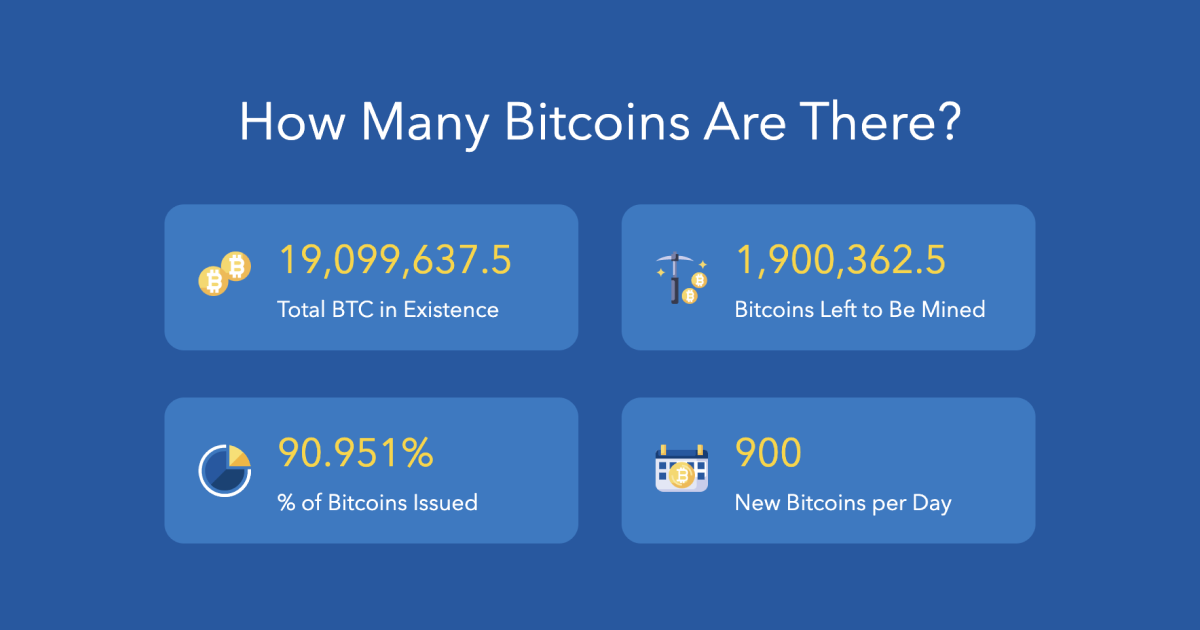
This article will delve into the intricacies of Bitcoin’s supply mechanics, exploring its fixed cap, the fascinating process of its issuance, and the profound financial implications of its programmed scarcity. Understanding these elements is not merely an academic exercise; it is crucial for anyone seeking to grasp Bitcoin’s role in personal finance, investment portfolios, and the future of global monetary systems.
The Immutable Foundation: Bitcoin’s Fixed Supply Cap
One of Bitcoin’s most revolutionary features is its absolute scarcity, encoded directly into its protocol by its pseudonymous creator, Satoshi Nakamoto. This design choice fundamentally differentiates it from conventional monetary systems and serves as the bedrock of its “digital gold” narrative.
Bitcoin’s Finite Limit: 21 Million Coins
The most crucial answer to “how many Bitcoin are left” is rooted in this immutable rule: there will never be more than 21 million Bitcoin in existence. This hard cap is not an arbitrary number but a foundational principle ensuring that Bitcoin’s supply is predictable and resistant to inflation by arbitrary governmental or institutional decisions. This contrasts sharply with fiat currencies, whose supply can be expanded through quantitative easing or other monetary policies, often leading to devaluation over time.
The concept of a fixed supply cap is vital for its perception as a store of value. Just as gold’s value is partly derived from its finite availability and difficulty to extract, Bitcoin’s programmed scarcity aims to mimic and even surpass this characteristic in the digital realm. It offers a transparent and auditable supply schedule, removing the element of trust required in centralized financial systems.
The Rationale Behind Scarcity: A Digital Gold Standard
Satoshi Nakamoto’s vision for Bitcoin was, in part, a response to the perceived flaws of traditional banking and monetary systems, particularly the uncontrolled expansion of money supply. By imposing a hard limit, Bitcoin was designed to be deflationary by nature relative to its supply, or at least resistant to supply-side inflation. This makes it an attractive alternative asset for those seeking refuge from inflationary pressures or looking for a secure store of value in uncertain economic times.
The “digital gold” moniker stems directly from this scarcity. Gold has historically served as a hedge against inflation and economic instability due to its limited supply and universal acceptance as a valuable commodity. Bitcoin aims to replicate this function in the digital age, providing a non-sovereign, censorship-resistant, and finite asset that can retain its purchasing power over the long term. This positioning is critical for investors considering Bitcoin as a component of a diversified portfolio, especially in environments where traditional assets might be under pressure.
Contrasting with Fiat Currencies: A Paradigm Shift in Monetary Policy
The distinction between Bitcoin’s fixed supply and the elastic supply of fiat currencies is central to understanding its financial potential. Central banks manage fiat currency supply based on economic conditions, often leading to fluctuations in purchasing power. While monetary policy aims to stabilize economies, it can also lead to currency debasement.
Bitcoin, by design, offers an alternative: a monetary system governed by code, not by committees. Its predictable issuance schedule means that everyone knows exactly how many Bitcoin will ever exist and when they will be issued. This transparency and predictability are powerful draws for individuals and institutions looking for a sound monetary asset free from political interference and the erosion of value through endless printing. For personal finance and investing, this represents a fundamental paradigm shift, encouraging long-term holding (HODL) strategies based on an anticipated appreciation driven by increasing demand against a perfectly inelastic supply.
Decoding Bitcoin’s Emission Schedule: The Halving Mechanism
While the 21 million Bitcoin cap is fixed, the rate at which new Bitcoin enter circulation is precisely controlled through a clever mechanism known as the “halving.” This process is integral to managing supply and incentivizing network security.
The Mining Process and Block Rewards
New Bitcoin are introduced into the system through a process called “mining.” Miners use powerful computers to solve complex cryptographic puzzles to validate and add new blocks of transactions to the Bitcoin blockchain. As a reward for their computational effort and securing the network, the first miner to successfully add a block receives a fixed amount of newly minted Bitcoin, known as the “block reward.” Additionally, miners collect transaction fees from the transactions included in the block.
Initially, when Bitcoin launched in 2009, the block reward was 50 Bitcoin. This incentive was designed to encourage early adoption and participation in securing the nascent network. This steady stream of new Bitcoin into the market continues until the 21 million cap is reached.
The Halving Mechanism Explained
The halving, or “halvening,” is a programmed event where the block reward for miners is automatically cut in half. This event occurs approximately every four years, or more precisely, after every 210,000 blocks are mined. The purpose of the halving is to control the rate of new Bitcoin entering circulation, creating a predictable disinflationary supply schedule. By reducing the supply of new Bitcoin, the halving reinforces the scarcity model and extends the period over which new coins are mined, pushing the final issuance date far into the future.
This predictable reduction in supply is a core economic feature. It creates supply shocks that, historically, have often preceded significant price movements. Investors and analysts keenly track halving events as they represent a major milestone in Bitcoin’s economic lifecycle, influencing supply-demand dynamics.
Past and Future Halving Events and Their Impact
Bitcoin has already undergone several halving events, each having a profound impact on its circulating supply and often, its market valuation:
-
First Halving (November 2012): Block reward reduced from 50 BTC to 25 BTC.
-
Second Halving (July 2016): Block reward reduced from 25 BTC to 12.5 BTC.
-
Third Halving (May 2020): Block reward reduced from 12.5 BTC to 6.25 BTC.
-
Fourth Halving (April 2024): Block reward reduced from 6.25 BTC to 3.125 BTC.
Each halving event effectively cuts the new supply of Bitcoin entering the market by 50%. This inherent supply shock, combined with sustained or increasing demand, has historically contributed to upward price pressure in the periods following a halving. For investors, understanding the halving cycle is critical for anticipating market trends and informing long-term investment strategies. It reinforces the idea that Bitcoin’s value is not solely based on utility but also on its verifiable and diminishing rate of supply, a key factor in financial modeling and price prediction.
The Current State of Bitcoin Supply
To truly answer “how many Bitcoin are left,” we need to look at the current circulating supply, the remaining unmined portion, and the intriguing phenomenon of lost coins.
Circulating Supply vs. Total Supply
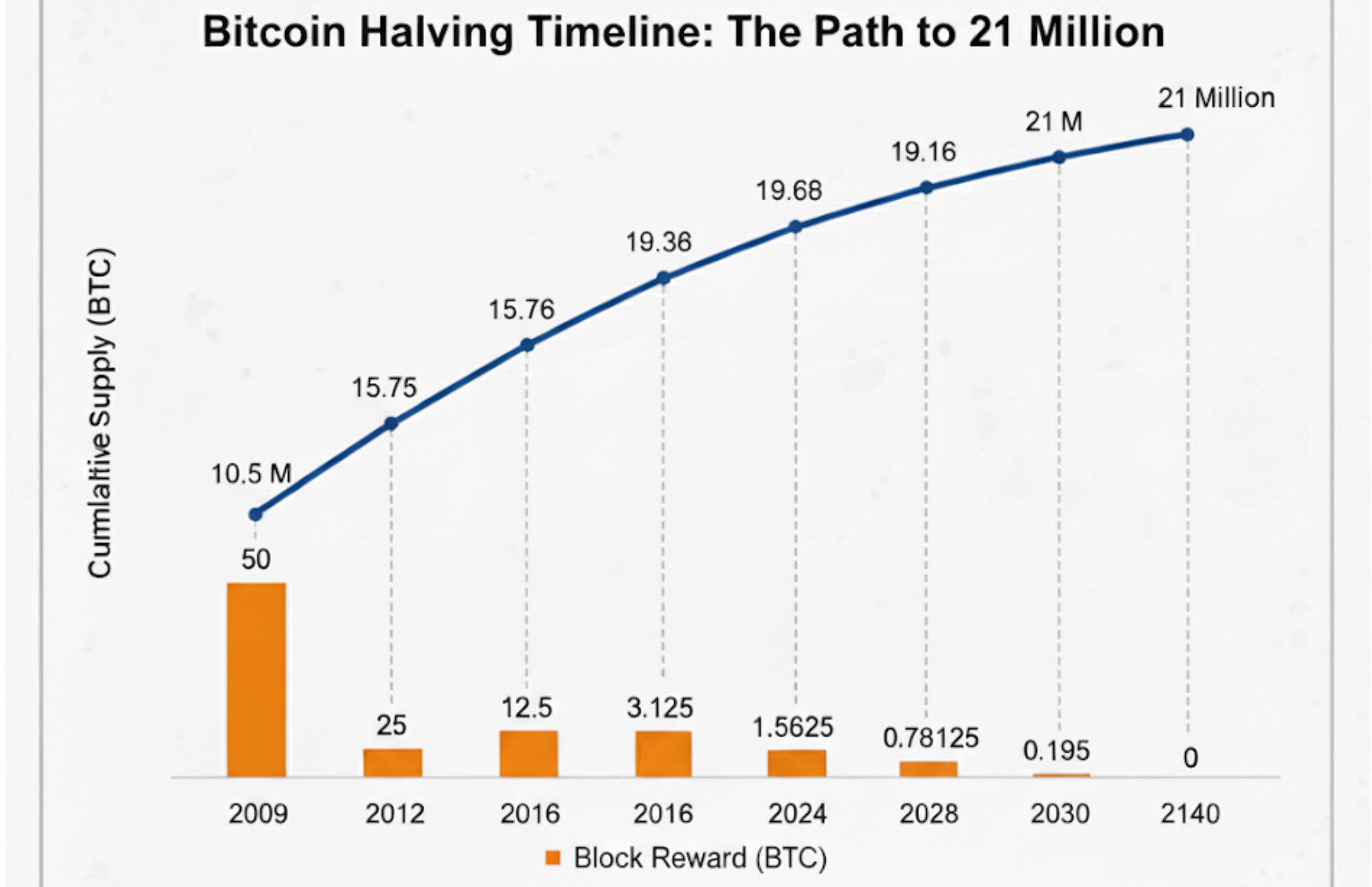
As of early 2024, approximately 19.6 million Bitcoin out of the maximum 21 million have already been mined and are in circulation. This “circulating supply” refers to the total number of Bitcoin that are publicly available and actively being traded or held. The difference between the circulating supply and the total supply (21 million) represents the Bitcoin yet to be mined.
It’s important to distinguish this from the liquid supply, which refers to the Bitcoin that are actively being moved between wallets, as opposed to those held in long-term storage (cold wallets) by investors. The vast majority of Bitcoin that will ever exist are already in circulation, making the remaining portion relatively small but still significant for miner incentives.
Estimating Remaining Bitcoin to Be Mined
With the block reward currently at 3.125 BTC per block (post-April 2024 halving), and subsequent halvings continuing every 210,000 blocks, the remaining ~1.4 million Bitcoin will be mined over an extended period. Due to the exponential decay nature of the halving process, the final Bitcoin is not expected to be mined until around the year 2140.
This long tail of issuance is strategic. It ensures that miners continue to be incentivized to secure the network for decades to come, even as the block reward diminishes. The slow, predictable trickle of new Bitcoin into the market over more than a century provides a consistent and transparent supply schedule, further cementing its appeal as a stable, long-term asset. For financial planning, this extended timeline means Bitcoin’s scarcity narrative will persist for generations.
The Concept of “Lost” Bitcoins and Its Impact on Effective Supply
An often-overlooked but significant factor in Bitcoin’s effective scarcity is the phenomenon of “lost” Bitcoins. Due to the irreversible nature of cryptographic keys, if a user loses access to their private key, their Bitcoin effectively become unspendable and permanently removed from the circulating supply. This can happen for various reasons:
-
Forgotten passwords or seed phrases.
-
Hardware wallet failures without backups.
-
Sending Bitcoin to incorrect, unrecoverable addresses.
-
Early miners or adopters who simply discarded their private keys, not foreseeing Bitcoin’s future value.
Estimates vary widely, but it is believed that anywhere from 2 to 4 million Bitcoin may be permanently lost. This means the effective maximum supply that can ever be traded or used is significantly less than 21 million. For example, if 3 million Bitcoin are lost, the true maximum spendable supply would be closer to 18 million. This further amplifies Bitcoin’s scarcity, making it an even more deflationary asset in practice. Investors consider this a crucial point, as a lower effective supply could lead to greater price appreciation if demand continues to grow.
The Long-Term Financial Implications of Scarcity
Bitcoin’s scarcity isn’t just a technical detail; it’s a fundamental economic characteristic that underpins its financial value and role in investment portfolios.
Store of Value Argument and Inflation Hedge
The most compelling financial argument for Bitcoin, especially among institutional investors, is its potential as a store of value and an inflation hedge. In an era of expansive monetary policies and rising concerns about inflation, Bitcoin’s fixed supply offers a direct counter-narrative. Unlike fiat currencies, which can lose purchasing power over time due to inflation, Bitcoin’s scarcity suggests it could potentially retain or even increase its value relative to inflationary currencies.
For individuals and businesses, allocating a portion of assets to Bitcoin can be seen as a strategic move to preserve wealth against economic uncertainties. Its finite nature provides a predictable long-term supply outlook, a stark contrast to the volatility and unpredictability of traditional asset classes influenced by government policy. This makes it an attractive alternative in personal finance strategies focused on wealth preservation and growth.
Price Discovery and Market Dynamics
The scarcity of Bitcoin plays a critical role in its price discovery mechanism. As demand for Bitcoin increases—driven by adoption, institutional investment, and global economic factors—the fixed and diminishing supply naturally creates upward pressure on its price. Each halving event, by cutting the new supply in half, creates a supply shock that has historically led to periods of significant price appreciation.
Market dynamics surrounding Bitcoin are heavily influenced by this supply-demand imbalance. While volatility is a known characteristic of the cryptocurrency market, the underlying supply mechanism provides a long-term bullish bias. Investors often refer to “stock-to-flow” models, which attempt to predict Bitcoin’s price based on its existing supply (stock) relative to its annual production (flow), highlighting the importance of scarcity in its valuation.
Investment Strategy Considerations: HODL vs. Trading
Understanding Bitcoin’s supply schedule and scarcity is paramount for developing an effective investment strategy. For many, the “HODL” (hold on for dear life) strategy is rooted in the belief that Bitcoin’s finite supply, combined with increasing adoption, will inevitably lead to long-term value appreciation. This strategy prioritizes accumulating and holding Bitcoin for years, often through market cycles, to capitalize on its long-term potential as a scarce asset.
Conversely, traders attempt to profit from Bitcoin’s short-term price volatility. However, even for traders, knowing the supply dynamics, particularly around halving events, can inform their tactical decisions. Whether one chooses to be a long-term holder or an active trader, the fundamental scarcity of Bitcoin remains a central pillar in financial analysis and strategic planning. Incorporating Bitcoin into a financial portfolio, therefore, requires a clear understanding of these supply constraints and their implications for risk and return.
Beyond 21 Million: The Future of Bitcoin’s Economy
While the final Bitcoin is not expected to be mined until 2140, the system is designed to sustain itself well beyond that point. The economic model pivots as the block reward diminishes, transitioning to a transaction fee-driven economy.
Miner Incentives Post-Mining Rewards
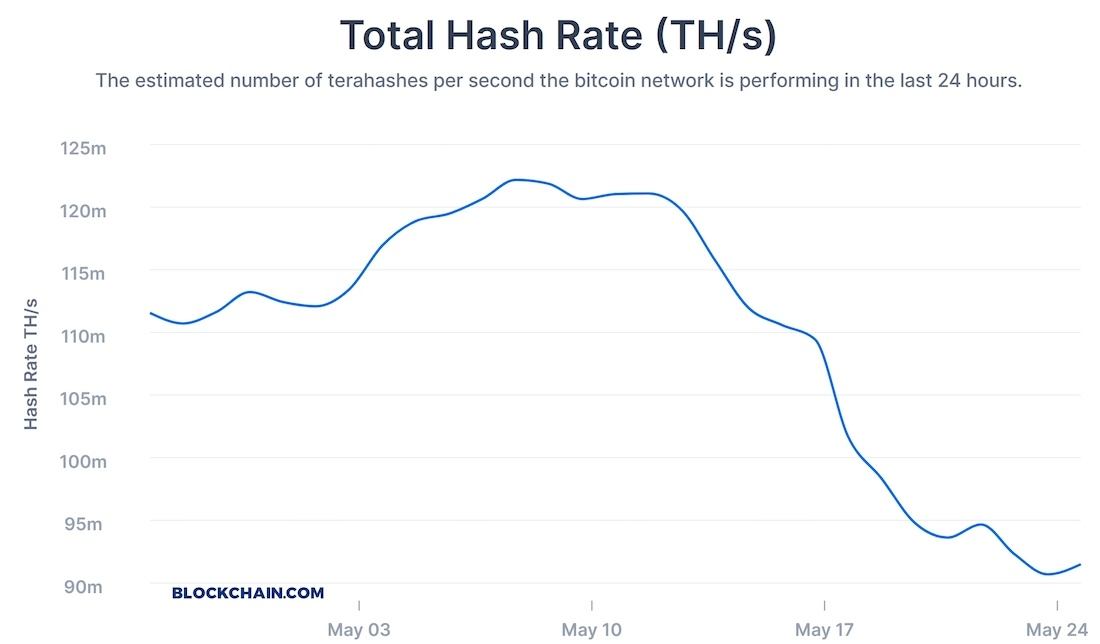
As the block reward approaches zero over the coming decades, the financial incentive for miners will shift predominantly to transaction fees. Currently, miners earn both the block reward and transaction fees paid by users to prioritize their transactions. Once the 21 million cap is reached, new Bitcoin will no longer be minted. At that point, miners will rely solely on collecting transaction fees to cover their operational costs (electricity, hardware) and turn a profit.
This transition is critical for Bitcoin’s long-term security. The network’s integrity relies on a robust and profitable mining ecosystem. Therefore, the long-term viability of Bitcoin depends on a healthy demand for transaction processing, ensuring that fees are sufficient to incentivize miners. This implies that the utility and adoption of Bitcoin as a medium of exchange will become even more crucial.
Transaction Fees as the Primary Driver
The future economic model for Bitcoin anticipates that transaction fees will grow in significance, becoming the primary remuneration for securing the network. This means that as Bitcoin adoption grows and the volume of transactions increases, the aggregate transaction fees collected by miners should be substantial enough to maintain network security.
This model encourages efficient use of the blockchain and potentially the development of “layer 2” solutions (like the Lightning Network) to handle smaller, more frequent transactions off-chain, leaving the main chain for larger value transfers or final settlement. The balance between affordable transaction fees for users and sufficient revenue for miners is a dynamic that will continue to evolve.
The Evolution of Bitcoin’s Financial Utility
The journey to 21 million and beyond signifies an evolution in Bitcoin’s financial utility. Initially conceived as a “peer-to-peer electronic cash system,” its programmed scarcity has increasingly positioned it as a “store of value” and “digital gold.” As new Bitcoin issuance approaches its end, its role may further solidify as a global settlement layer, a foundational layer for other financial applications, and a premier inflation-resistant asset.
The question “how many Bitcoin are left” is more than just about a number; it encapsulates the core economic design of a revolutionary financial technology. It speaks to a future where money can be transparent, predictable, and immune to the whims of centralized authorities, offering a new paradigm for personal finance, investment, and wealth management in the 21st century. Its finite supply is not a limitation but its greatest strength, ensuring its enduring relevance in the global financial landscape.
aViewFromTheCave is a participant in the Amazon Services LLC Associates Program, an affiliate advertising program designed to provide a means for sites to earn advertising fees by advertising and linking to Amazon.com. Amazon, the Amazon logo, AmazonSupply, and the AmazonSupply logo are trademarks of Amazon.com, Inc. or its affiliates. As an Amazon Associate we earn affiliate commissions from qualifying purchases.