
In the landscape of modern personal finance, airline miles have transitioned from mere loyalty perks to a sophisticated form of alternative currency. For the savvy traveler and financial strategist, American Airlines (AA) AAdvantage miles represent a liquid asset that, when managed correctly, can yield a return on investment far exceeding traditional cash-back rewards. However, determining exactly how many points you need for a flight is no longer as simple as consulting a static award chart.
Since American Airlines shifted toward a dynamic pricing model, the “cost” of a flight in miles fluctuates based on demand, seasonality, and route density. To maximize the value of your portfolio, you must understand the underlying mechanics of AAdvantage valuations, the strategic use of partner airlines, and the mathematical thresholds that separate a poor redemption from a high-yield financial move.
The Valuation of American Airlines Miles in Today’s Economy
Before booking a flight, a disciplined investor of miles must establish a baseline valuation. In the current market, AAdvantage miles are generally valued between 1.2 and 1.5 cents per mile (CPM). This figure serves as your “break-even” point. If a redemption offers a value lower than 1.2 CPM, you are effectively losing purchasing power; if it exceeds 2.0 CPM, you are achieving a superior financial return.
Understanding Dynamic Pricing
American Airlines has largely retired its fixed-rate award charts for its own metal (AA-operated flights) in favor of “Web Specials” and dynamic pricing. This means a one-way domestic flight could cost as little as 5,000 miles during a low-demand Tuesday in October or as much as 50,000 miles during the peak holiday season.
Dynamic pricing requires a shift in mindset. Instead of asking “What is the price?”, you must ask “Is this price efficient?” For short-haul domestic hops (under 500 miles), the sweet spot is often 7,500 to 10,000 miles. For transcontinental flights, 12,500 miles represents the standard “saver” floor. Anything significantly above these numbers warrants a comparison against the cash price of the ticket.
The Math of the Redemption
To calculate your CPM, use the following formula:
(Cash Price of Ticket – Taxes and Fees) / Number of Miles Required = Value per Mile.
For example, if a flight from New York to Los Angeles costs $450 or 30,000 miles plus $5.60 in fees, your valuation is 1.48 cents per mile. In this scenario, using miles is a rational financial decision. However, if that same flight costs only $200, the valuation drops to 0.64 CPM, making it a poor use of your points. In the latter case, paying cash and saving your miles for a higher-value redemption is the objectively better fiscal choice.
Redeeming Points for Maximum ROI: Domestic vs. International
The true power of American Airlines points is unlocked in the arbitrage opportunities found in international premium cabin travel. While domestic economy redemptions are convenient, they rarely offer the outsized value found in long-haul Business or First Class.
The “Sweet Spots” of the AAdvantage Program
Despite the move to dynamic pricing for its own flights, American Airlines maintains a more predictable structure for partner airline bookings. This is where the highest “alpha” is generated in the travel rewards space.
-
Domestic Short-Haul: Look for “Web Specials” starting at 5,000 to 7,500 miles. These are excellent for maximizing the volume of your travel.
-
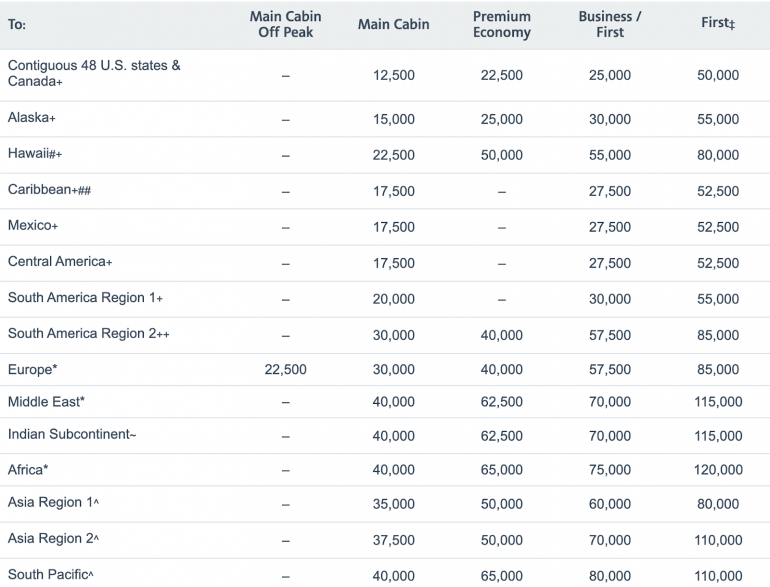
Continental U.S. to Europe: In Economy, expect to pay 22,500 to 30,000 miles one-way during off-peak dates. However, the real value lies in Business Class, which typically costs 57,500 to 70,000 miles. Given that these seats often retail for $3,000 to $5,000, your CPM can skyrocket to 5.0 or higher.
-
U.S. to Asia: Partner bookings with Japan Airlines (JAL) or Cathay Pacific remain some of the best values in the world. A Business Class seat to Tokyo for 60,000 miles or First Class for 80,000 miles offers a luxury experience that would otherwise cost five figures in cash.
Partner Airline Arbitrage
As a member of the Oneworld Alliance, American Airlines allows you to use your miles on carriers like Qatar Airways, British Airways, and Finnair. The strategic advantage here is that many of these partners still adhere to a zone-based award structure when booked through the AA portal. Utilizing AA miles to book Qatar Airways’ “Qsuite”—widely considered the best business class in the world—for 70,000 miles to the Middle East is a hallmark of elite personal finance management.
Strategies for Accumulating AAdvantage Miles

To spend miles aggressively, one must have a robust accumulation strategy. The modern AAdvantage program has evolved into a “Loyalty Point” ecosystem, where miles earned through credit card spend and strategic partnerships also count toward elite status.
Co-Branded Credit Cards and Sign-up Bonuses
The most efficient way to inject a large volume of points into your account is through sign-up bonuses (SUBs). American Airlines has a unique dual-partnership with both Citi and Barclays. By strategically timing applications for the Citi® / AAdvantage® Platinum Select® and the Barclays AAdvantage® Aviator® Red, a consumer can accumulate upwards of 100,000 to 150,000 miles within a single fiscal quarter. This provides the “capital” necessary for high-value international redemptions without depleting cash reserves.
The Bask Bank Connection
In a high-interest-rate environment, the opportunity cost of earning miles instead of cash interest must be scrutinized. Bask Bank offers a unique “AAdvantage Savings Account” that pays interest in miles rather than USD. For individuals in high tax brackets, this can be an effective strategy, as miles are generally not taxed as income upon receipt (unlike cash interest). If the yield in miles exceeds the after-tax yield of a high-yield savings account, it becomes a superior vehicle for wealth preservation and travel funding.
Shopping Portals and Dining Programs
The AAdvantage eShopping portal is a vital tool for the financially conscious. By routing everyday online purchases through this portal, you can earn 2x to 10x miles per dollar spent on top of your credit card rewards. This “double dipping” strategy accelerates your earnings. Similarly, the AAdvantage Dining program allows you to earn miles at local restaurants. These are passive income streams for your points portfolio that require minimal effort but yield significant long-term results.
Navigating Fees and Surcharges: Protecting Your Capital
A common mistake in the points-and-miles world is ignoring the “hidden” costs of an award flight. Not all “free” flights are created equal, and some can come with heavy cash requirements that erode the value of your points.
Fuel Surcharges on Partner Bookings
While using AA miles on British Airways might seem attractive due to high availability, British Airways often passes on massive “fuel surcharges” that can exceed $700 for a one-way Business Class ticket. Financially, this is often a suboptimal move. Conversely, booking the same route on American Airlines’ own planes or through partners like Iberia or Finnair will often result in much lower cash outlays—typically under $100. Always check the taxes and fees before confirming a booking to ensure your “free” flight isn’t costing you a significant portion of what a cash ticket would have.
The Value of Flexibility
American Airlines has removed change and cancellation fees for most award tickets. This provides a level of financial liquidity that cash tickets often lack. If you book a flight for 50,000 miles and the price later drops to 40,000 miles, you can cancel and rebook to “refund” the 10,000-mile difference to your account. This ability to “tax-loss harvest” your miles ensures you are always paying the lowest possible price.
Long-term Financial Planning with Travel Rewards
Treating your AAdvantage miles like a financial portfolio requires a balance of “earning” and “burning.” Unlike the stock market, airline miles are a depreciating asset. Airlines frequently devalue their points by increasing the number of miles required for a flight.
The Perils of Hoarding
Inflation hits loyalty programs just as it hits the grocery store. A flight that costs 60,000 miles today might cost 80,000 miles in two years. Therefore, the goal should not be to accumulate millions of miles for a distant retirement, but rather to maintain a “working capital” of points that you rotate through every 12 to 24 months.

Opportunity Cost: Miles vs. Cash Back
For every dollar spent on an American Airlines credit card, you are forgoing the 2% cash back you could earn on a standard flat-rate card. If you are earning 1 AA mile per dollar, you are essentially “buying” that mile for 2 cents. If you then redeem that mile for only 1.2 cents, you are losing money on every transaction.
The sophisticated user only uses AAdvantage cards when the projected redemption value exceeds the cash-back alternative, or when the spend is necessary to achieve “Loyalty Points” for elite status. Elite status itself has a financial value, providing benefits like free checked bags, complimentary upgrades, and priority processing that can save a frequent traveler thousands of dollars annually.
In conclusion, the question of how many points you need for a flight is the starting point of a larger financial equation. By focusing on high-yield redemptions, maximizing accumulation through sign-up bonuses and alternative banking, and remaining vigilant about fees and inflation, you can transform the AAdvantage program into a powerful tool for global mobility and wealth optimization.
aViewFromTheCave is a participant in the Amazon Services LLC Associates Program, an affiliate advertising program designed to provide a means for sites to earn advertising fees by advertising and linking to Amazon.com. Amazon, the Amazon logo, AmazonSupply, and the AmazonSupply logo are trademarks of Amazon.com, Inc. or its affiliates. As an Amazon Associate we earn affiliate commissions from qualifying purchases.