
At first glance, the question “how many 3/4 are in 1/2” might seem like a simple arithmetic problem, perhaps a relic from elementary school mathematics. The direct answer, of course, is less than one – specifically, two-thirds, or approximately 0.67. This isn’t a complex calculation. However, within the intricate world of finance, this seemingly straightforward query carries profound implications. It serves as a powerful metaphor for understanding the allocation of resources, the reality of budget constraints, the scaling of investments, and the delicate balance between financial aspirations and available capital.
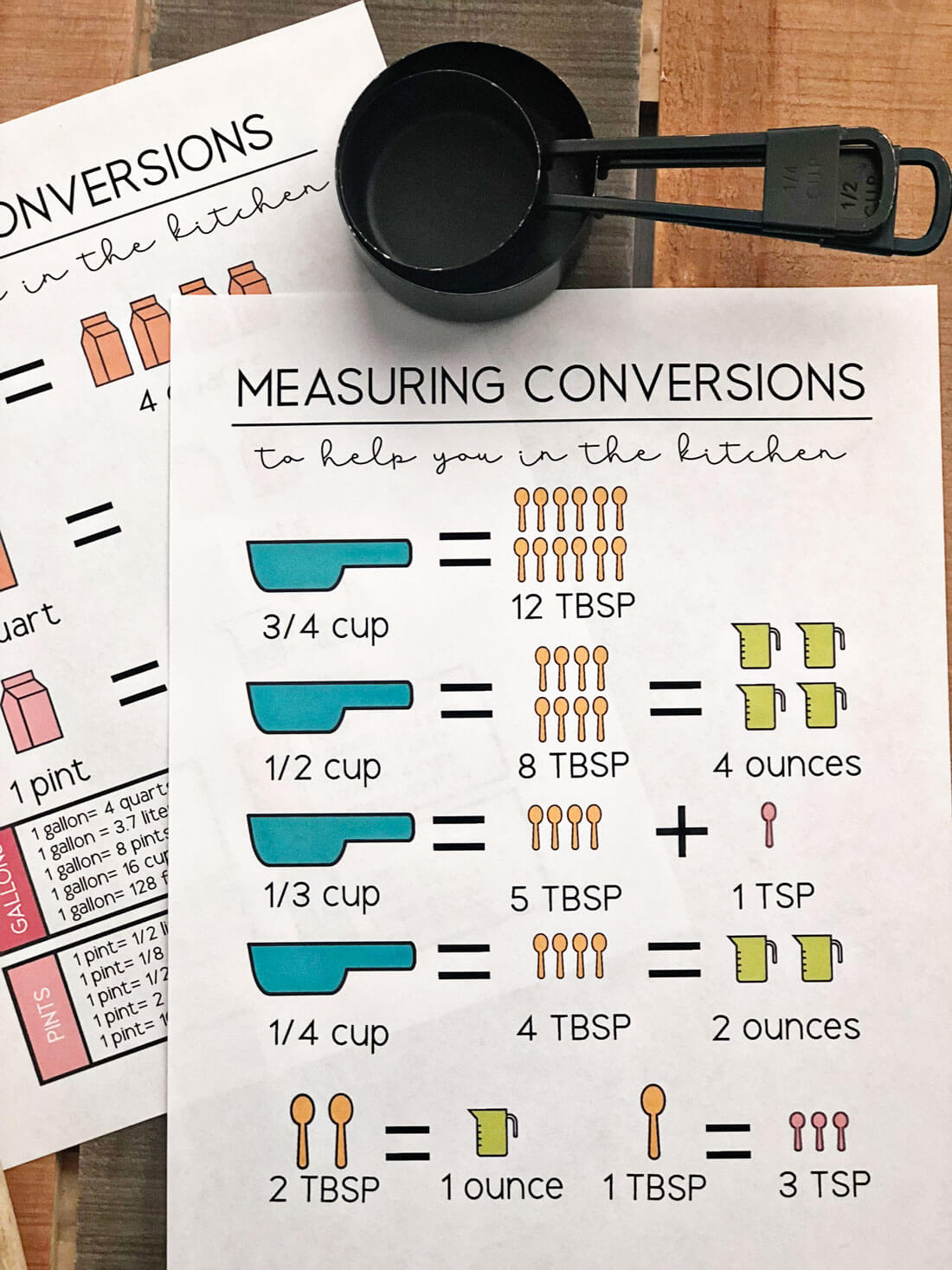
In personal finance, business strategy, and investment decisions, we frequently encounter situations where our available resources (the “1/2”) are less than what is required or desired (the “3/4”). This article delves into the financial lessons embedded within this fractional problem, exploring how understanding these inherent disproportions is crucial for astute financial management, strategic planning, and ultimately, achieving our economic goals. It’s about more than just numbers; it’s about perspective, strategy, and resilience in the face of financial realities.
Deconstructing the Core Question: A Metaphor for Financial Acumen
The foundational question, “how many 3/4 are in 1/2,” immediately confronts us with a scenario of insufficiency. You possess a quantity, 1/2, and you’re trying to fit units of 3/4 into it. Mathematically, this yields 0.50 / 0.75 = 0.666…, meaning you cannot even fit a single whole unit of 3/4 into 1/2. This core mathematical truth provides a fertile ground for exploring critical financial concepts.
The Literal Interpretation: Understanding Basic Proportions
Literally, the question asks us to divide one fraction by another. This mathematical operation is fundamental to understanding ratios, percentages, and proportions—all cornerstones of financial analysis. Whether it’s calculating debt-to-income ratios, determining the percentage of an investment portfolio allocated to a specific asset class, or understanding a company’s market share, the ability to work with and comprehend proportions is indispensable. The simplicity of the “3/4 in 1/2” problem belies the complexity of the financial scenarios it can represent. It forces us to acknowledge when a resource is simply inadequate for a single unit of a given requirement.
Shifting Perspective: From Arithmetic to Financial Strategy
The true power of this question emerges when we shift our perspective from pure arithmetic to financial strategy. If “1/2” represents your available budget or capital, and “3/4” represents the cost of a necessary item, a desired investment unit, or the resource requirement for a project, then the answer (0.67) signifies a critical shortfall. It means you don’t have enough to acquire even one complete unit. This isn’t just about simple division; it’s about recognizing limitations, prioritizing, restructuring, or seeking additional resources. It’s about understanding financial capacity and making informed decisions when faced with a deficit. This realization is the first step towards prudent financial planning, moving from merely calculating to strategically navigating financial constraints.
Budgeting in Fractions: When Resources Fall Short of Requirements
In personal and business finance, budgeting is the art and science of allocating limited resources. The “how many 3/4 are in 1/2” dilemma manifests frequently here, highlighting the common challenge of having an income or budget that is insufficient to cover all desired or even necessary expenditures.
Identifying the “3/4” Expenses and “1/2” Income Streams
Consider “1/2” as your monthly disposable income after essential bills, and “3/4” as a significant discretionary expense you wish to incur—say, a payment towards a new car, a vacation fund contribution, or a specific business investment. The calculation reveals that your available “half” doesn’t quite cover the “three-quarters” you desire to spend. This highlights the crucial exercise of identifying disproportionate expenses. Are certain lifestyle choices (the “3/4” elements) consistently outstripping your available funds (the “1/2” pool)? This calls for a rigorous review of spending habits and income generation. For businesses, this might mean analyzing project costs against allocated budgets or marketing spend against revenue targets.
The Peril of Underestimation: Why 2/3 Isn’t Enough
The numerical answer, 2/3, is more than just a fraction; it’s a stark reminder that simply having some of the required amount is not always enough. You can’t buy 2/3 of a coffee; you can’t pay 2/3 of your rent; you can’t successfully launch 2/3 of a product. In finance, there are often minimum thresholds or complete units required. If you consistently find your available funds falling short of these complete units, even by a small fraction, it leads to accumulated debt, delayed goals, or missed opportunities. This peril of underestimation is where many individuals and businesses stumble, failing to account for the full “3/4” requirement when only “1/2” is consistently available. This fractional deficit can erode financial stability over time.
Strategic Recalibration: Bridging the Fractional Gap
Recognizing that your “1/2” isn’t enough for the “3/4” forces strategic recalibration. This can involve several approaches:
-
Cutting the “3/4” Requirement: Can the expense be reduced? Is there a more affordable alternative? Can the project scope be narrowed?
-
Increasing the “1/2” Resource: Can income be boosted through a side hustle, salary negotiation, or increased sales? Can savings be strategically utilized?
-
Phased Approach: Can the “3/4” requirement be broken down into smaller, manageable chunks that do fit into the “1/2” available over time? This might mean saving for multiple months before making a large purchase or funding a project in stages.
This proactive adjustment is critical for moving beyond perpetual shortfalls and achieving financial equilibrium.
Investment Scaling and Fractional Ownership: Maximizing Limited Capital
The concept of “how many 3/4 are in 1/2” is particularly resonant in the realm of investing, where capital limitations often dictate what and how much an individual or entity can acquire.
The Rise of Fractional Investing: Opportunities in Small Increments
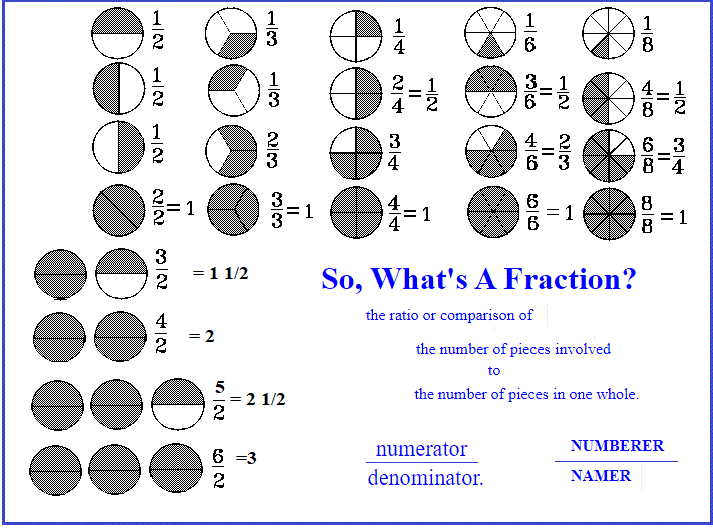
Historically, investing in high-value assets like stocks in blue-chip companies, real estate, or even fine art was prohibitive for those with limited capital. The “3/4” represented the cost of a full share or property, far exceeding the average investor’s “1/2” budget. However, the advent of fractional investing has revolutionized access to these markets. Platforms now allow investors to purchase “fractions” of shares or properties, meaning you can invest your “1/2” and acquire a portion, even if it’s less than a full “3/4” unit. This democratizes investing, enabling broader participation and allowing smaller sums to contribute to diversified portfolios. While you still can’t afford a full 3/4 unit, you can at least acquire a proportional stake equal to your 1/2 capital, aligning your investment with your budget.
Diversification Through Division: Spreading Risk Across “Half” a Budget
When operating with a limited budget (the “1/2”), the challenge of achieving diversification (often requiring multiple “3/4” investments) can seem daunting. Fractional investing directly addresses this. Instead of saving for one full “3/4” share, which would tie up all your “1/2” and leave you undiversified, you can allocate your “1/2” across multiple fractional positions. This strategy effectively turns a single “1/2” into a diversified portfolio of smaller, proportional holdings, mitigating risk without requiring a massive capital outlay. It’s about making your available “half” work smarter, spreading it across various assets even if you can’t afford a full unit of each.
Goal Attainment: How “3/4” Goals Are Impacted by “1/2” Progress
Investment goals, whether for retirement, a down payment, or education, often appear as large, intimidating “3/4” targets. Our current savings or available capital might only represent “1/2” (or even less) of that target. Understanding “how many 3/4 are in 1/2” in this context is crucial for setting realistic expectations and maintaining motivation. It means acknowledging that current efforts might only cover a fraction of the desired outcome. However, this doesn’t diminish the value of the “1/2” progress. It merely highlights the need for continued, consistent contributions and perhaps a longer time horizon. It reinforces the power of compound interest and regular contributions to eventually turn many “1/2” efforts into a consolidated “3/4” or even a “whole” goal achieved.
Business Finance and Resource Allocation: Optimizing Operational Units
In the corporate world, the challenge of fitting “3/4” requirements into “1/2” resources is a daily reality, impacting everything from project management to supply chain logistics and profit margins.
Project Planning: Allocating Manpower and Capital in Non-Whole Units
Large-scale business projects frequently require specific resource allocations: X number of full-time employees, Y hours of specialized equipment, or Z amount of capital. If a project critically needs “3/4” of a dedicated resource (e.g., a specific engineer’s time or a piece of machinery’s capacity), but only “1/2” is available within the budget or current staffing, managers face a dilemma. This often leads to critical path delays, increased costs, or compromised quality. Understanding this fractional shortfall early on allows for proactive decision-making: re-prioritizing projects, outsourcing the fractional need, or investing in additional capacity to bridge the gap. It’s a constant balancing act of ensuring critical requirements are met with existing, often fractional, availability.
Supply Chain Efficiencies: Measuring Inputs vs. Outputs in Fractions
Efficiency in the supply chain is about maximizing output (“1/2” product) from a given input (“3/4” raw materials cost). Or, conversely, ensuring that the cost of raw materials (the “3/4”) doesn’t consume an unacceptably large portion of the final product’s value (the “1/2” profit margin). Analyzing “how many 3/4 are in 1/2” helps businesses identify bottlenecks or inefficiencies where a disproportionately large input is yielding a smaller, less valuable output. This could be in waste management, energy consumption, or labor hours. Optimizing these fractional relationships is key to reducing operational costs and enhancing overall profitability, ensuring that every unit of resource translates into maximum value.
Profit Margins: Understanding the “Remaining Half” After “Three Quarters” of Costs
A critical application lies in understanding profit margins. If the cost of goods sold (COGS) and operational expenses collectively consume “3/4” of every dollar of revenue, then only “1/2” of that dollar (after taxes and other deductions) remains as net profit. Businesses constantly strive to reduce the “3/4” cost component to expand the “1/2” profit margin. The inverse relationship highlights the constant pressure to optimize spending, negotiate better supplier deals, improve production processes, and manage overheads to ensure that a significant portion of revenue translates into sustainable earnings. The smaller the “3/4” (costs), the larger the effective “1/2” (profit).
The Mindset of Fractional Finance: Embracing Growth and Prudent Planning
Ultimately, the question “how many 3/4 are in 1/2” extends beyond mere calculations to shape a fundamental mindset in financial management. It encourages a nuanced, realistic, and strategic approach to money.
Beyond Whole Numbers: Developing a Granular Financial Perspective
Life and finance rarely fit neatly into whole numbers. Incomes fluctuate, expenses vary, and investments yield fractional returns. A “fractional financial perspective” means moving beyond broad generalizations and delving into the specifics of every financial component. It’s about understanding the subtle shifts, the small deficits, and the incremental gains. This granular view allows for more precise budgeting, more informed investment decisions, and a better grasp of the true health of one’s financial situation, empowering individuals and businesses to react swiftly and strategically to minor imbalances before they escalate.
Long-Term Vision: Consolidating Fractions into Future Wholes
While “1/2” might not contain a whole “3/4” today, a long-term vision in finance is about how these smaller, sometimes incomplete, fractions can be strategically consolidated over time to form future wholes. Consistent saving of “1/2” a small sum each month can eventually fund a large “3/4” purchase. Regular, even fractional, investments can accumulate into significant wealth. This mindset fosters patience, discipline, and a forward-thinking approach, recognizing that today’s partial efforts are the building blocks for tomorrow’s complete achievements. It’s about the compounding effect of consistent fractional progress.

The Power of Incremental Progress: Turning 2/3 into 1
The raw answer to our question, 2/3, highlights that even when we can’t achieve a full unit, we often achieve a significant portion. Embracing the power of incremental progress means valuing this 2/3 achievement. If your current budget only allows for 2/3 of a desired investment, making that 2/3 investment is still progress. If your project is 2/3 complete due to resource limitations, it’s a foundation upon which to build. In finance, every step, no matter how small or fractional, contributes to the larger journey. The journey from 2/3 to a full 1 is often achieved through consistent, disciplined effort, identifying additional resources, or strategically adjusting the target. It’s a testament to the fact that even when facing a shortfall, prudent management can bridge the gap, turning perceived limitations into achievable goals.
In conclusion, the seemingly simple query “how many 3/4 are in 1/2” serves as an invaluable pedagogical tool in the world of finance. It forces a confrontation with reality, demanding careful calculation, strategic planning, and a nuanced understanding of resource allocation. By embracing the lessons embedded within this fractional problem, individuals and businesses can cultivate greater financial acumen, navigate constraints with intelligence, and ultimately pave a more secure and prosperous path forward.
aViewFromTheCave is a participant in the Amazon Services LLC Associates Program, an affiliate advertising program designed to provide a means for sites to earn advertising fees by advertising and linking to Amazon.com. Amazon, the Amazon logo, AmazonSupply, and the AmazonSupply logo are trademarks of Amazon.com, Inc. or its affiliates. As an Amazon Associate we earn affiliate commissions from qualifying purchases.