
Tesla, Inc. stands as a titan in the modern technological landscape, synonymous with electric vehicles, renewable energy, and ambitious advancements in artificial intelligence. When the question “how long have Teslas been around?” arises, it often points not just to the birth of a company, but to the origin story of a profound technological disruption that has reshaped the automotive industry and our collective imagination. From its humble beginnings as a stealth startup to its current status as a global powerhouse, Tesla’s journey spans two decades, marked by audacious engineering, relentless innovation, and a persistent drive to accelerate the world’s transition to sustainable energy. This article delves into the technological timeline of Tesla, exploring its foundational moments, key product launches, and the enduring impact it has had on the tech ecosystem.
The Genesis of an Electric Dream: From Concept to Car (2003-2008)
The narrative of Tesla begins not with its charismatic CEO, Elon Musk, but with a shared vision among a small group of engineers and entrepreneurs who saw the untapped potential of electric propulsion. The company’s inception laid the groundwork for a technological revolution that would challenge centuries of internal combustion engine dominance.
The Founding Vision and Early Ambitions (2003-2004)
Tesla Motors was officially incorporated in July 2003 by Martin Eberhard and Marc Tarpenning. Their initial motivation was rooted in a desire to prove that electric cars could be better than gasoline cars – faster, more fun to drive, and environmentally superior – rather than merely utilitarian, golf cart-esque alternatives. Their vision centered on leveraging cutting-edge battery technology, specifically lithium-ion cells, which were at the time primarily used in consumer electronics like laptops. This foundational decision to adopt readily available, energy-dense battery cells for automotive application was a critical technological departure from previous attempts at electric vehicles, which often relied on heavier, less efficient lead-acid or NiMH batteries. The early team focused on developing the complex battery pack, motor control systems, and power electronics necessary to bring a high-performance EV to life.
Elon Musk’s Entry and Strategic Direction (2004-2008)
Elon Musk’s involvement began in February 2004 when he led the Series A funding round, investing over $6.5 million and becoming the company’s chairman. Musk quickly became the driving force behind Tesla’s strategic direction, articulating a “Master Plan” that would guide the company’s product development for years to come. This plan outlined a phased approach: first, build a low-volume, high-price sports car to fund the development of a medium-volume, medium-price sedan, and then use those profits to create a high-volume, low-price car. This strategy was not just a business model; it was a technological roadmap designed to incrementally advance EV capabilities and infrastructure while simultaneously cultivating market acceptance.
The challenges in these early years were immense. Developing a high-voltage battery system that was safe, reliable, and performed in a demanding automotive environment required groundbreaking engineering. Integrating sophisticated power electronics, thermal management systems for the battery pack, and a robust software architecture were all critical steps. Tesla was not merely building an electric car; it was effectively building a complex, software-defined computer on wheels, pushing the boundaries of what was considered feasible in automotive design and manufacturing.
Electrifying the Roads: Early Models and Market Disruption (2008-2016)
The period between 2008 and 2016 saw Tesla move from an ambitious startup to a formidable force, launching two iconic vehicles that fundamentally altered perceptions of electric mobility and laid the groundwork for its future dominance.
The Roadster: Tesla’s Unconventional Debut (2008)
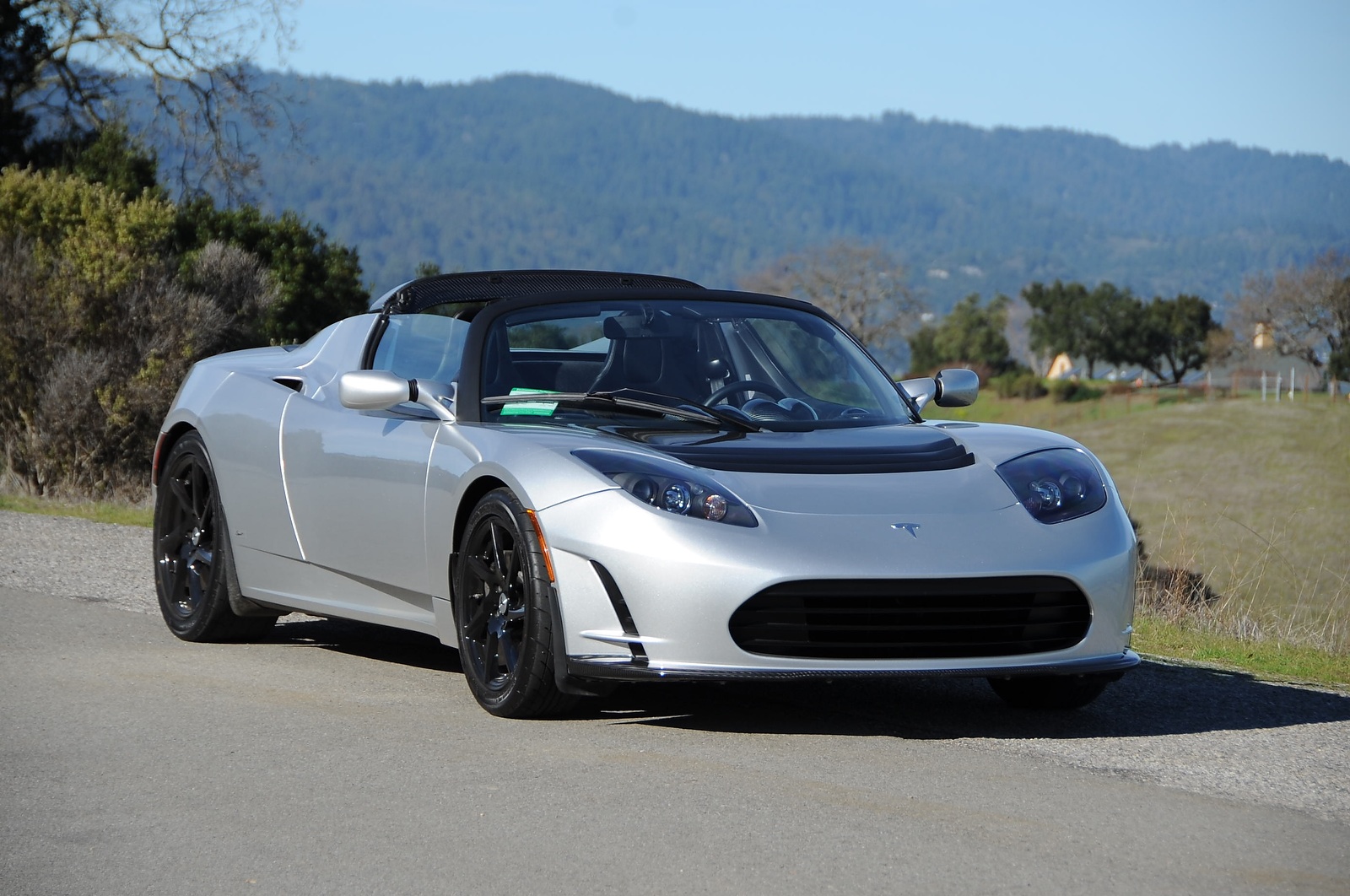
In March 2008, after years of intense development, Tesla unveiled its first production vehicle: the Roadster. Based on a Lotus Elise chassis, but with 90% new components, the Roadster was a technological marvel. It featured a revolutionary lithium-ion battery pack, a three-phase, four-pole electric motor, and an advanced power electronics module that delivered startling acceleration (0-60 mph in under 4 seconds) and a range of approximately 244 miles on a single charge – unheard of for an EV at the time. The Roadster demonstrated that electric cars could be fast, fun, and offer practical range, dispelling the widespread notion that EVs were slow, ugly, or limited in utility.
The Roadster’s launch was a proof of concept, not just for Tesla but for the entire EV industry. It showcased the viability of high-performance battery-electric vehicles and attracted significant attention from both technology enthusiasts and environmental advocates. Its innovative battery thermal management system, designed to prevent overheating and extend battery life, was a critical technological breakthrough, distinguishing it from prior EV attempts plagued by battery degradation issues.
The Model S: Redefining Luxury and Performance EVs (2012)
The true game-changer arrived in June 2012 with the launch of the Model S. Designed from the ground up as a pure electric vehicle, the Model S was a sleek, full-size luxury sedan that redefined what a modern car could be. Technologically, it was a leap forward. Its skateboard architecture, housing the battery pack beneath the floor, allowed for a low center of gravity, exceptional handling, and a spacious interior with both front and rear trunks. The Model S introduced an industry-first 17-inch touchscreen that controlled virtually all vehicle functions, integrating infotainment, navigation, and vehicle settings into a seamless digital interface.
Perhaps its most disruptive feature was the capability for Over-The-Air (OTA) software updates. This allowed Tesla to continuously improve the car’s performance, add new features, and even fix bugs remotely, treating the vehicle less like a static piece of hardware and more like a continually evolving software platform. This concept, commonplace in consumer electronics, was revolutionary in the automotive sector. Complementing the Model S launch was the aggressive rollout of the Tesla Supercharger network, a proprietary global fast-charging infrastructure that addressed range anxiety – a major barrier to EV adoption. The Superchargers, capable of delivering hundreds of miles of range in minutes, were a crucial technological and strategic asset, enabling long-distance electric travel.
Expanding the Lineup: Model X and Battery Gigafactory (2015-2016)
Tesla continued its expansion with the Model X, an all-electric SUV launched in 2015, featuring distinctive “falcon-wing” doors and advanced safety features. While structurally complex and challenging to manufacture, the Model X showcased Tesla’s ambition to penetrate diverse automotive segments with electric alternatives. Concurrently, a pivotal technological investment began with the construction of Gigafactory 1 in Nevada. Announced in 2014 and commencing production in 2016, this massive facility was designed to produce lithium-ion batteries on an unprecedented scale, significantly driving down per-unit cost and ensuring a stable supply for Tesla’s rapidly expanding vehicle production. This vertical integration of battery manufacturing was a critical strategic move, giving Tesla control over its most vital component and further cementing its technological leadership.

Towards Autonomy and Mass Market Adoption: The Modern Era (2016-Present)
The latter half of Tesla’s journey has been defined by its relentless pursuit of mass-market accessibility and advanced autonomous driving capabilities, pushing the boundaries of automotive intelligence.
The Model 3 and Global Accessibility (2017)
In 2017, Tesla introduced the Model 3, a more affordable, mass-market electric sedan designed to fulfill the final phase of Musk’s “Master Plan.” With a simpler interior, a single central screen, and streamlined production processes, the Model 3 aimed to make EVs accessible to a much broader demographic. Its launch was met with unprecedented demand, accumulating hundreds of thousands of pre-orders. While scaling production proved to be an immense challenge, often dubbed “production hell,” the Model 3 ultimately became one of the best-selling electric vehicles globally, solidifying Tesla’s position as a volume player in the automotive industry. Its sophisticated thermal management system, efficient drivetrain, and compact design made it a benchmark for affordable long-range EVs.
The Autonomous Driving Revolution (Autopilot & FSD)
From its earliest models, Tesla has been at the forefront of developing advanced driver-assistance systems (ADAS) and autonomous driving technology. Autopilot, introduced as a suite of features that enable the car to steer, accelerate, and brake automatically within its lane, rapidly evolved through OTA updates. Tesla’s approach to autonomy is heavily reliant on a camera-centric sensor suite, neural networks, and vast amounts of real-world driving data collected from its fleet.
The journey towards Full Self-Driving (FSD) capability has been characterized by iterative software releases and a complex interplay of perception, planning, and control algorithms. Tesla’s FSD Beta program, allowing select owners to test increasingly advanced autonomous features on public roads, represents a significant technological undertaking. It requires processing immense visual data in real-time, understanding complex driving scenarios, predicting the behavior of other road users, and making split-second decisions—all enabled by powerful custom silicon (Dojo chip, FSD chip) and advanced AI models trained on petabytes of driving data. While the journey to true, unsupervised FSD is ongoing and fraught with regulatory and technical complexities, Tesla’s commitment has undeniably propelled the entire industry forward in the pursuit of autonomous vehicles.
Innovation Continues: Model Y, Cybertruck, and Beyond
The innovation pipeline at Tesla remains robust. The Model Y, a compact crossover SUV launched in 2020, leveraged the Model 3 platform to enter another high-demand segment. More recently, the Cybertruck, unveiled in 2019 and entering production in late 2023, represents a radical departure in automotive design and engineering. Its stainless steel exoskeleton, “armor glass,” steer-by-wire system, and advanced 48V architecture (a move away from the traditional 12V system for improved efficiency and power delivery) showcase Tesla’s willingness to challenge conventional automotive manufacturing and design principles.
Beyond vehicles, Tesla’s technological ambitions extend to sustainable energy storage (Powerwall, Powerpack), solar energy solutions (Solar Roof), and even humanoid robotics (Optimus), all interconnected by advanced battery technology, AI, and a vision for a sustainable future. These endeavors highlight Tesla’s evolution from a niche EV maker to a diversified technology conglomerate with a broad impact across multiple sectors.
Tesla’s Enduring Impact on the Tech Landscape
Tesla’s nearly two decades in existence have had a profound and undeniable impact, not just on the automotive industry but on the broader technological landscape.
Accelerating EV Adoption and Legacy Automaker Transformation
Perhaps Tesla’s most significant achievement is its role in accelerating the global transition to electric vehicles. By proving that EVs could be high-performance, desirable, and technologically advanced, Tesla forced traditional automakers, initially skeptical, to rapidly shift their strategies towards electrification. The intense competition fostered by Tesla has led to an explosion of EV models from nearly every major manufacturer, pushing innovation in battery technology, charging infrastructure, and electric powertrain design across the board. Tesla didn’t just build electric cars; it validated the entire concept for the mass market.
Software-Defined Vehicles and Over-the-Air Updates
Tesla pioneered the concept of the “software-defined vehicle.” Its continuous reliance on OTA updates transformed cars from static machines into evolving digital platforms. This paradigm shift has influenced the entire industry, with more and more automakers now adopting similar approaches to vehicle functionality, personalization, and maintenance. The car, as a complex edge device, continuously improving and adding features post-purchase, is a technological legacy firmly established by Tesla.

Energy Ecosystem and Sustainable Technologies
Beyond vehicles, Tesla’s vision encompasses a broader energy ecosystem. Its development of grid-scale energy storage solutions and integrated solar products positions it as a key player in the renewable energy sector. By linking vehicle charging, home energy storage, and solar power generation, Tesla is building an interconnected technological infrastructure designed to enable a more sustainable and resilient energy future. This holistic approach, driven by advancements in battery technology and intelligent energy management systems, extends Tesla’s influence far beyond the garage.
In conclusion, Teslas have been around for over 15 years in production form, with the company itself founded in 2003, marking two decades of relentless technological pursuit. From the audacious vision of the Roadster to the mass-market success of the Model 3 and the futuristic promise of autonomous driving and the Cybertruck, Tesla’s journey has been a testament to the power of innovation. It has not merely built electric cars; it has built a technology ecosystem that has reshaped our understanding of mobility, energy, and the potential for a more sustainable, technologically advanced future. Its influence, rooted in profound technological disruption and an unwavering commitment to engineering excellence, continues to reverberate across industries worldwide.
aViewFromTheCave is a participant in the Amazon Services LLC Associates Program, an affiliate advertising program designed to provide a means for sites to earn advertising fees by advertising and linking to Amazon.com. Amazon, the Amazon logo, AmazonSupply, and the AmazonSupply logo are trademarks of Amazon.com, Inc. or its affiliates. As an Amazon Associate we earn affiliate commissions from qualifying purchases.