
When people ask “how long has Tesla been around,” they are often surprised to learn that the company is not a product of the 2010s tech boom, but rather a survivor of the early 2000s Silicon Valley landscape. Founded in July 2003, Tesla has been in operation for over twenty years. However, its age is less significant than its evolution from a niche hardware startup into a global leader in integrated technology, software-defined vehicles, and energy ecosystems.
To understand Tesla’s longevity is to understand the trajectory of modern computing as it moved from our desks to our pockets, and finally, to our garages. Tesla did not just enter the automotive industry; it force-multiplied the speed of technological advancement within it, turning a century-old mechanical industry into a frontier for high-end software engineering and artificial intelligence.
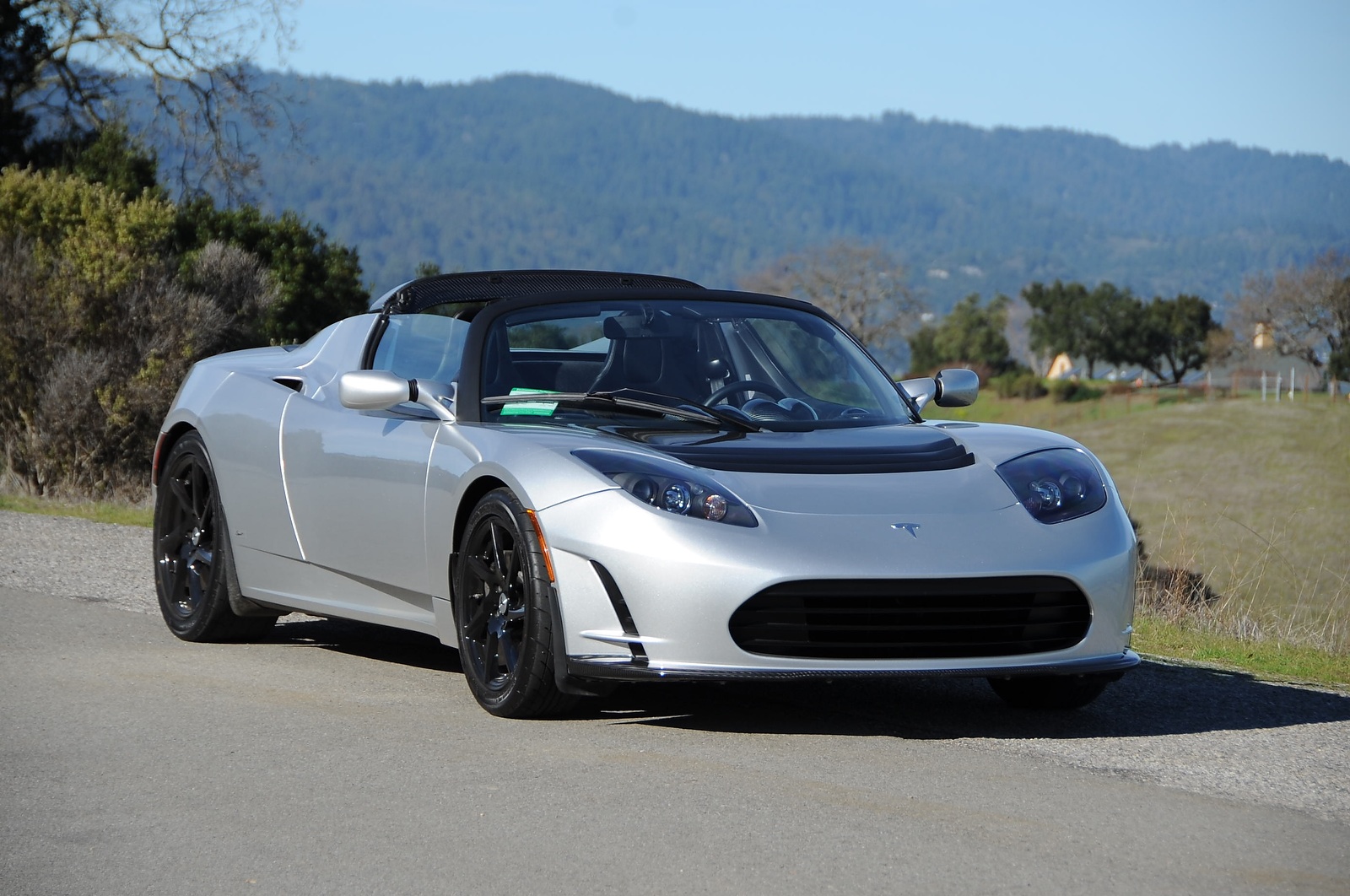
The Foundational Years (2003–2008): From Silicon Valley Concept to Hardware Reality
Tesla Motors, as it was originally known, was incorporated on July 1, 2003, by Martin Eberhard and Marc Tarpenning. Elon Musk joined shortly thereafter in 2004 as the lead investor. While the public often views Tesla through the lens of automotive manufacturing, its early years were characterized by a purely technological challenge: could the lithium-ion battery technology powering laptops be scaled to move a 2,000-pound vehicle?
The AC Propulsion Heritage and the Birth of the Roadster
The technological DNA of Tesla traces back to the Tzero, a prototype electric sports car built by AC Propulsion. Tesla’s early engineers realized that the bottleneck for electric vehicles (EVs) wasn’t the motor—it was the energy storage. By leveraging the same commodity lithium-ion cells used in consumer electronics, Tesla pivoted away from the heavy, inefficient lead-acid batteries that had plagued previous attempts at EVs, such as GM’s EV1.
The original Tesla Roadster, delivered in 2008, served as a proof of concept for this tech-first approach. It wasn’t designed for mass production but rather as a high-performance laboratory on wheels. It proved that an electric powertrain could outperform internal combustion engines (ICE) in torque, acceleration, and efficiency, setting the stage for the massive scaling that would follow.
Solving the Lithium-Ion Puzzle for Automotive Use
The core innovation during Tesla’s first five years was the Battery Management System (BMS). Cooling and managing thousands of individual cells to prevent thermal runaway was a software and thermal engineering hurdle that traditional car manufacturers were ill-equipped to solve. Tesla’s decision to build its own proprietary BMS architecture remains one of the primary reasons it maintains a technological lead over legacy competitors today. This early focus on the “battery-as-a-computer” is what allowed the company to survive the 2008 financial crisis while other startups faltered.
The Software-Defined Vehicle Revolution
As Tesla entered its second decade, it shifted its focus from merely proving that EVs could work to redefining how a vehicle interacts with its user. This era saw the introduction of the Model S in 2012, which introduced the world to the “Software-Defined Vehicle” (SDV). In this niche, Tesla operates more like a mobile operating system developer (such as Apple or Google) than a traditional metal-bender like Ford or Toyota.
Over-the-Air (OTA) Updates: Redefining Vehicle Longevity
Before Tesla, a car’s technology was static the moment it left the factory. If a manufacturer wanted to improve braking performance or add a new interface feature, the consumer had to buy a new model. Tesla disrupted this cycle through Over-the-Air (OTA) updates.
By centralizing the car’s electronic control units (ECUs) into a cohesive architecture, Tesla gained the ability to push software patches that could increase range, improve acceleration, or fix safety recalls without the vehicle ever visiting a service center. This technological paradigm shift turned the car into a living product that improves over time, effectively extending the lifecycle of the hardware and creating a massive data-driven feedback loop between the vehicle and the engineering team.
Vertical Integration: Designing Proprietary Silicon and OS
While most automakers rely on a sprawling web of Tier 1 suppliers for their electronics, Tesla took the opposite approach: vertical integration. This is most evident in their move to design their own proprietary silicon. When existing mobile chips weren’t powerful enough to handle the massive data throughput required for advanced driver assistance systems, Tesla developed its own Full Self-Driving (FSD) computer.
By controlling the silicon, the operating system (a custom Linux-based build), and the application layer, Tesla achieved a level of hardware-software synergy that is rare in the tech world. This integration allows for extreme efficiency in power consumption—a critical metric for EVs—and ensures that the hardware can support software features years into the future.

The Advancement of Powertrain and Battery Architecture
As Tesla approaches the mid-point of its third decade, the focus has returned to the “hard tech” of energy density and manufacturing physics. The company’s longevity is fueled by a relentless pursuit of the “Million Mile Battery” and a radical simplification of the manufacturing process through advanced robotics.
The 4680 Cell and the Quest for Energy Density
In 2020, Tesla unveiled the 4680 battery cell, a larger form factor designed to decrease the cost per kilowatt-hour while increasing power and range. The technological breakthrough here isn’t just the size; it’s the “tabless” architecture that allows for faster charging and better thermal management.
Tesla’s engineering team redesigned the internal chemistry and physical structure of the cell to allow electrons to travel shorter distances, reducing heat buildup. This is a purely metallurgical and chemical engineering feat that reinforces Tesla’s position as a battery technology firm first and an automaker second.
The Gigafactory Ecosystem: Scaling Manufacturing Tech
Tesla’s “Machine that Builds the Machine” philosophy is perhaps its most significant contribution to industrial technology. The Gigafactories are not just large warehouses; they are highly automated environments where software controls every aspect of the assembly.
The introduction of “Giga Press” die-casting machines—which can cast entire front and rear sections of a car frame as single pieces—has revolutionized automotive structural engineering. By reducing hundreds of parts to a handful of castings, Tesla uses physics to reduce weight and complexity, showcasing a level of manufacturing tech that legacy firms are now scrambling to emulate.
Artificial Intelligence and the Future of Autonomy
Today, the conversation regarding how long Tesla has been around is shifting toward its future as an Artificial Intelligence company. The last five years have seen Tesla transition from a manufacturer of electric cars to a developer of world-class AI models and robotics.
Computer Vision vs. LiDAR: Tesla’s Neural Network Approach
In the tech world, the battle for autonomous driving is divided into two camps: those who use LiDAR (laser-based sensing) and Tesla, which uses “Vision.” Tesla’s technological bet is that a neural network trained on billions of miles of real-world video data can navigate the world exactly as a human does—through sight.
Tesla’s FSD (Full Self-Driving) suite is essentially a giant neural network. Each Tesla on the road acts as a data collection node, feeding “edge cases”—strange or difficult driving scenarios—back to a central supercomputer. This creates an “Infinite Data Loop” where the fleet’s collective experience trains the AI, which is then pushed back out to the fleet via OTA updates. This is a massive scale AI project that places Tesla in direct competition with companies like Waymo and NVIDIA.
Dojo and the Infinite Data Loop
To process the exabytes of video data coming from its fleet, Tesla developed “Dojo,” a custom-built supercomputer. Dojo is designed specifically for AI machine learning and video training. By building their own D1 chips and supercomputing clusters, Tesla is attempting to bypass the limitations of general-purpose GPUs.
The implications of this tech extend beyond cars. The same AI “brain” that navigates a Model 3 is being adapted for “Optimus,” Tesla’s humanoid robot. This transition represents the ultimate evolution of the company: from a 2003 startup trying to make a battery-powered car to a 2024 AI powerhouse attempting to solve generalized robotics.

Conclusion: Two Decades of Constant Reinvention
In the twenty-plus years since its inception, Tesla has successfully navigated the “Valley of Death” that claims most hardware startups. Its longevity is not merely a result of survival, but of a commitment to a specific technological philosophy: that the integration of software, hardware, and AI is the only way to solve complex global problems.
From the first lithium-ion cells in the Roadster to the massive AI clusters of Dojo, Tesla has remained at the forefront of the tech sector by refusing to accept the limitations of legacy engineering. As the company moves into its third decade, it no longer looks like a car company; it looks like the blueprint for the next generation of industrial AI and energy infrastructure. Whether it is through revolutionary battery chemistry or cutting-edge neural networks, Tesla’s twenty-year journey is a testament to the power of vertical integration and software-first thinking in a hardware-centric world.
aViewFromTheCave is a participant in the Amazon Services LLC Associates Program, an affiliate advertising program designed to provide a means for sites to earn advertising fees by advertising and linking to Amazon.com. Amazon, the Amazon logo, AmazonSupply, and the AmazonSupply logo are trademarks of Amazon.com, Inc. or its affiliates. As an Amazon Associate we earn affiliate commissions from qualifying purchases.