
The desire for personal mobility often translates into the purchase of a car, a significant financial commitment for most individuals. For many, this purchase is facilitated by an auto loan, transforming a one-time large expense into a series of manageable monthly payments stretched over several years. But how long does it really take to pay off a car? The answer isn’t a simple fixed number; it’s a dynamic calculation influenced by a multitude of factors, from the initial loan terms to the borrower’s financial habits and strategic decisions.
Understanding the typical repayment period, and more importantly, the levers you can pull to shorten it, is crucial for effective personal financial management. A car loan is often one of the largest debts a household carries, second only to a mortgage. Its duration and cost can significantly impact your monthly budget, your ability to save, and your overall financial health. This article will delve into the core factors that determine how long you’ll be making car payments, explore strategies to accelerate your payoff timeline, illuminate the benefits of achieving car loan freedom, and discuss important considerations to help you make informed financial decisions.

The Core Factors Determining Your Car Loan Duration
The initial agreement you sign at the dealership or bank sets the foundation for your car loan’s lifespan. However, several interconnected variables play a crucial role in how quickly you can eliminate this debt.
Loan Term and Interest Rate
The most obvious determinants are the loan term (the number of months you have to repay) and the interest rate. Car loans typically range from 36 to 84 months, with 60- and 72-month terms being common. A longer loan term results in lower monthly payments, making the car seem more affordable in the short term. However, it also means you’ll be paying interest for a longer period, significantly increasing the total cost of the car. Conversely, a shorter term leads to higher monthly payments but reduces the overall interest paid and accelerates the payoff date. The interest rate, expressed as an Annual Percentage Rate (APR), directly impacts how much extra you pay beyond the principal. A higher APR means more of your monthly payment goes towards interest, slowing down the principal reduction, especially in the early stages of the loan.
Down Payment and Trade-in Value
The amount of money you put down upfront, either as a cash down payment or through the value of a trade-in vehicle, directly reduces the principal amount you need to borrow. A larger down payment means a smaller loan from the outset. This not only decreases your monthly payments but also shortens the time it takes to pay off the loan, assuming the same payment schedule. It also reduces the risk of being “upside down” on your loan (owing more than the car is worth), which is a common problem with new vehicles that depreciate rapidly.
Vehicle Price and Loan Amount
It stands to reason that the more expensive the car, the larger the loan amount required, assuming all other factors are constant. A larger principal balance inherently takes longer to pay off, even with a favorable interest rate and term. Choosing a vehicle that aligns with your financial capacity, rather than just your desires, is a critical step in managing your repayment timeline. Overextending yourself on a car purchase can lead to longer loan terms, higher monthly payments, and a protracted debt burden.
Your Credit Score’s Impact
Your credit score is a powerful factor influencing the interest rate you qualify for. Lenders use credit scores to assess risk; borrowers with excellent credit are considered lower risk and typically receive the most favorable interest rates. Conversely, individuals with lower credit scores are often offered higher interest rates to compensate lenders for the perceived increased risk. A higher interest rate, as discussed, means more of your payment goes to interest, prolonging the time it takes to pay down the principal and ultimately pay off the car. Improving your credit score before applying for a car loan can lead to significant savings and a faster path to debt freedom.
Strategies to Accelerate Your Car Loan Payoff
While the initial loan agreement sets a baseline, you’re not entirely locked into that timeline. Proactive financial strategies can dramatically shorten the time it takes to pay off your car, saving you money and freeing up your budget.
Making Larger or More Frequent Payments
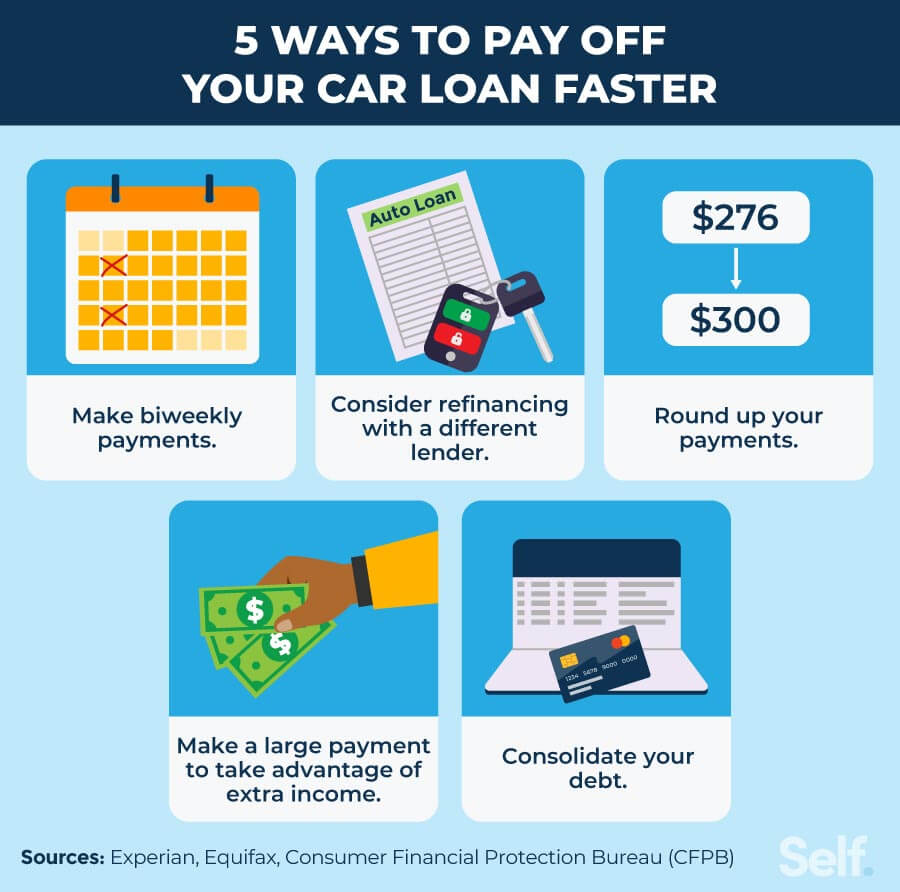
One of the most straightforward ways to accelerate your payoff is to pay more than the minimum required amount each month. Even a modest extra payment can make a substantial difference over the life of the loan, as the additional funds go directly towards reducing the principal. Similarly, making bi-weekly payments (half your monthly payment every two weeks) effectively results in one extra full payment per year. For example, if your payment is $400/month, paying $200 bi-weekly means you make 26 half-payments, totaling $5200 annually, compared to 12 full payments totaling $4800. This extra payment directly shaves time and interest off your loan. Always ensure any extra payments are applied to the principal, not future interest.
Refinancing for Better Terms
If your credit score has improved since you first took out your car loan, or if interest rates have dropped, refinancing could be a powerful strategy. Refinancing involves taking out a new loan, typically with a lower interest rate, to pay off your existing loan. A lower interest rate means more of your payment goes towards the principal, reducing the total cost and potentially allowing you to pay it off faster, even if you keep the same monthly payment amount. You could also choose a shorter term when refinancing, which will increase your monthly payment but significantly reduce the total interest paid and accelerate your payoff.
Applying Windfalls and Bonuses
Unexpected money, such as a work bonus, a tax refund, an inheritance, or even a generous gift, presents an excellent opportunity to make a lump-sum payment towards your car loan principal. Directing these windfalls to your debt can significantly reduce your outstanding balance, immediately cutting down the total interest you’ll pay and moving your payoff date closer. It’s often more financially beneficial to put these funds towards high-interest debt than to spend them on depreciating assets or non-essential items.
Leveraging Side Hustles or Extra Income
In today’s gig economy, finding ways to earn extra income outside of your primary job is more accessible than ever. Whether it’s freelancing, driving for a ride-share service, selling crafts online, or taking on consulting work, dedicating the earnings from a side hustle specifically to your car loan can be incredibly effective. Even a few hundred dollars extra per month can shave months or even years off your loan term and save you hundreds or thousands in interest. This strategy turns discretionary income into a powerful debt-reduction tool.
The Tangible Benefits of Early Car Loan Freedom
Achieving “car loan freedom” isn’t just a mental relief; it comes with significant financial advantages that can positively impact your long-term financial health and flexibility.
Eliminating Interest Payments
The most direct and quantifiable benefit of paying off your car early is the elimination of future interest payments. Car loans, especially longer ones, can accrue thousands of dollars in interest over their term. Every extra dollar you pay towards the principal accelerates the point at which you stop paying interest, leading to substantial savings that can be redirected to other financial goals.
Freeing Up Monthly Cash Flow
Once your car loan is paid off, that monthly payment amount – which could be several hundred dollars – becomes available for other purposes. This freed-up cash flow can be a game-changer for your budget. You could use it to boost your savings, contribute more to retirement accounts, pay down other higher-interest debts (like credit cards), invest, or fund other significant life goals like a down payment on a house or a child’s education. This increased financial liquidity provides greater flexibility and control over your money.
Building Equity and Financial Stability
When you fully own your car, you hold 100% equity in an asset. While cars depreciate, having a paid-off vehicle means you have an asset that you can sell without having to clear an outstanding loan balance first. This contributes to your overall net worth and financial stability. In an emergency, a paid-off car offers more options, whether it’s selling it for cash or knowing you don’t have that monthly payment hanging over your head during a tough time.
Reducing Financial Stress
Debt, particularly consumer debt, is a significant source of stress for many individuals. The constant burden of monthly payments and the fear of unforeseen circumstances affecting your ability to pay can be taxing. Paying off your car loan eliminates one substantial monthly obligation, significantly reducing financial stress and fostering a greater sense of security and peace of mind. This psychological benefit should not be underestimated in its contribution to overall well-being.
Navigating Potential Obstacles and Making Smart Choices
While paying off a car loan early is generally a wise financial move, there are a few important considerations and potential pitfalls to be aware of. Smart financial planning involves weighing these factors against your desire for early debt freedom.
Prepayment Penalties: What to Watch For
Some loan agreements, though less common with auto loans than mortgages, include prepayment penalties. These are fees charged by the lender if you pay off your loan ahead of schedule. Before making any extra payments, it’s crucial to review your loan documents or contact your lender to confirm whether a prepayment penalty applies. In most cases, the interest savings from early payoff will far outweigh a small penalty, but it’s important to be aware of any potential charges.
Balancing Car Payoff with Other Financial Goals
While accelerating your car loan payoff is beneficial, it shouldn’t necessarily come at the expense of other, potentially more critical, financial goals. For example, if you have high-interest credit card debt, it almost always makes more sense to prioritize paying that off first, as credit card interest rates are typically much higher than car loan rates. Similarly, ensuring you have an adequate emergency fund (3-6 months of living expenses) is paramount. Don’t drain your savings to pay off your car if it leaves you vulnerable to unexpected expenses.
Maintaining Emergency Savings
As mentioned, an emergency fund is a cornerstone of financial security. While the drive to become debt-free is commendable, sacrificing your emergency savings to pay off a car loan can leave you exposed. Should you face a job loss, medical emergency, or unexpected home repair, you’d then be forced to take on new, potentially high-interest, debt to cover those costs, negating the benefits of paying off your car. A strong emergency fund should always be maintained alongside debt reduction efforts.
The Trade-off: Car vs. Investment Returns
For some individuals, particularly those with very low-interest car loans and a robust investment strategy, there might be a financial argument for not aggressively paying off the car. If your car loan’s interest rate is 3% and you’re confident you can consistently earn a higher return (e.g., 7-10% in the stock market over the long term), then mathematically, it might make more sense to invest the extra money rather than paying off the loan. However, this strategy carries investment risk, and the psychological benefit of being debt-free is often preferred by many, regardless of potential arbitrage. It’s a personal decision based on risk tolerance and financial literacy.
Beyond the Payoff: What Comes Next?
Congratulations, you’ve paid off your car! This significant achievement opens up new avenues for financial planning and optimization. But what should you do with that freed-up money, and how can you plan for the future?
Planning for Future Vehicle Purchases
Even with your current car paid off, the need for transportation will likely arise again in the future. Now is an excellent time to start saving for your next car purchase. By setting aside the amount you used to pay for your car loan into a dedicated savings account, you can build a substantial fund for your next vehicle. This strategy puts you in a powerful position to either pay cash for your next car or make a very large down payment, drastically reducing or eliminating future auto loan debt and its associated interest.
Reallocating Freed-Up Funds
The cessation of car payments provides a fantastic opportunity to reallocate those funds strategically. Consider boosting your retirement contributions (401k, IRA), increasing your emergency fund, opening a college savings plan (529), or accelerating the payoff of other existing debts, especially those with higher interest rates like credit cards or student loans. You could also direct these funds towards home improvement projects or a down payment for a home, further solidifying your financial foundation.

Ongoing Vehicle Maintenance and Insurance
While the loan is gone, the costs of car ownership are not. A paid-off car still requires regular maintenance (oil changes, tire rotations, repairs) and insurance. Continue to budget for these essential expenses. In fact, with no loan company requiring full coverage, you might be tempted to reduce your insurance. However, always ensure you have adequate coverage to protect your asset and your financial well-being, even if the car is fully owned. Maintaining your vehicle properly will extend its life, delaying the need for another car purchase and further saving you money in the long run.
Paying off a car is a significant financial milestone. By understanding the factors that influence your loan duration and proactively employing strategies to shorten it, you can save money, reduce stress, and achieve greater financial flexibility. It’s a journey that requires discipline and smart decision-making, but the rewards of automotive debt freedom are well worth the effort.
aViewFromTheCave is a participant in the Amazon Services LLC Associates Program, an affiliate advertising program designed to provide a means for sites to earn advertising fees by advertising and linking to Amazon.com. Amazon, the Amazon logo, AmazonSupply, and the AmazonSupply logo are trademarks of Amazon.com, Inc. or its affiliates. As an Amazon Associate we earn affiliate commissions from qualifying purchases.