
The question “how is the market?” is perhaps the most frequent inquiry in the world of finance, yet the answer is rarely a simple “good” or “bad.” To an equity trader, the market might be a volatile playground of price action; to a retiree, it represents the stability of their pension fund; and to a first-time homebuyer, it is a daunting landscape of interest rates and inventory. Understanding the current state of the market requires peeling back layers of macroeconomic data, investor sentiment, and sectoral performance to reveal the underlying mechanisms driving global wealth.
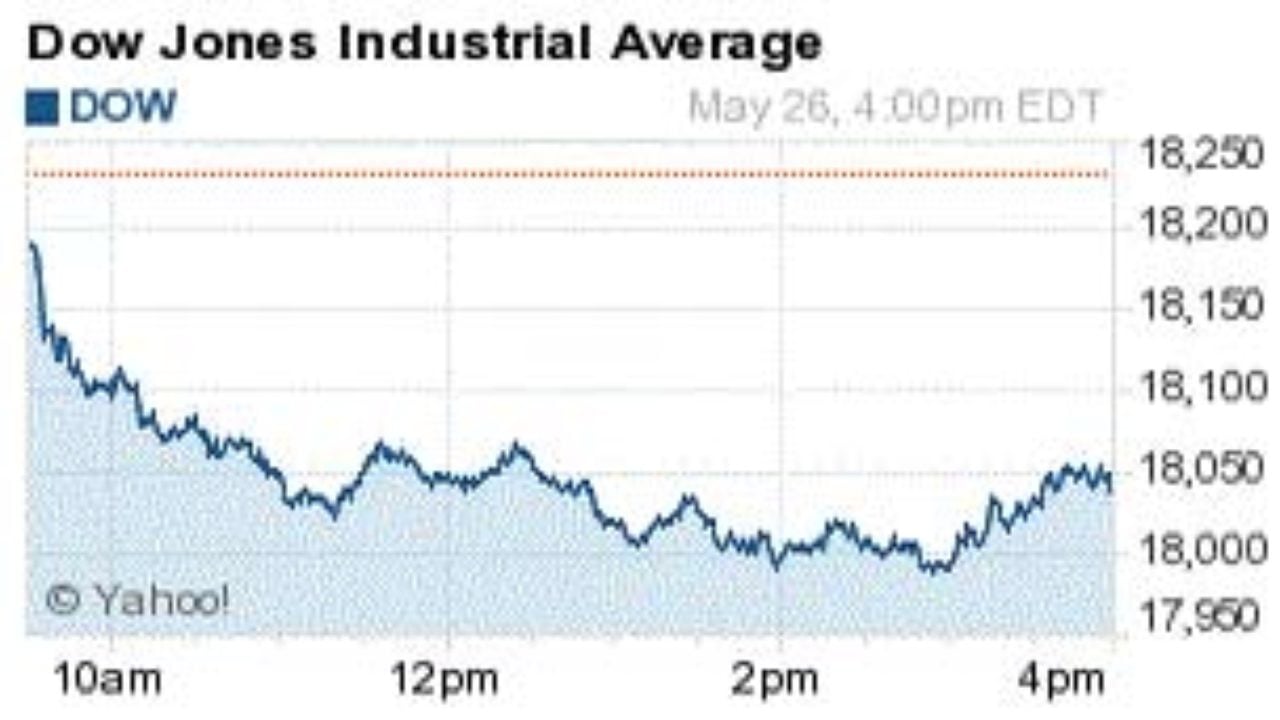
In the contemporary financial era, the market is characterized by a transition from the “easy money” period of the last decade to a more disciplined, high-rate environment. This shift has redefined how we measure success and risk. To truly grasp how the market is performing today, one must look beyond the daily fluctuations of the S&P 500 and examine the structural forces at play.
Decoding the Macros: The Fundamental Indicators Shaping Today’s Market
The primary driver of market direction in the current landscape is the interplay between inflation and central bank policy. For years, investors enjoyed historically low interest rates, which fueled growth in risk assets like technology stocks and cryptocurrencies. However, the return of inflation has forced a pivot in the global economic narrative.
Interest Rates and Central Bank Policy
The Federal Reserve and its international counterparts have been the ultimate architects of market sentiment over the past twenty-four months. By raising interest rates to combat inflation, central banks have effectively increased the “cost of money.” When interest rates rise, the present value of future cash flows diminishes, which often leads to a compression in stock market valuations—particularly for high-growth companies that are not yet profitable.
Currently, the market is in a “wait and see” mode regarding the terminal rate. Investors are meticulously scanning every speech by central bank officials for hints of a “pivot”—the moment when rates stop rising and begin to fall. The market’s health is now intrinsically tied to these policy decisions, as they dictate the attractiveness of fixed-income assets like Treasury bonds relative to the stock market.
Inflation and Purchasing Power
Inflation is the silent regulator of the market. While moderate inflation is often a sign of a healthy, growing economy, the recent spikes in Consumer Price Index (CPI) readings have created a challenging environment for both consumers and corporations. High inflation erodes purchasing power, leading to a potential slowdown in consumer spending, which accounts for a significant portion of GDP.
From a market perspective, the “stickiness” of inflation determines how long high interest rates will persist. We are currently seeing a divergence between “headline inflation” (which includes volatile food and energy prices) and “core inflation.” The market reacts favorably when core inflation shows signs of cooling, as it suggests that the aggressive monetary tightening is finally taking effect.
Employment Data and Consumer Spending
Paradoxically, a “strong” labor market has often been viewed negatively by the stock market in recent times. This is because high employment and rising wages can contribute to a wage-price spiral, fueling further inflation and prompting the Fed to keep rates higher for longer. However, as we move further into the current cycle, resilient employment is being viewed as a sign that the economy might achieve a “soft landing”—a scenario where inflation is tamed without triggering a severe recession.
Sector Performance: Where the Capital is Flowing
The market is not a monolith. While the broad indices might show one trend, individual sectors often tell a different story. In the current environment, we are witnessing a significant “rotation” of capital as investors seek safety, yield, and growth in different corners of the economy.
The Resurgence of Value vs. Growth
For much of the 2010s, growth stocks—primarily in the tech sector—outperformed everything else. In a low-rate environment, investors were willing to pay a premium for future earnings. Today, the pendulum has swung back toward “value” stocks. These are companies with stable earnings, strong balance sheets, and consistent dividends. Sectors like energy, financials, and healthcare have seen renewed interest as investors prioritize immediate cash flow over speculative future growth.
The Impact of Artificial Intelligence on Tech
Despite the high-interest-rate environment, the technology sector has found a new catalyst: Generative AI. The market has bifurcated within the tech space, where companies directly involved in the AI infrastructure—chipmakers, cloud providers, and software integrators—have seen massive capital inflows. This “AI rally” has been a significant contributor to the market’s resilience, proving that innovation can still drive valuations even when the macroeconomic backdrop is challenging.

Defensive Sectors and Commodities
In times of uncertainty, the market often retreats to “defensive” sectors. Utilities, consumer staples, and healthcare are traditionally less sensitive to economic cycles because people still need electricity, food, and medicine regardless of the economy’s state. Furthermore, commodities have reclaimed their spot as a vital asset class. Gold, often viewed as a hedge against inflation and geopolitical instability, has seen significant movement, reflecting a cautious undercurrent in the global market.
Investment Strategies for Volatile Environments
When the market is in a state of flux, the strategies that worked during a bull market often lead to disappointment. Navigating the current landscape requires a shift from speculative trading to strategic asset allocation.
Dollar-Cost Averaging (DCA) and Long-Term Horizon
One of the most effective ways to handle market volatility is through Dollar-Cost Averaging. By investing a fixed amount of money at regular intervals, regardless of the price, investors buy more shares when prices are low and fewer shares when prices are high. This mitigates the risk of “timing the market” incorrectly. In the current “choppy” market, DCA remains the gold standard for individual investors looking to build wealth over decades rather than days.
The Importance of Diversification
The era of the “60/40” portfolio (60% stocks, 40% bonds) was pronounced dead by many during the 2022 downturn when both asset classes fell simultaneously. However, diversification remains essential. Today, diversification extends beyond just stocks and bonds into “alternatives.” This includes real estate, private equity, and even high-yield savings accounts or Certificates of Deposit (CDs), which are offering their best returns in over fifteen years.
Risk Management and Hedging
For more sophisticated participants, the current market demands rigorous risk management. This includes setting stop-loss orders to protect capital and using options to hedge against downside risk. Understanding one’s “risk tolerance” is no longer a theoretical exercise; it is a practical necessity. The current market rewards those who have a plan for when things go wrong, rather than just a plan for when things go right.
The Psychological Landscape: Sentiment and Behavioral Finance
The market is driven as much by human psychology as it is by math and logic. “How is the market?” is often a question about how people feel about their money.
The Greed and Fear Index
Market sentiment often swings between two extremes: greed and fear. When the market is rallying, “FOMO” (Fear Of Missing Out) drives investors to buy at the top. Conversely, when the market dips, “FUD” (Fear, Uncertainty, and Doubt) leads to panic selling at the bottom. Currently, the market is characterized by a “wall of worry.” There is a persistent fear of an impending recession, yet the market continues to climb as investors realize that the worst-case scenarios have not yet materialized.
Avoiding the Noise
We live in an age of 24-hour financial news and social media influencers who profit from volatility and sensationalism. A crucial part of understanding the market today is learning what to ignore. Short-term price movements are often “noise”—random fluctuations that do not reflect the underlying value of an asset. Successful investors are those who can distinguish between a temporary market “hiccup” and a fundamental change in the economic landscape.

Looking Ahead: Forecasting the Next Market Cycle
As we analyze “how the market is,” we must also ask where it is going. We are likely in the middle of a transition toward a “new normal.” This new era will likely be defined by higher structural inflation than we saw in the 2010s, more localized supply chains, and a continued focus on energy transition and technological integration.
The market is currently searching for a new equilibrium. The excesses of the post-pandemic stimulus are being flushed out, and capital is being reallocated to more productive and sustainable uses. While volatility is uncomfortable, it is also the mechanism through which the market finds its true value.
For the disciplined investor, the current market is not something to be feared, but a puzzle to be solved. By focusing on fundamental indicators, maintaining a diversified portfolio, and keeping a steady psychological hand, one can navigate these turbulent waters. The market is constantly evolving, and staying informed is the only way to ensure that your financial strategy evolves with it. In summary, the market today is resilient but cautious, priced for perfection in some areas while offering deep value in others—a true landscape of opportunity for those who know where to look.
aViewFromTheCave is a participant in the Amazon Services LLC Associates Program, an affiliate advertising program designed to provide a means for sites to earn advertising fees by advertising and linking to Amazon.com. Amazon, the Amazon logo, AmazonSupply, and the AmazonSupply logo are trademarks of Amazon.com, Inc. or its affiliates. As an Amazon Associate we earn affiliate commissions from qualifying purchases.