
Tesla (TSLA) stock holds a unique position in the modern investment landscape, consistently capturing headlines, sparking debate, and defining periods of market sentiment. Far from a mere automotive manufacturer, Tesla is perceived by many investors as a bellwether for innovation, a disruptive force in multiple industries, and a highly volatile, yet potentially rewarding, financial instrument. Understanding “how Tesla stock is today” requires looking beyond just its immediate price movements, delving into the myriad factors that influence its valuation, investor psychology, and long-term potential within the dynamic financial markets.
As of [Today’s Date – for a live article this would be dynamically updated; for this generated content, it implies a snapshot view], Tesla’s stock price reflects a complex interplay of its latest quarterly earnings, production and delivery figures, macroeconomic trends, competitive pressures, and the ever-present influence of CEO Elon Musk. Its journey has been characterized by dramatic swings, rewarding patient long-term holders while challenging short-term traders. For any investor, whether seasoned or novice, a clear-eyed assessment of TSLA’s current standing and the underlying forces at play is paramount for informed decision-making.
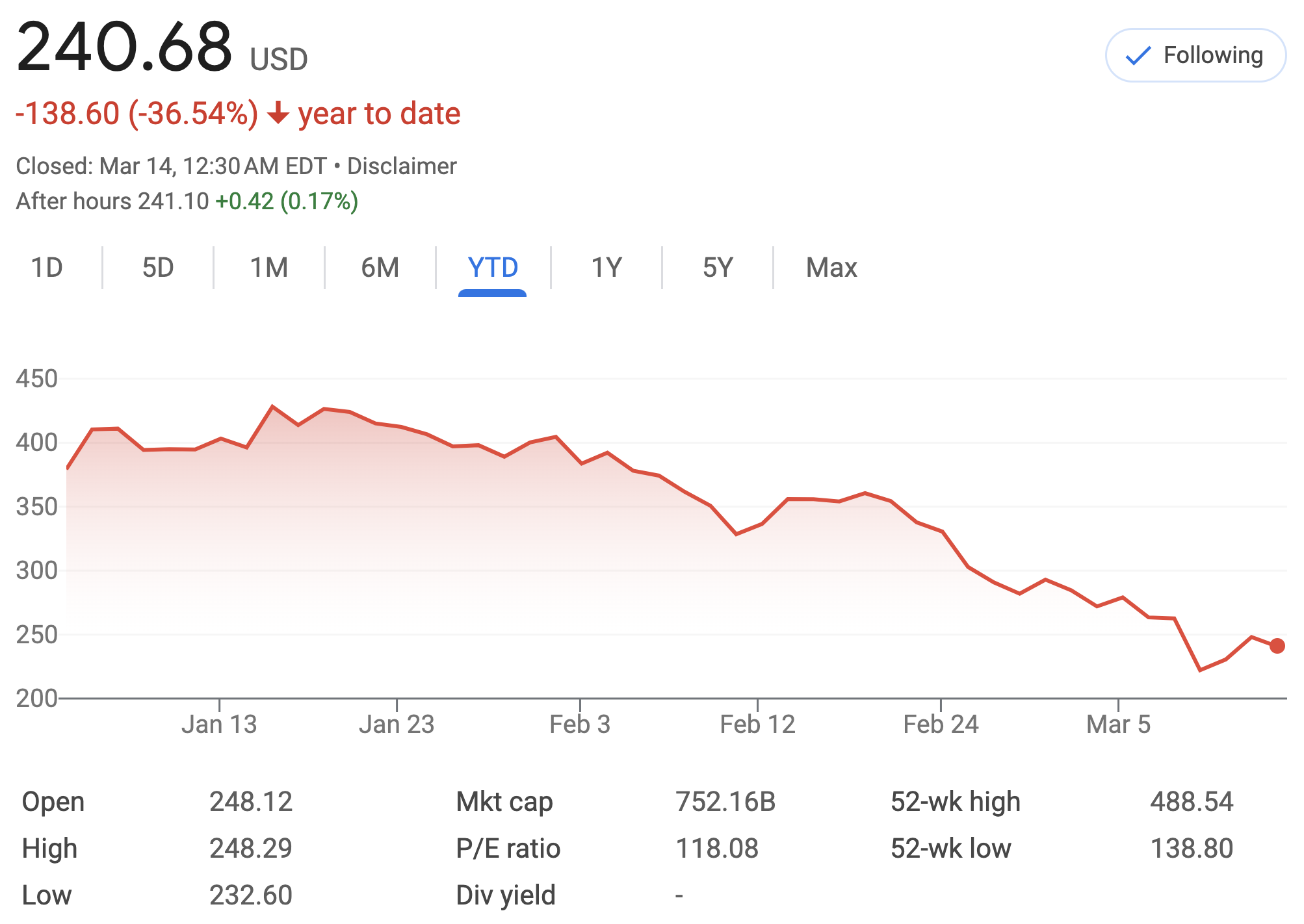
Navigating the Volatility: Tesla’s Market Performance
Tesla stock is synonymous with volatility. Its price movements are often more dramatic than the broader market, driven by a blend of fundamental business performance, speculative interest, and the unique influence of its charismatic leader. Today’s performance, like any day, is a snapshot within this turbulent yet compelling history.
Recent Price Action and Key Metrics
To assess TSLA’s immediate standing, investors typically first look at its current trading price and how it compares to recent periods. Is it up or down for the day? What are its 52-week high and low? How does its market capitalization stand in relation to other major companies? A quick glance might show a daily gain or loss, perhaps reacting to a specific news item—like an analyst upgrade, a production milestone announcement, or a broader market shift.
For instance, a particular day might see TSLA shares moving in response to data from China, a critical market for the company, indicating changes in demand or production capacity. Or, it could be influenced by a wider sector trend, such as increased investor confidence in electric vehicles (EVs) generally, or concerns about rising interest rates impacting consumer spending on big-ticket items. Volume figures are also crucial; unusually high trading volume accompanying a price movement can indicate stronger conviction behind that move, whether upwards or downwards.
Understanding TSLA’s Historical Volatility
Tesla’s stock has a reputation for being a rollercoaster. This isn’t just a recent phenomenon; it’s ingrained in its DNA. Early investors witnessed astronomical gains, while periods of significant drawdowns have tested the resolve of even the most bullish supporters. This volatility stems from several factors: its position as a growth stock with high expectations, a dedicated retail investor base that can amplify movements, and the company’s often unconventional approach to business and communication.
Comparing TSLA’s Beta—a measure of a stock’s volatility in relation to the overall market—often reveals it to be significantly higher than 1, indicating it tends to move more dramatically than the S&P 500. This characteristic makes it attractive to some traders seeking outsized gains, but also poses a higher risk for those with a lower tolerance for significant fluctuations. Understanding this historical context is vital when interpreting any single day’s performance. A 3% swing, which might be alarming for other stocks, could be considered a relatively quiet day for TSLA.
Analyst Sentiment and Short-Term Outlook
Wall Street analysts frequently issue ratings (Buy, Hold, Sell) and price targets for Tesla stock, reflecting their short-to-medium-term outlook based on their financial models and industry analysis. These ratings, while not infallible, can influence market sentiment and contribute to daily price movements. Today’s sentiment might be shaped by recent upgrades or downgrades, or even by conflicting opinions among prominent analysts.
For example, a respected analyst raising their price target due to anticipated improvements in gross margins from new factories or successful cost-cutting measures could provide a bullish catalyst. Conversely, a downgrade citing concerns over rising competition in key markets or potential delays in new product launches could trigger selling pressure. These short-term outlooks aggregate into a broader consensus, which investors often use as one data point among many when considering their positions.
Driving Factors Behind TSLA’s Current Valuation
Tesla’s valuation, consistently among the highest in the automotive sector and beyond, is underpinned by a confluence of its financial performance, operational achievements, strategic vision, and broader economic conditions. These are the engines that power investor confidence and dictate its daily market cap.
Financial Health and Earnings Reports
The bedrock of any company’s stock valuation is its financial health. Tesla’s quarterly earnings reports are pivotal events, scrutinized by investors for metrics like revenue growth, gross margins, net income, and free cash flow. A strong beat on earnings per share (EPS) or revenue, coupled with optimistic forward guidance, can send the stock soaring. Conversely, a miss or a cautious outlook can lead to a significant sell-off.
Investors also pay close attention to the profitability of its automotive segment, energy generation and storage business, and services. The ability to maintain or expand profit margins amid price cuts or increased operational costs is a critical indicator of efficiency and pricing power. Today’s stock performance might be an aftershock of a recent earnings call, where executives provided updates on production ramp-ups, cost efficiencies, or challenges faced in various markets.
Production and Delivery Numbers
As an automaker, Tesla’s production and delivery figures are paramount. These metrics, often released ahead of full earnings reports, provide an early indication of the company’s operational success and market demand. Meeting or exceeding analyst expectations for vehicle deliveries demonstrates the company’s ability to scale manufacturing and capture market share. Failure to meet targets, or revised guidance downwards, can significantly dent investor confidence.
The geographical breakdown of deliveries—e.g., strong growth in Europe or China versus North America—also offers insights into market penetration and diversification. Any news today regarding production bottlenecks, factory utilization rates, or new model ramp-ups (like the Cybertruck or next-gen vehicle platform) would directly impact how investors perceive its short-term operational capabilities and future growth prospects.
Competitive Landscape and Market Share
Tesla operates in an increasingly crowded and competitive environment. While it pioneered the EV market, traditional automakers like Ford, GM, Volkswagen, and Hyundai, along with new pure-play EV startups like Rivian and Lucid, are rapidly expanding their electric offerings. The market’s perception of Tesla’s competitive edge, whether in battery technology, charging infrastructure (Supercharger network), software, or manufacturing efficiency, constantly influences its valuation.
News today regarding a competitor’s new EV launch, a breakthrough in battery technology from a rival, or a shift in market share data could weigh on TSLA. Investors are keen to see if Tesla can maintain its leadership position and pricing power, especially as more affordable EV options become available and government incentives shift.
Macroeconomic Headwinds and Tailwinds
Broader economic conditions play a significant role in how Tesla stock performs. Interest rates, inflation, and overall consumer confidence directly impact demand for new vehicles, particularly premium ones. Higher interest rates, for instance, can make car loans more expensive, potentially dampening sales. A strong economy with high employment, conversely, might fuel demand.
Supply chain issues, geopolitical tensions (affecting key material sourcing or international market access), and commodity prices (like lithium or nickel) also affect Tesla’s production costs and profitability. Today’s TSLA stock movement might reflect a reaction to global economic data, central bank announcements, or changes in international trade policies, rather than anything specific to the company itself.
The Long-Term Investment Thesis for Tesla Stock
While daily fluctuations dominate headlines, many investors hold Tesla stock for its long-term potential, viewing it as more than just an automotive company. The long-term thesis is built on innovation, brand strength, and the visionary leadership that aims to disrupt multiple industries.

Innovation and Future Growth Vectors
At the heart of the long-term bullish case for Tesla is its relentless pursuit of innovation. Beyond EVs, the company is heavily invested in artificial intelligence (AI), particularly through its Full Self-Driving (FSD) software, Dojo supercomputer, and nascent humanoid robot project, Optimus. These ventures, while currently revenue-generating for FSD but speculative for Optimus, represent potential massive future growth vectors that could unlock entirely new markets and revenue streams.
The energy generation and storage business, encompassing solar panels and Powerwall/Megapack batteries, also offers significant growth potential as the world transitions to renewable energy. Investors in TSLA are often betting on these future technologies and their ability to command premium valuations, seeing Tesla as an AI and energy company disguised as a carmaker.
Brand Loyalty and Global Expansion
Tesla has cultivated a powerful brand that resonates with consumers globally, synonymous with innovation, sustainability, and performance. This strong brand loyalty translates into continued demand, even amidst increasing competition. Its global manufacturing footprint, with Gigafactories in the U.S., China, and Germany, positions it to cater to major markets efficiently.
The expansion of its Supercharger network and service infrastructure further strengthens its ecosystem, creating a moat against competitors. The ability to rapidly expand into new geographical markets and successfully launch new models (like the upcoming mass-market vehicle) are crucial components of its long-term growth story.
The Elon Musk Factor
Perhaps no other CEO is as intimately tied to his company’s stock performance as Elon Musk. His vision, ambition, and ability to execute have been instrumental in Tesla’s rise. However, his public persona, sometimes controversial statements, and commitments to other ventures (SpaceX, X/Twitter) can also introduce unique risks and volatility.
For long-term investors, Musk’s leadership is often seen as a critical asset, propelling the company into areas others wouldn’t dare. Yet, the impact of his distractions or controversies can weigh on the stock, making the “Elon Musk factor” a double-edged sword that forms an undeniable part of the long-term investment calculus.
Risks and Challenges for TSLA Investors
Despite its impressive growth, Tesla stock is not without significant risks. Understanding these challenges is crucial for a balanced investment perspective, particularly in a stock valued so highly on future potential.
Regulatory Scrutiny and Geopolitical Risks
Tesla, like any major global corporation, faces increasing regulatory scrutiny. This includes investigations into its FSD technology, environmental regulations, and worker safety standards across its factories. Any adverse regulatory ruling or significant recall could impact production, reputation, and profitability.
Furthermore, its substantial operations in China expose it to geopolitical risks, including trade tensions, regulatory changes within China, and broader international relations that could affect its market access or supply chain. Diversification of manufacturing and sales across different regions aims to mitigate some of these risks, but they remain a persistent concern.
Intense Competition and Pricing Pressure
While Tesla once enjoyed a near-monopoly in premium EVs, the market is now fiercely competitive. Traditional automotive giants are pouring billions into electrification, leveraging their existing scale, distribution networks, and brand recognition. New EV startups are also vying for market share with compelling designs and technologies.
This heightened competition invariably leads to pricing pressure. Tesla’s strategy of price adjustments, while sometimes boosting demand, can compress profit margins and raise questions about the long-term sustainability of its premium pricing model. Investors must continually assess whether Tesla’s innovation and brand strength are sufficient to fend off rivals and maintain profitability.
Valuation Concerns and Investor Sentiment Shifts
For many years, Tesla’s valuation has been a point of contention, with critics arguing it trades at a significant premium compared to traditional automakers, even after accounting for its growth trajectory. This high valuation implies that a substantial portion of its future growth potential is already priced into the stock.
Any significant slowdown in growth, unexpected operational challenges, or a shift in broader market sentiment (e.g., a rotation out of growth stocks into value stocks) could lead to a sharp re-evaluation of TSLA. Retail investor sentiment plays a huge role in Tesla’s price movements, and a sudden shift in this sentiment, often driven by social media trends or market gurus, can amplify selling pressure.
Actionable Insights for Potential and Current Investors
Given the complexities surrounding Tesla stock, an informed approach is essential for anyone considering an investment or managing an existing position.
Due Diligence and Diversification
Before investing in TSLA, or any stock, thorough due diligence is paramount. This involves researching the company’s financials, understanding its business model, staying updated on industry trends, and critically evaluating news and analyst reports. Do not invest based purely on hype or past performance.
Furthermore, diversification is a cornerstone of prudent investing. Given TSLA’s inherent volatility, it is rarely advisable to make it an excessively large portion of a portfolio. Spreading investments across different asset classes, sectors, and geographies can help mitigate the risks associated with any single stock.
Considering Your Investment Horizon
Your investment horizon—whether you’re looking to trade short-term or invest for the long haul—should dictate your strategy for TSLA. Short-term traders might focus on technical analysis, daily news catalysts, and risk management techniques like stop-loss orders to navigate its volatility.
Long-term investors, conversely, might look past daily swings, focusing instead on Tesla’s fundamental growth story, its innovative pipeline, and its potential to disrupt multiple industries over the next decade. For them, dips might be seen as buying opportunities, assuming the long-term thesis remains intact.

Staying Informed
The landscape surrounding Tesla is constantly evolving. Staying informed through reputable financial news sources, reviewing the company’s official SEC filings (10-K, 10-Q), and following expert analysis can provide critical insights. Be wary of unsubstantiated rumors or overly optimistic/pessimistic social media chatter. Regular monitoring of its quarterly reports, delivery numbers, and any significant corporate announcements will enable investors to adapt their strategy as new information emerges.
In conclusion, “how Tesla stock is today” is never a simple answer. It’s a dynamic reflection of its cutting-edge operations, ambitious vision, fierce competition, and the broader economic currents that shape global markets. For investors, it remains a high-stakes, high-reward proposition that demands continuous analysis and a robust understanding of both its immense potential and its significant risks.
aViewFromTheCave is a participant in the Amazon Services LLC Associates Program, an affiliate advertising program designed to provide a means for sites to earn advertising fees by advertising and linking to Amazon.com. Amazon, the Amazon logo, AmazonSupply, and the AmazonSupply logo are trademarks of Amazon.com, Inc. or its affiliates. As an Amazon Associate we earn affiliate commissions from qualifying purchases.