
Tesla, Inc. (TSLA) remains one of the most polarizing and closely watched assets in the global financial markets. For investors, the question of “how Tesla stock is doing” is rarely a simple matter of looking at a daily percentage change. It involves a complex interplay of production metrics, interest rate environments, and the shifting landscape of the global automotive industry. As a pioneer in the electric vehicle (EV) space, Tesla has transitioned from a high-growth speculative play into a dominant industrial powerhouse, yet its stock price continues to exhibit the volatility of a Silicon Valley startup. To understand the current state of Tesla’s stock, one must look beyond the ticker symbol and analyze the fundamental financial drivers, the macroeconomic headwinds, and the future catalysts that define its valuation.
Understanding Tesla’s Current Stock Performance and Valuation
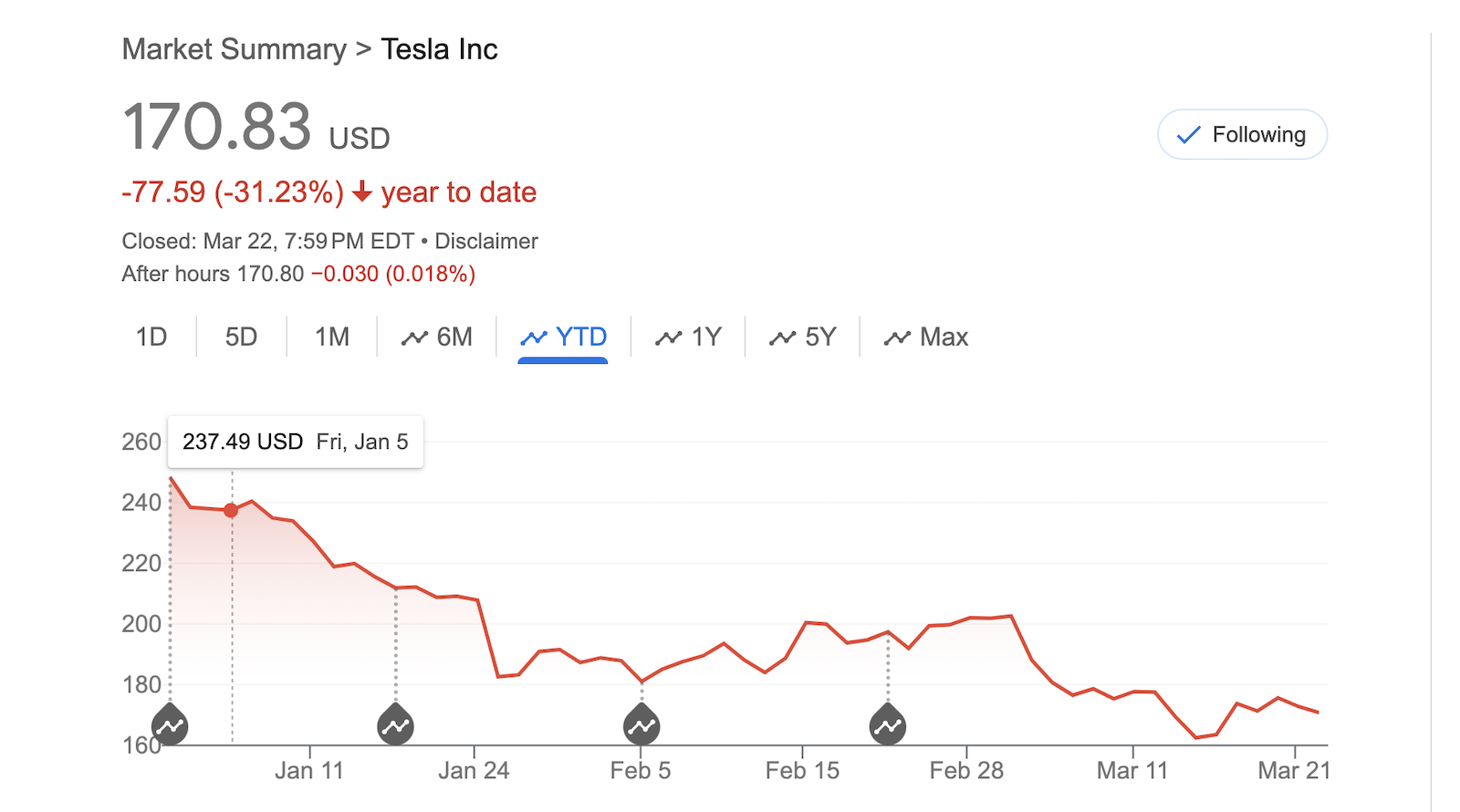
Tesla’s stock performance is often viewed through the lens of its massive market capitalization, which frequently exceeds that of several of its largest competitors combined. However, for the discerning investor, the “how” of its performance is rooted in specific financial metrics and historical price action.
Recent Price Action and Historical Context
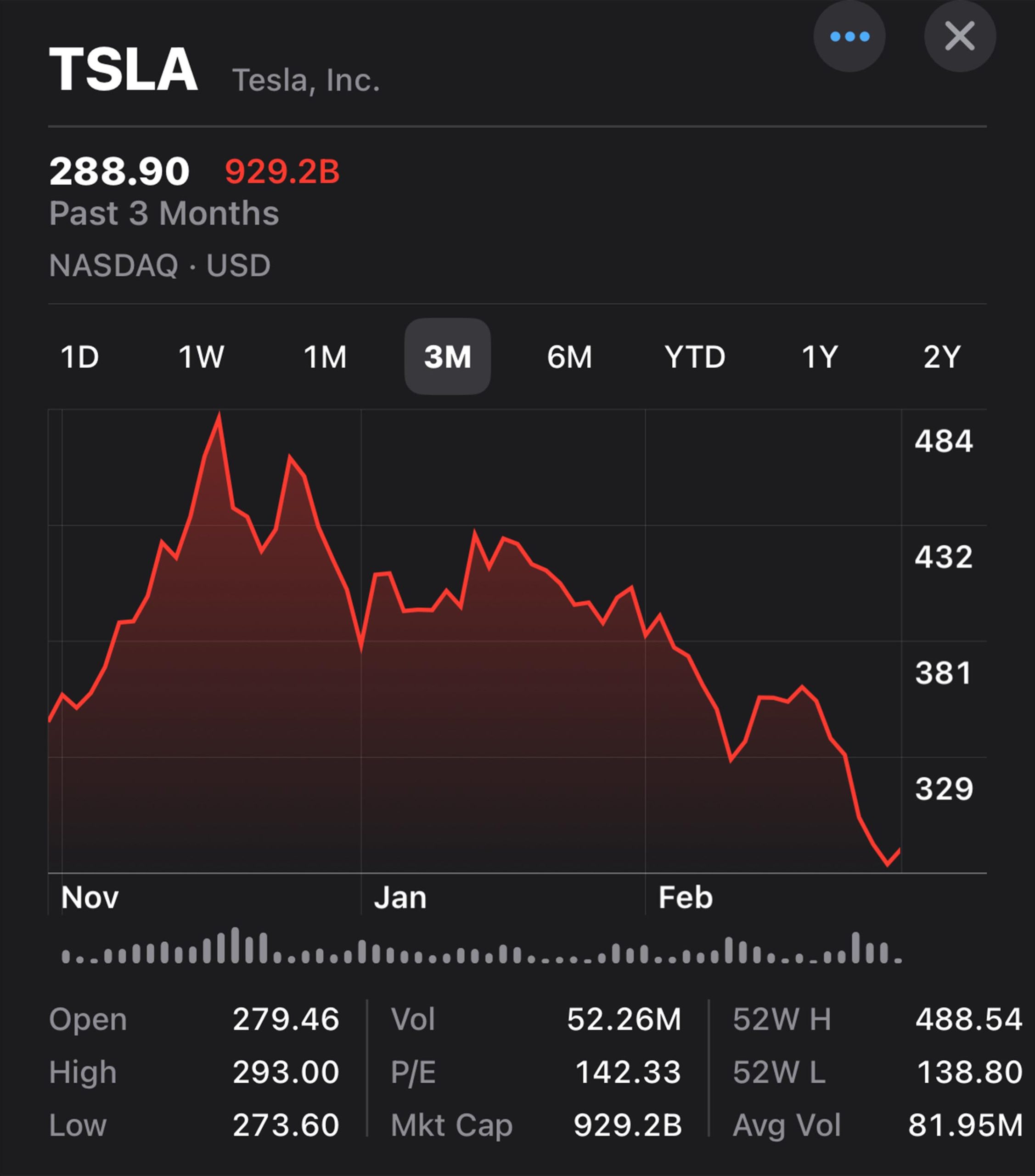
In recent fiscal periods, Tesla has experienced significant fluctuations. After reaching all-time highs during the post-pandemic bull market, the stock has faced a series of corrections driven by cooling EV demand and increased competition. When assessing how the stock is doing, investors must differentiate between short-term “noise”—such as social media sentiment or quarterly delivery misses—and the long-term trajectory of the company’s capital appreciation. Historically, TSLA has been a “high-beta” stock, meaning it moves more aggressively than the broader S&P 500. For an investor, this means that while the upside potential is significant, the drawdowns can be equally sharp, requiring a high risk tolerance.
Key Valuation Metrics: P/E Ratio and Market Cap
One of the most debated aspects of Tesla’s financial health is its Price-to-Earnings (P/E) ratio. Unlike traditional automakers like Ford or General Motors, which often trade at single-digit P/E multiples, Tesla frequently commands a premium multiple. This suggests that the market is not pricing Tesla solely on its current car sales but on its future potential in software, energy, and robotics. When the P/E ratio compresses, it often signals that the market is becoming more skeptical of Tesla’s growth projections. Monitoring the relationship between Tesla’s earnings per share (EPS) and its stock price is critical for determining whether the stock is “expensive” or “cheap” relative to its own history.
Comparative Analysis with Legacy Automakers
To gauge how Tesla is truly doing, it must be benchmarked against the broader automotive sector. While Tesla led the way in EV margins for years, the gap is narrowing. Financial analysts look at “operating margin per vehicle” as a primary indicator of health. When Tesla performs well, its margins significantly outpace legacy manufacturers who are still burdened by the high costs of transitioning away from internal combustion engines. However, when Tesla engages in price wars to maintain market share, its stock often reacts negatively as investors fear the erosion of the company’s “premium” financial profile.
The Core Drivers of Revenue and Profitability
A stock’s performance is ultimately a reflection of the company’s ability to generate cash and grow its bottom line. For Tesla, the revenue engine is multifaceted, extending beyond just selling Model 3s and Model Ys.
Vehicle Deliveries and Manufacturing Scale
The “heartbeat” of Tesla’s stock performance is its quarterly delivery report. This number is the primary metric the market uses to judge growth. If Tesla meets or exceeds delivery guidance, the stock typically rallies. Manufacturing efficiency at “Gigafactories” in Texas, Berlin, and Shanghai is the backbone of this revenue. Lowering the cost of goods sold (COGS) through advanced manufacturing techniques like “Giga-casting” allows Tesla to maintain profitability even when it lowers vehicle prices, a financial feat that few other EV makers have replicated.
Energy Storage and Solar Solutions
A growing segment of Tesla’s business that often bolsters its stock during slow automotive quarters is Tesla Energy. This includes the Megapack and Powerwall products. From a business finance perspective, this segment represents a massive “total addressable market” (TAM) that is less cyclical than the auto industry. High-margin energy storage deployments are increasingly contributing to the company’s gross profit, providing a diversified revenue stream that makes the stock more resilient against downturns in the consumer car market.

The Impact of Price Cuts on Operating Margins
In recent years, Tesla has adopted a strategy of aggressive price reductions to stimulate demand and box out competitors. From a “Money” and “Investing” standpoint, this is a double-edged sword. On one hand, it secures market share and increases the fleet of vehicles that could eventually run Tesla’s high-margin software. On the other hand, it puts immediate pressure on operating margins. Investors who prioritize short-term profitability often sell off the stock following these announcements, while long-term “bulls” view it as a necessary step to achieve the scale required for future dominance.
Macroeconomic Influences and Market Sentiment
No stock exists in a vacuum, and Tesla is particularly sensitive to the broader economic environment. How the stock is doing is often a reflection of global fiscal policies as much as it is a reflection of Elon Musk’s leadership.
Interest Rates and Consumer Financing
Because most vehicles are purchased through financing, Tesla’s stock is highly sensitive to interest rate hikes by the Federal Reserve. High interest rates increase the monthly payment for consumers, effectively making the cars more expensive even if Tesla keeps the sticker price the same. For investors, a “hawkish” Fed usually spells trouble for Tesla’s valuation, as it discounts the value of future cash flows and makes the stock less attractive relative to “risk-free” assets like Treasury bonds.
Regulatory Credits and Government Incentives
A unique aspect of Tesla’s financial statements is the revenue generated from selling regulatory credits to other automakers who fail to meet emission standards. This is essentially “pure profit” and has, in some quarters, been the difference between a net loss and a net income. Additionally, government incentives like the Inflation Reduction Act (IRA) in the United States provide tax credits that lower the effective price of Tesla’s vehicles. Changes in political leadership or shifts in green energy subsidies are major risk factors that investors monitor closely, as they directly impact Tesla’s competitive pricing advantage.
Institutional vs. Retail Investor Sentiment
Tesla has one of the most dedicated retail investor bases in the world. This “fanbase” often provides a floor for the stock price during downturns. However, the “smart money”—institutional investors like pension funds and hedge funds—tends to focus more on institutional-grade metrics such as Free Cash Flow (FCF) and capital expenditures (CAPEX). When institutional ownership increases, it usually stabilizes the stock; conversely, when large funds exit their positions due to governance concerns or growth slowdowns, it can lead to significant volatility.
Future Catalysts: Growth Horizons and Risks
To answer how Tesla stock is doing, one must also look forward. The market is a forward-looking mechanism, and much of Tesla’s current valuation is “priced in” based on future technologies that have yet to reach full commercial scale.
Autonomous Driving and Robotaxi Potential
The most significant “X-factor” for Tesla’s stock is Full Self-Driving (FSD) technology. If Tesla successfully transitions from a hardware company (selling cars) to a software-as-a-service (SaaS) company (licensing autonomous software or running a Robotaxi fleet), the financial implications are astronomical. Software margins are typically 70-80%, compared to automotive margins of 15-20%. Any breakthrough or regulatory approval in the realm of autonomy serves as a massive catalyst for the stock price.
Expansion into Emerging Markets
Tesla’s ability to tap into markets like India or expand its presence in Southeast Asia is a key component of its long-term growth thesis. Investors look for “Capex” (Capital Expenditure) announcements regarding new factory locations as a sign of the company’s confidence in future demand. However, entering these markets requires navigating complex geopolitical tensions and local competition, which can introduce new layers of risk to the balance sheet.
Competitive Pressures and Market Saturation
Finally, the “EV gold rush” is over, and the era of intense competition has begun. In China, companies like BYD are producing high-quality EVs at lower price points, challenging Tesla’s dominance in the world’s largest auto market. In the West, luxury brands and domestic giants are finally bringing viable EV alternatives to market. If Tesla cannot maintain its technological lead or brand desirability, its stock may undergo a fundamental re-rating, moving away from a high-growth “tech” multiple toward a more modest “industrial” valuation.
In conclusion, Tesla stock is currently navigating a transitional phase. It is no longer the undisputed, sole player in the EV space, but it remains the most financially robust. For investors, the stock’s performance is a balancing act between impressive manufacturing scale and the reality of tightening margins and macroeconomic pressures. Whether TSLA is an attractive investment today depends on one’s belief in its ability to execute on its autonomous and energy-related goals, which represent the next frontier of its financial evolution.
aViewFromTheCave is a participant in the Amazon Services LLC Associates Program, an affiliate advertising program designed to provide a means for sites to earn advertising fees by advertising and linking to Amazon.com. Amazon, the Amazon logo, AmazonSupply, and the AmazonSupply logo are trademarks of Amazon.com, Inc. or its affiliates. As an Amazon Associate we earn affiliate commissions from qualifying purchases.