
Understanding how your Social Security benefit is calculated is a cornerstone of effective retirement planning. For millions of Americans, Social Security represents a significant, often indispensable, source of income during their non-working years. Yet, the precise mechanisms behind its determination can seem complex, shrouded in a mix of government acronyms and formulas. This article aims to demystify the process, breaking down the key factors that contribute to your monthly payment and empowering you with the knowledge to make informed decisions about your financial future.
At its core, Social Security is an earned benefit program. It’s not a savings account in the traditional sense, but rather an insurance program funded by payroll taxes. Your contributions throughout your working life establish your eligibility and shape the benefit amount you, and potentially your family, will receive. The amount you eventually collect is a complex interplay of your earnings history, your age at retirement, and a few other crucial variables designed to ensure a safety net for all Americans, while also reflecting individual contributions.

The Foundational Pillars of Social Security Benefits
Before any dollar figures can be discussed, two fundamental aspects must be established: your eligibility through earned credits and the accuracy of your earnings record. These form the bedrock upon which all future calculations are built.
Earning Social Security Credits
Eligibility for Social Security benefits isn’t automatic; it’s earned through work. As you work and pay Social Security taxes, you earn “credits.” For most people, you can earn up to four credits each year. The amount of earnings required for a credit changes annually with national average wage levels. For example, in 2024, you earn one Social Security credit for every $1,730 in earnings, up to the maximum of four credits for earnings of $6,920 or more.
While you can earn four credits per year, the crucial number for most types of benefits is 40 credits. Earning 40 credits translates to 10 years of substantial work, making you “fully insured” and eligible for retirement benefits. Without these 40 credits, you generally cannot claim retirement benefits on your own work record, though you might be eligible for spousal or survivor benefits based on someone else’s record. It’s important to note that credits stay on your record even if you stop working for a period, so you don’t lose them. They accumulate over your lifetime.
The Importance of Your Earnings Record
The Social Security Administration (SSA) maintains a detailed earnings record for every individual who pays Social Security taxes. This record is paramount, as it documents all the income on which you’ve paid FICA (Federal Insurance Contributions Act) taxes throughout your career. Each year, your employer reports your wages to the SSA, and self-employed individuals report their net earnings.
The accuracy of this record is critical because your benefit amount is directly tied to your lifetime earnings. If your earnings record is incorrect—perhaps due to an employer error, a forgotten period of work, or a clerical mistake—your future benefits could be negatively impacted. The SSA encourages everyone to review their earnings record periodically, especially through their online “my Social Security” account. Discrepancies should be reported and corrected as soon as possible, ideally before you begin collecting benefits, as there can be time limits for correcting past errors. Maintaining an accurate earnings record ensures that all your hard work and contributions are properly recognized when it comes time to determine your benefits.
Unpacking the Primary Insurance Amount (PIA)
Once eligibility is established, the core calculation revolves around determining your Primary Insurance Amount (PIA). The PIA is the monthly benefit you would receive if you start receiving benefits at your Full Retirement Age (FRA). It’s the starting point for almost all Social Security benefit calculations, including retirement, disability, and survivor benefits.
The Average Indexed Monthly Earnings (AIME)
The first step in calculating your PIA is to determine your Average Indexed Monthly Earnings (AIME). This isn’t just a simple average of all your earnings. The SSA uses a method called “wage indexing” to adjust your past earnings for changes in the national average wage level over time. This process ensures that your earnings from decades ago reflect their relative value in today’s economy. Without indexing, a dollar earned in 1980 would seem much smaller than a dollar earned today, unfairly diminishing its impact on your benefits.
Here’s how AIME is calculated:
-
The SSA identifies your highest 35 years of indexed earnings. If you have fewer than 35 years of earnings, the missing years are counted as zero.
-
Your actual earnings for each year are “indexed” to reflect the general increase in wages since the year the earnings were received, up to the indexing year (typically two years before the year you turn 62, become disabled, or die). For example, if you turned 62 in 2024, earnings from 1980 would be multiplied by an indexing factor to bring them to a relative value closer to 2022.
-
These 35 highest indexed annual earnings are summed up.
-
This total is then divided by 420 (the number of months in 35 years) to arrive at your Average Indexed Monthly Earnings (AIME). The AIME represents a normalized, inflation-adjusted average of your most significant career earnings.
The PIA Formula: Bend Points and Progressive Calculation
Once your AIME is calculated, it is plugged into a progressive formula to determine your PIA. This formula uses “bend points”—specific dollar amounts that change annually—to apply different percentage factors to different segments of your AIME. The formula is structured to be progressive, meaning it replaces a higher percentage of earnings for lower-income workers than for higher-income workers. This is a fundamental principle of Social Security, aiming to provide a basic level of income protection for everyone, regardless of their lifetime earnings.
For example, for someone who turns 62 in 2024, the PIA formula might look something like this:
-
90% of the first $1,174 of your AIME, plus
-
32% of your AIME over $1,174 and up to $7,078, plus
-
15% of your AIME over $7,078.
These “bend points” ($1,174 and $7,078 in this example) are adjusted annually to keep pace with changes in the national average wage index. The progressive nature of this formula means that while higher earners will receive a larger absolute benefit, lower earners will have a larger proportion of their pre-retirement earnings replaced by Social Security. This progressive tilt helps reduce income inequality in retirement. The sum of these three calculated segments forms your initial Primary Insurance Amount (PIA).
Factors Influencing Your Final Benefit Amount
While your PIA is the core calculation, it’s not necessarily the amount you’ll receive each month. Several other critical factors can increase or decrease your actual payment.
Your Full Retirement Age (FRA)
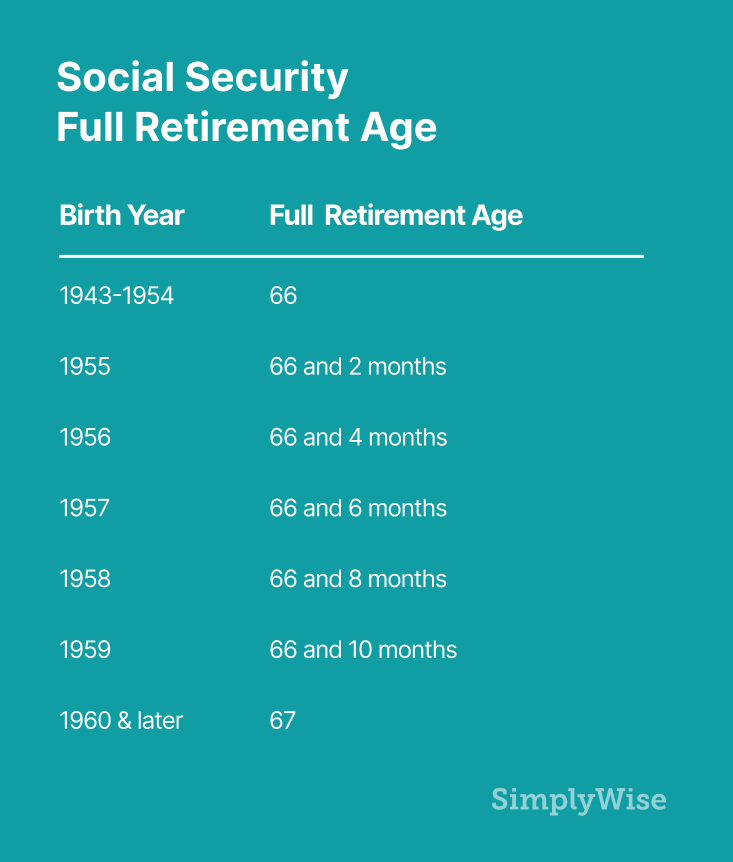
Your Full Retirement Age (FRA) is perhaps the most significant determinant of your final benefit amount after your earnings record. Your FRA is the age at which you are entitled to receive 100% of your Primary Insurance Amount (PIA). It is not a universal age but rather depends on your birth year.
For individuals born in 1937 or earlier, FRA was 65. For those born between 1943 and 1954, FRA is 66. For those born in 1960 or later, FRA is 67. There are incremental increases for birth years between 1955 and 1959. Understanding your specific FRA is crucial because it acts as the benchmark for whether your benefits will be reduced or increased. Claiming before your FRA results in a permanently reduced benefit, while claiming after your FRA results in a permanently increased benefit.
Claiming Age: Early, Full, and Delayed Retirement Benefits
The age at which you choose to start receiving Social Security benefits is a pivotal decision with long-lasting financial implications.
- Early Claiming (Age 62 to FRA-1): You can begin receiving retirement benefits as early as age 62. However, claiming before your FRA results in a permanent reduction of your monthly benefit. The reduction amount depends on how many months early you claim. For example, if your FRA is 67, claiming at age 62 would result in a benefit that is roughly 30% lower than your PIA. This reduction is permanent and applies for the rest of your life. While seemingly attractive to start receiving money sooner, this choice locks in a lower monthly payment, which can have a substantial cumulative impact over a long retirement.
-
Full Retirement Age Claiming: If you wait until your FRA, you will receive 100% of your calculated Primary Insurance Amount (PIA). This is the base amount without any reduction for early claiming or credits for delayed claiming. For many, this represents a balanced approach, providing a steady income stream without the financial penalty of early claiming.
-
Delayed Claiming (FRA+1 to Age 70): If you choose to delay claiming benefits past your FRA, you can earn Delayed Retirement Credits (DRCs). For each year you defer claiming benefits past your FRA, up to age 70, your monthly benefit will increase by a certain percentage. This increase is typically 8% per year (or 2/3 of 1% per month) for those born in 1943 or later. These credits are added to your PIA, resulting in a significantly higher monthly payment. For example, delaying from FRA (say, 67) to age 70 can increase your monthly benefit by 24% (3 years x 8% per year). There are no additional delayed retirement credits earned after age 70, so there is no financial advantage to waiting past that age to claim.
The decision of when to claim benefits is highly personal and depends on factors such as your health, other retirement income sources, marital status, and desired lifestyle in retirement.
Cost-of-Living Adjustments (COLAs)
Once you begin receiving Social Security benefits, your monthly payment isn’t static. It is subject to annual Cost-of-Living Adjustments (COLAs). COLAs are designed to help your benefits keep pace with inflation, maintaining your purchasing power over time. Each year, typically in October, the SSA announces whether there will be a COLA for the following year, based on the Consumer Price Index for Urban Wage Earners and Clerical Workers (CPI-W).
If the CPI-W increases, your benefit amount will also increase by that percentage. If there is no increase in the CPI-W, there will be no COLA for that year, and your benefit amount will remain the same. These adjustments are a vital feature of Social Security, helping to protect retirees from the erosion of their income due to rising living costs, ensuring that their benefits retain their value throughout retirement.
Beyond Individual Benefits: Family and Spousal Considerations
Social Security is more than just individual retirement income; it’s a family protection program that extends benefits to spouses, children, and survivors under certain circumstances.
Spousal Benefits
If you are married, divorced, or widowed, you may be eligible for spousal benefits based on your spouse’s (or ex-spouse’s) earnings record, even if you never worked or had very low earnings. A spouse can receive up to 50% of the worker’s full retirement age benefit (PIA). To claim spousal benefits, the primary worker must generally have already filed for their own benefits, and the spouse must be at least 62 years old (or caring for a qualifying child). The spousal benefit can be reduced if claimed before the spouse’s own FRA. It’s important to note that if you are eligible for benefits based on your own work record and a spousal benefit, the SSA will pay you the higher of the two amounts.
Survivor Benefits
Social Security also provides crucial financial protection for families when a worker dies. Survivor benefits can be paid to a deceased worker’s widow(er), children, and dependent parents. A surviving spouse can receive up to 100% of the deceased worker’s benefit if they claim at their own full retirement age (or if they are caring for a child under age 16 or disabled). Dependent children can also receive benefits. These benefits offer a vital safety net, helping families cope with the financial loss following the death of a breadwinner.
Disability Benefits
The calculation of disability benefits is also rooted in the PIA. If you become disabled and are unable to work, Social Security Disability Insurance (SSDI) benefits are based on your average lifetime earnings, similar to retirement benefits. Your Primary Insurance Amount (PIA) is used as the starting point to determine your monthly disability payment. The eligibility criteria for SSDI focus on your medical condition and inability to engage in “substantial gainful activity.” This highlights Social Security’s role not just in retirement, but as an essential insurance program for unexpected life events.
The “Windfall Elimination Provision” (WEP) and “Government Pension Offset” (GPO)
It’s also important to be aware of provisions that can affect individuals who have both Social Security-covered employment and a pension from non-covered employment (e.g., some government jobs not covered by Social Security). The Windfall Elimination Provision (WEP) can reduce your Social Security benefit if you receive a pension from non-covered work. The Government Pension Offset (GPO) can reduce or eliminate spousal or survivor benefits for those who receive a government pension from non-covered employment. These provisions are designed to prevent “double-dipping” benefits, where individuals might receive benefits from both systems that are disproportionate to their overall contributions.
Navigating Your Social Security Journey
Armed with a deeper understanding of how your benefits are determined, you’re better positioned to plan for your financial future.
Utilizing Your Online Social Security Account
The single most valuable tool for understanding your personal Social Security situation is your “my Social Security” online account. Creating an account allows you to:
-
Review your detailed earnings record for accuracy.
-
Get personalized estimates of your future retirement, disability, and survivor benefits at different claiming ages.
-
View your Social Security statement.
-
Print a benefit verification letter.
This online portal provides transparency and empowers you to track your progress towards retirement and make informed decisions.
Seeking Professional Guidance
While this article provides a comprehensive overview, individual situations can be complex. Consulting a qualified financial advisor who specializes in retirement planning and Social Security can be highly beneficial. They can help you analyze your specific earnings record, model different claiming strategies, and integrate your Social Security benefits into your broader financial plan, considering factors like other income sources, tax implications, and your legacy goals. Their expertise can ensure you optimize your claiming strategy to maximize your lifetime benefits.
Future of Social Security
It’s also worth acknowledging that Social Security is a dynamic program. While the fundamental principles of benefit determination have remained consistent for decades, discussions about the program’s long-term solvency and potential future adjustments are ongoing. However, the core mechanism of how your individual benefit is calculated based on your earnings history and claiming age is robust and provides a reliable framework for planning.

Conclusion
The determination of your Social Security benefit is a sophisticated process, yet one built on understandable principles. It begins with your lifetime earnings, indexed to account for inflation, and calculated into your Primary Insurance Amount (PIA) using a progressive formula. This PIA is then adjusted based on your Full Retirement Age and, crucially, the specific age at which you choose to begin receiving benefits. Finally, factors like Cost-of-Living Adjustments and potential family benefits further refine the ultimate monthly payment.
By understanding these interwoven components – from earning credits to navigating bend points and claiming ages – you gain clarity and control over a critical aspect of your financial security. Proactive engagement with your Social Security statement and, where beneficial, professional advice, can transform what seems like a complex calculation into a powerful tool for achieving a stable and comfortable retirement.
aViewFromTheCave is a participant in the Amazon Services LLC Associates Program, an affiliate advertising program designed to provide a means for sites to earn advertising fees by advertising and linking to Amazon.com. Amazon, the Amazon logo, AmazonSupply, and the AmazonSupply logo are trademarks of Amazon.com, Inc. or its affiliates. As an Amazon Associate we earn affiliate commissions from qualifying purchases.