
In the world of global aviation, time is not merely a measurement of duration; it is the fundamental currency of profitability. For American Airlines, one of the largest carriers by fleet size and revenue, the boarding process represents a critical juncture where operational efficiency meets capital management. When a passenger asks, “How early does American Airlines board?” the answer is typically 30 to 50 minutes before the scheduled departure time. However, beneath this simple window of time lies a complex financial architecture designed to minimize ground time, maximize asset utilization, and optimize the revenue generated per minute of gate occupancy.
Understanding the mechanics of the American Airlines boarding process requires a shift in perspective from that of a traveler to that of a financial analyst. Every minute an aircraft sits idle at the gate, it incurs substantial “opportunity costs.” From gate lease fees and ground crew labor to the massive capital depreciation of a multi-million dollar Boeing 787 or Airbus A321, the countdown to departure is a high-stakes financial race.
The Economics of the Gate: Why Boarding Time Dictates Profitability
The aviation industry operates on razor-thin margins, often dictated by the efficiency of the “turnaround time”—the period between an aircraft’s arrival and its next departure. For American Airlines, the boarding process is the most variable-heavy segment of this cycle. By initiating boarding 30 minutes for domestic narrow-body flights and up to 50 minutes for international wide-body flights, the airline attempts to mitigate the financial risks associated with delays.
The Cost of Grounded Assets
An aircraft only generates revenue when it is in the air. On the ground, it is a liability. For a carrier like American, which operates thousands of flights daily, a mere five-minute delay across its entire network can result in millions of dollars in additional operational costs annually. These costs manifest in several ways:
-
Burned Fuel for APU: While at the gate, aircraft often run Auxiliary Power Units (APUs) to maintain climate control and electronics, consuming expensive jet fuel without moving an inch.
-
Gate Occupancy Fees: Major hubs like DFW (Dallas/Fort Worth) or CLT (Charlotte) charge airlines based on gate usage. Staying over the allotted slot can trigger heavy penalties and disrupt the scheduling for following flights.
-
Crew Duty Limits: Federal regulations strictly limit the number of hours a flight crew can work. A delayed boarding process can push a crew into “timing out,” forcing the airline to sub in a reserve crew at a premium cost or, worse, cancel the flight entirely.
The Fifteen-Minute Rule
American Airlines strictly enforces a policy where the boarding door closes 15 minutes before the scheduled departure time. This is not a bureaucratic whim; it is a strategic buffer. This 15-minute window allows for the finalization of the weight and balance manifest, a legal requirement for flight safety and fuel calculation. From a business finance perspective, this buffer ensures that the aircraft pushes back on time, maintaining its “slot” in the departure queue, which avoids the cascading costs of missed takeoff windows.
The Monetization of Priority: How American Airlines Sells Time
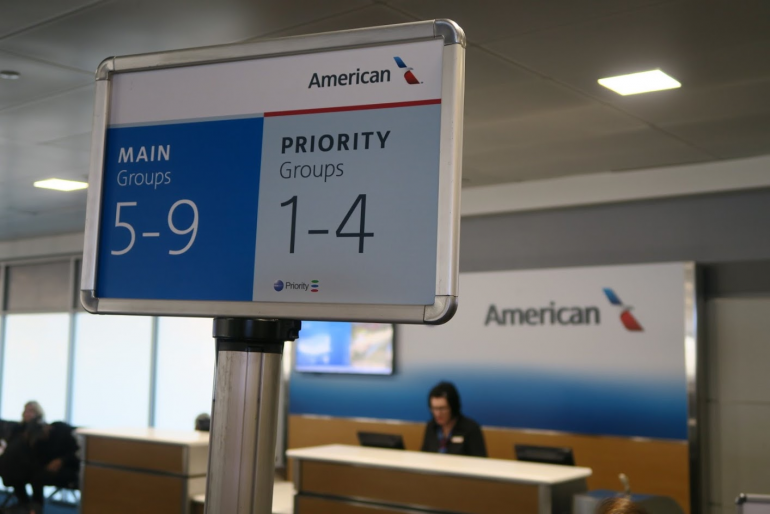
The boarding process is not egalitarian; it is a highly segmented revenue model. American Airlines utilizes a nine-group boarding system that serves as a ladder of monetization. By controlling when a passenger boards, the airline creates a tiered value proposition that encourages higher spending through ticket classes, loyalty programs, and co-branded financial products.
Group 1 to 4: The High-Yield Segments
The earliest boarding groups (1 through 4) are reserved for First and Business Class passengers, active-duty military, and elite status members of the AAdvantage program. From a corporate finance standpoint, these groups represent the highest “Customer Lifetime Value” (CLV). By offering early access to the cabin, the airline provides a non-monetary perk that has high perceived value to the consumer but low marginal cost to the airline, thereby protecting premium ticket margins.
Group 5: The Main Cabin Extra Strategy
Group 5 is a significant revenue driver. It often includes passengers who have paid for “Main Cabin Extra” seating or those who hold an American Airlines co-branded credit card. This is where personal finance intersects with corporate strategy. The airline effectively sells “boarding peace of mind.” For the cost of an upgraded seat or an annual credit card fee, passengers buy the assurance that overhead bin space will be available. This reduces “gate checking” of bags, which is a slow, labor-intensive process that can delay departures.
Groups 6 through 9: The Logistics of Basic Economy
The final groups represent the standard and “Basic Economy” tiers. Group 9, specifically, is a tool for cost-containment. By restricting these passengers to boarding last and often limiting their carry-on allowances, the airline speeds up the final stages of boarding and minimizes the financial overhead associated with cabin management.

Personal Finance and Travel Strategy: Maximizing Value Through Boarding Groups
For the savvy traveler, understanding the American Airlines boarding timeline is an exercise in personal finance. The goal is to maximize the utility of the travel experience while minimizing unnecessary expenditures.
The ROI of Co-Branded Credit Cards
For infrequent flyers, paying a $99 annual fee for a credit card like the Citi / AAdvantage Platinum Select can be a sound financial investment. This card typically grants Group 5 boarding. If a traveler flies three times a year with a companion, the avoided “checked bag fees” (often $35+ per bag) and the time saved by avoiding the Group 9 scrum can result in a positive Return on Investment (ROI) within the first few trips.
Status as a Financial Asset
Frequent flyers treat AAdvantage status as a tangible asset. Reaching “Pro Platinum” or “Executive Platinum” status ensures Group 1 or 2 boarding, which translates to time saved and reduced stress. In the context of business finance, for a consultant or executive billing hundreds of dollars per hour, the 20 to 30 minutes saved at the gate and the ability to work comfortably on the plane sooner represents a significant “soft” financial gain.
Operational Efficiency as a Financial Tool
American Airlines continuously reinvests in technology to streamline the boarding window. The transition to biometrics and enhanced mobile app notifications is a capital expenditure aimed at reducing the labor cost at the gate.
Biometric Boarding and Throughput
By implementing facial recognition technology at international gates, American Airlines can process passengers faster than a traditional gate agent scanning paper or digital boarding passes. Increased throughput at the gate means the airline can theoretically schedule tighter turnarounds, increasing the “utilization rate” of their fleet. In the airline industry, a 1% increase in fleet utilization can translate to tens of millions of dollars in additional revenue without the need to purchase new aircraft.
The Cost of Carry-On Luggage
One of the primary bottlenecks in the boarding process—and a major threat to the 30-minute window—is overhead bin capacity. When bins fill up, the boarding process grinds to a halt as agents must manually tag bags and move them to the cargo hold. American Airlines has invested heavily in “oversized” overhead bins on its retrofitted A321 and 737 fleets. These bins allow bags to be stored on their sides, significantly increasing capacity. While this was an expensive capital investment, the financial justification is clear: fewer gate-checked bags lead to faster boarding, which leads to better On-Time Performance (OTP).
Strategic Planning for the Business Traveler
For those managing corporate travel budgets or personal business expenses, the boarding time is a critical variable in the “total cost of travel.”
Minimizing the “Transit Tax”
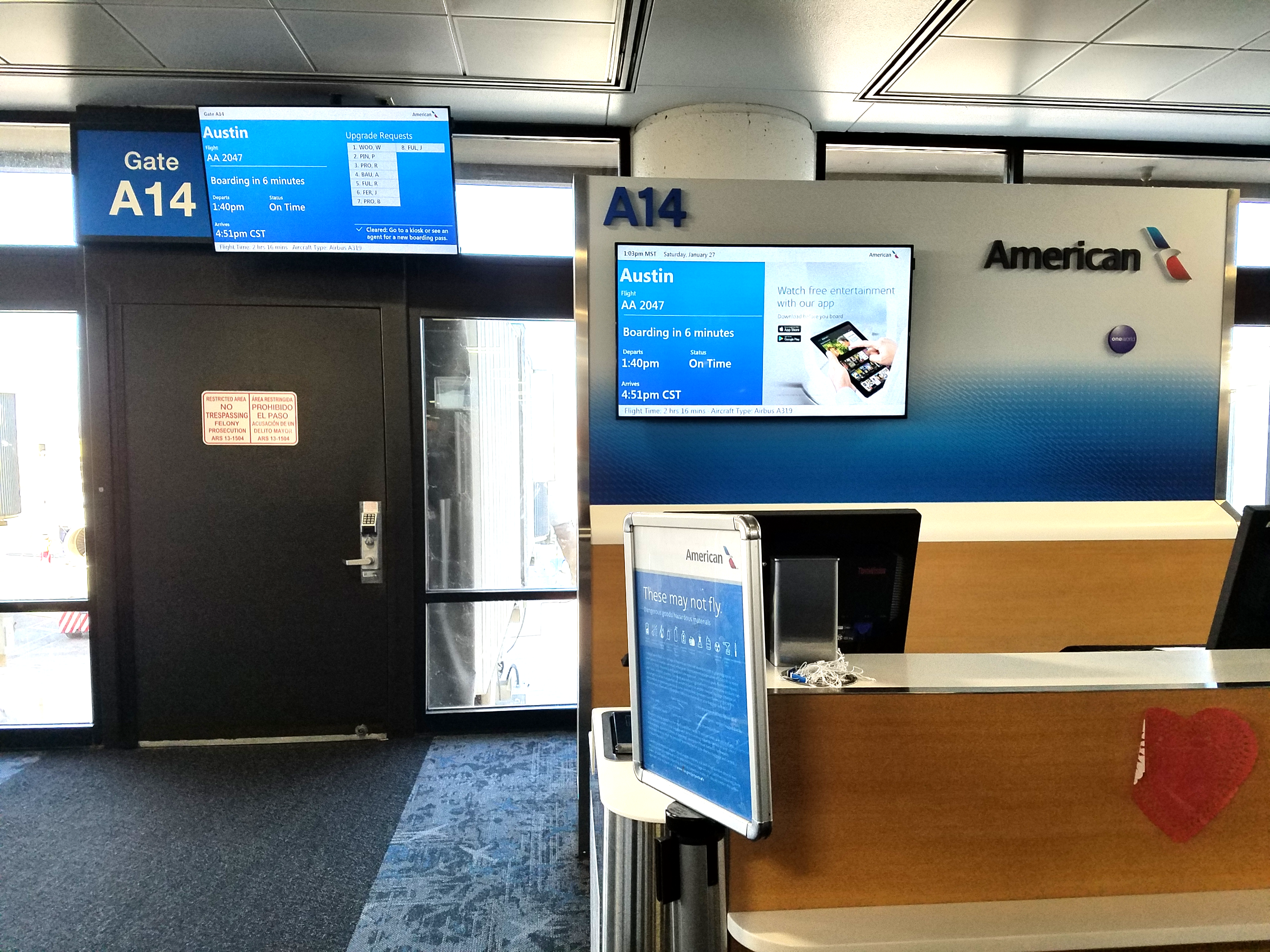
The time spent waiting at the gate is essentially a “transit tax.” To minimize this, business travelers should aim to arrive at the gate exactly when their group is called. For American Airlines, the mobile app provides real-time updates on when boarding begins. By leveraging these digital tools, a traveler can remain in a lounge or a workstation—maintaining productivity—rather than standing in a terminal line.
Hedging Against Delays
Understanding that American Airlines closes the door 15 minutes early is vital for risk management. A traveler who misses this window due to a late arrival loses not only the ticket value but also the “sunk cost” of their time and the potential revenue of the meeting or event they are traveling for. In financial terms, the 15-minute rule is a “hard deadline” that requires travelers to build a safety margin into their itinerary, effectively acting as an insurance policy against unforeseen disruptions.
In conclusion, the question of how early American Airlines boards is a gateway into a much larger discussion about the intersection of time, logistics, and finance. Whether you are an individual looking to optimize your travel budget or a corporate entity analyzing the efficiency of a global carrier, the boarding process remains a primary indicator of how well an organization manages its most valuable and perishable asset: time. By mastering the 30-to-50-minute window, American Airlines continues to balance the delicate scales of operational necessity and revenue optimization.
aViewFromTheCave is a participant in the Amazon Services LLC Associates Program, an affiliate advertising program designed to provide a means for sites to earn advertising fees by advertising and linking to Amazon.com. Amazon, the Amazon logo, AmazonSupply, and the AmazonSupply logo are trademarks of Amazon.com, Inc. or its affiliates. As an Amazon Associate we earn affiliate commissions from qualifying purchases.