
Margin trading, a powerful yet perilous tool, allows investors to amplify their potential returns by borrowing money to purchase securities. For users of commission-free trading platforms like Robinhood, understanding how margin works, particularly through its Robinhood Gold service, is crucial before diving into this advanced investment strategy. While the allure of increased buying power is strong, the inherent risks demand a thorough grasp of its mechanics, costs, and potential consequences. This article will demystify margin trading on Robinhood, empowering you with the knowledge to decide if it aligns with your financial goals and risk tolerance.
Understanding Investment Margin: The Basics
At its core, margin trading is about leverage. Instead of using only your own capital, you borrow funds from your brokerage to make larger investments. This can accelerate profits if your investments perform well, but it equally magnifies losses if they decline.
What is Margin Trading?
Margin trading is the practice of buying assets, such as stocks or exchange-traded funds (ETFs), with money borrowed from a broker. The borrowed money is secured by the assets in your brokerage account, which serve as collateral. Essentially, you’re taking out a loan to increase your investment exposure. The primary objective is to generate returns that exceed the cost of borrowing (interest) and the initial capital invested. If successful, the percentage gain on your own capital can be significantly higher than if you had only used your own funds.
The Concept of Borrowing to Invest
When you open a margin account, your brokerage firm extends a line of credit. You can then use this credit, combined with your own cash, to purchase securities. For instance, if you have $5,000 in your account and a 50% initial margin requirement, you could borrow an additional $5,000 to purchase $10,000 worth of stock. The securities you buy are held in your margin account and act as collateral for the loan. The broker charges interest on the borrowed amount, which accrues daily and is typically paid monthly. This interest rate can vary based on market conditions, the amount borrowed, and the specific brokerage firm’s policies.
Key Terminology: Margin Account vs. Cash Account
It’s essential to distinguish between a margin account and a cash account.
-
Cash Account: This is the most basic type of brokerage account. With a cash account, you can only trade with the funds you have deposited. You must have enough cash to cover the full purchase price of any security you buy. There’s no borrowing involved, no interest payments, and your risk is limited to the capital you invest. You cannot engage in short selling or day trading with unsettled funds in a cash account.
-
Margin Account: A margin account grants you the ability to borrow money from your broker. To open a margin account, you typically need to meet certain minimum equity requirements (e.g., $2,000 as per FINRA regulations). While it offers increased buying power and allows for strategies like short selling, it also comes with significantly higher risks, including the potential for substantial losses and margin calls. Robinhood’s margin offering is available through its premium subscription service, Robinhood Gold.
Robinhood Gold and Margin Eligibility
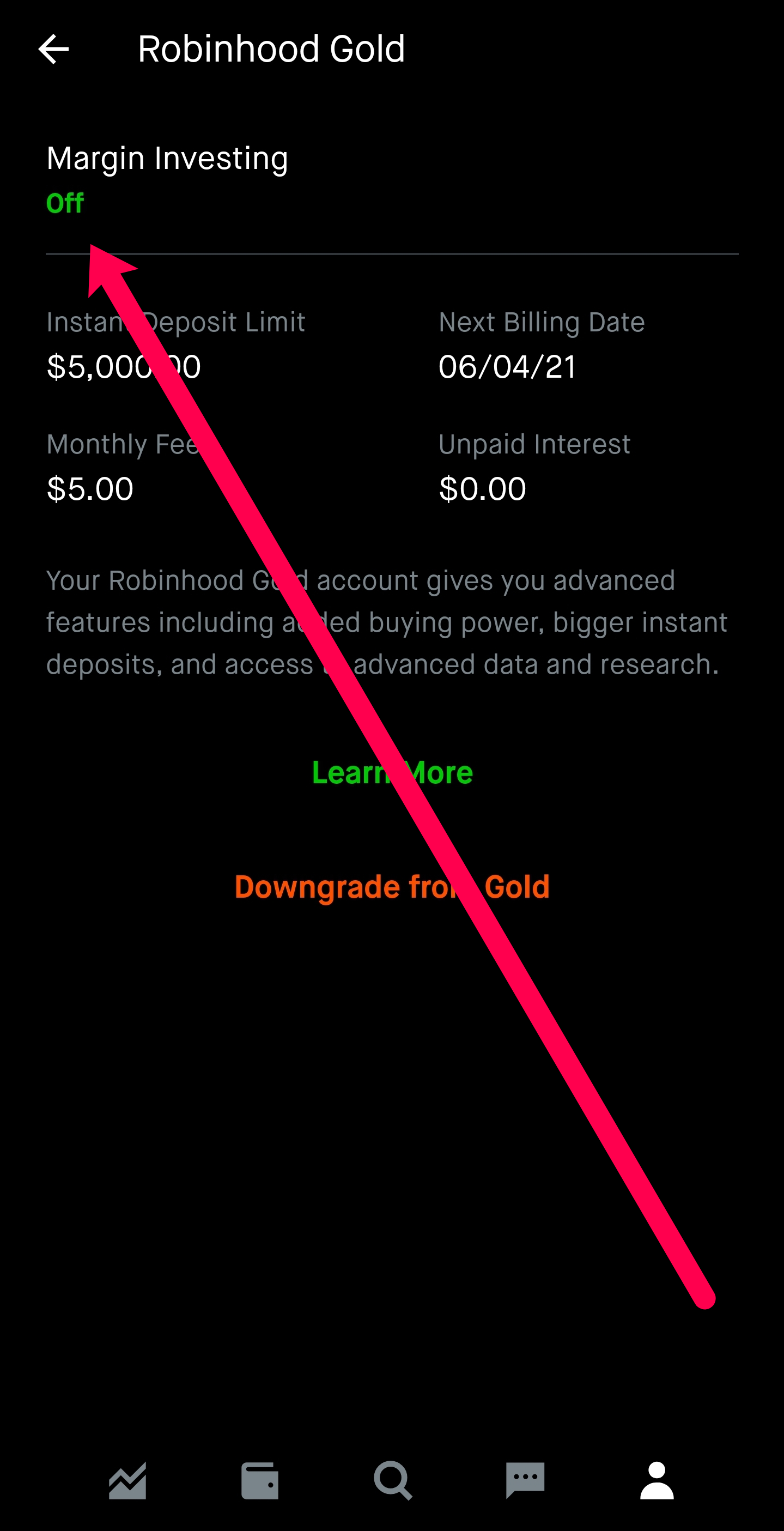
Robinhood, a pioneer in commission-free trading, offers margin capabilities through its premium subscription service, Robinhood Gold. This service provides more than just margin, bundling several features designed for active traders.
Robinhood Gold: More Than Just Margin
Robinhood Gold is a paid subscription service that enhances the standard Robinhood experience. For a monthly fee, subscribers gain access to a suite of advanced features, with margin trading being a significant component. Other benefits typically include:
-
Instant Deposits: Larger instant deposits than standard accounts, allowing users to access funds immediately rather than waiting for bank transfers to clear.
-
Professional Research: Access to professional research from Morningstar and Level II market data from Nasdaq.
-
Higher Yield on Uninvested Cash: Often, Robinhood Gold accounts offer a higher interest rate on uninvested cash compared to standard accounts.
-
Margin Trading: The core benefit for many, offering the ability to borrow funds for investment purposes. Robinhood Gold provides the first $1,000 of margin without interest charges, with interest applied to amounts exceeding this threshold.
Eligibility Requirements for Margin Trading on Robinhood
Not every Robinhood user is eligible for margin trading, even with a Robinhood Gold subscription. Robinhood, like all brokerages, has specific criteria to ensure users are financially prepared for the risks involved. Typically, these requirements include:
-
Minimum Account Equity: You generally need at least $2,000 in account equity (cash plus market value of securities) to trade on margin. This is a regulatory requirement set by FINRA.
-
Approved Margin Account: You must apply for and be approved for a margin account within the Robinhood Gold subscription. This involves reviewing and acknowledging the risks associated with margin trading.
-
Age and Residency: You must be 18 years or older and a legal resident of the United States.
-
Brokerage Account Status: Your Robinhood account must be in good standing, without any history of significant violations or issues.
These requirements are in place to protect both the investor and the brokerage firm, ensuring that margin is only accessible to those who meet certain financial stability benchmarks.
How to Activate Margin on Robinhood Gold
Activating margin on Robinhood is straightforward once you meet the eligibility criteria and subscribe to Robinhood Gold.
-
Subscribe to Robinhood Gold: If you haven’t already, sign up for Robinhood Gold through the app. This will incur the monthly subscription fee.
-
Ensure Minimum Equity: Make sure your account equity is at least $2,000. If it’s below this, you won’t be able to utilize margin.
-
Accept Margin Agreement: As part of the Robinhood Gold signup or activation process, you will be prompted to read and accept the Margin Agreement. This legally binding document outlines the terms, conditions, risks, and responsibilities associated with margin trading. It’s crucial to read this carefully.
-
Access Increased Buying Power: Once activated, your buying power will reflect the addition of margin. You’ll see both your cash balance and your available margin, indicating the total funds you can use to purchase securities. Robinhood conveniently displays this directly within the trading interface.
The Mechanics of Margin on Robinhood
Once activated, understanding the practical application of margin on Robinhood involves several key concepts: initial requirements, maintenance, interest, and how it impacts your buying power.
Initial Margin Requirements
The initial margin requirement is the percentage of the purchase price of a security that you must pay with your own funds. The remaining percentage can be borrowed from the broker. For most securities, the Federal Reserve Board’s Regulation T currently sets the initial margin requirement at 50%. This means if you want to buy $10,000 worth of stock, you must put up at least $5,000 of your own money, and you can borrow the remaining $5,000. Robinhood adheres to these regulations but may impose higher initial margin requirements for certain volatile or less liquid securities to manage its own risk.
Maintenance Margin and Margin Calls
While initial margin dictates how much you can borrow to buy a security, maintenance margin dictates how much equity you must maintain in your account after the purchase. The Financial Industry Regulatory Authority (FINRA) requires a minimum maintenance margin of 25% of the total market value of the securities in your margin account. However, brokerages like Robinhood often set their own maintenance margin requirements higher, sometimes at 30% or 35%, to provide an extra buffer.
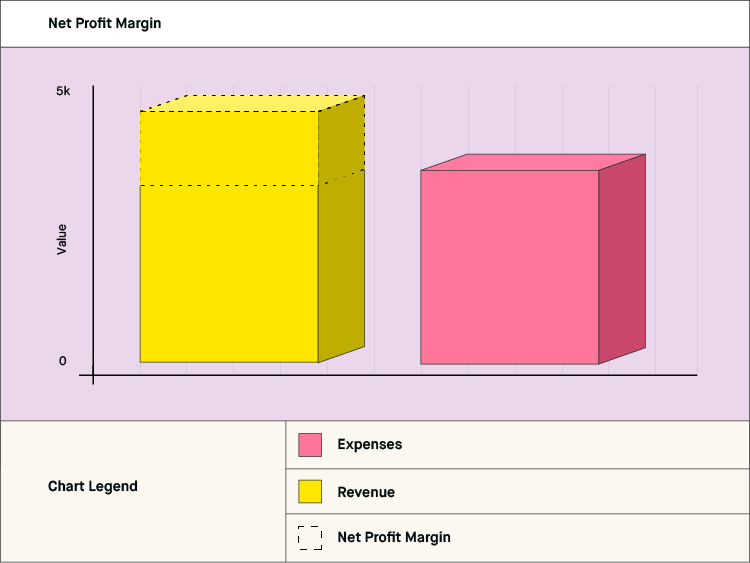
If the value of your portfolio drops and your account equity falls below the maintenance margin requirement, you will receive a margin call. A margin call is a demand from your broker to deposit additional funds or sell securities to bring your account back up to the required maintenance level. If you fail to meet a margin call promptly, Robinhood has the right to liquidate (sell) your securities, even at a loss, to cover the debt, without consulting you. This is one of the most significant risks of margin trading.
Understanding Margin Interest Rates
Robinhood Gold offers a unique structure for margin interest. Typically, the first $1,000 of margin is interest-free for Gold subscribers. Any amount borrowed above this $1,000 threshold incurs interest. Robinhood’s margin interest rates are variable and typically tied to a benchmark rate, such as the federal funds rate, plus a spread. These rates can change based on market conditions and Robinhood’s policies. Interest is usually calculated daily on the outstanding borrowed amount and charged to your account monthly. It’s crucial to monitor the current margin interest rate on Robinhood’s website or within the app, as this cost directly impacts the profitability of your margin trades. A high-interest rate can quickly erode potential gains, especially in a flat or declining market.
Calculating Your Buying Power with Margin
Your buying power is the total value of securities you can purchase in your account. With margin, your buying power is significantly increased.
-
Without Margin: Your buying power is simply your available cash.
-
With Margin (on Robinhood):
-
For the first $1,000 of margin, it’s effectively “free” buying power (excluding the Gold subscription fee).
-
For amounts above $1,000, your buying power is calculated based on your eligible equity and the initial margin requirement.
-
Example: If you have $5,000 in cash and the initial margin requirement is 50%, you can borrow an additional $5,000. Your total buying power would be $10,000. If the first $1,000 of margin is interest-free, then $4,000 of that borrowed amount would incur interest.
-
Robinhood’s app typically displays your current buying power prominently, making it easy to see how much you can invest using both your cash and available margin.
Risks and Rewards: Is Margin Trading Right for You?
Margin trading is a double-edged sword. While it offers the potential for accelerated gains, it also exposes you to magnified losses. It’s not a strategy suitable for all investors.
Amplifying Gains: The Upside Potential
The primary appeal of margin is its ability to magnify profits. If you correctly anticipate a stock’s upward movement, using margin can significantly boost your percentage return on your initial capital.
-
Scenario: You invest $5,000 in a stock that rises 10%. Your profit is $500.
-
With Margin: If you used $5,000 of your own money plus $5,000 of margin to buy $10,000 worth of the same stock, and it still rises 10%, the stock’s value becomes $11,000. After repaying the $5,000 loan, you are left with $6,000, representing a $1,000 profit on your initial $5,000 investment – a 20% return, double the non-margined return. This amplification is the driving force behind its use by active traders.
Magnifying Losses: The Downside Risk
Conversely, the biggest risk of margin trading is the amplification of losses. If the stock price falls, your losses are also magnified.
- Scenario: Using the previous example, if the $10,000 worth of stock you purchased with $5,000 margin falls by 10%, its value drops to $9,000. After repaying the $5,000 loan, you are left with $4,000. This means you’ve lost $1,000 of your initial $5,000 investment – a 20% loss. This illustrates how quickly losses can mount, exceeding your initial investment.
The Role of Volatility and Market Swings
Margin trading thrives on predictability, but markets are inherently volatile. Sudden market downturns, unforeseen company news, or broader economic shocks can trigger rapid declines in asset values. When you’re margined, even a modest percentage drop in your holdings can lead to a significant depletion of your account equity. High volatility increases the likelihood of hitting maintenance margin requirements and facing a margin call, forcing you to make difficult decisions under pressure.
Forced Liquidation and Its Consequences
The most severe consequence of margin trading is forced liquidation. If you receive a margin call and cannot meet it by depositing additional funds or selling other non-margined assets, your broker (Robinhood) has the right to sell some or all of your margined securities without your consent. They will sell enough assets to bring your account back to the maintenance margin level. This can happen quickly, often at inopportune times (e.g., during a sharp market decline), locking in significant losses and potentially wiping out a substantial portion, or even all, of your invested capital. Furthermore, if the liquidation doesn’t cover the full borrowed amount plus interest, you could end up owing money to the broker, even after your account balance is zero.
Best Practices and Responsible Margin Trading
Given the inherent risks, responsible margin trading requires discipline, continuous monitoring, and a clear strategy. Margin is a tool, not a magic bullet, and should be used cautiously.
Start Small and Understand the Risks
Never allocate all your capital to margin trading, especially when you are new to it. Start with a small portion of your portfolio to gain experience and understand its dynamics without exposing yourself to undue risk. Thoroughly educate yourself on all aspects of margin, including initial and maintenance requirements, interest rates, and the mechanics of margin calls. Reading Robinhood’s Margin Agreement is not optional – it’s crucial.
Monitor Your Portfolio Diligently
Active management is paramount when trading on margin. You cannot afford to “set it and forget it.” Regularly monitor the performance of your margined assets and your overall account equity. Keep a close eye on market news and economic indicators that could impact your investments. Being aware of potential declines before they trigger a margin call can give you time to adjust your positions or deposit additional funds, preventing forced liquidation. Robinhood provides real-time account balances, making this monitoring feasible directly within the app.
Have a Clear Exit Strategy
Before entering any margin trade, define your profit targets and, critically, your stop-loss levels. Know at what point you will sell to cut losses, even if it means taking a small hit. Relying on hope that a stock will recover after a significant decline is a recipe for disaster when on margin. A disciplined exit strategy helps to manage risk and protect your capital from catastrophic losses. Consider setting mental or actual stop-loss orders for your margined positions.
Diversification and Risk Management
While margin allows for concentrated bets, prudent risk management still advocates for diversification. Avoid putting all your margined funds into a single highly volatile stock. Diversifying across different sectors or asset classes can help mitigate the impact of a poor-performing single asset. Furthermore, always maintain a buffer of uninvested cash or easily liquidatable assets in your account that could be used to meet a margin call if necessary. Never invest more on margin than you are prepared to lose, and consider it a supplementary strategy, not the cornerstone of your entire investment approach.
In conclusion, margin trading on Robinhood through Robinhood Gold offers an intriguing avenue for experienced investors seeking to maximize returns. However, its power comes with significant responsibility. By understanding the basics, adhering to eligibility requirements, knowing the mechanics, and diligently managing the associated risks, you can make an informed decision about whether this advanced financial tool fits into your overall investment strategy. For many, the conservative approach of trading with only one’s own capital remains the safest and most suitable path to long-term wealth creation.
aViewFromTheCave is a participant in the Amazon Services LLC Associates Program, an affiliate advertising program designed to provide a means for sites to earn advertising fees by advertising and linking to Amazon.com. Amazon, the Amazon logo, AmazonSupply, and the AmazonSupply logo are trademarks of Amazon.com, Inc. or its affiliates. As an Amazon Associate we earn affiliate commissions from qualifying purchases.