
The emergence of cryptocurrency has often been framed through the lens of market volatility and financial speculation. However, at its core, “crypto” is not merely a digital asset; it is a sophisticated convergence of several long-standing computer science disciplines, including cryptography, distributed systems, and game theory. To understand how crypto works from a technical perspective, one must look past the price charts and examine the underlying architecture that allows a global, peer-to-peer network to maintain a single, immutable truth without a central authority.
The Architecture of the Blockchain: A Distributed Ledger System
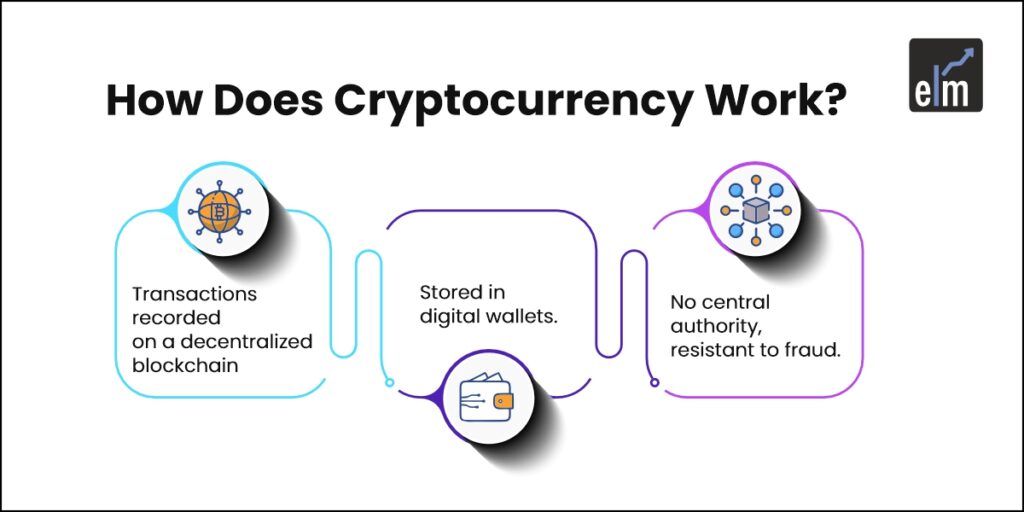
At the heart of any cryptocurrency is the blockchain. In technical terms, a blockchain is a distributed, decentralized, and digital ledger that records transactions across many computers so that the record cannot be altered retroactively. This structure ensures that no single entity has control over the history of the data.
The Anatomy of a Block and the Chain
A blockchain consists of a linear sequence of “blocks.” Each block contains a list of validated transactions, a timestamp, and a crucial piece of data known as a “hash” of the previous block. This hash acts as a digital fingerprint. Because each block includes the fingerprint of the one before it, they are inextricably linked. If a single bit of data is changed in an earlier block, its hash changes, which invalidates the hash in the following block, and so on. This creates a “chain” where any attempt at tampering becomes immediately apparent to the entire network.
Distributed Peer-to-Peer (P2P) Networking
Unlike a traditional bank, which stores its data on centralized servers, a cryptocurrency operates on a Peer-to-Peer (P2P) network. Thousands of independent computers, known as “nodes,” each host a full copy of the blockchain. When a new transaction is broadcast to the network, nodes verify it according to set protocols. This redundancy ensures that even if 49% of the nodes go offline or are compromised, the integrity of the ledger remains intact across the remaining 51%.
The Role of Cryptography in Security and Ownership
The “crypto” in cryptocurrency refers to the cryptographic techniques that secure the network. These techniques serve two primary purposes: ensuring the integrity of the data and proving ownership of assets without revealing sensitive information.
Public-Key Cryptography and Digital Signatures
Cryptocurrency uses a branch of mathematics called asymmetric cryptography, or public-key cryptography. Every user possesses a pair of keys: a public key and a private key.
- The Public Key: Think of this as an email address or a bank account number. It is safe to share and is used to generate the “address” where funds are sent.
- The Private Key: This is equivalent to a high-level password or a digital signature. It is never shared.
When a user wants to send a transaction, they “sign” it using their private key. The network uses the corresponding public key to verify that the signature is authentic. Mathematically, it is virtually impossible to derive a private key from a public key, which ensures that only the rightful owner of a digital asset can authorize its movement.
Cryptographic Hash Functions
The most critical tool in the blockchain’s security arsenal is the cryptographic hash function (such as SHA-256). A hash function takes an input of any size and produces a fixed-size string of characters, which appears random. These functions are “one-way”: you can easily turn a file into a hash, but you cannot turn a hash back into the original file.
In crypto, hashing is used to summarize the data within a block. It ensures that the data has not been altered. Even a tiny change—like changing a comma to a period in a transaction record—would result in a completely different hash, alerting the system to a breach of protocol.
Achieving Consensus in a Trustless Environment
One of the greatest challenges in computer science is the “Byzantine Generals Problem”—how to reach agreement in a distributed system where some participants may be malicious or unreliable. Cryptocurrencies solve this through “consensus mechanisms.”

Proof of Work (PoW): Security Through Computation
Proof of Work was the first consensus mechanism, popularized by Bitcoin. In a PoW system, “miners” compete to solve a complex mathematical puzzle. This puzzle is so difficult that it requires massive amounts of computational power (and electricity) to solve, but the solution is very easy for other nodes to verify.
The first miner to solve the puzzle earns the right to add the next block to the chain. This “work” serves as a barrier to entry; to attack the network, an adversary would need to control more than 50% of the entire network’s computing power, a feat that is economically and logistically prohibitive for major blockchains.
Proof of Stake (PoS): Security Through Economic Incentive
Proof of Stake is a more modern, energy-efficient alternative to PoW. Instead of using electricity to solve puzzles, the network is secured by “validators” who “stake” or lock up a portion of the network’s native tokens.
The system randomly selects a validator to propose the next block based on the size of their stake and other factors. If a validator attempts to approve fraudulent transactions, they lose their staked assets. This aligns the technical integrity of the network with the economic interests of the participants, ensuring that those with the power to validate transactions have a vested interest in the system’s honesty.
The Execution Layer: Smart Contracts and Programmable Logic
While the earliest cryptocurrencies were designed solely to record the transfer of value, modern platforms like Ethereum have introduced a “logic layer” known as smart contracts. This transformed the blockchain from a simple ledger into a “World Computer.”
How Smart Contracts Operate
A smart contract is a self-executing piece of code stored on the blockchain. It automatically performs actions when certain predefined conditions are met. For example, a smart contract could be programmed to release funds to a developer only once a specific piece of code is uploaded to a repository.
Because these contracts reside on the blockchain, they inherit the properties of the ledger: they are transparent, immutable, and do not require a middleman to execute. This allows for “decentralized applications” (dApps) that can handle complex logic, from insurance payouts to decentralized voting systems, without a central server.
The Role of Gas and Computation
To prevent the network from being bogged down by infinite loops or spam, most smart contract platforms use a concept called “Gas.” Gas is a unit that measures the amount of computational effort required to execute an operation. Every line of code costs a small amount of gas, paid for by the user initiating the transaction. This creates a technical throttle that ensures the network’s resources are used efficiently and that the “World Computer” remains performant for all users.
Network Infrastructure and Scalability Solutions
As the adoption of cryptocurrency grows, the underlying technology must evolve to handle increasing transaction volumes without sacrificing decentralization or security—a challenge known as the “Scalability Trilemma.”
Nodes and Peer-to-Peer Distribution
The infrastructure of a crypto network relies on different types of nodes. “Full nodes” keep the entire history of the blockchain, while “Light nodes” only download the headers of blocks to save space. This tiered infrastructure allows the network to remain accessible to users with varying levels of hardware, ensuring that the network doesn’t become centralized around those with the most powerful servers.

Layer 2 and Off-Chain Scaling
To increase speed and reduce costs, engineers have developed “Layer 2” solutions. These are protocols that sit on top of the main blockchain (Layer 1). They process transactions “off-chain”—handling thousands of transactions per second—and then periodically bundle them together to be settled on the main blockchain in a single transaction.
Techniques like “Rollups” (which “roll up” many transactions into one) and “State Channels” allow crypto networks to scale to the levels required for global usage. By moving the heavy lifting of computation away from the main ledger while still relying on its security for final settlement, these technical innovations bridge the gap between theoretical decentralized systems and practical, high-performance applications.
In summary, the mechanics of cryptocurrency are a masterclass in modern systems engineering. By combining the immutability of cryptographic hashing, the security of public-key encryption, and the democratic resilience of consensus algorithms, crypto provides a framework for digital trust that does not rely on human intervention, but on the cold, objective certainty of mathematics and code.
aViewFromTheCave is a participant in the Amazon Services LLC Associates Program, an affiliate advertising program designed to provide a means for sites to earn advertising fees by advertising and linking to Amazon.com. Amazon, the Amazon logo, AmazonSupply, and the AmazonSupply logo are trademarks of Amazon.com, Inc. or its affiliates. As an Amazon Associate we earn affiliate commissions from qualifying purchases.