
For the modern consumer, the quest for value often leads to the familiar, cavernous aisles of a Costco warehouse. However, one of the most potent financial tools in a member’s arsenal isn’t found on a pallet in the center of the store—it is tucked away in the digital infrastructure of Costco Travel. Understanding how Costco Travel works is not merely a matter of knowing how to book a hotel; it is an exercise in strategic personal finance and value-based spending.
By leveraging the collective buying power of millions of members, Costco operates as a high-volume travel agency that prioritizes “net value” over mere “lowest price.” For those looking to optimize their travel budget without sacrificing quality, Costco Travel offers a unique ecosystem of curated packages, transparent pricing, and secondary financial rewards that can significantly lower the total cost of ownership for a luxury vacation.

The Financial Mechanics of the Costco Travel Ecosystem
To understand why Costco Travel consistently ranks as a top choice for savvy travelers, one must look at the underlying business model. Unlike aggregators or search engines that list every available flight and hotel, Costco Travel operates on a “curated” model. They select specific partners—major cruise lines, hotel chains, and car rental agencies—and negotiate bulk rates that are unavailable to the general public.
The Power of Bulk Negotiation
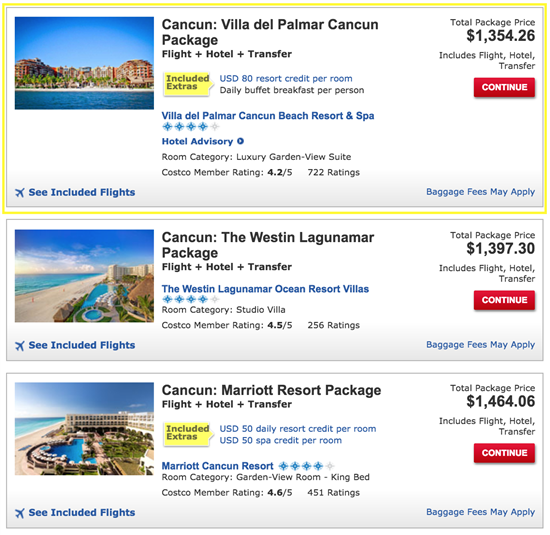
Costco’s primary leverage is its membership base. With over 120 million cardholders, the company can guarantee a high volume of customers to its partners. In exchange, those partners provide deeply discounted rates or, more frequently, “value-added” inclusions. From a financial perspective, these inclusions—such as daily breakfast, resort credits, or spa treatments—act as a shadow discount. While the sticker price might appear similar to other sites, the net cost is lower because you are not paying out-of-pocket for these high-margin amenities once you arrive at your destination.
Transparent Pricing and the Absence of Hidden Fees
One of the most significant frustrations in travel budgeting is the “drip pricing” model used by many airlines and hotels, where the initial price swells with taxes, resort fees, and service charges at checkout. Costco Travel utilizes a transparent pricing model. The price quoted at the beginning of the search typically includes all mandatory taxes and fees. For a budget-conscious traveler, this transparency is a vital tool for accurate financial planning, ensuring that the “bottom line” remains consistent from the research phase to the final payment.
The Costco Digital Shop Card Rebate
Perhaps the most distinctive financial feature of the platform is the Costco Digital Shop Card. Many vacation packages and cruises include a rebate in the form of a Costco gift card, often ranging from 5% to 10% of the total trip cost. From a personal finance standpoint, this effectively functions as a post-vacation dividend. If you spend $5,000 on a family cruise and receive a $500 Shop Card upon your return, you have essentially reduced your grocery or household expenses for the following month, further improving the overall ROI of the trip.
Strategic Value for Different Membership Tiers
The financial benefits of Costco Travel are not distributed equally; they are scaled based on your membership level and your choice of payment method. To truly master the system, a traveler must align their membership status with their spending habits.
Gold Star vs. Executive Membership
For the casual shopper, the Gold Star membership is the standard entry point. However, for those booking significant travel, the Executive Membership ($120 annually) is almost always the more fiscally responsible choice. Executive members earn a 2% annual reward on qualified Costco Travel purchases (up to a $1,000 limit).
On a $6,000 vacation, an Executive member earns $120 back in their annual reward certificate—completely covering the cost of the membership upgrade in a single transaction. When you combine the 2% reward with the aforementioned Shop Card rebates, the “stacking” of benefits can result in a double-digit percentage return on your travel spend.
Integrating the Costco Anywhere Visa® Card by Citi
The financial optimization doesn’t stop at the membership tier. Using the Costco Anywhere Visa® Card by Citi to pay for your travel adds another layer of cash back. The card offers 3% cash back on eligible travel purchases, including those made through Costco Travel.

Consider the mathematics of a high-tier booking:
-
2% Reward from the Executive Membership.
-
3% Cash Back from the Citi Visa card.
-
5-8% Value in the form of a Costco Digital Shop Card.
By stacking these three mechanisms, a member can effectively recoup 10% to 13% of their total travel expenditure. In the world of personal finance, finding a guaranteed 10% return on a discretionary spend is a rarity.
Decoding the Inventory: Where the Savings Are Highest
While Costco Travel offers a wide array of options, the financial “sweet spots” are found in specific categories. Knowing where Costco has the most leverage allows you to direct your capital toward the highest-value opportunities.
The Rental Car Secret
In the travel industry, Costco is legendary for its rental car program. The platform allows users to compare four major brands (Alamo, Avis, Budget, and Enterprise) on a single screen. Beyond the lower base rates, the real financial win is the inclusion of an additional driver at no extra cost in the U.S. and Canada. Many agencies charge $10 to $15 per day for an extra driver; over a 10-day trip, Costco Travel saves the user $150 before a single mile is driven. Furthermore, these bookings are typically “pay at the counter” and can be canceled without penalty, allowing travelers to re-book if prices drop—a key strategy for price optimization.
Kirkland Signature Vacations
Just as the Kirkland Signature brand represents high quality at a lower price point in the warehouse, “Kirkland Signature” travel packages represent the pinnacle of curated value. These packages often involve luxury partners like Fairmont or Hyatt and include massive bundles of extras: private airport transfers, room upgrades, and substantial resort credits. For a traveler who desires a premium experience, these packages often price out at 20-30% less than if each component were booked individually.
The Cruise Advantage
The cruise industry is built on complex pricing and “onboard spend” credits. Costco Travel simplifies this by offering “Costco Cash” rewards that often exceed what a traditional travel agent or the cruise line itself can offer. Because Costco handles such a high volume of bookings for lines like Royal Caribbean, Celebrity, and Disney, they are often able to secure exclusive blocks of rooms at legacy rates, even when the cruise line shows the ship as nearly full.
Evaluating the ROI: Is Costco Travel Always the Best Deal?
A sophisticated approach to money management requires acknowledging that no single tool is perfect for every scenario. While Costco Travel is a powerhouse for value, it is essential to know its limitations to avoid leaving money on the table.
The Limitation of Choice
The primary “cost” of using Costco Travel is a lack of infinite choice. Because they curate their partners, you will not find every boutique hotel or every budget airline. If your goal is the absolute lowest possible price point—such as a hostel or a no-frills flight—Costco is not the tool for you. It is a tool for “value,” which is defined as the quality of the experience relative to the price paid.
Comparison Strategies
To ensure you are getting the best ROI, you should always perform a “three-point check”:
-
Check the direct price on the hotel or cruise line’s website.
-
Check an aggregator (like Expedia or Google Hotels) for the market baseline.
-
Check Costco Travel.
When comparing, you must monetize the “extras.” If a hotel on an aggregator is $200 cheaper than Costco, but the Costco package includes $300 worth of breakfast and a $150 Shop Card, the Costco option is the superior financial choice despite the higher initial price.
Flexibility and Customer Service
From a risk management perspective, Costco Travel provides a layer of security that “discount” booking sites often lack. During travel disruptions, Costco members have access to a dedicated support team. In the world of business and personal finance, time is money. Avoiding hours of hold time with an airline and having a Costco representative advocate for you is a form of “soft” ROI that becomes invaluable when things go wrong.
In conclusion, Costco Travel works by applying the principles of bulk procurement and member loyalty to the fragmented travel industry. It transforms travel from a complex, often opaque expense into a transparent, reward-heavy investment. By understanding the stacking of membership rewards, the value of curated inclusions, and the strategic selection of inventory, members can ensure that their travel dollars work as hard as they do. It is not just about going on a trip; it is about deploying capital in a way that maximizes both the experience and the long-term financial health of the household.
aViewFromTheCave is a participant in the Amazon Services LLC Associates Program, an affiliate advertising program designed to provide a means for sites to earn advertising fees by advertising and linking to Amazon.com. Amazon, the Amazon logo, AmazonSupply, and the AmazonSupply logo are trademarks of Amazon.com, Inc. or its affiliates. As an Amazon Associate we earn affiliate commissions from qualifying purchases.