
In an increasingly digitized world, the concept of a decentralized, immutable, and transparent ledger has emerged as one of the most transformative technological innovations of our time: blockchain. While often associated primarily with cryptocurrencies like Bitcoin, blockchain technology extends far beyond digital money, promising to revolutionize industries from finance and logistics to healthcare and intellectual property. At its core, blockchain is a distributed ledger technology (DLT) that records transactions across a network of computers in a way that is secure, verifiable, and resistant to tampering. Understanding how this intricate system operates is key to appreciating its vast potential and dissecting its future implications. This article will delve into the fundamental mechanisms that power blockchain, explaining its core components, the lifecycle of a transaction, its various forms, and the myriad of applications it enables, all while maintaining a professional, insightful, and engaging tone.
The Foundational Pillars of Blockchain
At the heart of blockchain’s revolutionary nature lie several critical principles that differentiate it from traditional centralized databases. These pillars ensure its security, integrity, and operational robustness.
Decentralization: Distributing Power
One of the most radical departures of blockchain from conventional systems is its decentralized architecture. Unlike a traditional bank or government agency that maintains a central database of records, a blockchain distributes identical copies of its ledger across numerous computers, known as “nodes,” within its network. There is no single central authority controlling the data. This distribution offers several advantages: enhanced security, as there’s no single point of failure; increased resilience against attacks, as shutting down one node doesn’t cripple the entire network; and greater transparency, as all participants can potentially view the entire transaction history. This shared governance model fosters trust without requiring an intermediary.
Cryptography: Securing the Chains
Cryptography is the backbone of blockchain security. Each “block” in the blockchain contains a cryptographic hash of the previous block, linking them together in an unbreakable chain. A cryptographic hash is a unique, fixed-size string of characters that represents a block’s data. Even a minuscule change to the data within a block would result in a completely different hash, instantly invalidating all subsequent blocks in the chain. This sophisticated mathematical process ensures the integrity of the data and makes it incredibly difficult for malicious actors to alter past transactions without being detected by the entire network. Public-key cryptography is also used to secure individual transactions, ensuring that only the rightful owner can initiate a transfer and verifying the sender’s identity.
Immutability: A Permanent Record
Once a transaction is validated and added to a block, and that block is appended to the blockchain, it becomes virtually impossible to alter or delete it. This characteristic, known as immutability, is a direct consequence of cryptography and decentralization. Because each block is cryptographically linked to the previous one, changing any piece of information in an older block would necessitate recalculating the hashes for all subsequent blocks – an computationally intensive task that would also require the consensus of the majority of network participants. This permanence makes blockchain an ideal ledger for records that require absolute integrity and an indisputable historical trail.
Consensus Mechanisms: Agreeing on Truth
In a decentralized network, where no single entity is in charge, there must be a method for all participants to agree on the valid state of the ledger. This is where consensus mechanisms come into play. These are algorithms that determine how new blocks are added to the chain and how the network maintains its integrity. The most well-known mechanism is Proof of Work (PoW), used by Bitcoin, where “miners” compete to solve complex computational puzzles to validate new blocks. The first to solve it gets to add the new block and earns a reward. Other mechanisms include Proof of Stake (PoS), where validators are chosen based on the amount of cryptocurrency they “stake” as collateral, and various Byzantine Fault Tolerance (BFT) derivatives, each with its own trade-offs in terms of security, scalability, and decentralization. The chosen consensus mechanism is crucial for the network’s security and efficiency.
Anatomy of a Blockchain Transaction
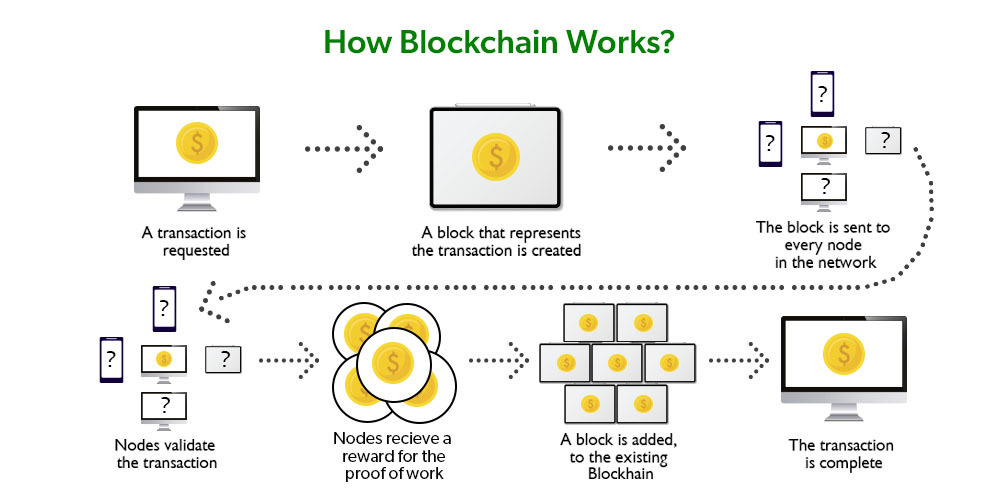
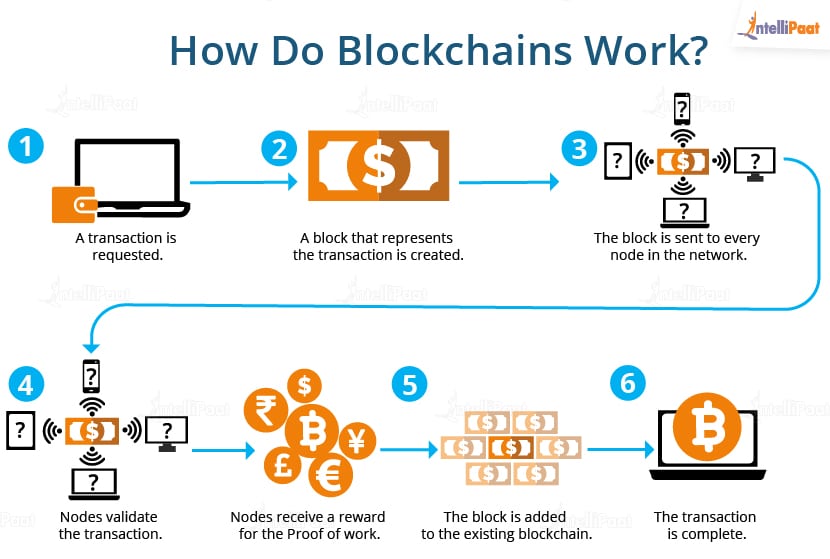
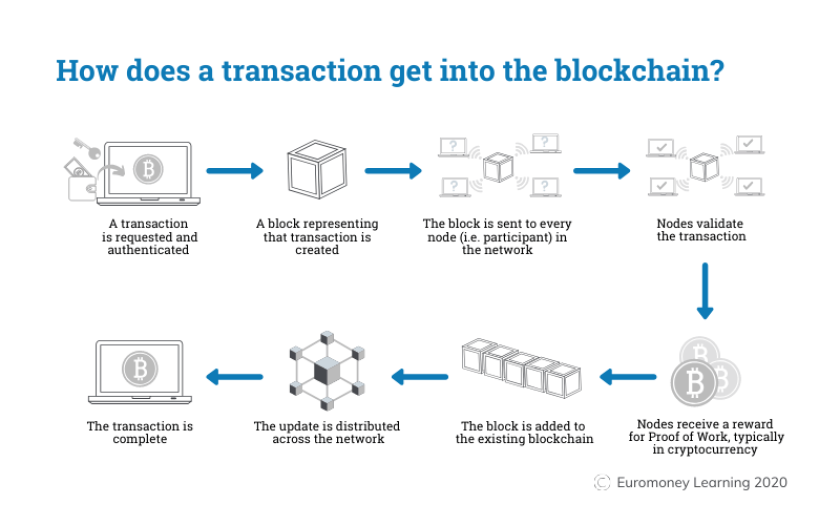
To truly grasp how blockchain works, it’s essential to understand the journey of a typical transaction from initiation to final inclusion in the ledger.
Initiating a Transaction
The process begins when a user wants to send value (e.g., cryptocurrency) or data across the network. The sender creates a transaction request, which includes details like the sender’s address, the recipient’s address, and the amount/data to be transferred. This transaction is then digitally signed using the sender’s private key, proving their ownership and authorization without revealing their identity directly.
Verification and Validation
Once signed, the transaction is broadcast to the network. Individual nodes then independently verify the transaction’s legitimacy. This involves checking if the sender has sufficient funds (in the case of cryptocurrency) and ensuring the digital signature is valid. If the transaction passes these checks, it’s deemed valid and is temporarily held in a pool of unconfirmed transactions.
Block Creation and Addition
Valid transactions are then grouped together into a “block” by a node (often referred to as a “miner” in PoW systems or a “validator” in PoS systems). This new block also contains a timestamp and the cryptographic hash of the previous block, linking it in chronological order. Before this block can be added to the main chain, the network’s consensus mechanism must be satisfied. For instance, in PoW, the miner must expend computational effort to solve a complex mathematical puzzle.
The Hashing Process
Upon successful completion of the consensus mechanism’s challenge, the newly formed block is broadcast to all other nodes in the network. These nodes verify the block’s legitimacy, ensuring that the consensus rules were followed and that all transactions within the block are valid. Once a majority of nodes confirm its validity, the block is added to their local copies of the blockchain. At this point, the transaction is considered confirmed and immutable, becoming a permanent part of the distributed ledger accessible to all network participants.
Types of Blockchain Networks
Not all blockchain networks are created equal. They are typically categorized into different types based on their access controls and governance models, each suited for distinct use cases.
Public Blockchains: Open and Transparent
Public blockchains are permissionless networks where anyone can join, participate in the consensus process, send transactions, and view the entire transaction history. Bitcoin and Ethereum are prime examples of public blockchains. They offer maximum decentralization, transparency, and censorship resistance but can face challenges related to scalability and privacy for certain applications.
Private Blockchains: Controlled Environments
In contrast, private blockchains are permissioned networks where participation is restricted. A single organization or entity typically controls who can join the network, validate transactions, and access the data. While offering greater privacy, faster transaction speeds, and easier regulatory compliance due to their centralized control, they sacrifice the decentralization and transparency inherent in public blockchains. They are often used for internal organizational processes or supply chain tracking where confidentiality is paramount.
Consortium Blockchains: Collaborative Control
Consortium blockchains represent a middle ground between public and private networks. They are permissioned, but instead of being controlled by a single entity, multiple pre-selected organizations or members collectively govern the network. Each member might operate a node and participate in the consensus process. This model offers a balance of decentralization among participating organizations, enhanced privacy compared to public chains, and improved efficiency over purely private networks. It’s often favored for inter-organizational collaborations, like groups of banks or healthcare providers.
Hybrid Blockchains: Best of Both Worlds
Hybrid blockchains attempt to combine the advantages of both public and private models. For instance, a private blockchain might be used for confidential internal transactions, but periodically, certain verified data could be published onto a public blockchain to leverage its immutability and transparency for specific aspects, like public verification of an audit trail. This flexibility allows organizations to maintain control over sensitive data while benefiting from the broader trust and security offered by public networks.
Beyond Cryptocurrencies: Diverse Applications of Blockchain
While often synonymous with digital currencies, blockchain’s potential extends far beyond monetary transactions, poised to disrupt numerous industries by providing unprecedented levels of trust, transparency, and efficiency.
Supply Chain Management
Blockchain can revolutionize supply chain transparency. By recording every step of a product’s journey – from raw material sourcing and manufacturing to shipping and delivery – on an immutable ledger, companies can track goods with unprecedented accuracy. This helps combat counterfeiting, verify ethical sourcing, reduce waste, and provide consumers with verifiable information about the products they buy.
Digital Identity and Data Security
In an era of increasing data breaches, blockchain offers a robust solution for managing digital identities. Individuals could own and control their personal data, selectively granting access to verified entities without relying on centralized databases. This self-sovereign identity model enhances privacy and security, putting individuals in charge of their digital footprints.
Healthcare Records
Blockchain can create a secure and interoperable system for managing patient health records. Patients could control who accesses their medical data, and healthcare providers could share records securely and efficiently, leading to better coordinated care, reduced administrative overhead, and enhanced data integrity across different institutions.
Voting Systems
The immutability and transparency of blockchain make it an intriguing candidate for secure and verifiable voting systems. Each vote could be recorded as a transaction, ensuring that it is counted accurately, cannot be altered, and is publicly auditable without compromising voter anonymity, thereby increasing trust in democratic processes.
Smart Contracts and Decentralized Applications (dApps)
One of the most powerful extensions of blockchain is the concept of “smart contracts.” These are self-executing agreements with the terms of the contract directly written into code. Once activated, they automatically execute predefined actions when specific conditions are met, without the need for intermediaries. Smart contracts form the backbone of Decentralized Applications (dApps), which run on a blockchain and are governed by smart contracts, offering a new paradigm for everything from decentralized finance (DeFi) to gaming and social media.
Challenges and Future Outlook
Despite its revolutionary potential, blockchain technology is still evolving and faces several hurdles that need to be addressed for its widespread adoption.
Scalability Concerns
Many current blockchain networks, particularly public ones like Bitcoin and Ethereum (though Ethereum is undergoing significant upgrades), struggle with scalability. The number of transactions they can process per second is often limited compared to traditional payment systems like Visa. Research into “layer 2” solutions (like Lightning Network for Bitcoin or rollups for Ethereum) and new consensus mechanisms are actively working to overcome these limitations.
Regulatory Landscape
The decentralized and global nature of blockchain technology presents significant challenges for regulators. Governments worldwide are grappling with how to classify, tax, and oversee cryptocurrencies and blockchain-based businesses without stifling innovation. A clearer, more harmonized regulatory framework is essential for institutional adoption and mainstream acceptance.
Environmental Impact
Consensus mechanisms like Proof of Work (PoW), employed by Bitcoin, consume significant amounts of energy due to the computational power required for mining. This environmental concern is a major point of criticism. The transition to more energy-efficient mechanisms like Proof of Stake (PoS) and the development of sustainable energy sources for blockchain operations are crucial areas of focus.
The Promise of Web3 and Further Innovation
Looking ahead, blockchain is a cornerstone of the emerging “Web3” paradigm – a vision for a decentralized internet where users have greater control over their data and digital assets, moving away from the centralized platforms of Web2. Continued innovation in areas like interoperability between different blockchains, zero-knowledge proofs for enhanced privacy, and new cryptographic techniques promises to further unlock blockchain’s capabilities and expand its application landscape.
In conclusion, blockchain technology is far more than just the engine behind digital currencies; it is a fundamental shift in how we can record, secure, and share information in a trustless environment. By leveraging decentralization, cryptography, immutability, and robust consensus mechanisms, it offers a powerful framework for building more transparent, secure, and efficient systems across a vast array of industries. While challenges remain, the ongoing evolution and increasing understanding of how blockchain works indicate a future where its transformative impact will be felt in virtually every corner of our digital lives, fostering a new era of verifiable trust and collaborative innovation.
aViewFromTheCave is a participant in the Amazon Services LLC Associates Program, an affiliate advertising program designed to provide a means for sites to earn advertising fees by advertising and linking to Amazon.com. Amazon, the Amazon logo, AmazonSupply, and the AmazonSupply logo are trademarks of Amazon.com, Inc. or its affiliates. As an Amazon Associate we earn affiliate commissions from qualifying purchases.