
Bitcoin has evolved from a niche cryptographic experiment into a global financial powerhouse, often referred to as “digital gold.” For the modern investor, the central question is no longer just “what is it,” but rather “how does it work to generate wealth?” Understanding the mechanics of Bitcoin as a financial asset requires a shift in perspective from traditional fiat currency to a decentralized, deflationary system. By leveraging its unique economic properties, market cycles, and emerging financial products, individuals and institutions alike have found various pathways to profitability.
The Economic Foundation: Scarcity and the Halving Cycle
To understand how Bitcoin makes money for its holders, one must first understand its supply-side economics. Unlike traditional currencies like the US Dollar or the Euro, which central banks can print in unlimited quantities, Bitcoin is governed by an immutable mathematical code that dictates a hard cap of 21 million coins. This absolute scarcity is the primary driver of its long-term value appreciation.
Digital Scarcity and the 21 Million Cap
In economics, value is often a function of scarcity. Bitcoin’s creator, Satoshi Nakamoto, designed the protocol to mimic the properties of precious metals. Because there will never be more than 21 million BTC, as demand increases—driven by institutional adoption, retail interest, or its use as a hedge against inflation—the price must rise to balance the market. This “deflationary” pressure is the bedrock of the “buy and hold” (HODL) strategy, which has historically been the most successful way to make money with Bitcoin.
The Impact of the Halving Events
Every four years (or every 210,000 blocks), a pre-programmed event known as “the halving” occurs. This event cuts the reward for mining new Bitcoin in half. For investors, this represents a significant supply shock. When the production rate of new Bitcoin drops while demand remains steady or grows, the price typically experiences upward momentum. Historically, the periods following a halving have been associated with massive bull runs, providing a predictable—though volatile—cycle that savvy investors use to time their entries and exits.
Strategic Approaches to Profitability
Making money with Bitcoin is not a one-size-fits-all endeavor. The strategies range from passive, long-term wealth preservation to active, high-frequency engagement with the market. Each approach carries a different risk profile and requires a varying level of technical and financial expertise.
Long-Term Investing: The Power of HODLing
The term “HODL” originated as a typo in a 2013 forum post but has since become a legitimate investment philosophy. This strategy involves purchasing Bitcoin and holding it for years, regardless of market volatility. The logic is rooted in the belief that Bitcoin is a superior form of money that will eventually replace or coexist with gold and reserve currencies. For the patient investor, HODLing eliminates the stress of timing the market and capitalizes on the historical trend of Bitcoin outperforming almost every other asset class over a four-to-five-year horizon.
Active Trading and Market Volatility
Bitcoin is famous for its price swings, sometimes moving 10% or more in a single day. While this volatility scares away the risk-averse, it is a goldmine for active traders.
-
Day Trading: Traders capitalize on short-term price movements by buying low and selling high within a 24-hour period.
-
Swing Trading: This involves holding positions for days or weeks to capture a specific market trend.
-
Arbitrage: Because Bitcoin trades on hundreds of different exchanges globally, price discrepancies occasionally occur. Arbitrageurs make money by buying Bitcoin on an exchange where the price is lower and simultaneously selling it on an exchange where the price is higher.
Bitcoin Mining: The Business of Validation
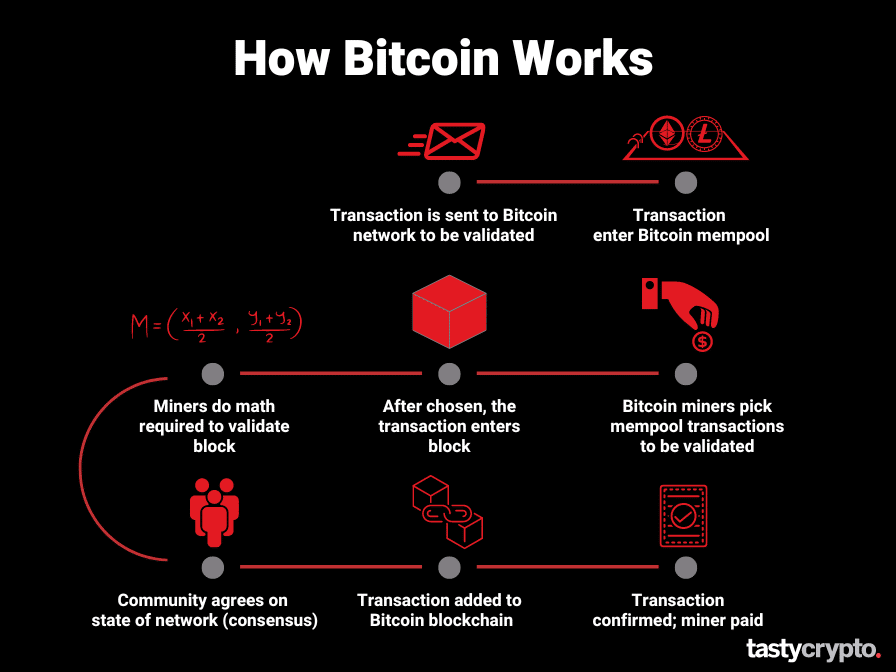
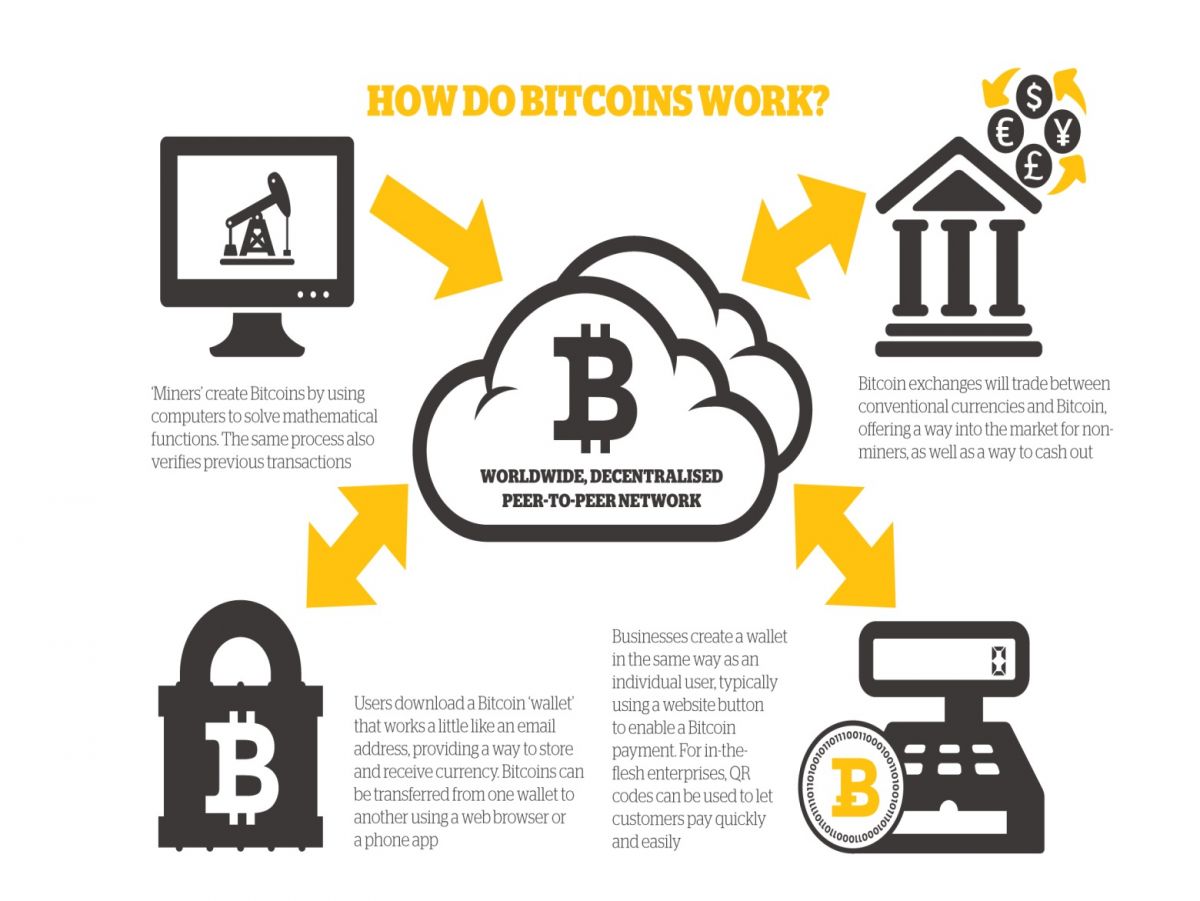
Mining is the process by which new Bitcoins are entered into circulation and the network is secured. Miners use specialized hardware (ASICs) to solve complex mathematical puzzles. In exchange for this computational work and the electricity consumed, they earn “block rewards” and transaction fees. While mining has become highly industrial and competitive, requiring significant capital expenditure (CAPEX) and operational costs (OPEX), it remains a fundamental way to “produce” Bitcoin at a potentially lower cost than the current market price, depending on energy efficiency.
Yield Generation and Lending
The rise of decentralized finance (DeFi) and specialized crypto-lending platforms has introduced a way to earn “interest” on Bitcoin. Instead of letting the asset sit idle in a wallet, owners can lend their Bitcoin to institutional borrowers or provide liquidity to decentralized exchanges. In return, they receive a yield, usually paid in BTC or a stablecoin. This transforms Bitcoin from a non-productive store of value into a productive asset, similar to a rental property or a dividend-paying stock.
Navigating Market Cycles and Investor Psychology
To make money in the Bitcoin market, one must master the psychology of the “four-year cycle.” Bitcoin markets are highly emotional, often swinging between extreme euphoria and deep despair. Understanding these phases is crucial for protecting capital and maximizing returns.
The Bull Market and the “Fear of Missing Out” (FOMO)
During a bull market, prices rise rapidly, and media coverage intensifies. This is where most retail investors enter the market, driven by FOMO. While the gains can be spectacular, this is also the most dangerous time to invest. Making money during this phase often involves “taking chips off the table”—gradually selling into the strength to realize profits before the inevitable correction.
The Bear Market and Accumulation
Bear markets are characterized by price drops of 50% to 80% and a general sense of “crypto is dead” in the mainstream media. However, for professional investors, this is the most profitable phase. This is the period of accumulation, where one can lower their “cost basis” by buying Bitcoin at a discount. Those who have the emotional fortitude to buy when others are selling are usually the ones who see the greatest returns in the subsequent cycle.
Dollar-Cost Averaging (DCA)
One of the most effective ways to mitigate the risks of volatility is Dollar-Cost Averaging. This involves investing a fixed amount of money at regular intervals (e.g., $100 every week) regardless of the price. Over time, this strategy lowers the average purchase price and removes the emotional burden of trying to “time the bottom.” For many, DCA is the most reliable path to building a significant Bitcoin position and generating long-term wealth.
The Institutional Shift: Bitcoin as a Macro Asset
A major shift in how Bitcoin makes money has occurred with the entry of institutional capital. This transition from a “retail toy” to a “macro-economic hedge” has changed the liquidity and stability of the market.
Spot Bitcoin ETFs and Accessibility
The approval of Spot Bitcoin ETFs (Exchange-Traded Funds) in major financial markets has opened the floodgates for traditional investment. These funds allow pension funds, 401k holders, and high-net-worth individuals to gain exposure to Bitcoin’s price movements without the technical hurdle of managing private keys. This massive influx of capital creates a “floor” for the price and increases the overall valuation of the network, benefiting all holders.
Bitcoin as a Hedge Against Monetary Debasement
In an era of high government debt and currency devaluation, many corporations—most notably MicroStrategy—have begun using Bitcoin as a primary reserve asset. By converting their cash reserves (which lose purchasing power over time) into Bitcoin, these companies are betting on Bitcoin’s ability to preserve and grow their treasury’s value. This institutional validation provides a “store of value” use case that supports a higher price equilibrium over time.
Risk Management and the “Golden Rules” of Crypto Finance
While the potential for profit is high, the risks are equally significant. Making money with Bitcoin requires a disciplined approach to security and risk management.
Self-Custody and Security
The phrase “not your keys, not your coins” is the most important rule in Bitcoin. If you keep your Bitcoin on an exchange, you do not technically own it; you own a claim against the exchange. To ensure your “money” is safe, using hardware wallets (cold storage) is essential. Security breaches or exchange insolvencies can wipe out years of profit in an instant.
Never Investing More Than You Can Lose
Because of its volatility, Bitcoin should be treated as a high-risk, high-reward component of a diversified portfolio. The most successful Bitcoin investors are those who are not forced to sell during a market crash because they are over-leveraged or need the money for immediate living expenses. Having a “time horizon” of at least five to ten years is the most effective way to neutralize the risks of short-term price fluctuations.
Understanding Tax Implications
In most jurisdictions, Bitcoin is treated as property or a capital asset. Every time you sell Bitcoin for a profit, or even trade it for another cryptocurrency, you may trigger a taxable event. Successful wealth building with Bitcoin involves careful tax planning, such as holding for over a year to qualify for long-term capital gains rates or utilizing tax-advantaged accounts where available.

Conclusion: The Future of Bitcoin Wealth Generation
Bitcoin makes money by functioning as a decentralized, global, and scarce digital asset. Its value is derived from its utility as a censorship-resistant medium of exchange and its perfection as a store of value. Whether through the patient accumulation of “Sats” (the smallest unit of Bitcoin), active trading of market volatility, or participating in the burgeoning ecosystem of Bitcoin-backed finance, the opportunities for wealth generation are vast. As the network matures and moves toward global adoption, the mechanics of how it “works” to make money remain rooted in the simple balance of finite supply against an ever-expanding digital economy. For those who understand these mechanics, Bitcoin represents perhaps the most significant financial opportunity of the 21st century.
aViewFromTheCave is a participant in the Amazon Services LLC Associates Program, an affiliate advertising program designed to provide a means for sites to earn advertising fees by advertising and linking to Amazon.com. Amazon, the Amazon logo, AmazonSupply, and the AmazonSupply logo are trademarks of Amazon.com, Inc. or its affiliates. As an Amazon Associate we earn affiliate commissions from qualifying purchases.