
Since its inception in 2009, Bitcoin has evolved from an obscure cryptographic experiment into a global financial powerhouse. While early headlines focused primarily on its volatile price swings, the narrative has shifted toward its practical application within the modern economy. Today, “using” Bitcoin goes far beyond speculative trading. It represents a paradigm shift in personal finance, corporate treasury management, and global remittances.
To truly understand how to use Bitcoin, one must look at it through the lens of financial utility. Whether you are an individual investor looking to preserve wealth or a business owner seeking to streamline international payments, Bitcoin offers a suite of financial functions that traditional fiat systems often struggle to match. This guide explores the multifaceted ways Bitcoin is used today as a tool for wealth management, investment, and medium of exchange.
Bitcoin as a Store of Value: The “Digital Gold” Strategy
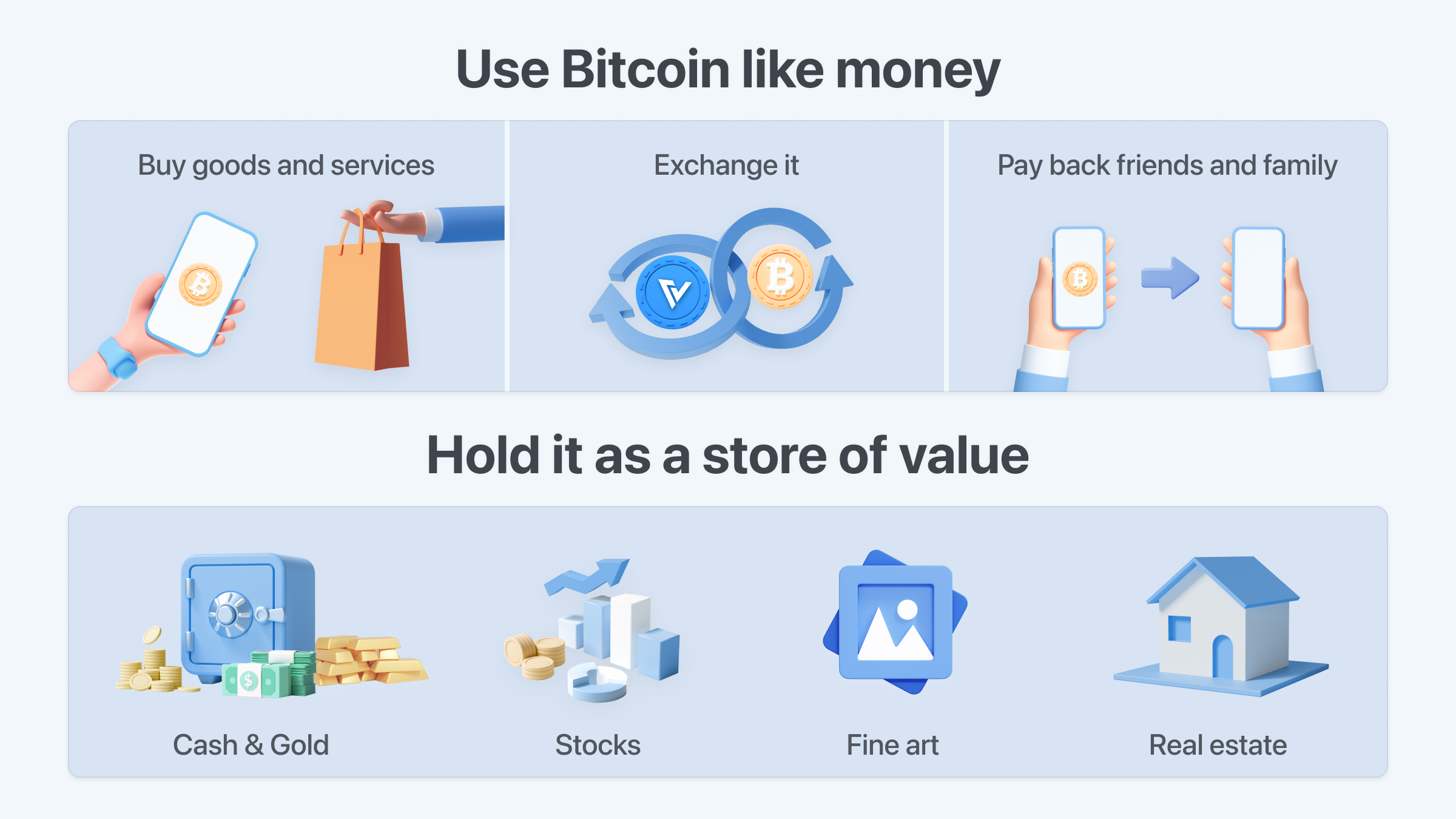
For many users, the primary way to use Bitcoin is as a long-term store of value. This strategy, often referred to in the community as “HODLing,” treats Bitcoin similarly to physical gold. In an era of high inflation and currency devaluation, Bitcoin’s fixed supply of 21 million coins makes it an attractive hedge against the erosion of purchasing power.
Understanding Scarcity and the 21 Million Cap
The fundamental value proposition of Bitcoin lies in its mathematical scarcity. Unlike traditional currencies (fiat), which central banks can print in unlimited quantities, Bitcoin is governed by a transparent, immutable code. This “hard money” property is the cornerstone of its use as a financial tool. Users utilize Bitcoin to opt out of inflationary cycles, trusting that the protocol’s supply limit will protect the relative value of their savings over decades rather than years.
Long-term Holding for Wealth Preservation
Using Bitcoin for wealth preservation requires a shift in mindset. Instead of viewing it as a “get rich quick” scheme, sophisticated users view it as a multi-generational asset. By moving funds into Bitcoin, individuals create a “sovereign reserve” that is independent of any single government’s economic policy. This usage is particularly prevalent in regions experiencing hyperinflation, where Bitcoin serves as a vital financial lifeline for families looking to keep their life savings from disappearing due to local currency collapse.
Integrating Bitcoin into Your Personal Investment Portfolio
Beyond a simple store of value, Bitcoin has become a legitimate asset class within a diversified investment portfolio. Financial advisors and retail investors alike use Bitcoin to achieve non-correlated growth, meaning its price movements do not always mirror those of the traditional stock or bond markets.
Risk Management and Asset Allocation
Using Bitcoin as an investment requires a calculated approach to risk. Most financial experts suggest an allocation ranging from 1% to 5% of a total portfolio, depending on an individual’s risk tolerance. Because Bitcoin is highly volatile in the short term, users leverage it to capture “asymmetric upside”—the potential for significant gains that far outweigh the initial capital risked. In this context, Bitcoin is used as the “aggressive growth” component of a broader financial plan.
Dollar-Cost Averaging (DCA) as a Disciplined Approach
One of the most effective ways to use Bitcoin financially is through Dollar-Cost Averaging (DCA). Instead of trying to “time the market” and buy at the absolute lowest price, users invest a fixed amount of fiat currency (such as $50 or $100) at regular intervals—weekly or monthly. This strategy mitigates the impact of volatility and removes the emotional stress of price fluctuations. Over time, DCA allows investors to build a significant position in Bitcoin while maintaining a disciplined, professional approach to wealth building.
Practical Transacting: Spending Bitcoin in the Real World
While many view Bitcoin as a digital version of gold, it remains a peer-to-peer electronic cash system. Using Bitcoin for transactions offers advantages in speed, cost, and accessibility, particularly when moving money across international borders.

Using Bitcoin for Global Remittances and Low-Fee Transfers
Traditional international wire transfers are notoriously slow, expensive, and burdened by intermediary banks. Bitcoin solves this by allowing users to send value anywhere in the world, 24/7, without the need for a central clearinghouse. For those using Bitcoin for remittances, the process is revolutionary: a worker can send funds to their family in another country, and the transaction settles in minutes for a fraction of the cost of services like Western Union. This use case is a cornerstone of “financial inclusion,” providing banking-like services to the unbanked populations of the world.
Direct Merchant Payments and Gift Card Conversions
In the consumer sector, the ease of spending Bitcoin continues to grow. Many major retailers now accept Bitcoin directly or through third-party payment processors. Additionally, many users “spend” their Bitcoin by purchasing gift cards for mainstream services like Amazon, Uber, or Starbucks through platforms like Bitrefill. This bridge between the crypto-economy and the traditional retail economy allows users to live on a “Bitcoin standard,” using their digital assets to cover daily living expenses while avoiding the fees associated with converting back to fiat currency.
Navigating the Ecosystem of Financial Tools
To use Bitcoin effectively, one must understand the tools that facilitate its management. The financial infrastructure surrounding Bitcoin has matured significantly, offering users various levels of control and security.
Choosing Between Custodial and Non-Custodial Platforms
A major financial decision for any Bitcoin user is where to store their assets. Custodial platforms, such as regulated exchanges (Coinbase, Kraken, or Binance), offer a user experience similar to online banking. They are excellent for beginners but require the user to trust a third party. On the other hand, non-custodial wallets (like hardware wallets) allow users to act as their own bank. Utilizing a hardware wallet is the gold standard for financial security, as it ensures that the user has sole control over their private keys, protecting them from exchange hacks or institutional failures.
Tax Implications and Financial Reporting
In most jurisdictions, Bitcoin is treated as property for tax purposes. Using Bitcoin responsibly means keeping meticulous records of “cost basis” and “fair market value” at the time of each transaction. Every time you sell Bitcoin or use it to buy a product, it may trigger a capital gains tax event. Modern financial tools and software, such as CoinTracker or Koinly, have become essential for Bitcoin users, allowing them to automate their tax reporting and stay compliant with local regulations. Treating Bitcoin usage as a professional financial activity is key to long-term success.
The Future of Bitcoin in Business Finance
The utility of Bitcoin is not limited to individuals; corporations and small businesses are increasingly integrating Bitcoin into their financial operations.
Bitcoin as a Treasury Reserve Asset
Following the lead of companies like MicroStrategy and Tesla, many businesses are now using Bitcoin as a treasury reserve asset. Rather than letting cash sit in a bank account where it earns negligible interest and loses value to inflation, companies convert a portion of their balance sheet into Bitcoin. This use case demonstrates Bitcoin’s role as a “pristine collateral” and a superior alternative to corporate bonds or cash equivalents in a high-inflation environment.
Enabling Micro-payments for Digital Services
Bitcoin is uniquely suited for the digital economy through the Lightning Network, a “Layer 2” protocol that allows for nearly instant, near-zero-cost transactions. This technology enables businesses to use Bitcoin for micro-payments—transactions worth a fraction of a cent. For example, content creators can be paid by the minute for video views, or gamers can earn tiny amounts of Bitcoin for in-game achievements. This level of financial granularity is impossible with the current credit card infrastructure, opening up entirely new business models for the internet age.
Conclusion
Using Bitcoin is no longer a niche activity for tech enthusiasts; it is a sophisticated financial strategy that offers autonomy, security, and growth. Whether you are using it as “digital gold” to protect your savings, as a diversified investment to build wealth, or as a borderless currency to settle global transactions, Bitcoin provides a level of financial freedom that was previously unattainable.
As the ecosystem continues to mature, the tools will become more intuitive and the adoption more widespread. However, the core principle remains the same: Bitcoin is a tool for financial empowerment. By understanding its role as a store of value, an investment asset, and a medium of exchange, you can navigate the digital economy with confidence and purpose. The question is no longer “What is Bitcoin?” but rather, “How will you use Bitcoin to secure your financial future?”
aViewFromTheCave is a participant in the Amazon Services LLC Associates Program, an affiliate advertising program designed to provide a means for sites to earn advertising fees by advertising and linking to Amazon.com. Amazon, the Amazon logo, AmazonSupply, and the AmazonSupply logo are trademarks of Amazon.com, Inc. or its affiliates. As an Amazon Associate we earn affiliate commissions from qualifying purchases.