
Navigating the complexities of tax season can be daunting, but understanding how to properly set up payments with the Internal Revenue Service (IRS) is a fundamental aspect of responsible financial management. Whether you owe a balance from a filed return, need to make estimated tax payments throughout the year, or are addressing a past due amount, the IRS offers a variety of methods to ensure your tax obligations are met. This guide delves into the official channels available, explores options for those facing financial hardship, and provides crucial insights to help you manage your tax payments effectively and without undue stress.
Navigating Your IRS Payment Obligations
Before you can set up a payment, it’s essential to understand what you owe, why you owe it, and by when. The IRS system, while robust, requires taxpayers to be proactive in identifying their liabilities.
Identifying Your Tax Due Date
For most individual taxpayers, the primary tax deadline for filing returns and paying any taxes owed for the previous year is April 15th (or the next business day if April 15th falls on a weekend or holiday). However, this is not the only payment date you might encounter. If you’re self-employed, a gig worker, or have significant income not subject to withholding, you likely need to make estimated tax payments quarterly. These typically fall on April 15th, June 15th, September 15th, and January 15th of the following year. Missing these deadlines can result in underpayment penalties, even if you pay your full tax liability by the April 15th deadline.
Types of Payments You Might Owe
Your obligation to the IRS can stem from several sources:
- Balance Due on a Filed Return: This is the most common scenario, where your tax liability for the year exceeds the amount withheld from your paychecks or paid via estimated taxes.
- Estimated Taxes: As mentioned, if you expect to owe at least $1,000 in tax for the year and do not have sufficient withholding, you generally need to make estimated payments. This prevents a large tax bill and potential penalties at year-end.
- Underpayment Penalties: If you didn’t pay enough tax throughout the year through withholding or estimated payments, the IRS might assess an underpayment penalty. This is a separate charge that often needs to be paid in addition to your tax liability.
- Tax Assessments from Audits or Notices: Following an audit or a notice from the IRS, you might be assessed additional tax, penalties, and interest.
- Installment Agreement or Offer in Compromise Payments: If you’ve entered into a payment plan with the IRS, you’ll be making regular payments according to that agreement.
Understanding IRS Notices and Bills
When the IRS determines you owe money or that there’s an issue with your return, they will send you a notice or a bill. It’s crucial not to ignore these. Each notice has a specific purpose and often includes a response deadline. They typically explain the reason for the bill, the amount owed (including penalties and interest), and how to pay or dispute the charges. If you disagree with a notice, it’s vital to respond promptly with supporting documentation. Ignoring notices can lead to more severe collection actions, such as liens or levies.
Official IRS Payment Methods: A Comprehensive Guide
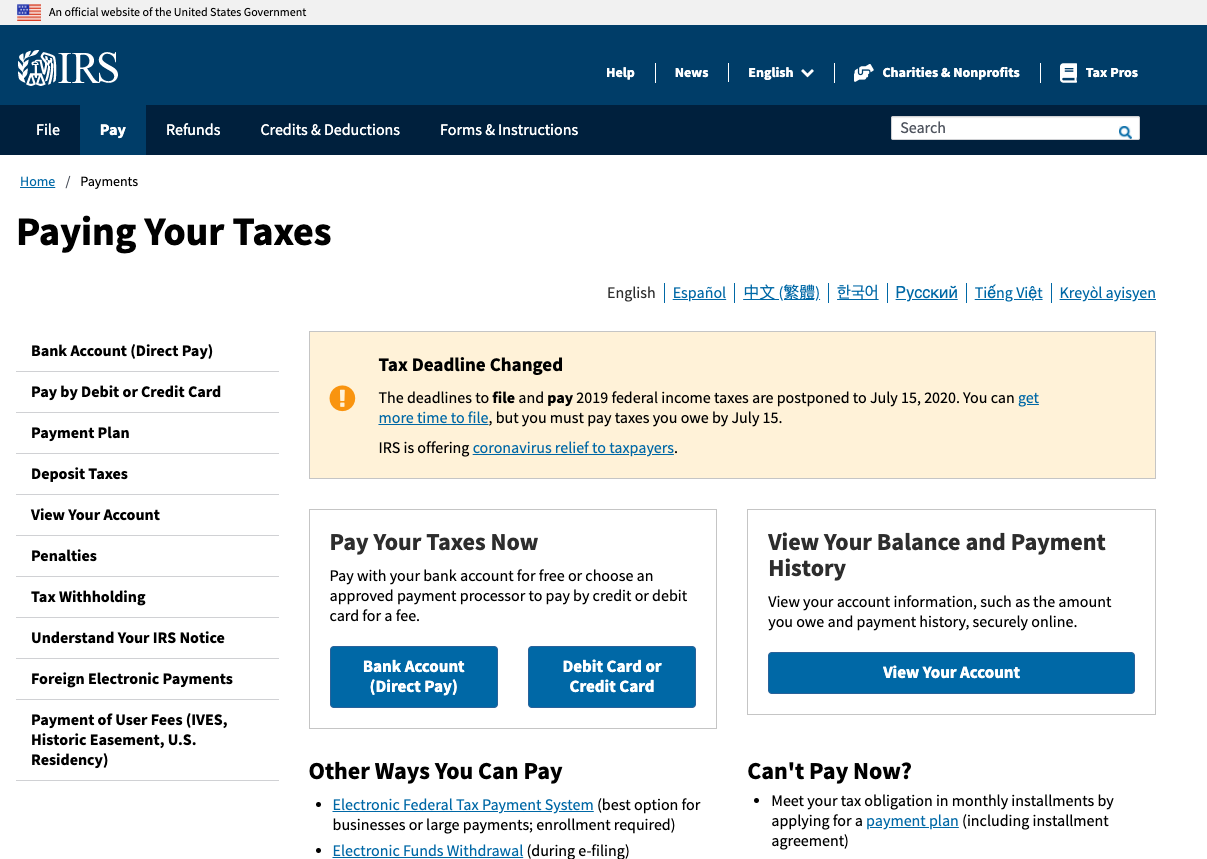
The IRS provides multiple secure and convenient ways to make your tax payments. Choosing the right method depends on your personal preference, the type of payment, and sometimes, the amount.
IRS Direct Pay: Fast and Free
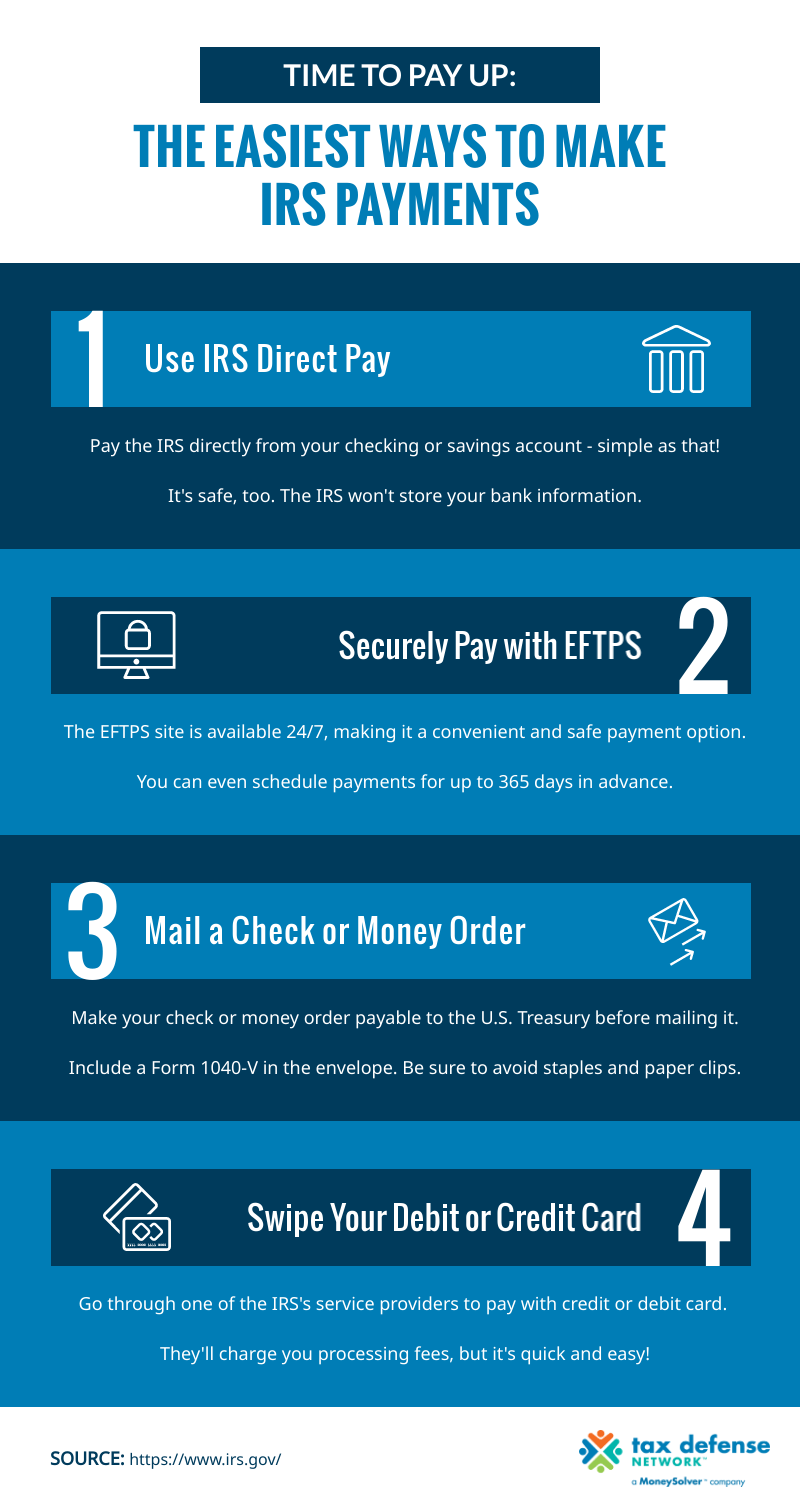
IRS Direct Pay is arguably the most straightforward and cost-effective method for individuals to pay their federal taxes directly from their checking or savings account. It’s free, secure, and doesn’t require pre-registration. You can schedule payments up to 365 days in advance, receive immediate confirmation via email, and even modify or cancel payments up to two days before the scheduled date. This method is ideal for balance due payments, estimated taxes, and payments for a variety of other tax forms.
Debit Card, Credit Card, or Digital Wallet Payments
For those who prefer the convenience of plastic or digital wallets, the IRS allows payments via debit cards, credit cards, and certain digital wallets (like PayPal or Click to Pay). These payments are processed through third-party payment processors, which charge a processing fee based on the payment amount. While these fees can add up, some taxpayers opt for this method to earn credit card rewards, manage cash flow, or simply for the ease of use. It’s crucial to weigh the fee against any potential benefits.
Electronic Federal Tax Payment System (EFTPS): For Businesses and Frequent Payers
The Electronic Federal Tax Payment System (EFTPS) is a free online service, but it requires prior enrollment. Once enrolled, individuals, businesses, and tax professionals can use EFTPS to make all types of federal tax payments, including federal tax deposits (like payroll taxes), estimated taxes, and balance due payments. It allows for scheduling payments up to 365 days in advance and provides an immediate confirmation number. EFTPS is particularly recommended for businesses due to its comprehensive features and security, as well as for individuals who make frequent estimated payments.
Paying by Electronic Funds Withdrawal (EFW) During E-filing
When you file your federal tax return electronically (e-file) through tax software or a tax professional, you often have the option to authorize an electronic funds withdrawal (EFW) directly from your bank account. This allows you to specify a payment date up to the tax deadline, streamlining the filing and payment process simultaneously. It’s a convenient option for those who know their exact tax liability when filing.
Traditional Methods: Check, Money Order, or Cash
Despite the proliferation of electronic options, traditional payment methods are still available:
- Check or Money Order: You can mail a check or money order made out to the “U.S. Treasury.” It’s imperative to include your name, address, daytime phone number, Social Security number (or employer identification number), the tax year, and the related tax form or notice number on the payment. The IRS provides specific mailing addresses based on your location and the type of payment.
- Cash: The IRS accepts cash payments through retail partners, including 7-Eleven stores. This option is facilitated through PayWithMyBank or a similar service that generates a payment code. It’s a secure way to pay cash, but requires careful attention to detail and obtaining a receipt. This method might be suitable for those who prefer or need to deal in cash.
What If You Can’t Pay On Time? IRS Payment Solutions
Financial difficulties can strike anyone, and the IRS acknowledges that not every taxpayer can pay their full tax liability by the due date. The key is to be proactive and communicate with the IRS rather than ignoring the problem. There are several programs designed to help taxpayers in these situations.
Short-Term Payment Plans (Up to 180 Days)
If you can pay your full tax liability within 180 days, but just need a little more time, you can request a short-term payment plan. This option is available through the IRS website or by phone. While you will still incur penalties and interest until the balance is paid in full, it avoids more aggressive collection actions and the complexities of longer-term agreements.
Installment Agreement: Monthly Payments for Up to 72 Months
For those who need more than 180 days, an installment agreement allows you to make monthly payments for up to 72 months (six years). This option is available to taxpayers who owe a combined total of under $50,000 (for individuals) or $25,000 (for businesses) in tax, penalties, and interest. You can apply online through the IRS Online Payment Agreement application, or by submitting Form 9465, Installment Agreement Request. While an installment agreement is in place, certain penalties may be reduced, but interest continues to accrue.
Offer in Compromise (OIC): Settling for Less
An Offer in Compromise (OIC) allows certain taxpayers to resolve their tax liability with the IRS for a lower amount than what they originally owe. An OIC is typically granted when a taxpayer is experiencing significant financial hardship and can demonstrate that they cannot pay their full tax debt. The IRS evaluates OICs based on your ability to pay, your income, your expenses, and the equity of your assets. It’s a complex process and not everyone qualifies. The IRS encourages taxpayers to use the OIC Pre-Qualifier Tool to determine if they are eligible before submitting an application (Form 656, Offer in Compromise).
Understanding Penalties and Interest
It’s important to differentiate between penalties and interest.
- Penalties: The IRS assesses penalties for various reasons, including failing to file on time, failing to pay on time, or failing to prepare an accurate return. The “failure to pay” penalty is typically 0.5% of the unpaid taxes for each month or part of a month that taxes remain unpaid, capped at 25% of your unpaid liability.
- Interest: Interest is charged on underpayments, overpayments, and unpaid penalties. The interest rate is adjusted quarterly and can compound daily. Unlike penalties, interest generally cannot be abated (removed) by the IRS, even if the underlying penalty is removed.
If you’re unable to pay, setting up a payment plan is crucial to mitigate further penalties and interest, and to avoid more serious collection actions.
Key Considerations and Best Practices for IRS Payments
Proactive planning and diligent record-keeping can significantly smooth your interactions with the IRS and ensure your tax payments are handled efficiently.
Filing Your Return Even If You Can’t Pay
This is a critical piece of advice: always file your tax return on time, even if you can’t afford to pay the full amount you owe. The penalty for failing to file (5% of the unpaid taxes for each month or part of a month that a return is late, capped at 25%) is significantly higher than the penalty for failing to pay (0.5% per month). Filing on time prevents the larger “failure to file” penalty and gives you time to explore payment options with the IRS.
Keeping Meticulous Records
Maintain thorough records of all your tax filings, payments, and correspondence with the IRS. This includes copies of your tax returns, proof of payment (transaction confirmation numbers, bank statements, canceled checks), and any notices or letters received. Such records are invaluable if there’s ever a dispute or question about your tax history. Digital copies are often sufficient and can be stored securely.
Seeking Professional Tax Assistance
For complex tax situations, significant tax debt, or if you’re unsure about the best payment strategy, consulting a qualified tax professional (like a CPA or Enrolled Agent) can be highly beneficial. They can help you understand your obligations, explore all available payment options, negotiate with the IRS on your behalf, and ensure you’re making the most informed decisions for your financial health. Their expertise can save you money, time, and considerable stress.

Avoiding Common Payment Scams
Unfortunately, tax season is also prime time for scammers. Be extremely wary of unsolicited calls, emails, or texts claiming to be from the IRS and demanding immediate payment, threatening legal action, or asking for personal financial information. The IRS will never:
- Demand immediate payment without first mailing you a bill.
- Demand that you pay taxes without giving you an opportunity to question or appeal the amount they say you owe.
- Require you to use a specific payment method (like a prepaid debit card or wire transfer).
- Ask for credit card or debit card numbers over the phone or email.
- Threaten to bring in local police or other law enforcement groups to have you arrested for not paying.
Always verify the legitimacy of any IRS communication through official channels or your tax professional if you have any doubts.
In conclusion, setting up payments with the IRS doesn’t have to be a source of anxiety. By understanding the various payment methods, being aware of the options available for financial hardship, and adhering to best practices, you can fulfill your tax obligations efficiently and responsibly. Proactivity, meticulous record-keeping, and knowing when to seek professional advice are your strongest allies in navigating the world of federal tax payments.
aViewFromTheCave is a participant in the Amazon Services LLC Associates Program, an affiliate advertising program designed to provide a means for sites to earn advertising fees by advertising and linking to Amazon.com. Amazon, the Amazon logo, AmazonSupply, and the AmazonSupply logo are trademarks of Amazon.com, Inc. or its affiliates. As an Amazon Associate we earn affiliate commissions from qualifying purchases.