
In the landscape of American personal finance, few institutions carry as much prestige and loyalty as USAA (United Services Automobile Association). Known for its industry-leading customer service and competitive rates, USAA is often cited by financial planners as a “gold standard” for those who can access it. However, unlike traditional insurers that open their doors to the general public, USAA maintains a strict eligibility framework. Understanding how to qualify for USAA insurance is not just a matter of checking a box; it is about understanding a specialized financial ecosystem designed to support the military community and their families.
For those looking to optimize their personal finance portfolio, securing a USAA membership can be a transformative step. It offers a suite of products—from auto and home insurance to banking and investment tools—tailored to the unique life cycles of service members. This guide provides a deep dive into the specific qualification criteria, the financial advantages of membership, and the strategic steps required to join this exclusive organization.
The Core Eligibility Requirements: Who Can Join?
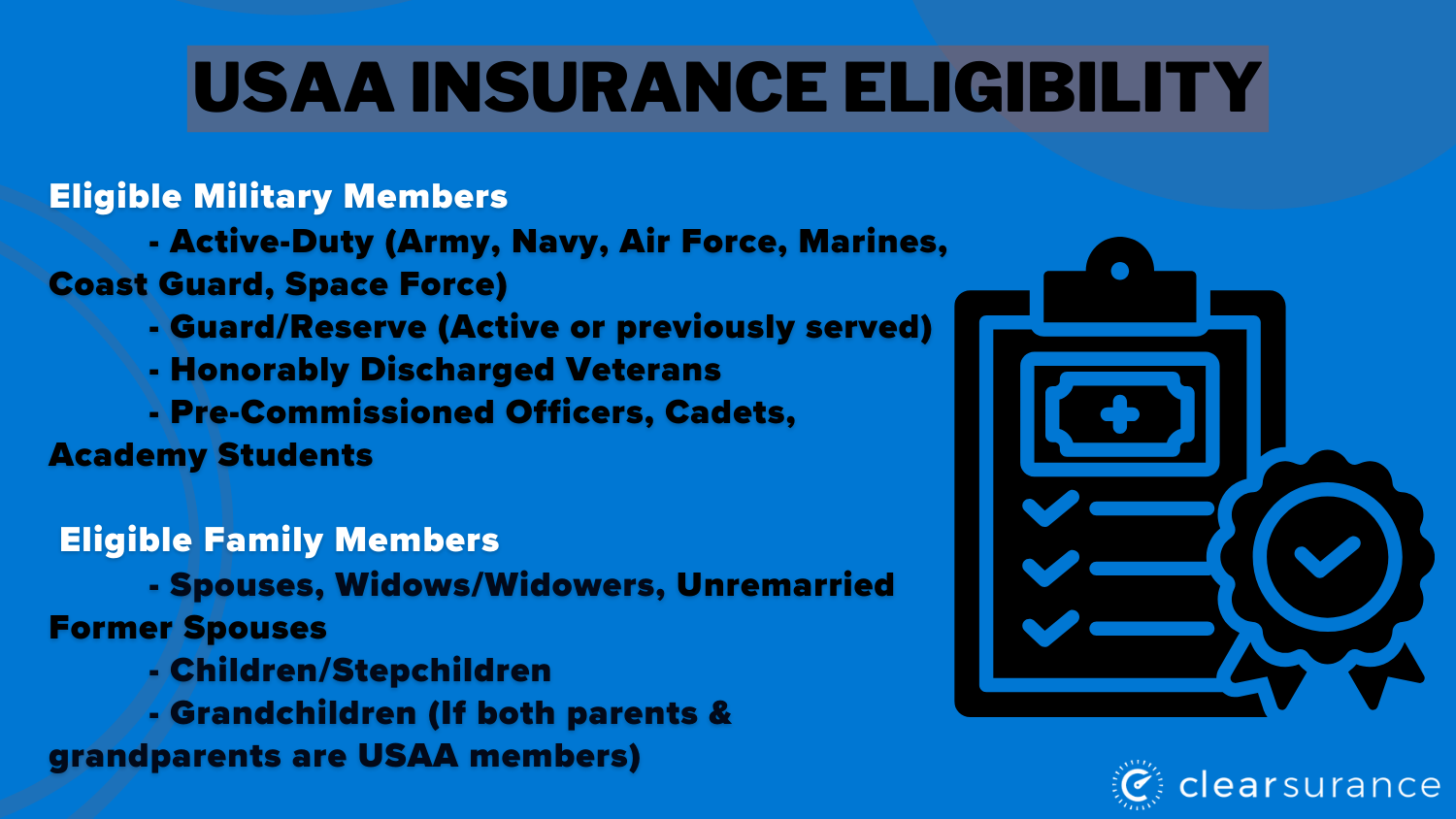
The primary hurdle to accessing USAA is its membership eligibility. Because USAA is a reciprocal inter-insurance exchange, its structure is designed to benefit a specific group of people who share a common bond of service. Qualification is generally divided into three main pillars: military service, veteran status, and family lineage.
Active Duty, Guard, and Reserve Members
The most direct path to qualification is through active military service. Individuals currently serving in the U.S. Air Force, Army, Coast Guard, Marine Corps, Navy, or the newly formed Space Force are immediately eligible. This also extends to those serving in the National Guard and the Selected Reserve. For these individuals, USAA provides specialized financial products that account for the nuances of military life, such as deployments and frequent relocations.
Veterans and Honorably Discharged Personnel
Military service does not have to be current to qualify an individual for USAA. Veterans who have retired or been honorably discharged from any branch of the U.S. military are eligible to apply. It is important to note that the type of discharge matters; generally, an “honorable” or “under honorable conditions” discharge is required to meet the membership standards. This allows those who have served their country to maintain high-quality financial protection long after they have hung up the uniform.
Candidates in Commissioning Programs
A often-overlooked category of eligibility includes those who are on the path to becoming officers. This includes cadets and midshipmen at U.S. Service Academies (like West Point or Annapolis), as well as students in the Reserve Officers’ Training Corps (ROTC) who are under contract. Even those in Officer Candidate School (OCS) or Officer Training School (OTS) can begin their relationship with USAA early in their careers, allowing them to build a credit and insurance history within the system before they even receive their first commission.
Navigating the Financial Benefits of USAA Membership
Qualifying for USAA is often pursued because of the significant financial advantages the institution offers compared to “civilian” banks and insurers. Within the “Money” niche of personal finance, USAA is frequently praised for its holistic approach to a member’s net worth.
Competitive Insurance Premiums and Dividends
The primary draw for most applicants is USAA’s insurance products. Because USAA focuses on a specific demographic that is statistically disciplined, they are often able to offer lower premiums on auto, homeowners, and renters insurance. Beyond low rates, USAA operates with a unique financial structure where it may return a portion of its profits to members in the form of dividends or distributions into “Subscriber’s Accounts.” This effectively lowers the true cost of insurance over time, a benefit rarely seen in traditional stock-held insurance companies.
Integrated Banking and Investment Services
Once you qualify for insurance, you gain access to the USAA Federal Savings Bank. This is a critical component of a robust personal finance strategy. USAA banking often features lower fees, competitive interest rates on savings accounts, and specialized loan products. For example, their VA Loan programs for home buying are among the most streamlined in the industry. For the savvy investor, USAA also provides access to wealth management services and brokerage accounts that understand the tax implications and benefits unique to military pay structures.
Financial Tools for Deployment and Relocation
USAA’s financial tools are built for the “Permanent Change of Station” (PCS) lifestyle. Members gain access to tools that help manage the costs of moving, specialized insurance riders for personal property in transit, and even the ability to pause or discount certain insurance coverages while a vehicle is in storage during a deployment. These niche financial maneuvers can save a service member thousands of dollars over the course of a career.
The Step-by-Step Qualification Process
Once you believe you meet the criteria, the process of officially joining requires specific documentation and a verification phase. In the world of digital finance, USAA has made this process relatively seamless, but it still requires diligence.

Required Documentation for Verification
To qualify, you will need to provide proof of your military connection. For active-duty members and veterans, this usually involves a Social Security number and details regarding your service dates and branch. In some cases, you may be asked to provide a copy of your DD-214 (Certificate of Release or Discharge from Active Duty). For those qualifying through a family member, you will need the USAA number or the identifying details of the relative who is or was a member.
The “Pass-Through” Eligibility for Family Members
One of the most powerful aspects of USAA is that eligibility can be passed down. If a parent joins USAA, their children become eligible to join as well. This creates a multi-generational financial advantage. It is important to understand that the “chain” must remain intact. For a grandchild to join, the parent must typically have established their own USAA membership first, based on the grandparent’s service. This makes the decision to join a long-term legacy play for a family’s financial health.
Establishing Your Online Profile
The final step in qualification is the creation of a digital identity within the USAA portal. This involves a security screening and a “Know Your Customer” (KYC) check, which is standard for all financial institutions. Once the account is established, members can immediately begin shopping for quotes and moving their banking assets. The digital tools provided by USAA, including their mobile app, are consistently ranked among the best for ease of use in managing complex financial portfolios.
Strategic Considerations: Is USAA the Right Choice for Your Portfolio?
While the prestige of USAA is undeniable, a sophisticated approach to personal finance requires comparing it against other market options. Qualification is a privilege, but utilizing the service should be a calculated financial decision.
Comparing Rates with Private Insurers
While USAA is often the cheapest option, it is not always the cheapest for everyone. Depending on your geographic location, driving record, or credit score, other “civilian” insurers like Geico or Progressive may occasionally offer lower raw premiums. However, one must factor in the “value-add” of USAA, such as their claims handling reputation and the aforementioned Subscriber’s Account distributions, which often bridge the gap in price.
Bundling and Multi-Product Discounts
To get the most out of a USAA membership, bundling is essential. The institution offers significant discounts for members who hold both auto and home policies, or those who use USAA for both banking and insurance. From a wealth-building perspective, centralizing your financial life with one institution can simplify your cash flow management and make it easier to track your net worth.
Customer Service as a Financial Value
In personal finance, “time is money.” USAA’s customer service is legendary for its efficiency. When dealing with a complex car accident claim or a mortgage application, the speed and reliability of the institution can prevent financial leaks. For many members, the peace of mind knowing that they are dealing with an organization that understands military life is worth more than a few dollars’ difference in a monthly premium.
Common Misconceptions and Eligibility Myths
There are several myths regarding who can join USAA that often lead to confusion in financial forums. Clearing these up is essential for anyone trying to navigate the qualification process.
The “Grandchild” Loophole
Many people believe that if their grandfather was in the military, they can automatically join. This is only partially true. As mentioned earlier, the eligibility must be passed down like a baton. The grandparent must have joined USAA, then the parent must have joined, and only then can the grandchild join. If the chain is broken (i.e., the veteran grandparent never joined USAA while they were alive), it is much more difficult, and often impossible, for the grandchild to qualify.
Eligibility for Discharged Personnel
Another common misconception is that any discharge allows for membership. USAA is quite strict about the “Honorable” status. Those with a Dishonorable Discharge are generally barred from membership. This maintains the risk pool’s integrity, which is a key reason why USAA can afford to keep its rates lower than many competitors.
Access for Unmarried Partners
In the modern era, the definition of “family” has evolved, but USAA’s rules are specific. Legal spouses are eligible. Unmarried partners generally do not qualify for their own accounts unless they have their own military connection. However, once a couple is legally married, the non-military spouse can be fully integrated into the USAA financial ecosystem, inheriting the same eligibility benefits as the service member.

Conclusion: The Long-Term Value of USAA Qualification
Qualifying for USAA insurance is more than just a transaction; it is an entry into a specialized financial community. For those in the “Money” niche, USAA represents a unique opportunity to leverage military service into long-term financial stability. By understanding the nuances of eligibility—from active duty requirements to the complexities of family lineage—potential members can unlock a suite of tools designed to protect and grow their wealth.
Whether it is through the competitive premiums of their insurance products, the low-fee structure of their banking, or the unique dividend-paying model of their reciprocal exchange, USAA remains a cornerstone of military financial planning. If you meet the criteria, the effort to verify your eligibility is a high-return investment in your financial future, providing a foundation of security that can last for generations.
aViewFromTheCave is a participant in the Amazon Services LLC Associates Program, an affiliate advertising program designed to provide a means for sites to earn advertising fees by advertising and linking to Amazon.com. Amazon, the Amazon logo, AmazonSupply, and the AmazonSupply logo are trademarks of Amazon.com, Inc. or its affiliates. As an Amazon Associate we earn affiliate commissions from qualifying purchases.