
The emergence of Bitcoin has undeniably revolutionized the world of finance, presenting both opportunities and complexities for the modern investor. Once a niche interest, Bitcoin has matured into a significant global asset, attracting attention from individual retail investors, institutional funds, and even sovereign nations. For many, the allure of this decentralized digital currency lies in its potential for significant returns, its independence from traditional financial institutions, and its role as a hedge against inflation. However, for those new to the cryptocurrency space, the process of acquiring Bitcoin can seem daunting, shrouded in technical jargon and unfamiliar platforms. This comprehensive guide aims to demystify the process, providing a professional, insightful, and engaging roadmap for purchasing Bitcoin, grounded firmly in financial prudence and strategic investment principles. We will navigate the essential steps, from understanding Bitcoin’s financial landscape to executing your first purchase and securing your investment, ensuring you approach this new frontier with confidence and clarity.
Understanding Bitcoin: A Brief Overview for Investors
Before diving into the mechanics of purchasing Bitcoin, it’s crucial to establish a foundational understanding of what it is, why it holds investment appeal, and the market dynamics that govern its value. Approaching any investment without this preliminary knowledge is akin to sailing without a compass, fraught with unnecessary risks.
What is Bitcoin? More Than Just Digital Cash
At its core, Bitcoin is a decentralized digital currency, meaning it operates independently of any central bank or government. Created in 2009 by an anonymous entity known as Satoshi Nakamoto, it utilizes a technology called blockchain to record all transactions in a public, immutable ledger. This distributed ledger system ensures transparency and security without the need for intermediaries like banks. From an investor’s perspective, Bitcoin represents a digital asset with a finite supply – capped at 21 million coins – a characteristic often compared to precious metals like gold, which has led some to label it “digital gold.” This scarcity, combined with increasing demand and adoption, forms a significant part of its investment thesis. It’s not merely a payment system; it’s an asset class being integrated into diversified portfolios.
Why Invest in Bitcoin? Potential Benefits and Risks
The motivation behind investing in Bitcoin is multifaceted. For many, it’s a belief in the future of decentralized finance and a desire to participate in a nascent, high-growth sector. Bitcoin offers several potential benefits:
-
Decentralization: Freedom from government and institutional control.
-
Potential for High Returns: Historically, Bitcoin has shown periods of explosive growth, outperforming many traditional assets.
-
Inflation Hedge: Its limited supply makes it attractive as a store of value, especially in times of fiat currency debasement.
-
Global Accessibility: Bitcoin can be sent and received anywhere in the world with an internet connection, often with lower fees than traditional banking.
However, these benefits come hand-in-hand with significant risks:
-
Volatility: Bitcoin’s price is notoriously volatile, subject to rapid and dramatic fluctuations, which can lead to substantial losses.
-
Regulatory Uncertainty: The regulatory landscape for cryptocurrencies is still evolving globally, posing potential future risks.
-
Security Risks: While the blockchain itself is secure, individual investors face risks from hacks, scams, and loss of private keys if proper security measures aren’t taken.
-
Lack of Intrinsic Value Debate: Some critics argue Bitcoin lacks fundamental intrinsic value, making its price speculative.
A clear understanding of both the upside potential and the downside risks is paramount for responsible financial decision-making.
The Market Landscape: Volatility and Opportunity
The Bitcoin market is characterized by extreme volatility, influenced by macroeconomic factors, regulatory news, technological developments, and market sentiment. This volatility, while daunting, also presents opportunities for astute investors. Understanding market cycles, recognizing support and resistance levels (even if only generally), and being prepared for significant price swings are crucial elements of navigating this landscape. Unlike traditional stock markets, the cryptocurrency market operates 24/7, globally, adding another layer of dynamic complexity. Investors must be prepared for swift changes and avoid emotionally driven decisions, relying instead on their predetermined investment strategy.
Essential Steps Before Your First Bitcoin Purchase
Embarking on your Bitcoin investment journey requires more than just knowing where to click “buy.” Strategic preparation and due diligence are fundamental to safeguarding your capital and maximizing your potential for success.
Defining Your Investment Strategy and Risk Tolerance
Before committing any capital, articulate your personal investment goals. Are you looking for long-term growth, speculative short-term gains, or a diversified hedge? Crucially, determine your risk tolerance. Given Bitcoin’s inherent volatility, it is imperative to only invest capital you can afford to lose without impacting your financial stability. A common adage in crypto investing is “never invest more than you can afford to lose.” This principle helps manage the psychological impact of market downturns. Consider what percentage of your overall investment portfolio you are comfortable allocating to a high-risk asset like Bitcoin. For many financial advisors, this might be a small single-digit percentage, especially for beginners.
Choosing the Right Cryptocurrency Exchange
The cryptocurrency exchange is your primary gateway to purchasing Bitcoin. These platforms facilitate the buying and selling of digital assets, much like a stock brokerage. Selecting a reputable and secure exchange is paramount. Key factors to consider include:
-
Security: Look for exchanges with strong security protocols, including two-factor authentication (2FA), cold storage for client funds, and a history of robust security.
-
Reputation and Regulatory Compliance: Choose exchanges with a long-standing positive reputation and those that comply with financial regulations in your jurisdiction (e.g., KYC/AML procedures).
-
Fees: Understand the fee structure, including trading fees, deposit fees, withdrawal fees, and spread (the difference between buy and sell prices).
-
Liquidity: A highly liquid exchange ensures you can buy or sell Bitcoin quickly at fair market prices.
-
User Interface: Especially for beginners, an intuitive and easy-to-navigate platform enhances the user experience.
-
Customer Support: Accessible and responsive customer service can be invaluable when issues arise.
Popular global exchanges include Coinbase, Binance, Kraken, and Gemini, among others. Researching reviews and comparing options is highly recommended.
Setting Up a Secure Digital Wallet
While some exchanges allow you to hold your Bitcoin directly on their platform, for larger amounts or long-term holding, it is strongly advised to transfer your Bitcoin to a private digital wallet. This practice, often referred to as “not your keys, not your crypto,” emphasizes that true ownership comes with controlling your private keys.
-
Hot Wallets: Connected to the internet (e.g., mobile apps, desktop software, web wallets). Convenient for frequent transactions but generally less secure for large holdings due to online exposure.
-
Cold Wallets (Hardware Wallets): Physical devices (like a USB drive) that store your private keys offline, offering the highest level of security against online hacks. Examples include Ledger and Trezor. This is the recommended option for significant investments.
Choosing the right wallet depends on your investment size and frequency of transactions. For a first-time, small purchase, keeping it on a reputable exchange might be acceptable, but for any substantial amount intended for long-term holding, a hardware wallet is a wise investment.
A Step-by-Step Guide to Buying Bitcoin
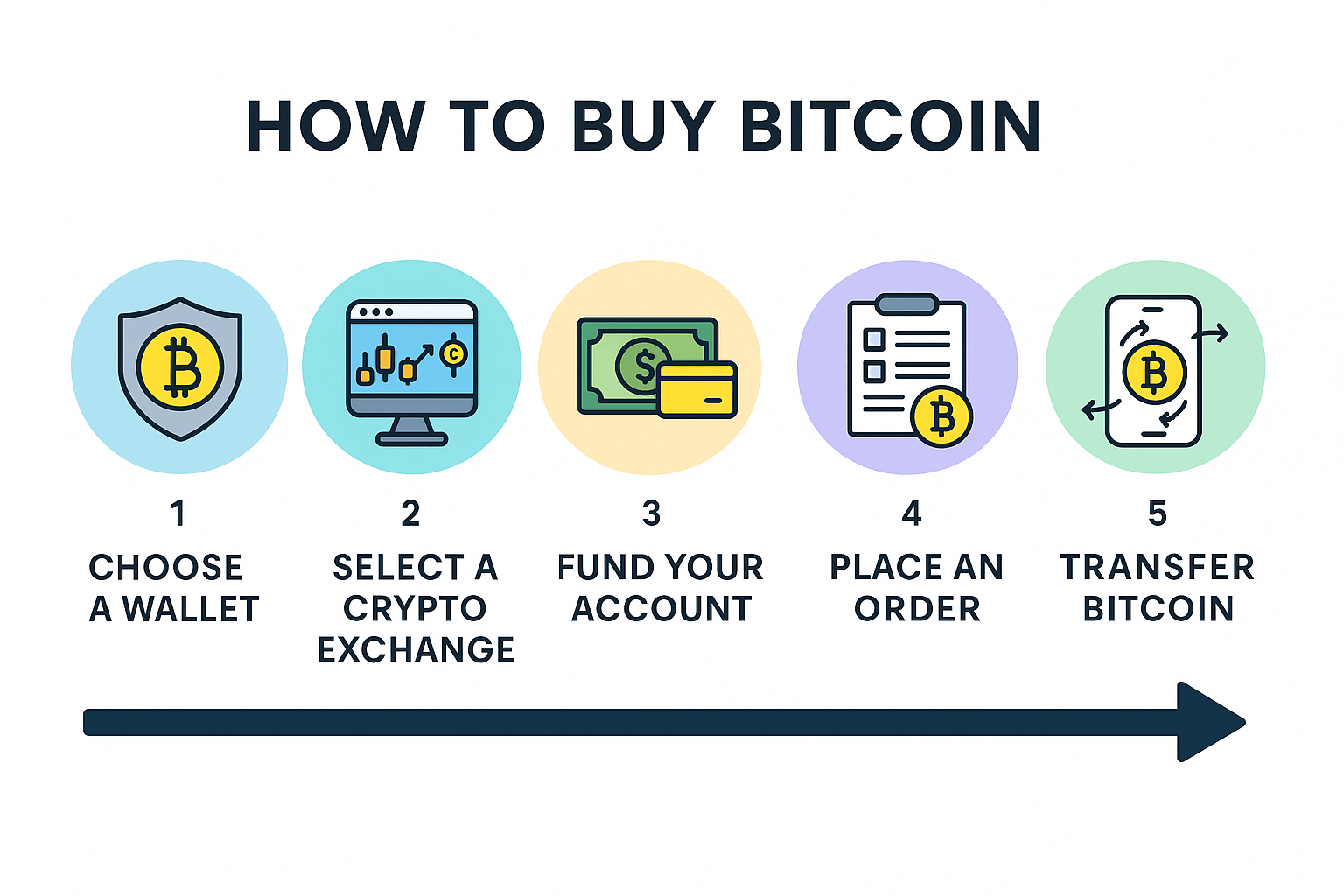
With your strategy defined and your platforms selected, you are ready to execute your first Bitcoin purchase. This process typically involves several distinct steps, designed to ensure security and compliance.
Exchange Registration and Verification (KYC)
The first step is to register an account with your chosen cryptocurrency exchange. This usually involves providing an email address, creating a strong password, and enabling two-factor authentication (2FA) immediately. Following registration, you will undergo a Know Your Customer (KYC) process, which is a regulatory requirement for most legitimate exchanges. This involves submitting personal identification documents (e.g., government-issued ID, proof of address) to verify your identity. This process can take anywhere from a few minutes to several days, depending on the exchange and the volume of applications. Do not skip this step, as it’s essential for security and to unlock higher trading limits.
Funding Your Exchange Account

Once your account is verified, you’ll need to deposit funds. Most exchanges support various funding methods:
-
Bank Transfer (ACH/SEPA/Wire Transfer): Generally the cheapest method, but can take a few business days to process.
-
Debit Card/Credit Card: Often instant but typically incurs higher fees due to processing costs. Some banks may also block crypto-related transactions.
-
Other Payment Methods: Some exchanges support PayPal, Apple Pay, or other local payment solutions.
Choose the method that balances speed, cost, and convenience for your needs. Always ensure you are transferring funds from an account in your name to avoid complications.
Executing Your Bitcoin Purchase
With funds in your account, navigate to the “Buy/Sell” section of the exchange.
-
Select Bitcoin: Choose BTC from the list of available cryptocurrencies.
-
Enter Amount: Specify how much fiat currency (e.g., USD, EUR) you wish to spend, or how much Bitcoin you want to buy.
-
Review Order: The exchange will display the current Bitcoin price, the total amount of Bitcoin you will receive, and any associated fees.
-
Confirm Purchase: If everything looks correct, confirm the transaction. Your Bitcoin will then be credited to your exchange wallet.
It’s common for exchanges to offer different order types (market order, limit order). A market order buys Bitcoin immediately at the current market price, while a limit order allows you to set a specific price at which you wish to buy, and the order will only execute if the price reaches that level. For beginners, a market order is often the simplest way to start.
Transferring Bitcoin to Your Private Wallet
After purchasing, especially if you plan to hold for the long term, initiate a transfer of your Bitcoin from the exchange to your private hardware or software wallet.
-
Retrieve Wallet Address: In your private wallet application or device, find your Bitcoin receiving address. This is a long string of alphanumeric characters.
-
Initiate Withdrawal on Exchange: On the exchange, select the “Withdraw” or “Send” option for Bitcoin.
-
Enter Address and Amount: Paste your Bitcoin wallet address carefully (double-check every character, or use QR codes if available) and enter the amount of Bitcoin you wish to transfer.
-
Confirm Transaction: Review all details, especially the address, and confirm the withdrawal. You will usually incur a small network fee for this transaction.
It’s highly recommended to send a small test amount first, especially for larger transfers, to ensure the address is correct and the process works smoothly before transferring your full investment. Bitcoin transactions are irreversible.
Advanced Considerations for Bitcoin Investors
As you become more comfortable with purchasing Bitcoin, it’s beneficial to consider strategies and factors that can optimize your investment approach and financial planning.
Dollar-Cost Averaging (DCA) Strategy
Given Bitcoin’s volatility, a powerful strategy for mitigating risk and potentially enhancing returns is Dollar-Cost Averaging (DCA). Instead of investing a lump sum at once, DCA involves investing a fixed amount of money at regular intervals (e.g., weekly, monthly) regardless of the Bitcoin price. This strategy averages out your purchase price over time, reducing the risk of buying all your Bitcoin at a market peak. It also removes emotional decision-making from the investment process, fostering disciplined accumulation over the long term. Many exchanges offer automated DCA features.
Understanding Transaction Fees and Spreads
Fees are an unavoidable part of investing. Beyond the purchase price, you’ll encounter several types of fees:
-
Trading Fees: Charged by exchanges for executing buy/sell orders. These can be percentage-based or tiered.
-
Deposit/Withdrawal Fees: Charged for moving fiat currency in or out of the exchange, or for withdrawing Bitcoin to an external wallet (network fees).
-
Spreads: The difference between the buy and sell price offered by an exchange. On some platforms, the spread might be a less obvious but significant cost.
Always be aware of these costs, as they can impact your overall investment returns. Comparing fees across different exchanges can yield substantial savings over time.
Tax Implications of Cryptocurrency Investments
A critical financial aspect often overlooked by new investors is the tax treatment of cryptocurrencies. In many jurisdictions, Bitcoin and other cryptocurrencies are treated as property for tax purposes, not currency. This means:
-
Capital Gains Tax: You may owe capital gains tax when you sell Bitcoin for a profit, exchange it for another cryptocurrency, or use it to purchase goods and services.
-
Income Tax: Receiving Bitcoin as payment for services or through mining activities might be considered taxable income.
It is essential to keep meticulous records of all your Bitcoin transactions, including purchase dates, prices, and selling dates/prices. Consulting with a tax professional specializing in cryptocurrency is highly recommended to ensure compliance and optimize your tax strategy, preventing costly surprises down the line.
Securing Your Bitcoin Investment
The decentralized nature of Bitcoin places a significant responsibility on the individual investor for the security of their assets. While incredibly innovative, the digital realm also presents unique security challenges.
Best Practices for Wallet Security
-
Strong, Unique Passwords: Use complex passwords for all crypto-related accounts and never reuse them.
-
Two-Factor Authentication (2FA): Always enable 2FA on exchanges and wallets. Hardware-based 2FA (e.g., YubiKey) is superior to SMS-based 2FA.
-
Backup Seed Phrase: For private wallets, you will be given a “seed phrase” (a series of 12-24 words). This is the master key to your funds. Write it down physically (not digitally) and store it in multiple secure, undisclosed locations. Never share it with anyone.
-
Regular Updates: Ensure your wallet software and hardware firmware are always up to date.
-
Avoid Public Wi-Fi: Refrain from accessing your crypto accounts on unsecured public networks.
Protecting Against Phishing and Scams
The cryptocurrency space is unfortunately a target for sophisticated scams.
-
Phishing: Be extremely wary of unsolicited emails, messages, or websites impersonating exchanges or wallet providers. Always double-check URLs and sender addresses. Bookmark official sites.
-
Impersonation Scams: Never trust individuals claiming to be support staff or offering guaranteed returns in exchange for sending them your crypto.
-
“Too Good to Be True” Offers: If an investment promises abnormally high returns with no risk, it is almost certainly a scam.
-
Hardware Wallet Authenticity: Purchase hardware wallets only directly from the manufacturer or authorized resellers.
Vigilance and a healthy skepticism are your best defenses against these threats.

The Importance of Diversification
While Bitcoin can be a powerful asset, it carries substantial risk. For a balanced financial portfolio, diversification is key. Consider allocating a portion of your investment capital to other asset classes, such as traditional stocks, bonds, real estate, or even other promising cryptocurrencies, depending on your risk appetite. Diversification helps mitigate the impact of poor performance from any single asset, providing a more stable overall investment trajectory. Bitcoin should be viewed as one component of a broader, well-thought-out financial strategy.
In conclusion, purchasing Bitcoin is a process that blends technological interaction with fundamental financial principles. By understanding the asset, preparing meticulously, executing trades thoughtfully, and prioritizing security and financial planning, investors can confidently navigate this exciting yet volatile market. Approaching Bitcoin with a professional mindset, informed by research and strategic planning, is the most robust path to potentially realizing its financial benefits while managing its inherent risks.
aViewFromTheCave is a participant in the Amazon Services LLC Associates Program, an affiliate advertising program designed to provide a means for sites to earn advertising fees by advertising and linking to Amazon.com. Amazon, the Amazon logo, AmazonSupply, and the AmazonSupply logo are trademarks of Amazon.com, Inc. or its affiliates. As an Amazon Associate we earn affiliate commissions from qualifying purchases.