
For many individuals and businesses, the annual tax ritual involves simply filing a return and either receiving a refund or paying a balance due. However, for a significant portion of the population – particularly the self-employed, freelancers, small business owners, and those with substantial income from investments – the obligation extends beyond a single annual filing. These individuals often fall into the category of taxpayers required to pay “estimated taxes” throughout the year. Navigating the world of estimated federal taxes can seem daunting, but with a clear understanding of the requirements, calculation methods, and payment options, it becomes a manageable aspect of sound financial planning. This guide will demystify the process, offering a professional, insightful, and engaging walkthrough to ensure you meet your obligations and avoid unnecessary penalties.
Understanding Estimated Taxes: Who Pays and Why?
Estimated taxes are the method used to pay Social Security and Medicare taxes and income tax throughout the year as you earn income. This system is crucial because the U.S. tax system operates on a “pay-as-you-go” principle. If you’re an employee, your employer typically withholds taxes from each paycheck, effectively paying your taxes incrementally. But if you don’t have an employer doing this for you, or if your withholding isn’t sufficient, the IRS expects you to make these payments yourself.
What Are Estimated Taxes?
At its core, estimated tax is exactly what it sounds like: an estimation of your income tax liability for the year, paid in advance. It’s designed to ensure that taxpayers contribute to their tax obligations steadily, rather than facing a massive bill (and potential penalties) at tax time. These payments cover not only federal income tax but also self-employment tax (which includes Social Security and Medicare taxes for those who work for themselves) and, in some cases, the Additional Medicare Tax.
Who Needs to Pay Estimated Taxes?
The most common taxpayers required to pay estimated taxes are:
-
Self-Employed Individuals: Freelancers, independent contractors, gig workers, and sole proprietors whose income isn’t subject to standard employer withholding.
-
Small Business Owners: Partnerships, S-corporation shareholders, and those with pass-through income.
-
Individuals with Significant Investment Income: Income from dividends, interest, capital gains, rents, or royalties that isn’t subject to withholding.
-
Those with Other Unwithheld Income: Including alimony, prizes, awards, or gambling winnings.
Generally, you must pay estimated tax if you expect to owe at least $1,000 in tax for the current year, and your withholding and refundable credits are expected to be less than the smaller of: (1) 90% of the tax to be shown on your current year’s return, or (2) 100% of the tax shown on your prior year’s return (110% if your adjusted gross income in the prior year was over $150,000). These are known as “safe harbor” rules, and understanding them is key to avoiding underpayment penalties.
Consequences of Underpayment
Failing to pay enough estimated tax throughout the year, or missing payment deadlines, can result in penalties. The IRS charges an underpayment penalty, which is essentially interest on the amount you should have paid but didn’t. This penalty can accumulate quickly and add an unwelcome burden to your tax liability. Therefore, accurate calculation and timely payment are paramount to sound financial health.
Calculating Your Estimated Tax Liability
The thought of calculating your estimated tax can be intimidating, especially if your income fluctuates. However, with a methodical approach, you can arrive at a reasonably accurate figure. The IRS provides tools and guidance to assist you, primarily through Form 1040-ES, Estimated Tax for Individuals.
The Role of Form 1040-ES
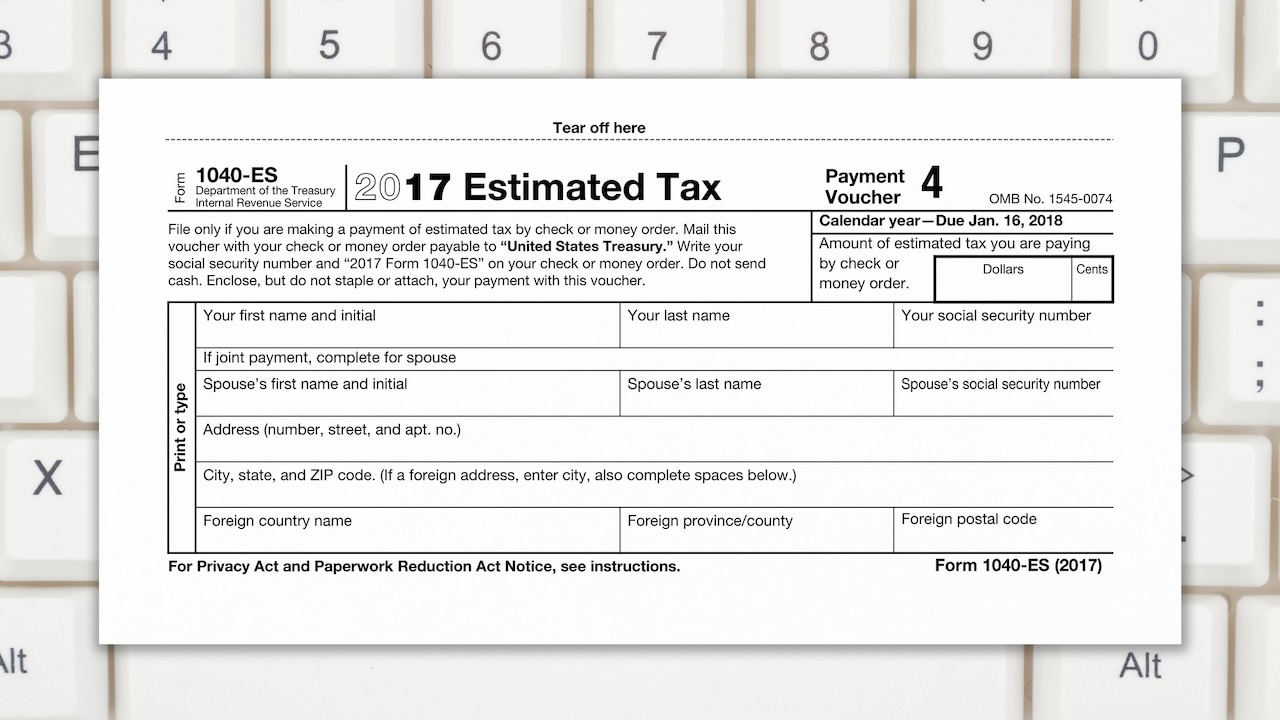
Form 1040-ES is not a form you file in the traditional sense, but rather a worksheet and payment vouchers. The worksheet guides you through estimating your adjusted gross income, deductions, credits, and ultimately, your total estimated tax liability for the year. It’s designed to help you project your earnings and expenses to determine the amount you should pay each quarter. While it can be completed manually, many taxpayers find it easier to use tax preparation software or consult with a tax professional.
Estimating Your Income and Deductions
The most challenging part of the calculation is accurately predicting your income and expenses for the entire year.
-
For Income: Start by reviewing your previous year’s tax return. This provides a baseline. Then, consider any significant changes expected in the current year – new clients, salary increases/decreases, changes in investment portfolio, retirement plans, etc. If you’re self-employed, try to project your gross receipts and subtract business expenses to arrive at your net self-employment income.
-
For Deductions: Similarly, anticipate your likely deductions and credits. Will you itemize or take the standard deduction? Are you eligible for new tax credits? The more accurately you can estimate these figures, the closer your estimated tax payments will be to your actual liability.
Accounting for Credits and Withholding
Don’t forget to factor in any tax credits you expect to receive and any income tax that might be withheld from other sources. For instance, if you have a part-time job in addition to your freelance work, the tax withheld from that employment can reduce your estimated tax payment obligations. Similarly, refundable tax credits directly reduce your tax bill and can decrease the amount you need to pay in estimated taxes. It’s crucial to subtract these from your projected tax liability when calculating your quarterly payments.
Safe Harbor Rules to Avoid Penalties
To avoid underpayment penalties, you generally need to pay at least 90% of your current year’s tax liability or 100% of your prior year’s tax liability through withholding and estimated payments. If your Adjusted Gross Income (AGI) in the prior year was over $150,000 (or $75,000 for married individuals filing separately), the prior year’s safe harbor increases to 110%. Utilizing these safe harbor rules can protect you from penalties even if your actual tax liability ends up being higher than your estimates, provided you meet one of these thresholds.
Methods for Paying Your Estimated Taxes
Once you’ve calculated your estimated tax liability, the next step is making the payments. The IRS offers several convenient ways to pay, catering to different preferences and technological comfort levels. Choosing the right method can streamline your financial management and ensure timely contributions.
IRS Direct Pay
IRS Direct Pay is one of the most popular and straightforward methods for individuals. It allows you to make estimated tax payments directly from your checking or savings account for free. It’s a secure online service that doesn’t require pre-registration. You simply visit the IRS website, select “estimated tax” as your payment reason, enter your bank account details, and schedule your payment. You can also view your payment history and receive email confirmations, offering peace of mind.
Electronic Federal Tax Payment System (EFTPS)
EFTPS is a free service provided by the U.S. Department of the Treasury that allows individuals and businesses to make all federal tax payments electronically. While it requires an enrollment process that takes a few days (as the IRS mails you a PIN), it offers robust features once activated. You can schedule payments up to 365 days in advance, review payment history for up to 15 months, and make payments 24/7. This system is particularly beneficial for those who prefer to plan all their payments at the start of the year or manage multiple tax types.
Credit or Debit Card
If you prefer the convenience of paying with a credit or debit card, the IRS facilitates this option through several third-party payment processors. While this method offers flexibility and can even allow you to earn credit card rewards, it’s important to be aware of the associated convenience fees. These fees are charged by the processing company, not the IRS, and typically range from 1.87% to 2.25% for credit cards, and a flat fee (e.g., $2.50 to $3.50) for debit cards. Weigh the cost against the convenience and any potential rewards to determine if this is the right option for you.
Electronic Funds Withdrawal (EFW)
When you use tax preparation software (like TurboTax or H&R Block) or have a tax professional file your income tax return (Form 1040), you often have the option to schedule estimated tax payments via Electronic Funds Withdrawal. This method allows you to authorize the IRS to directly debit your bank account for your estimated tax payments when you file your annual return. It’s a convenient way to set up your entire year’s payments in one go, linking them directly to your tax filing process.
Check or Money Order
For those who prefer traditional methods, you can still pay estimated taxes by check or money order. You’ll need to use the payment voucher (Form 1040-ES) corresponding to the quarter for which you are paying. Ensure you make the check or money order payable to the “U.S. Treasury,” write your name, address, social security number, daytime phone number, the tax year, and “Form 1040-ES” on the payment. Mail it to the correct IRS address specified in the Form 1040-ES instructions for your geographic location. While reliable, this method requires careful attention to detail and mailing deadlines.
Navigating Payment Deadlines and Strategies
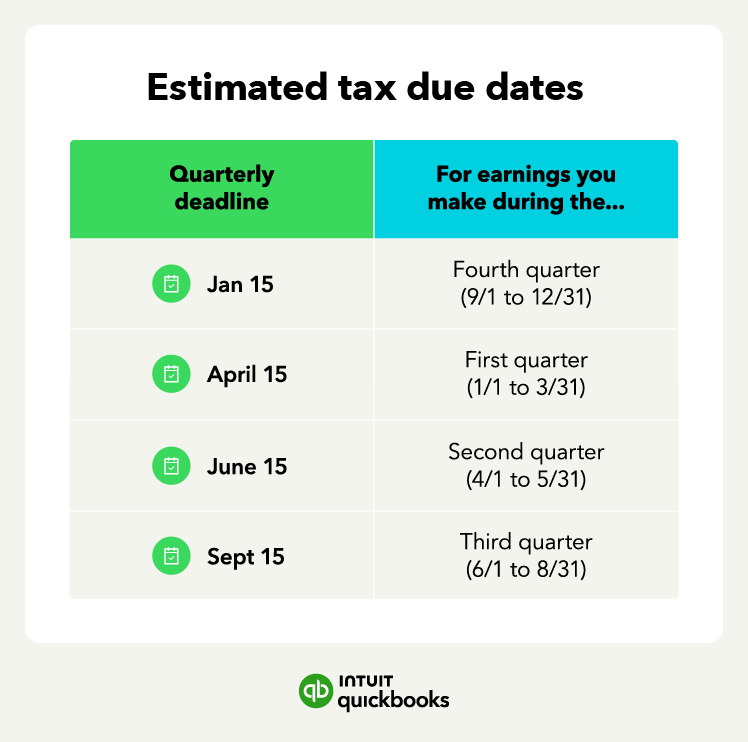
Estimated taxes are typically paid in four installments throughout the year. However, it’s crucial to understand that these “quarterly” periods don’t perfectly align with calendar quarters, which can be a common point of confusion. Effective planning requires adherence to these deadlines and a strategy for managing income fluctuations.
The Quarterly Payment Schedule
The IRS sets specific deadlines for estimated tax payments, generally falling on the 15th of April, June, September, and January of the following year.
-
Payment 1: For income earned January 1 to March 31, due April 15.
-
Payment 2: For income earned April 1 to May 31, due June 15.
-
Payment 3: For income earned June 1 to August 31, due September 15.
-
Payment 4: For income earned September 1 to December 31, due January 15 of the next year.
If any of these dates fall on a weekend or holiday, the deadline shifts to the next business day. Missing these deadlines can result in penalties, even if you eventually pay the full amount.
Adjusting Payments for Fluctuating Income
For many self-employed individuals and small business owners, income isn’t earned evenly throughout the year. If your income varies significantly from one quarter to the next, paying equal installments based on an annual estimate might lead to overpaying early in the year or underpaying later. In such cases, the IRS offers the Annualized Income Method. This method allows you to figure your estimated tax liability based on your income, deductions, and credits for each payment period. You essentially recalculate your income and tax liability for each period and adjust your payment accordingly. This approach can help avoid underpayment penalties for earlier quarters if a significant portion of your income comes later in the year.
Proactive Planning and Record Keeping
Successful management of estimated taxes hinges on proactive planning and meticulous record keeping.
-
Budgeting: Regularly review your income and expenses. Create a realistic budget that accounts for your estimated tax payments as a non-negotiable expense.
-
Tracking: Keep detailed records of all income sources and deductible expenses. This will not only aid in accurate quarterly calculations but also simplify your annual tax filing.
-
Review: At least once a quarter, preferably before each payment deadline, revisit your income projections and adjust your estimated tax payments if necessary. Life changes, business fluctuations, or new investment opportunities can all impact your tax liability.
Common Pitfalls and Best Practices
While the process of paying estimated taxes is manageable, certain common pitfalls can lead to unnecessary stress and penalties. Adopting best practices can transform this obligation into a seamless part of your financial routine.
Avoiding Underpayment Penalties
The most common pitfall is underestimating your income or simply forgetting to make a payment. To consistently avoid penalties:
-
Utilize Safe Harbors: Always aim to meet one of the safe harbor rules (90% of current year’s tax or 100%/110% of prior year’s tax). If your income varies, consider the Annualized Income Method.
-
Set Reminders: Use calendar alerts, financial software reminders, or even sticky notes to ensure you don’t miss payment deadlines.
-
Review Periodically: Don’t set your estimates at the beginning of the year and forget about them. Life and business are dynamic; your tax situation will likely be too. A mid-year review can be immensely helpful.
The Importance of Professional Guidance
While this guide provides a comprehensive overview, individual tax situations can be complex. Consulting with a qualified tax professional, such as a Certified Public Accountant (CPA) or an Enrolled Agent (EA), is often an invaluable investment. They can help you:
-
Accurately Calculate: Ensure your estimates are as precise as possible, especially if you have complex income streams or significant deductions.
-
Optimize Strategies: Advise on the best payment methods, strategies for fluctuating income, and ways to minimize your overall tax burden through legitimate deductions and credits.
-
Stay Compliant: Keep you informed of any changes in tax law that might impact your estimated tax obligations.
Leveraging Technology for Easier Management
In the digital age, numerous financial tools can simplify estimated tax management. While not exclusively “tech,” these tools contribute significantly to sound financial planning:
-
Accounting Software: Programs like QuickBooks, FreshBooks, or Xero can track income and expenses in real-time, making it easier to project your net income.
-
Tax Preparation Software: Products such as TurboTax Business or H&R Block often include estimated tax calculators and can help you set up electronic payments.
-
Financial Apps: Many budgeting and personal finance apps offer features that allow you to earmark funds for estimated taxes, helping you save consistently.
By integrating these tools into your routine, you can gain better visibility into your financial position and automate aspects of your tax planning, freeing up valuable time and reducing the risk of errors.

Conclusion
Paying estimated federal taxes is a fundamental responsibility for many individuals and businesses operating outside the traditional employer-employee relationship. While the process demands attention to detail and proactive financial planning, it is far from insurmountable. By understanding who needs to pay, diligently calculating your liability, utilizing the various convenient payment methods offered by the IRS, and adhering to the established deadlines, you can fulfill your obligations smoothly and efficiently. Embrace professional guidance when needed, leverage available technology, and commit to consistent record-keeping. Doing so will not only ensure compliance with tax law but also foster a greater sense of financial control and peace of mind throughout the year.
aViewFromTheCave is a participant in the Amazon Services LLC Associates Program, an affiliate advertising program designed to provide a means for sites to earn advertising fees by advertising and linking to Amazon.com. Amazon, the Amazon logo, AmazonSupply, and the AmazonSupply logo are trademarks of Amazon.com, Inc. or its affiliates. As an Amazon Associate we earn affiliate commissions from qualifying purchases.