
In the intricate dance of modern finance, few concepts are as ubiquitous and fundamental as the percentage. From the daily news headlines discussing interest rates and inflation to the personal decisions around budgeting, savings, and investments, percentages are the universal language that helps us quantify, compare, and understand financial information. They distill complex relationships into digestible figures, allowing us to grasp relative values, track changes, and make informed choices.
Yet, despite their pervasive presence, many individuals and even seasoned professionals occasionally find themselves pausing to “make a percentage” – to accurately calculate, interpret, and leverage these crucial numerical expressions. Understanding how to derive a percentage isn’t just a mathematical exercise; it’s a foundational skill that empowers you to decode financial statements, evaluate investment opportunities, negotiate better deals, and ultimately, gain greater control over your financial destiny. This article will demystify the art and science of “making a percentage,” exploring its core mechanics, its indispensable role in personal and business finance, and how a nuanced understanding can lead to significant financial growth and clarity.

The Foundational Mechanics: Basic Percentage Calculations
At its heart, a percentage is simply a way of expressing a number as a fraction of 100. The term “percent” literally means “per hundred.” This simple premise underpins all percentage calculations, making them accessible once you understand a few key formulas. Mastering these basic mechanics is the first step towards unlocking the power of percentages in any financial context.
Calculating a Percentage of a Whole
One of the most common applications of percentages is determining a specific portion of a larger quantity. Whether you’re figuring out a discount on a purchase, calculating sales tax, or estimating the interest on a loan, you’re essentially finding a percentage of a whole.
The formula is straightforward:
Percentage of Whole = (Percentage Rate / 100) * Whole Amount
Let’s illustrate with examples:
-
Discounts: If a product costs $200 and is on sale for 25% off, the discount amount is (25 / 100) * $200 = 0.25 * $200 = $50. The new price would be $200 – $50 = $150.
-
Taxes: If you buy an item for $50 and the sales tax is 8%, the tax amount is (8 / 100) * $50 = 0.08 * $50 = $4. The total cost is $50 + $4 = $54.
-
Interest: If you have a savings account with a 1.5% annual interest rate on a $1,000 balance, the interest earned in one year would be (1.5 / 100) * $1,000 = 0.015 * $1,000 = $15.
This calculation is fundamental to understanding how various charges and benefits are applied to your money.
Expressing a Part as a Percentage of a Whole
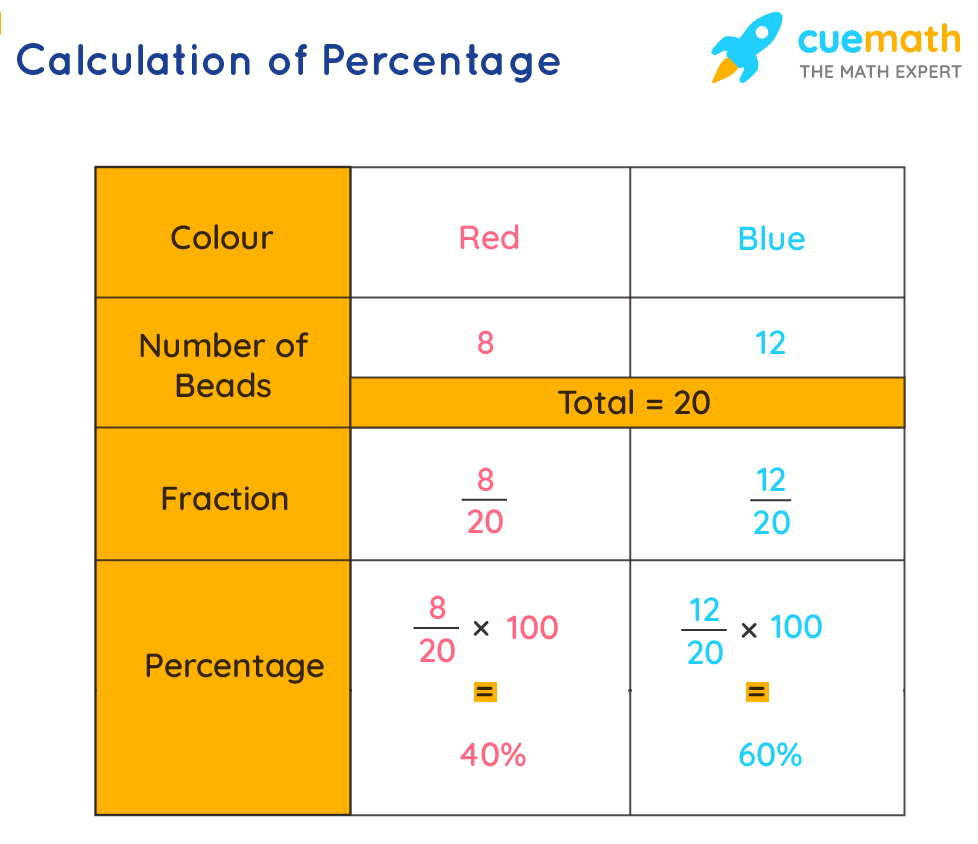
Equally important is the ability to determine what percentage one number is of another. This calculation allows you to contextualize numbers, compare proportions, and understand relative contributions. It’s vital for analyzing budget allocations, calculating profit margins, or understanding market share.
The formula is:
Percentage (Part of Whole) = (Part Amount / Whole Amount) * 100
Consider these scenarios:
-
Budgeting: If your total monthly income is $4,000 and you spend $1,200 on rent, the percentage of your income spent on rent is ($1,200 / $4,000) * 100 = 0.3 * 100 = 30%. This helps you identify where your money is going and if you’re adhering to financial rules of thumb (like the 30% rule for housing).
-
Profit Margins: A business sells a product for $100 that cost them $60 to produce. The profit is $40. The profit margin percentage is ($40 / $100) * 100 = 40%. This metric is crucial for assessing business efficiency and profitability.
-
Savings Rate: If you save $500 from your $3,000 monthly take-home pay, your savings rate is ($500 / $3,000) * 100 = 16.67%. This percentage is a key indicator of your financial health and progress towards financial goals.
Determining Percentage Change: Growth and Decline
Financial landscapes are dynamic, constantly shifting with growth and decline. Calculating percentage change is indispensable for measuring performance over time, comparing different periods, and understanding the magnitude of these shifts. This is applied to everything from investment returns to inflation rates, and salary increases.
The formula for percentage change is:
Percentage Change = ((New Value – Old Value) / Old Value) * 100
Note that if the New Value is greater than the Old Value, the result will be a positive percentage, indicating growth. If the New Value is less than the Old Value, the result will be a negative percentage, indicating a decline.
Examples:
-
Investment Growth: You bought a stock for $50, and it’s now worth $65. The percentage gain is (($65 – $50) / $50) * 100 = ($15 / $50) * 100 = 0.3 * 100 = 30%.
-
Inflation: A gallon of milk cost $3 last year and costs $3.15 this year. The inflation rate for milk is (($3.15 – $3) / $3) * 100 = ($0.15 / $3) * 100 = 0.05 * 100 = 5%.
-
Salary Increase: Your annual salary increased from $60,000 to $63,000. Your percentage raise is (($63,000 – $60,000) / $60,000) * 100 = ($3,000 / $60,000) * 100 = 0.05 * 100 = 5%.
Understanding percentage change allows you to evaluate performance, track trends, and project future outcomes more accurately.
Percentages in Personal Finance: Mastering Your Money
For individuals, percentages are not just theoretical constructs; they are practical tools that dictate how we manage, save, spend, and grow our personal wealth. Integrating percentage calculations into your personal financial strategy can dramatically enhance your decision-making and accelerate your financial goals.
Budgeting and Savings Rates
Budgeting is the cornerstone of personal finance, and percentages provide the framework for effective allocation. Rules like the 50/30/20 rule (50% needs, 30% wants, 20% savings/debt repayment) are entirely percentage-based. By calculating what percentage of your income goes to housing, food, transportation, and discretionary spending, you gain clarity on your spending habits. Your savings rate – the percentage of your income you save – is a critical metric for gauging your progress toward financial independence. A higher savings rate directly correlates with a faster path to reaching your financial targets, whether it’s a down payment, retirement, or a major purchase.
Debt Management and Interest Rates
Understanding interest rates, almost always expressed as percentages (Annual Percentage Rate or APR), is paramount when managing debt. Whether it’s a mortgage, an auto loan, or credit card debt, the percentage rate determines the cost of borrowing. A 1% difference in a mortgage rate can translate into tens of thousands of dollars over the loan’s lifetime. For credit cards, understanding how high APRs compound daily or monthly emphasizes the urgency of paying down high-interest balances. Conversely, understanding the positive power of compound interest in savings and investments highlights the benefit of starting early and consistently contributing.

Investment Performance and Returns
When you invest, percentages are your report card. Return on Investment (ROI) is a percentage that tells you how much profit or loss you’ve made relative to your initial investment. Dividend yields are expressed as percentages, indicating the income stream from stocks relative to their price. Understanding capital gains (the percentage increase in an asset’s value) and total return (combining gains and dividends) allows you to compare different investment opportunities and assess the performance of your portfolio. Furthermore, asset allocation, which is the distribution of your investments across different asset classes (e.g., 60% stocks, 30% bonds, 10% cash), is inherently percentage-based and crucial for managing risk and optimizing returns.
Retirement Planning and Contribution Rates
Retirement planning leans heavily on percentages. Financial advisors often recommend saving a certain percentage of your income, such as 10-15%, throughout your working life. Employer matching contributions to 401(k) plans are expressed as percentages (e.g., “we’ll match 50% of your contributions up to 6% of your salary”). Later, in retirement, understanding safe withdrawal rates (a percentage of your portfolio you can withdraw annually without running out of money, typically around 3-4%) becomes critical for managing your income and preserving your nest egg.
Percentages in Business Finance: Driving Profitability and Strategy
For businesses, percentages are the lifeblood of financial analysis, guiding strategic decisions, evaluating performance, and communicating health to stakeholders. From small startups to multinational corporations, the ability to calculate and interpret percentages is non-negotiable for sustainable growth and profitability.
Profit Margins and Revenue Analysis
Profit margins are among the most critical percentages in business.
-
Gross Profit Margin: (Gross Profit / Revenue) * 100 – indicates how much profit a company makes from each sale after accounting for direct costs of goods sold.
-
Operating Profit Margin: (Operating Profit / Revenue) * 100 – shows the profitability from core operations before interest and taxes.
-
Net Profit Margin: (Net Profit / Revenue) * 100 – reveals the ultimate percentage of revenue that translates into profit for shareholders after all expenses, taxes, and interest.
These percentages offer a concise view of a company’s efficiency and pricing power. Businesses constantly analyze these margins to identify areas for cost reduction, pricing adjustments, or operational improvements.
Pricing Strategies and Discounts
Percentages are at the core of pricing decisions. Businesses use them to mark up products from their cost to achieve desired profit margins. They also employ percentages heavily in marketing and sales promotions, offering discounts (e.g., “20% off all items”) to stimulate sales or clear inventory. Understanding the impact of these percentage-based price adjustments on overall revenue and profitability is essential for competitive positioning and managing inventory effectively. A seemingly small discount percentage can significantly erode margins if not carefully calculated.
Financial Ratios and Performance Metrics
Financial ratios, many of which are calculated or interpreted as percentages, provide invaluable insights into a company’s liquidity, solvency, efficiency, and profitability.
-
Current Ratio: (Current Assets / Current Liabilities) – indicates a company’s ability to cover its short-term obligations. While not a percentage, its interpretation often involves threshold percentages (e.g., a current ratio of 2:1 or 200% suggests good liquidity).
-
Debt-to-Equity Ratio: (Total Debt / Shareholder’s Equity) – highlights the proportion of debt financing relative to equity. A high percentage can signal financial risk.
-
Return on Equity (ROE): (Net Income / Shareholder’s Equity) * 100 – measures how efficiently a company is using shareholders’ investments to generate profit.
These and many other ratios allow businesses to benchmark their performance against industry averages and competitors, identify strengths and weaknesses, and inform strategic planning.
Sales Growth and Market Share
Businesses are constantly striving for growth, and this is typically measured in percentage terms. Year-over-year sales growth, quarterly revenue growth, or customer acquisition growth are all expressed as percentage changes. Similarly, market share – the percentage of the total market that a company controls – is a critical indicator of its competitive standing. Calculating and tracking these percentages enables businesses to assess the effectiveness of their strategies, project future performance, and make data-driven decisions regarding expansion, product development, and marketing efforts.
Common Pitfalls and Advanced Nuances of Percentages
While percentages are incredibly powerful, their interpretation can sometimes be tricky. A deeper understanding of their nuances prevents misinterpretation and allows for more sophisticated financial analysis.
Understanding Basis Points and Percentage Points
In financial markets, especially when discussing interest rates or bond yields, you’ll often encounter “basis points” (bps) and “percentage points.”
-
One percentage point is a full 1% (e.g., an increase from 5% to 6% is a 1 percentage point increase).
-
One basis point (bp) is one-hundredth of a percentage point (0.01%). So, 100 basis points equals 1 percentage point.
This distinction is crucial because small changes in interest rates or yields, often expressed in basis points, can have significant financial implications. For example, a central bank raising interest rates by 25 basis points (0.25%) is a common occurrence, and understanding this precise increment is key to following economic policy.
The Impact of Compounding Over Time
Revisiting compound interest is vital. A seemingly small annual percentage gain on an investment, when compounded over decades, can lead to exponential growth. Conversely, a high-interest debt that compounds frequently can quickly spiral out of control. Understanding how the frequency of compounding (daily, monthly, annually) can affect the true annual percentage yield (APY) or annual percentage rate (APR) is critical for both savers and borrowers. Even a fraction of a percentage point difference in compound interest over long periods can result in substantial financial disparities.
Beware of Misleading Percentages
Percentages, if not presented with full context, can be misleading. A “100% increase” sounds enormous, but if the original number was very small (e.g., increasing from 1 to 2), the absolute change is minimal. Conversely, a “1% market share” increase for a trillion-dollar industry represents billions. Always ask: “Percentage of what?” and consider the absolute numbers behind the percentages. Also, be wary of averaging percentages (e.g., an average of 5% gain and 5% loss is not necessarily 0% change in actual value due to sequential returns). Critical thinking and asking for the base values are essential when encountering percentage claims.
Practical Tools and Resources
While the underlying math is simple, modern financial management often benefits from tools that automate percentage calculations. Spreadsheets (like Excel or Google Sheets) are invaluable for creating dynamic budgets, investment trackers, and financial models that rely heavily on percentages. Built-in functions can quickly calculate percentages, percentage changes, and more complex financial metrics. Financial calculators (both physical and online) are also excellent resources for quick computations, especially for scenarios involving compound interest, loan amortizations, or investment returns. Leveraging these tools can save time and reduce errors, allowing you to focus on the insights derived from your percentage analysis.
Conclusion: Your Percentage Power-Up
From the grocery store checkout line to the trading floors of Wall Street, percentages are the unspoken language that underpins virtually every financial transaction and decision. Mastering “how you make a percentage” isn’t merely about performing arithmetic; it’s about gaining a profound ability to interpret financial information, identify opportunities, mitigate risks, and communicate financial realities with clarity and conviction.
Whether you’re an individual aiming to optimize your personal budget, save for a crucial life event, or grow your investment portfolio, or a business professional striving to enhance profitability, evaluate performance, or craft strategic pricing models, a solid grasp of percentages is your indispensable power-up. By consistently applying these fundamental calculations and understanding their deeper implications, you empower yourself to make more insightful choices, navigate the complex financial world with confidence, and ultimately, pave the way for sustained financial clarity and growth. Embrace the power of the percentage – your financial future will thank you for it.
aViewFromTheCave is a participant in the Amazon Services LLC Associates Program, an affiliate advertising program designed to provide a means for sites to earn advertising fees by advertising and linking to Amazon.com. Amazon, the Amazon logo, AmazonSupply, and the AmazonSupply logo are trademarks of Amazon.com, Inc. or its affiliates. As an Amazon Associate we earn affiliate commissions from qualifying purchases.