
The journey toward financial independence often begins with a single, pivotal question: how do you learn to invest in stocks? For many, the stock market appears as a chaotic landscape of flashing red and green numbers, complex terminology, and intimidating risks. However, stripped of its jargon, investing is simply the process of putting your capital to work today to generate a greater return in the future. It is a discipline that combines mathematical logic, psychological fortitude, and historical perspective. Learning to navigate this environment requires a structured approach that moves from foundational theory to practical execution.
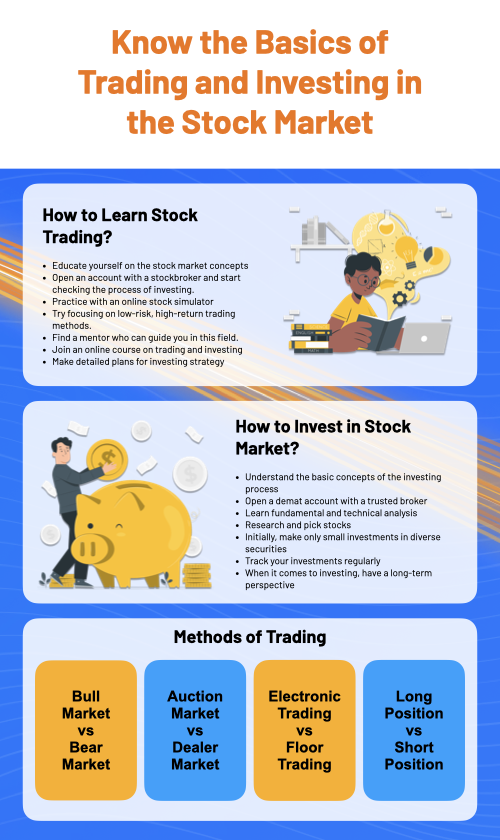
The Psychological Foundation: Shifting from Saver to Investor
Before choosing a single ticker symbol or opening a brokerage account, the aspiring investor must undergo a paradigm shift. Most people are conditioned to save—to set money aside in a secure location where it will not disappear. While saving is essential for liquidity and emergencies, it is an ineffective strategy for long-term wealth creation due to the erosive power of inflation. Learning to invest starts with understanding that “risk” is not just the possibility of losing money in the market; it is also the certainty of losing purchasing power by doing nothing.
Understanding the Power of Compound Interest
Albert Einstein famously referred to compound interest as the “eighth wonder of the world.” To learn investing, one must internalize the mechanics of compounding. This is the process where the returns on your investment begin to earn their own returns. In the early stages, the growth feels incremental and perhaps even underwhelming. However, over a decade or two, the curve steepens dramatically. Understanding this concept shifts the learner’s focus from “timing the market” to “time in the market.” Successful investing is less about finding the perfect moment to buy and more about giving your capital the maximum possible duration to grow.
Defining Your Financial Goals and Risk Tolerance
An investment strategy without a goal is like a ship without a rudder. Part of the learning process involves introspective assessment. Are you investing for retirement thirty years away, or are you looking to fund a down payment on a home in five years? Your timeline dictates your risk tolerance.
Risk tolerance is the measure of how much market volatility you can withstand without making emotional decisions. If the sight of a 10% dip in your portfolio would cause you to panic-sell, your strategy must reflect that reality. Learning to invest means learning about yourself—specifically, how you react to uncertainty. You must determine whether you are a conservative investor seeking capital preservation or an aggressive investor seeking high growth through higher-volatility assets.
Mastering the Fundamentals: How Markets Actually Work
Once the mindset is established, the next step is to understand the mechanics of the financial ecosystem. A stock is not just a digital token; it represents a fractional ownership stake in a real corporation. When you buy a share of a company, you are entitled to a portion of its assets and earnings.
Stocks, Bonds, and Asset Classes
A comprehensive education in investing requires a distinction between different asset classes. While the focus is often on stocks (equities), a balanced investor understands the role of bonds (fixed income). Stocks offer high growth potential but come with higher risk. Bonds typically offer lower returns but provide a “cushion” during market downturns because they represent debt that a company or government is obligated to pay back. Learning how these assets interact—often moving in opposite directions—is the key to building a resilient portfolio.
The Role of the Stock Exchange and Brokerage Houses
To participate in the market, you must understand the infrastructure. Stock exchanges, such as the New York Stock Exchange (NYSE) or the Nasdaq, are the marketplaces where buyers and sellers meet. However, individual investors cannot trade directly on these exchanges; they must use a brokerage.
In the modern era, learning to invest involves selecting the right digital platform. High-quality brokerages now offer commission-free trades, robust research tools, and user-friendly interfaces. The learner must understand the difference between a “market order” (buying immediately at the current price) and a “limit order” (buying only when the stock hits a specific price). Mastering these technical nuances ensures that you execute your strategy with precision rather than frustration.
Developing a Strategic Approach to Analysis
How do you decide which stocks to buy? This is where the art of investing meets the science of finance. There are two primary schools of thought: fundamental analysis and technical analysis.
Fundamental Analysis: Evaluating Company Health
Fundamental analysis is the cornerstone of long-term value investing. It involves looking at a company’s financial statements—the balance sheet, the income statement, and the cash flow statement—to determine its “intrinsic value.”
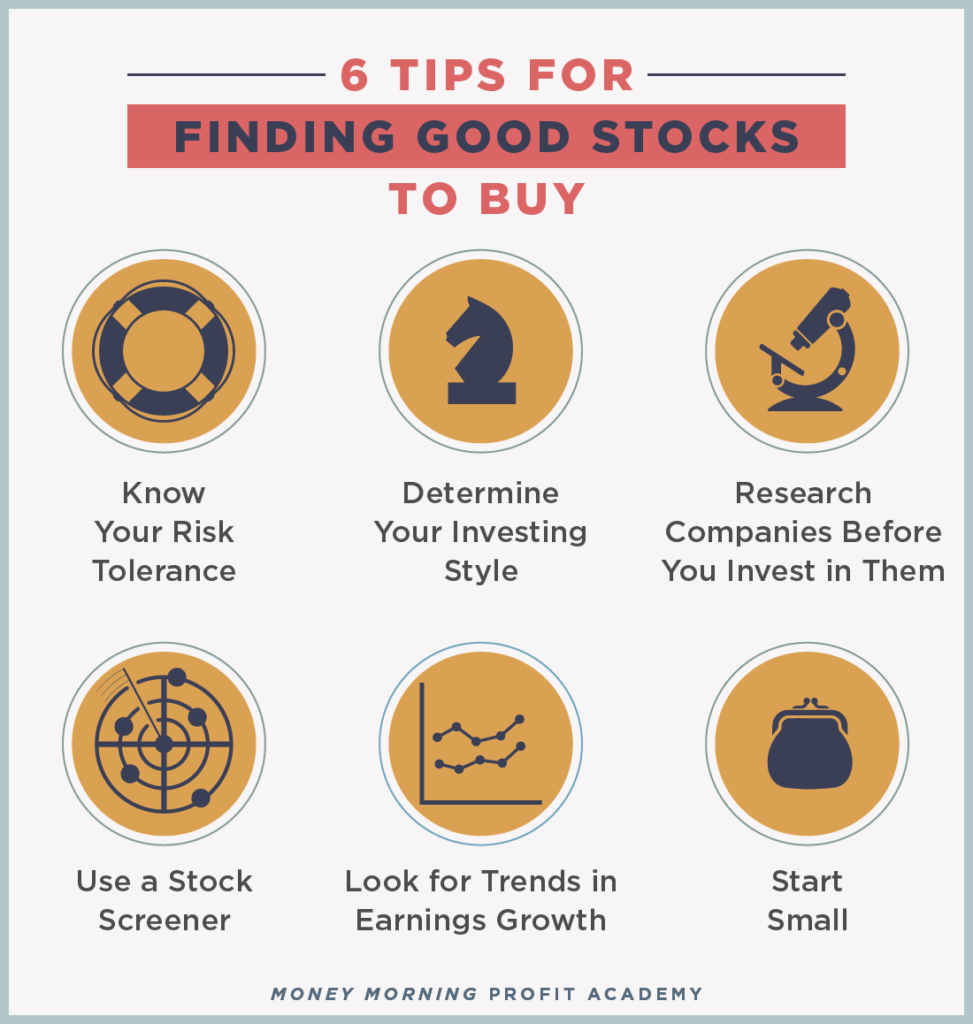
When learning fundamental analysis, you focus on several key metrics:
-
Earnings Per Share (EPS): The portion of a company’s profit allocated to each outstanding share.
-
Price-to-Earnings (P/E) Ratio: A valuation ratio of a company’s current share price compared to its per-share earnings. This helps you determine if a stock is “expensive” or “cheap” relative to its peers.
-
Dividend Yield: The annual dividend payment divided by the stock price, representing the “interest” you earn just for holding the stock.
-
The Moat: A concept popularized by Warren Buffett, referring to a company’s competitive advantage that protects it from rivals (e.g., brand loyalty, proprietary technology, or economies of scale).
Technical Analysis: Reading the Market Pulse
While fundamental analysis looks at the business, technical analysis looks at the stock’s price action and volume. Practitioners of technical analysis believe that all known information is already “priced in” to the stock and that patterns in price charts can predict future movements. Learning about support and resistance levels, moving averages, and relative strength indicators (RSI) can help an investor time their entries and exits more effectively, though it is often more relevant for short-term traders than long-term investors.
Qualitative vs. Quantitative Factors
A sophisticated investor learns to look beyond the numbers. Quantitative data tells you what has happened, but qualitative data suggests what will happen. This involves researching the leadership team: Does the CEO have a track record of integrity and success? It involves looking at industry trends: Is the company in a growing sector like renewable energy or a declining one like legacy print media? Learning to weigh these intangible factors is what separates great investors from average ones.
Building and Managing a Diversified Portfolio
Knowing how to pick a single stock is one thing; knowing how to manage a collection of them is another. Diversification is often called the “only free lunch” in finance. It is the practice of spreading your investments across different industries, geographic regions, and asset classes to reduce risk.
Index Funds and ETFs: The Passive Path to Wealth
For many, the best way to learn to invest is to start with “passive” vehicles. Instead of trying to find the next Amazon, you can buy an index fund or an Exchange-Traded Fund (ETF) that tracks the entire market, such as the S&P 500. This provides instant diversification. By owning a small piece of the 500 largest companies in the United States, you are betting on the long-term growth of the economy rather than the success of a single firm. Learning the difference between an expense ratio (the fee you pay to the fund manager) and the fund’s historical performance is crucial here.
The Core-Satellite Strategy
A popular method for intermediate learners is the core-satellite strategy. The “core” of the portfolio consists of low-cost, broad-market index funds that provide stability. The “satellites” are smaller positions in individual stocks or sector-specific funds that the investor believes will outperform the market. This approach allows you to engage in the excitement of individual stock picking while ensuring that the bulk of your wealth is protected by diversification.
Rebalancing and Long-Term Maintenance
Investing is not a “set it and forget it” activity. Over time, some investments will grow faster than others, causing your portfolio to become skewed. If your goal was to have 60% stocks and 40% bonds, a major bull market might leave you with 80% stocks. This increases your risk. Learning to “rebalance”—selling high-performing assets to buy underperforming ones—is a counterintuitive but vital skill that forces you to buy low and sell high.
Common Pitfalls and the Path to Continuous Education
The final stage of learning to invest is recognizing the traps that claim even experienced professionals. The most dangerous enemy an investor faces is usually their own reflection.
Avoiding Emotional Biases
Psychological traps such as “FOMO” (Fear Of Missing Out) lead investors to buy stocks at their peak because everyone else is talking about them. Conversely, “loss aversion” causes people to hold onto losing stocks for too long, hoping they will break even, rather than cutting their losses and reallocating capital to better opportunities. Learning to invest is as much about emotional regulation as it is about financial literacy. It requires the discipline to stick to a plan when the headlines are screaming of an impending “crash.”
Resources for Lifelong Learning
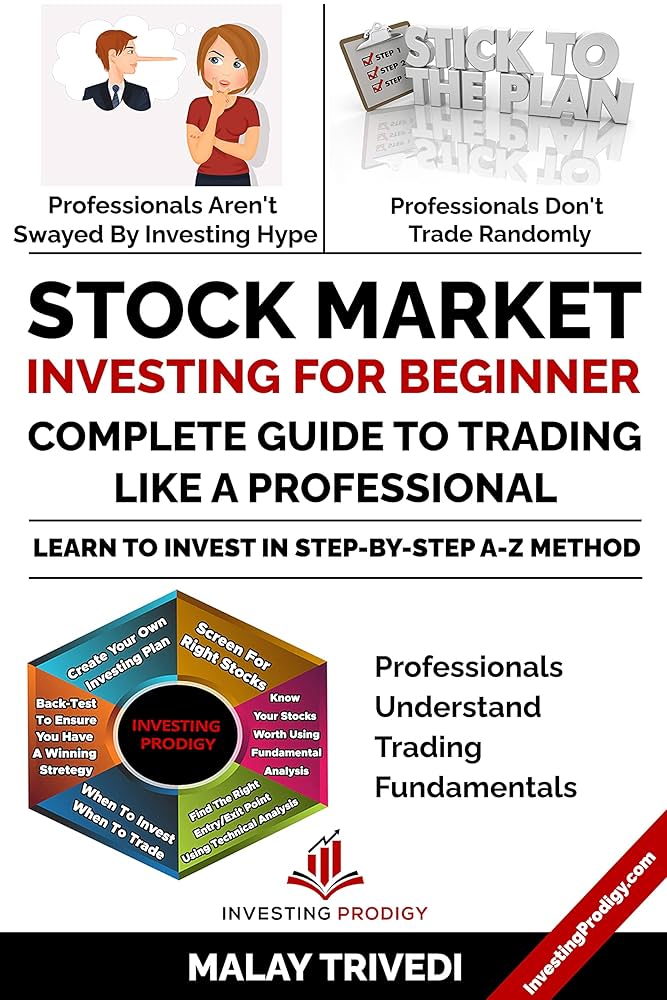
The market is a living, breathing entity that evolves with technology and policy. Therefore, the learning process never truly ends. A serious investor should cultivate a library of reputable resources. This includes classic texts like Benjamin Graham’s The Intelligent Investor, staying updated with financial news through outlets like the Wall Street Journal or Financial Times, and utilizing modern tools like stock screeners and investment podcasts.
Ultimately, learning to invest in stocks is a journey from curiosity to competence. It begins with the realization that your financial future is in your hands, proceeds through the rigorous study of market mechanics and company valuations, and culminates in the disciplined management of a diversified portfolio. By focusing on long-term growth, managing risk through diversification, and maintaining emotional equilibrium, anyone can transform from a spectator into a successful participant in the global economy.
aViewFromTheCave is a participant in the Amazon Services LLC Associates Program, an affiliate advertising program designed to provide a means for sites to earn advertising fees by advertising and linking to Amazon.com. Amazon, the Amazon logo, AmazonSupply, and the AmazonSupply logo are trademarks of Amazon.com, Inc. or its affiliates. As an Amazon Associate we earn affiliate commissions from qualifying purchases.