
Understanding how to increase an amount by a percentage is a foundational skill in personal and business finance. Far from being a mere academic exercise, this calculation underpins a vast array of financial decisions, from budgeting for inflation and calculating investment returns to setting pricing strategies and projecting revenue growth. Whether you’re a student trying to grasp basic financial concepts, an individual managing their household budget, or a business professional making critical strategic decisions, mastering this simple mathematical operation is indispensable. This guide will demystify the process, explain its core mechanics, and illustrate its pervasive relevance across the financial landscape.
The Fundamental Mathematics of Percentage Increase
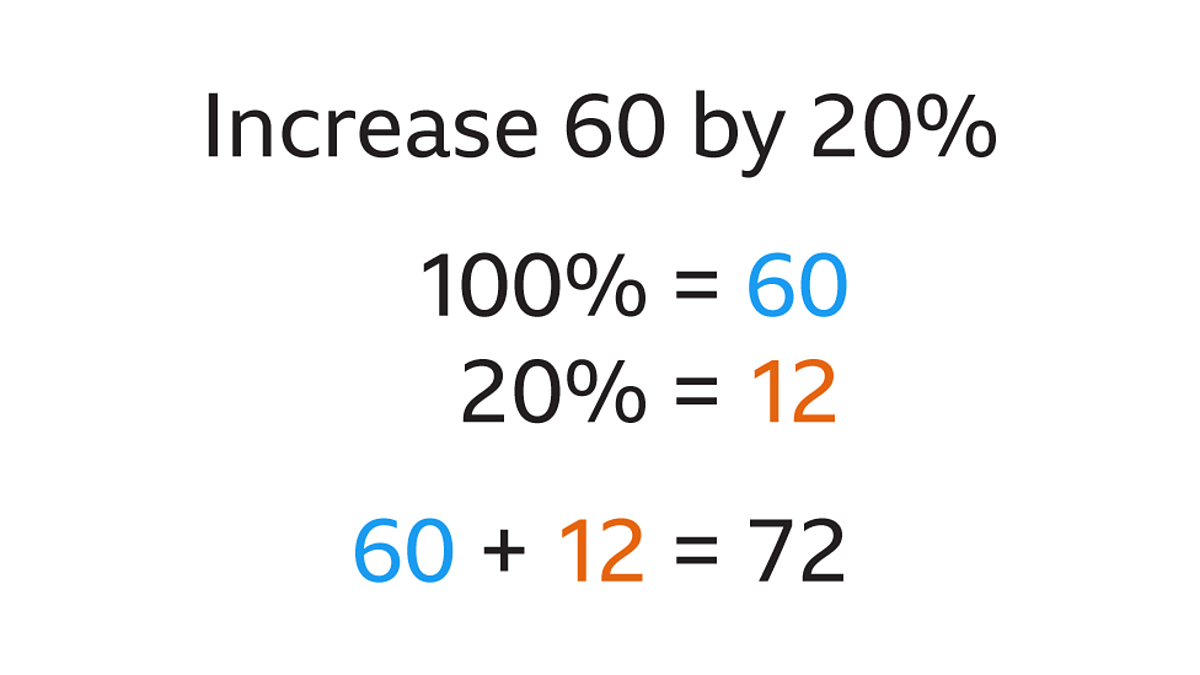
At its heart, increasing an amount by a percentage involves a straightforward two-step mathematical process. However, a clear understanding of what a percentage represents and how it interacts with a base value is crucial for accurate and confident application.
Understanding Percentages: A Quick Refresher
The term “percentage” literally means “per hundred” or “out of one hundred.” It’s a way of expressing a number as a fraction of 100. For instance, 10% can be written as 10/100 or, in decimal form, as 0.10. Percentages provide a standardized way to compare proportions and changes, regardless of the size of the original amounts. They normalize values, making comparisons more intuitive and meaningful. When we talk about increasing an amount by a percentage, we’re essentially asking: “What is the new total if we add a certain proportion (expressed as a percentage) of the original amount to itself?”
The Basic Formula for Percentage Increase
The formula for increasing an amount by a percentage is elegantly simple and can be approached in a couple of ways, both yielding the same result:
Method 1: Two-Step Calculation
-
Calculate the percentage amount:
Percentage Amount = Original Amount × (Percentage Increase / 100)
(Or, Percentage Amount = Original Amount × Decimal Form of Percentage Increase)
-
Add the percentage amount to the original amount:
New Total = Original Amount + Percentage Amount
Method 2: One-Step Calculation (Often more efficient)
-
New Total = Original Amount × (1 + (Percentage Increase / 100))
(Or, New Total = Original Amount × (1 + Decimal Form of Percentage Increase))
This second method is particularly efficient as it directly calculates the final amount by considering that the original amount is 100% (or 1 in decimal form) and you’re adding the specified percentage increase to it. So, if you’re increasing by 10%, you’re effectively finding 110% of the original amount (1 + 0.10 = 1.10).
Step-by-Step Calculation Example
Let’s illustrate with a common scenario: you want to increase an initial investment of $1,000 by 15%.
Using Method 1 (Two-Step):
-
Calculate the 15% increase:
15% of $1,000 = $1,000 × (15 / 100) = $1,000 × 0.15 = $150
-
Add the increase to the original amount:
New Total = $1,000 + $150 = $1,150
Using Method 2 (One-Step):
-
Calculate the new total directly:
New Total = $1,000 × (1 + (15 / 100))
New Total = $1,000 × (1 + 0.15)
New Total = $1,000 × 1.15 = $1,150
Both methods confirm that increasing $1,000 by 15% results in a new amount of $1,150. This fundamental calculation is the bedrock upon which numerous financial applications are built.
Practical Applications in Personal Finance
For individuals, mastering percentage increases is not just about arithmetic; it’s about empowerment. It allows for more informed decision-making across various facets of personal financial management.
Budgeting for Inflation and Cost of Living Increases
Inflation is the silent eroding force on purchasing power. Understanding how to calculate a percentage increase helps you project how much more you’ll need to spend to maintain your current lifestyle. If the cost of groceries is projected to increase by 3% next year, you can increase your current grocery budget by that percentage to estimate your future expenses. Similarly, when considering a salary increase, evaluating it against the cost of living increase (often expressed as a percentage) determines whether your real purchasing power has improved or merely kept pace. This calculation is crucial for proactive budgeting and ensuring your financial plans remain realistic and effective over time.
Calculating Investment Growth and Returns
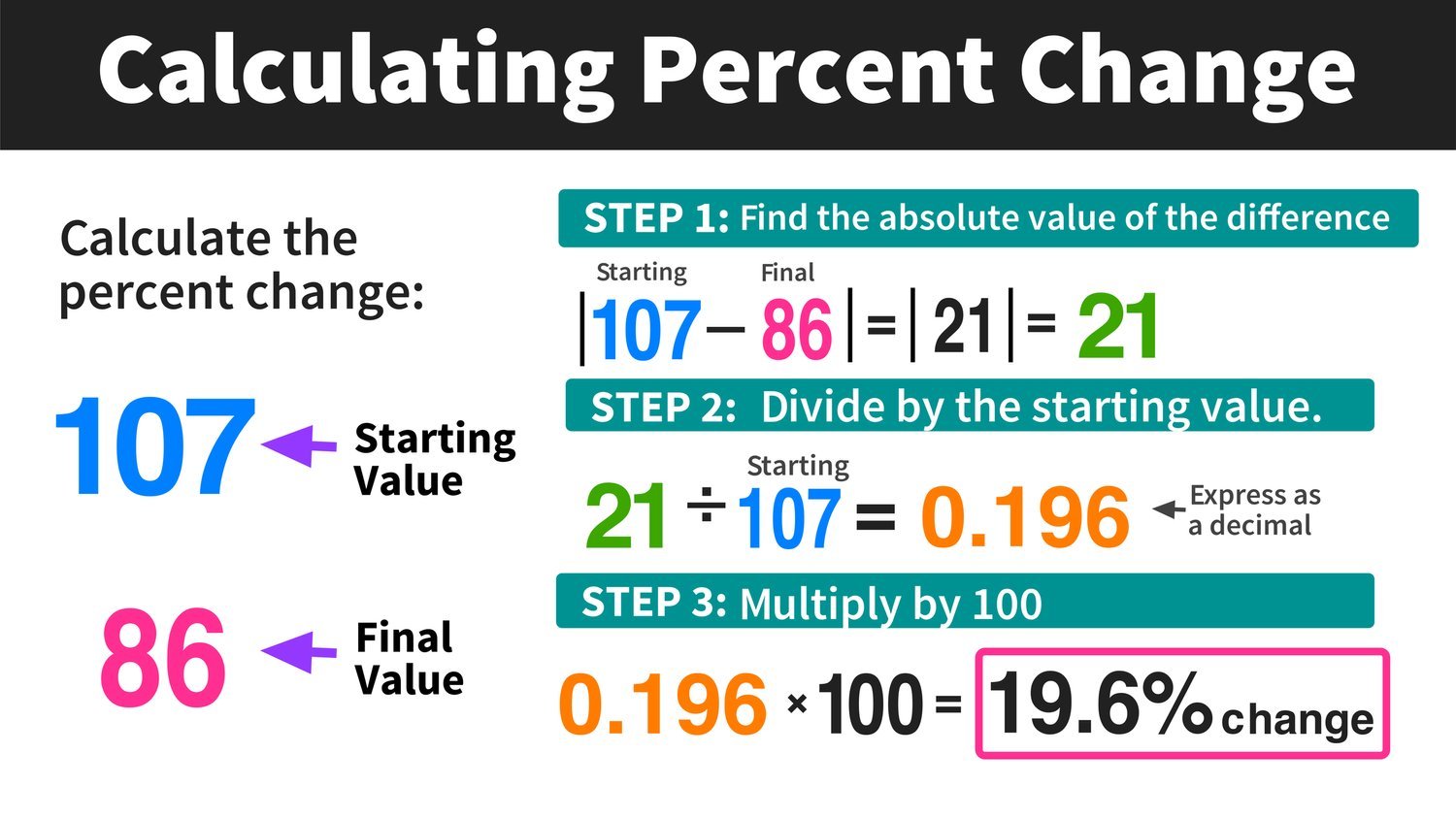
Perhaps one of the most exciting applications of percentage increase in personal finance is in analyzing investment performance. Whether you’re looking at a stock’s appreciation, the growth of a mutual fund, or the returns on a real estate investment, the growth is typically expressed as a percentage. If your initial investment of $5,000 grows to $5,750, you can quickly calculate the percentage increase to understand your return on investment (ROI). This metric allows you to compare the performance of different investments over varying periods, helping you make smarter portfolio adjustments and assess the effectiveness of your investment strategies.
Adjusting Savings Goals for Future Value
When planning for long-term goals like retirement or a child’s education, it’s not enough to simply save a fixed amount. The future value of money will be affected by inflation. If you aim to save $100,000 for a down payment in 10 years and anticipate an average inflation rate of 2% per year, you can use the percentage increase concept (compounded annually) to determine the equivalent purchasing power you’ll need in the future. This helps you adjust your savings contributions upwards to hit a meaningful financial target, ensuring your efforts aren’t undermined by rising costs.
Understanding Interest Rates on Loans and Credit Cards
Interest rates are a prime example of percentage increases working against you if you’re borrowing, or for you if you’re lending/saving. When you take out a loan, the interest rate (e.g., 7% APR) indicates the percentage by which the principal amount will increase over a given period. Similarly, credit card interest means your outstanding balance will grow by a certain percentage each month if not paid in full. Understanding these calculations helps you comprehend the true cost of borrowing, identify predatory rates, and make informed decisions about debt management, such as prioritizing higher-interest debts for quicker repayment.
Strategic Uses in Business Finance
For businesses, the ability to accurately calculate percentage increases is not just a useful skill; it’s a strategic imperative. It informs everything from product pricing to growth projections and employee compensation.
Pricing Strategies: Markup and Profit Margins
Businesses must set prices that cover costs and generate profit. Markup is the amount added to the cost of a product to determine its selling price, often expressed as a percentage. For example, if a product costs $50 to manufacture and a business aims for a 40% markup, the selling price would be $50 + ($50 * 0.40) = $70. Similarly, profit margin (the percentage of revenue that becomes profit) is a critical metric derived from these calculations. Understanding and applying percentage increases here directly impacts a company’s bottom line and competitive positioning.
Sales Growth and Revenue Projections
Projecting future sales and revenue is fundamental to business planning, budgeting, and securing investment. If a company achieved $1 million in sales last year and anticipates a 12% growth rate for the coming year, they can project next year’s revenue as $1,000,000 * 1.12 = $1,120,000. These percentage-based projections help businesses set targets, allocate resources, and evaluate performance against strategic objectives. Accurate growth projections are vital for managing inventory, staffing levels, and overall operational efficiency.
Employee Compensation and Salary Adjustments
Managing a workforce involves regular reviews of compensation packages. Annual salary adjustments, bonuses, and benefits increases are almost always expressed as percentages. A 5% raise on a $60,000 salary means an additional $3,000. Businesses must calculate these increases accurately to manage payroll budgets, ensure fair compensation, and attract and retain talent. Understanding the aggregate percentage increase across the entire workforce is crucial for financial planning and forecasting human resources costs.
Analyzing Market Share Growth
Market share, typically expressed as a percentage of the total market revenue or units sold, is a key indicator of a company’s competitive standing. Analyzing how market share has increased (or decreased) over time involves percentage calculations. If a company’s market share grew from 10% to 12% in a year, understanding this percentage point increase and the underlying percentage change in its own sales volume provides insights into its competitive strategy’s effectiveness and its position relative to competitors.
Common Pitfalls and How to Avoid Them
While the calculation of percentage increase is straightforward, several common mistakes can lead to misinterpretations and flawed financial decisions. Awareness of these pitfalls is key to accurate analysis.
Confusing Percentage Increase with Percentage Point Increase
This is a subtle but critical distinction. A “percentage increase” refers to the relative change from an original amount. A “percentage point increase” refers to the absolute change between two percentage values. For instance, if a company’s market share increases from 20% to 25%, that’s a 5 percentage point increase. However, the percentage increase in their market share is (25-20)/20 = 5/20 = 0.25, or 25%. Conflating these two can lead to significant over- or under-estimation of actual growth or change.
Applying Percentages to the Wrong Base Amount
A common error is applying a percentage to an incorrect starting value. For example, if an item was discounted by 20% and then its price increased by 20%, it does not return to its original price. The 20% increase is applied to the discounted price, not the original. Always ensure you are calculating the percentage based on the correct, most recent, or most relevant “original amount.”
Overlooking Compounding Effects
In finance, especially with investments and loans, percentages often compound. This means that subsequent percentage increases are applied not just to the original amount but to the new, increased amount from the previous period. For example, an investment growing by 10% per year for two years doesn’t just grow by 20% of the original amount. It grows by 10% in year one, and then by 10% of that new total in year two, leading to accelerated growth. Failing to account for compounding can significantly understate future values or overstate the true cost of borrowing.
Rounding Errors and Precision
While minor rounding in preliminary calculations might seem harmless, it can accumulate, especially in complex or large-scale financial models. For example, rounding an interest rate too aggressively can lead to material differences in the total interest paid or earned over a long period. In critical financial calculations, maintain appropriate precision, especially in intermediate steps, and only round the final result to the desired number of decimal places.
Tools and Resources for Easy Calculation
While understanding the manual calculation is essential, modern financial life offers numerous tools that simplify and automate the process, reducing the chance of human error and saving time.
Using Spreadsheets (Excel/Google Sheets)
Spreadsheets are arguably the most powerful and versatile tools for financial calculations. They allow you to set up formulas once and apply them to thousands of data points. For percentage increases, a simple formula like =A1*(1+B1) (where A1 is the original amount and B1 is the percentage increase in decimal form) can be copied across an entire dataset. Spreadsheets are invaluable for budgeting, investment tracking, sales projections, and scenario planning, offering flexibility and scalability.
Online Calculators and Mobile Apps
For quick, one-off calculations, a multitude of free online percentage calculators and mobile finance apps are readily available. These tools often provide user-friendly interfaces where you simply input the original amount and the percentage, and they instantly provide the increased value. While convenient, it’s always good practice to understand the underlying calculation these tools perform, especially for critical decisions.

Financial Calculators and Their Functions
Dedicated financial calculators (like those from Texas Instruments or HP) offer specialized functions for complex financial problems, including compounding interest, future value, and present value. While they might be overkill for a simple percentage increase, they are designed for precision and efficiency in multi-step financial planning, offering features that standard calculators lack. Familiarity with these tools can be highly beneficial for advanced personal finance and professional financial analysis.
In conclusion, increasing an amount by a percentage is a fundamental mathematical operation with profound implications across personal and business finance. From navigating daily expenses and planning for retirement to setting business strategies and analyzing market trends, mastering this concept empowers individuals and organizations to make more informed, strategic, and ultimately, more successful financial decisions. By understanding the core mechanics, recognizing its diverse applications, and leveraging available tools, anyone can effectively harness the power of percentage increases to achieve their financial objectives.
aViewFromTheCave is a participant in the Amazon Services LLC Associates Program, an affiliate advertising program designed to provide a means for sites to earn advertising fees by advertising and linking to Amazon.com. Amazon, the Amazon logo, AmazonSupply, and the AmazonSupply logo are trademarks of Amazon.com, Inc. or its affiliates. As an Amazon Associate we earn affiliate commissions from qualifying purchases.