
In the intricate world of personal finance, business analysis, and investment strategies, numbers tell a story. But often, the raw figures alone don’t provide the complete picture. To truly understand growth, performance, or change over time, we need a common language that allows for meaningful comparison and insight. That language is often expressed through percentages, and among them, the percentage of increase stands out as a crucial metric for evaluating progress and potential.
Whether you’re tracking your investment portfolio’s gains, analyzing your business’s revenue growth, or simply trying to understand the impact of a salary raise, knowing how to calculate the percentage of increase is an indispensable skill. It transforms absolute changes into relative measures, offering a clearer perspective on performance, efficiency, and the trajectory of your financial endeavors. This article will demystify the process, demonstrating its practical applications across various financial landscapes and equipping you with the knowledge to make more informed decisions.
Understanding the Core Concept: Why Percentage Increase Matters in Finance
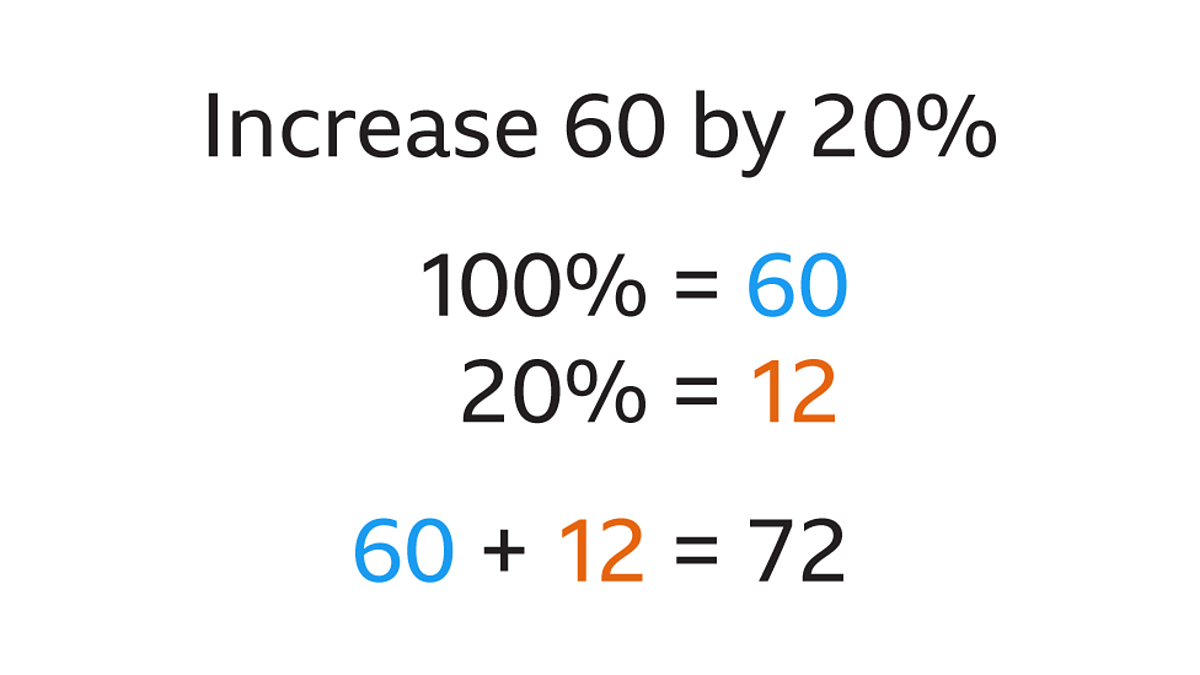
At its heart, a percentage of increase quantifies the relative change between an initial value and a final, larger value. It’s not just about how much something grew in absolute terms, but how much it grew in proportion to its original size. This distinction is critical in finance because it standardizes growth measurements, making disparate figures comparable and providing a more insightful view of progress.
Beyond Simple Numbers: The Power of Relative Growth
Imagine two businesses: Company A saw its profit grow from $10,000 to $20,000, while Company B’s profit grew from $1,000,000 to $1,010,000. In absolute terms, both companies experienced a $10,000 increase in profit. However, judging solely by this absolute figure would be misleading. Company A doubled its profits, representing a substantial 100% increase, indicating rapid growth and potentially a successful strategy. Company B, on the other hand, only saw a modest 1% increase, suggesting a much slower rate of improvement relative to its size.
This example vividly illustrates why relative growth, expressed as a percentage, is far more powerful than absolute figures when evaluating financial performance. It provides context, allows for meaningful comparisons between entities of different sizes, and helps in setting realistic expectations and benchmarks.
Key Financial Applications: Where You’ll Encounter It
The calculation of percentage increase is not an academic exercise; it’s a daily necessity in countless financial scenarios:
-
Investment Returns: Assessing the growth of stocks, bonds, mutual funds, or real estate over a period.
-
Business Performance: Monitoring the increase in sales, revenue, profit margins, or market share for a company.
-
Personal Income: Understanding the impact of salary raises, bonuses, or growth in passive income streams.
-
Economic Indicators: Analyzing inflation rates, GDP growth, or consumer spending trends.
-
Budgeting: Tracking increases in expenses or comparing actual spending to budgeted amounts.
From the individual investor to the corporate CFO, the ability to quickly and accurately determine a percentage increase is a foundational skill for financial literacy and strategic planning.
The Simple Formula: Calculating Percentage Increase Step-by-Step
Fortunately, the formula for calculating the percentage of increase is straightforward and intuitive. Once you understand the components, you can apply it to any relevant financial data with ease.
The general formula is:
$$ text{Percentage Increase} = left( frac{text{Final Value} – text{Initial Value}}{text{Initial Value}} right) times 100% $$
Let’s break down each step:
Identifying Your Starting and Ending Values
The first crucial step is to correctly identify the two values you’re comparing:
-
Initial Value (or Original Value): This is the baseline number, the point from which growth began.
-
Final Value (or New Value): This is the larger number after the growth has occurred. It’s essential that the Final Value is indeed greater than the Initial Value for a “percentage increase.” If it’s smaller, you’d be calculating a percentage decrease.
Example: If your stock portfolio was worth $50,000 at the beginning of the year and grew to $55,000 by year-end:
-
Initial Value = $50,000
-
Final Value = $55,000
Calculating the Absolute Change
The next step is to determine the absolute difference between the final and initial values. This tells you the raw amount by which the value has increased.
Formula: Absolute Change = Final Value – Initial Value
Using our portfolio example:
- Absolute Change = $55,000 – $50,000 = $5,000
This means your portfolio increased by $5,000.
Dividing by the Starting Value: The Ratio of Change
Now, you’ll take that absolute change and divide it by the original starting value. This step converts the absolute change into a decimal ratio that represents the change relative to the original size.
Formula: Ratio of Change = Absolute Change / Initial Value
Using our portfolio example:
- Ratio of Change = $5,000 / $50,000 = 0.10
This decimal (0.10) signifies that the increase was 10% of the original value.
Multiplying by 100: Converting to a Percentage
The final step is to convert the decimal ratio into a percentage by multiplying it by 100. This makes the figure easily understandable and comparable.
Formula: Percentage Increase = Ratio of Change × 100%
Using our portfolio example:
- Percentage Increase = 0.10 × 100% = 10%
So, your portfolio saw a 10% increase. This step-by-step process ensures accuracy and clarity in your financial calculations.
Practical Applications: Real-World Financial Scenarios
Understanding the “how” is important, but seeing the “where” truly brings the concept to life. Percentage increase is not just theoretical; it’s a fundamental tool for navigating various financial landscapes.
Analyzing Investment Returns: Tracking Portfolio Growth

One of the most common applications of percentage increase is in evaluating investment performance. Investors constantly use this metric to gauge the success of their portfolios, individual stocks, or funds over different periods.
Scenario: You invested $1,000 in a particular stock, and a year later, its value is $1,250.
-
Initial Value = $1,000
-
Final Value = $1,250
-
Absolute Change = $1,250 – $1,000 = $250
-
Percentage Increase = ($250 / $1,000) × 100% = 0.25 × 100% = 25%
This stock yielded a 25% return, allowing you to compare its performance against other investments or market benchmarks.
Evaluating Salary and Income Growth: Negotiating Your Worth
For personal finance, percentage increase helps you understand how your income is evolving and empowers you in salary negotiations.
Scenario: Your annual salary was $60,000, and after a performance review, it increased to $63,000.
-
Initial Value = $60,000
-
Final Value = $63,000
-
Absolute Change = $63,000 – $60,000 = $3,000
-
Percentage Increase = ($3,000 / $60,000) × 100% = 0.05 × 100% = 5%
You received a 5% raise. Knowing this percentage allows you to assess if your income growth is keeping pace with inflation or your career goals.
Understanding Business Metrics: Revenue, Profit, and Market Share
For entrepreneurs and business owners, percentage increase is indispensable for tracking operational success and strategic impact.
Scenario: A small business’s quarterly revenue grew from $250,000 in Q1 to $300,000 in Q2.
-
Initial Value = $250,000
-
Final Value = $300,000
-
Absolute Change = $300,000 – $250,000 = $50,000
-
Percentage Increase = ($50,000 / $250,000) × 100% = 0.20 × 100% = 20%
A 20% quarterly revenue growth is a strong indicator of business health and market acceptance. Similar calculations can be applied to profit margins, customer acquisition, or even website traffic.
Assessing Inflation and Cost of Living Changes
On a broader economic scale, percentage increase helps individuals and policymakers understand the impact of inflation.
Scenario: The average cost of a basket of goods was $100 last year and is $103 this year.
-
Initial Value = $100
-
Final Value = $103
-
Absolute Change = $103 – $100 = $3
-
Percentage Increase = ($3 / $100) × 100% = 0.03 × 100% = 3%
This indicates a 3% inflation rate, meaning your purchasing power has decreased by 3% if your income hasn’t increased proportionally.
Common Pitfalls and Nuances to Consider
While the calculation is straightforward, several nuances can affect how percentage increases are interpreted, especially in a financial context. Being aware of these can prevent misinterpretations and lead to more accurate financial analysis.
The “Base Effect”: Why the Starting Point Matters
The “base effect” refers to how the magnitude of the initial value can dramatically influence the resulting percentage increase. A small absolute increase on a very small base will yield a disproportionately large percentage increase, while the same absolute increase on a large base will result in a much smaller percentage.
Example:
-
A stock price going from $1 to $2 is a 100% increase (Absolute change $1 / Initial $1).
-
A stock price going from $100 to $101 is a 1% increase (Absolute change $1 / Initial $100).
Both are a $1 increase, but the relative impact is vastly different due to the base. Always consider the initial value when evaluating large percentage increases.
Annualized vs. Cumulative Growth: Understanding Timeframes
When dealing with investments or business growth over multiple periods, it’s crucial to distinguish between cumulative growth and annualized growth.
-
Cumulative Growth: This is the total percentage increase over the entire period, regardless of its duration.
-
Annualized Growth: This expresses the average growth rate per year, even if the total period is shorter or longer than a year. It’s particularly useful for comparing investments that have been held for different lengths of time, often involving compound interest calculations.
While the basic percentage increase formula gives you cumulative growth, deriving an annualized rate often requires more complex formulas involving roots for multiple years or simple division for shorter periods (e.g., quarterly growth multiplied by 4).
The Impact of Negative Starting Values or Decreases
The formula for percentage increase assumes a positive initial value and an increase. If your initial value is negative (rare in finance but possible in some metrics like ‘net profit’ going from loss to smaller loss), or if the final value is less than the initial value (indicating a decrease), the standard formula for “percentage increase” will yield misleading results or indicate a decrease. For a decrease, the formula is:
$$ text{Percentage Decrease} = left( frac{text{Initial Value} – text{Final Value}}{text{Initial Value}} right) times 100% $$
It’s important to correctly identify whether you’re looking for an increase or a decrease before applying the formula.
Distinguishing Between Real and Nominal Growth
In economics and personal finance, it’s vital to differentiate between nominal growth and real growth.
-
Nominal Growth: This is the growth rate calculated using current market prices or values, without adjusting for inflation. The percentage increase formula typically calculates nominal growth.
-
Real Growth: This is the growth rate adjusted for inflation, providing a truer picture of the increase in purchasing power or value. To calculate real growth, you generally subtract the inflation rate from the nominal growth rate (or use a more precise formula for higher inflation).
Understanding the difference ensures that you’re not celebrating an investment return that is entirely eaten away by rising prices.
Leveraging Percentage Increase for Informed Financial Decisions
The ability to calculate and interpret percentage increase is more than just a mathematical exercise; it’s a strategic tool for enhancing your financial literacy and decision-making capabilities.
Setting Financial Goals and Benchmarks
By using percentage increase, you can set realistic and measurable financial goals. Instead of simply aiming to “grow your investments,” you can target a “10% annual increase in portfolio value.” You can also benchmark your performance against market averages or industry standards. If your investment portfolio is only growing by 5% annually while the market benchmark is 8%, the percentage increase highlights an underperformance that needs addressing.
Comparing Performance Across Different Assets
Percentage increase provides a standardized metric for comparing the performance of diverse financial assets. Did your real estate investment provide a better return than your stock portfolio? Which mutual fund manager delivered superior growth? By calculating the percentage increase for each, you can make apples-to-apples comparisons, irrespective of the initial investment amounts or asset classes involved.

Forecasting Future Growth and Planning
While past performance is not indicative of future results, historical percentage increases can be a valuable input for financial forecasting and planning. Understanding average growth rates for your income, investments, or business can help you project future earnings, estimate retirement savings, or plan for future expansions. This foresight is crucial for budgeting, risk assessment, and long-term wealth accumulation strategies.
Conclusion
The percentage of increase is a deceptively simple yet profoundly powerful concept in the realm of finance. It transforms raw numbers into meaningful insights, offering a clear and comparative view of growth, performance, and change. From the careful investor analyzing market trends to the diligent business owner tracking quarterly profits, mastering this fundamental calculation is an essential step towards greater financial acumen and more informed decision-making. By embracing this tool, you empower yourself to navigate the complexities of money with confidence, clarity, and a deeper understanding of the forces shaping your financial future.
aViewFromTheCave is a participant in the Amazon Services LLC Associates Program, an affiliate advertising program designed to provide a means for sites to earn advertising fees by advertising and linking to Amazon.com. Amazon, the Amazon logo, AmazonSupply, and the AmazonSupply logo are trademarks of Amazon.com, Inc. or its affiliates. As an Amazon Associate we earn affiliate commissions from qualifying purchases.