
In an increasingly data-driven world, understanding percentages isn’t just a mathematical curiosity; it’s a cornerstone of financial literacy. From calculating the discount on a much-desired item to deciphering interest rates on a loan or understanding investment returns, percentages permeate nearly every aspect of our economic lives. For anyone looking to manage their personal finances effectively, evaluate business opportunities, or simply make informed purchasing decisions, the ability to find a percent is not merely helpful — it is essential.
This article delves into the core mechanics of calculating percentages, grounding this fundamental skill firmly within the context of personal and business finance. We’ll explore what percentages represent, break down the basic formula, and then apply this knowledge to a myriad of real-world financial scenarios. By the end, you’ll not only know how to find a percent but also appreciate its profound impact on your financial well-being.
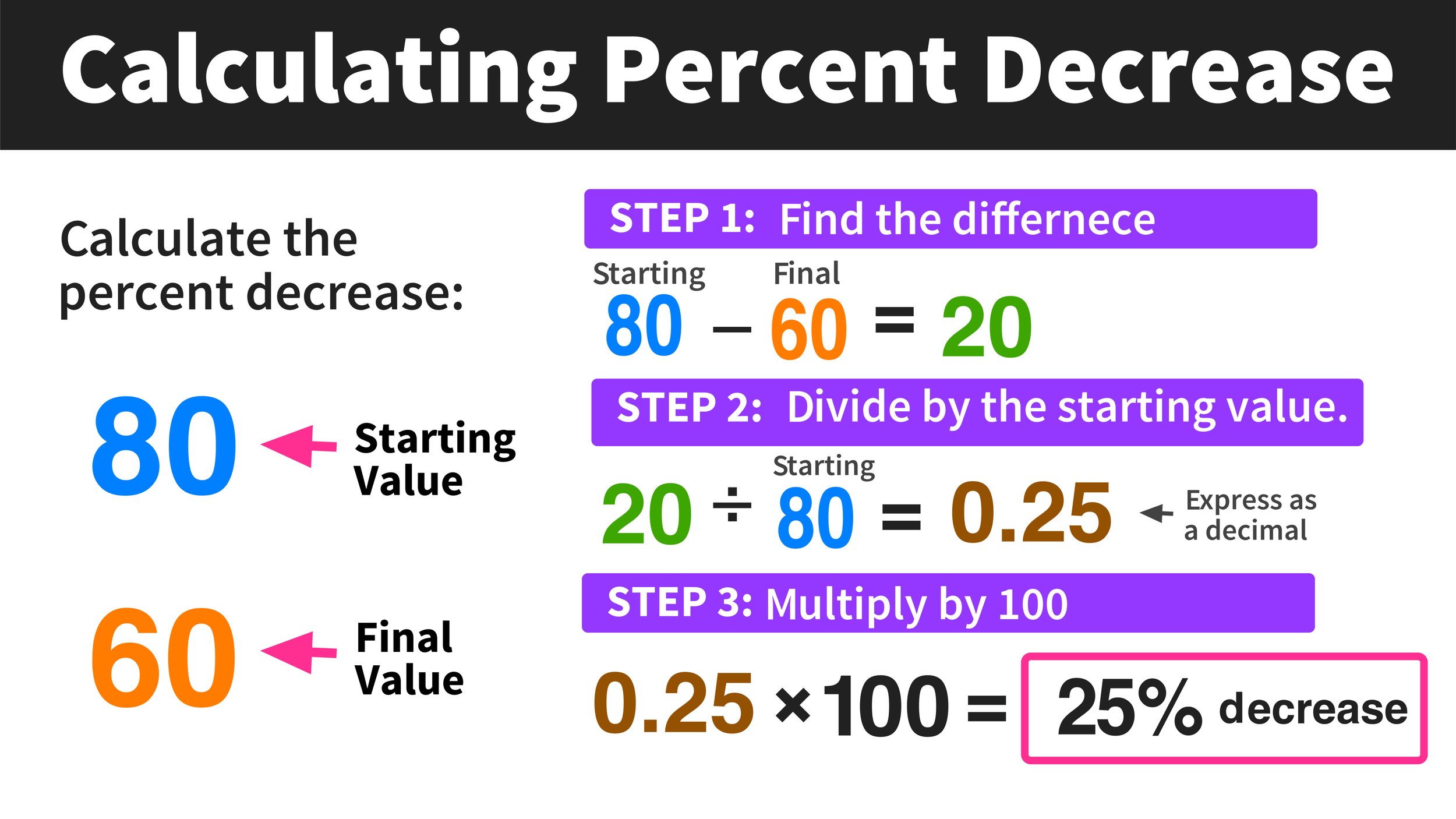
The Foundation: Understanding Percentages in Finance
Before diving into calculations, it’s crucial to grasp what a percentage fundamentally represents and why it holds such significance in the financial realm. Without this foundational understanding, the numbers can seem abstract and disconnected from their practical implications.
What Exactly Is a Percent?
At its simplest, a “percent” means “per hundred” or “out of every hundred.” It’s a way of expressing a number as a fraction of 100. For instance, 25% literally means 25 out of 100, which can also be written as the fraction 25/100 or the decimal 0.25. The percent symbol (%) is merely a shorthand for this “out of 100” concept.
The beauty of percentages lies in their ability to standardize comparisons. When you say an item is 20% off, it’s easy to understand the proportion of the reduction, regardless of the item’s original price. This standardization makes percentages an invaluable tool for comparing financial data, whether it’s the performance of two different investments or the cost-effectiveness of various loans.
Why Percentages Matter in Your Financial Life
Percentages are the language of finance. They allow us to quantify change, proportion, and risk in a universally understood format. Consider these examples:
- Savings and Investments: How much interest will your savings account earn? What was the return on your stock investment?
- Loans and Debt: What’s the interest rate on your mortgage or credit card? How much of your minimum payment goes towards the principal versus interest?
- Budgeting: What percentage of your income do you spend on housing, food, or entertainment?
- Purchasing: How much will you save with a discount? How much sales tax will be added to your purchase?
- Inflation: How much has your purchasing power eroded due to rising prices?
Without a firm grasp of percentage calculations, navigating these common financial situations becomes akin to trying to read a map without understanding directions.
The Core Formula: Part / Whole x 100
At the heart of every percentage calculation lies a simple, universal formula. To find what percentage one number (the “part”) is of another number (the “whole”), you use the following:
Percentage = (Part / Whole) x 100
Let’s illustrate with a basic, non-financial example: If you got 80 questions right out of a total of 100 questions on a test, your score would be: (80 / 100) x 100 = 80%.
Now, let’s apply it financially: If you spent $30 on groceries from a total weekly budget of $150, the percentage of your budget spent on groceries is: ($30 / $150) x 100 = 0.20 x 100 = 20%.
This fundamental formula will be the bedrock for all the more complex financial calculations we discuss. Understanding it thoroughly is your first step towards financial empowerment.
Everyday Financial Applications: Calculating Common Percents
With the basic formula in hand, let’s explore how percentages are applied in common daily financial scenarios. These are the calculations you’ll encounter most frequently.
Discounts and Sales: Saving Money with Percentages
One of the most satisfying applications of percentages is calculating discounts. Whether it’s a “25% off” sale or a “buy one, get one 50% off” deal, understanding how to compute savings is crucial for smart shopping.
To find the discount amount:
Discount Amount = Original Price x (Discount Percentage / 100)
Example: A shirt costs $60 and is 25% off.
Discount Amount = $60 x (25 / 100) = $60 x 0.25 = $15.
To find the final price after a discount:
Final Price = Original Price - Discount Amount
or
Final Price = Original Price x (1 - (Discount Percentage / 100))
Example: Using the $60 shirt with a $15 discount:
Final Price = $60 – $15 = $45.
Alternatively: Final Price = $60 x (1 – 0.25) = $60 x 0.75 = $45.
Interest Rates: The Cost of Borrowing, The Gain of Saving
Interest is the cost of borrowing money or the income from lending money (or depositing it in a savings account). It’s almost always expressed as a percentage.
Simple Interest Calculation:
Interest = Principal x Rate x Time (where Rate is in decimal form, and Time is in years)
Example: You deposit $1,000 in a savings account that earns 3% simple annual interest. How much interest do you earn in one year?
Interest = $1,000 x 0.03 x 1 = $30.
Understanding how to calculate interest is vital for evaluating loans, credit card debt, and the potential growth of your savings and investments. Even with compound interest, the underlying percentage calculation for each period remains the same, it’s just applied to a growing principal.
Taxes: Understanding Your Obligations
Taxes – whether sales tax, income tax, or property tax – are typically calculated as a percentage of a base amount.
Sales Tax Calculation:
Sales Tax Amount = Item Price x (Sales Tax Percentage / 100)
Total Price = Item Price + Sales Tax Amount
Example: You buy an item for $50 in a state with an 8% sales tax.
Sales Tax Amount = $50 x (8 / 100) = $50 x 0.08 = $4.
Total Price = $50 + $4 = $54.
For income tax, while more complex due to tax brackets and deductions, the core principle is still applying a percentage rate to a specific portion of your income.
Tips and Gratuities: Showing Appreciation
When dining out or receiving services, calculating a tip is a common courtesy. Tips are typically a percentage of the service bill.
Tip Amount Calculation:
Tip Amount = Bill Total x (Tip Percentage / 100)
Example: Your restaurant bill is $40, and you want to leave a 15% tip.
Tip Amount = $40 x (15 / 100) = $40 x 0.15 = $6.
Total Paid = $40 + $6 = $46.
These everyday examples demonstrate that percentage calculations are not just academic exercises but practical skills that empower you to manage your daily finances with greater accuracy and confidence.

Advanced Financial Scenarios: Percentages in Business and Investing
Moving beyond personal spending, percentages become even more critical in the worlds of business and investing, serving as key performance indicators and analytical tools.
Profit Margins: Gauging Business Health
For entrepreneurs and investors, understanding profit margins is fundamental. They tell you how much profit a company makes for every dollar of revenue.
Gross Profit Margin: Measures how much profit a company makes after covering the direct costs of producing its goods or services.
Gross Profit Margin = ((Revenue - Cost of Goods Sold) / Revenue) x 100
Example: A business has $100,000 in revenue and $60,000 in Cost of Goods Sold (COGS).
Gross Profit Margin = (($100,000 – $60,000) / $100,000) x 100 = ($40,000 / $100,000) x 100 = 0.40 x 100 = 40%.
Net Profit Margin: Shows how much profit a company makes after all expenses, including taxes, have been deducted.
Net Profit Margin = (Net Income / Revenue) x 100
Example: If the business above had a Net Income of $15,000.
Net Profit Margin = ($15,000 / $100,000) x 100 = 0.15 x 100 = 15%.
These percentages are vital for assessing a company’s efficiency and profitability, both for internal management and external investment analysis.
Investment Returns: Measuring Growth and Performance
When you invest, you want to know how well your money is performing. This is typically expressed as a percentage return.
Return on Investment (ROI): A simple measure of the profitability of an investment.
ROI = ((Current Value of Investment - Initial Cost of Investment) / Initial Cost of Investment) x 100
Example: You invested $5,000 in stocks, and they are now worth $6,500.
ROI = (($6,500 – $5,000) / $5,000) x 100 = ($1,500 / $5,000) x 100 = 0.30 x 100 = 30%.
Calculating ROI helps investors compare the efficiency of different investments and make informed decisions about their portfolios. Annualized returns, dividend yields, and capital gains are all expressed as percentages, providing a standardized way to evaluate investment performance.
Budgeting and Expense Analysis: Where Does Your Money Go?
For robust personal finance, analyzing where your money goes as a percentage of your income is incredibly insightful. This helps identify areas for potential savings or adjustments.
Percentage of Income for a Category:
Percentage = (Amount Spent on Category / Total Income) x 100
Example: Your monthly take-home income is $4,000, and you spend $1,200 on housing.
Housing Percentage = ($1,200 / $4,000) x 100 = 0.30 x 100 = 30%.
Financial advisors often recommend target percentages for various spending categories (e.g., 50/30/20 rule for needs/wants/savings). Calculating these percentages allows you to benchmark your spending against these guidelines and gain control over your financial habits.
Common Pitfalls and How to Avoid Them
While finding a percent is mathematically straightforward, misinterpretations can lead to significant financial errors. Being aware of common pitfalls can save you from costly mistakes.
Confusing “Percentage Of” with “Percentage Point Change”
This is a subtle but critical distinction. A “percentage of” is what we’ve primarily discussed – a proportion of a whole. A “percentage point change” refers to the absolute difference between two percentages.
Example: If an interest rate increases from 5% to 6%, it’s a 1 percentage point increase.
However, the rate has increased by ( (6-5) / 5 ) x 100 = (1/5) x 100 = 20%. So, it’s a 1 percentage point increase, but a 20% relative increase.
Misunderstanding this difference can lead to underestimating or overestimating the true magnitude of change in financial metrics like interest rates, inflation, or growth figures.
The Impact of Compounding: More Than Just Simple Math
When percentages apply over multiple periods, especially in the context of interest or returns, the concept of compounding comes into play. Compounding means earning interest on your initial principal and on the accumulated interest from previous periods.
While the calculation for each period remains a percentage of the current balance, the effect over time is exponential. A seemingly small percentage rate can lead to substantial growth (or debt) over time due to compounding. This is why understanding compound annual growth rates (CAGR) and effective annual interest rates (EAR) is crucial for long-term financial planning.
Relying Solely on Calculators: The Importance of Mental Math and Estimation
Modern calculators and spreadsheets make percentage calculations effortless. However, relying solely on them without understanding the underlying math can be detrimental. Developing an intuitive grasp of percentages allows for quick mental estimations, which are invaluable for on-the-spot financial decisions (e.g., quickly assessing a discount, estimating a tip).
Furthermore, a solid understanding helps you spot errors or unreasonable figures generated by tools, ensuring you maintain a critical eye on your financial data.
Tools and Resources for Percentage Calculations
While a strong grasp of the manual calculation is paramount, leveraging available tools can enhance efficiency and accuracy, especially with complex financial models.
Online Calculators and Spreadsheets
For quick, accurate calculations, numerous online percentage calculators are available. Many financial websites offer specialized calculators for mortgage payments, loan interest, investment returns, and retirement planning, all of which heavily rely on percentage calculations.
Spreadsheet software like Microsoft Excel or Google Sheets is incredibly powerful. You can input formulas directly (e.g., =A1/B1*100 for part/whole), and they automatically update calculations when input values change. This is invaluable for budgeting, financial modeling, and analyzing large datasets.
Financial Apps and Software
Many personal finance apps (e.g., budgeting apps) and investment platforms integrate percentage calculations seamlessly. They often present data in easy-to-understand percentage formats (e.g., “you spent 25% of your income on dining this month,” or “your portfolio returned 8.5% year-to-date”). While these tools do the heavy lifting, knowing how the percentages are derived empowers you to interpret the data correctly and make informed decisions.
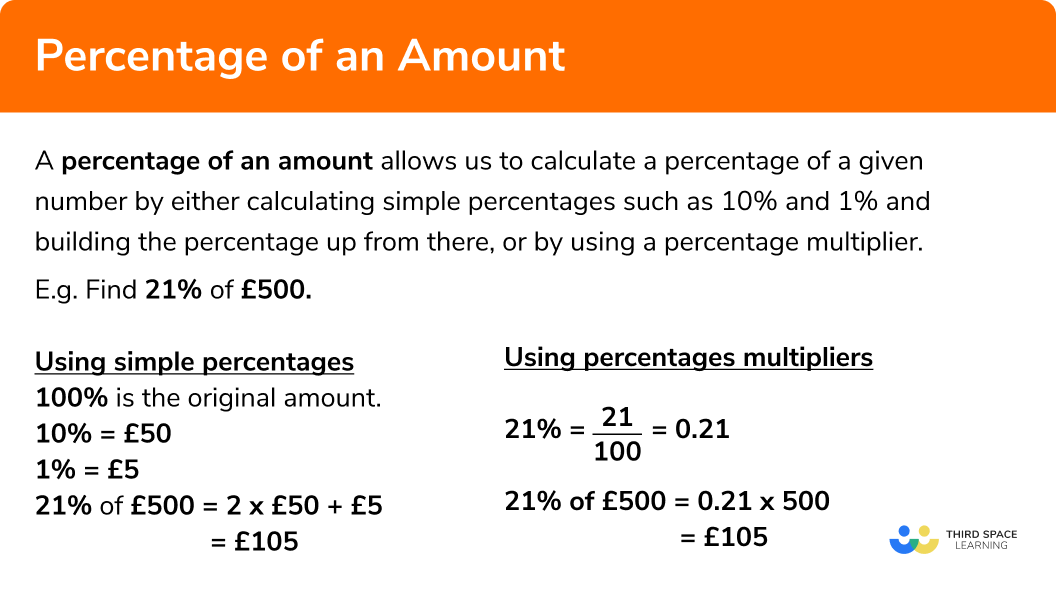
Conclusion
The ability to find a percent is far more than a basic math skill; it is a fundamental pillar of financial literacy. From navigating everyday purchases and managing personal budgets to understanding complex investment returns and business profitability, percentages provide the common language through which we comprehend and control our financial world.
By mastering the simple formula of “Part / Whole x 100” and understanding its diverse applications across discounts, interest, taxes, profit margins, and investment performance, you equip yourself with an invaluable tool. Developing this skill not only enhances your decision-making but also fosters a deeper confidence in managing your money, leading to greater financial empowerment and security. So, the next time you encounter a percentage, recognize it not as a daunting calculation, but as an opportunity to gain clarity and control over your financial destiny.
aViewFromTheCave is a participant in the Amazon Services LLC Associates Program, an affiliate advertising program designed to provide a means for sites to earn advertising fees by advertising and linking to Amazon.com. Amazon, the Amazon logo, AmazonSupply, and the AmazonSupply logo are trademarks of Amazon.com, Inc. or its affiliates. As an Amazon Associate we earn affiliate commissions from qualifying purchases.