
Understanding how to calculate a percentage of a number is a foundational skill, indispensable across every facet of financial management. From personal budgeting and investment analysis to business finance and economic forecasting, percentages provide a universal language for comparison, growth, and change. Mastering this fundamental arithmetic operation empowers individuals and organizations to make informed decisions, interpret financial data accurately, and navigate the complexities of the modern economic landscape. This guide demystifies the process, anchoring it firmly in practical financial applications.
The Ubiquitous Role of Percentages in Financial Decision-Making
Percentages are not merely abstract mathematical concepts; they are the bedrock upon which most financial metrics and analyses are built. They allow us to standardize comparisons, making disparate figures relatable and understandable. Whether evaluating investment returns, deciphering loan interest rates, or allocating funds within a budget, the ability to work with percentages is paramount.

Understanding the Basics: What is a Percent?
At its core, “percent” means “per hundred” or “out of one hundred.” It’s a way of expressing a part of a whole as a fraction of 100. For instance, 25% signifies 25 out of 100, or 25/100. This standardization is incredibly powerful in finance, as it enables direct comparisons across different scales. A company’s profit margin, a savings account’s interest rate, or a mortgage’s annual percentage rate (APR) are all expressed as percentages, providing a common metric for evaluation. Without percentages, comparing the performance of a small business to a multinational corporation, or assessing the cost of different loans, would be significantly more challenging and less intuitive.
Why Financial Professionals Rely on Percentages
Financial analysts, investors, business owners, and personal finance experts routinely employ percentages to:
- Gauge Performance: Calculate return on investment (ROI), profit margins, and revenue growth rates to assess financial health and trajectory.
- Evaluate Costs: Understand interest rates on loans, discounts on purchases, and expense ratios on investment funds.
- Allocate Resources: Distribute budgets, portfolio assets, and income towards various financial goals.
- Analyze Trends: Track inflation rates, market share changes, and economic indicators over time.
- Simplify Communication: Present complex financial data in a universally understood and digestible format.
The consistent use of percentages ensures that financial discussions are grounded in comparable metrics, fostering clarity and precision in an environment often characterized by large, complex numbers.
Core Methods for Calculating a Percent of a Number
Calculating a percent of a number is a straightforward process, primarily relying on converting the percentage into a decimal or a fraction. The method chosen often depends on personal preference and the specific context of the calculation.
Method 1: The Decimal Conversion Approach
This is the most widely used and efficient method, especially with the prevalence of calculators and financial software. It involves two simple steps:
- Convert the percentage to a decimal: Divide the percentage by 100. For example, 15% becomes 0.15 (15 ÷ 100).
- Multiply the decimal by the number: The result is the percentage of the original number.
Formula: Percentage of Number = (Percent / 100) × Original Number
Or more simply: Percentage of Number = Decimal Equivalent × Original Number
Example: Calculating a Discount on a Purchase
Imagine you’re buying an investment analysis software subscription that costs $250, and there’s a 20% discount.
- Convert 20% to a decimal: 20 ÷ 100 = 0.20
- Multiply the decimal by the original price: 0.20 × $250 = $50
The discount amount is $50. To find the final price, you would subtract the discount from the original price: $250 – $50 = $200.
Example: Determining Interest Earned or Paid
Consider a savings account with a principal balance of $5,000 earning an annual interest rate of 1.5%.
- Convert 1.5% to a decimal: 1.5 ÷ 100 = 0.015
- Multiply the decimal by the principal: 0.015 × $5,000 = $75
The interest earned in one year would be $75.
Method 2: The Fractional Approach
While less common for everyday calculations, understanding the fractional approach reinforces the conceptual meaning of percentages.
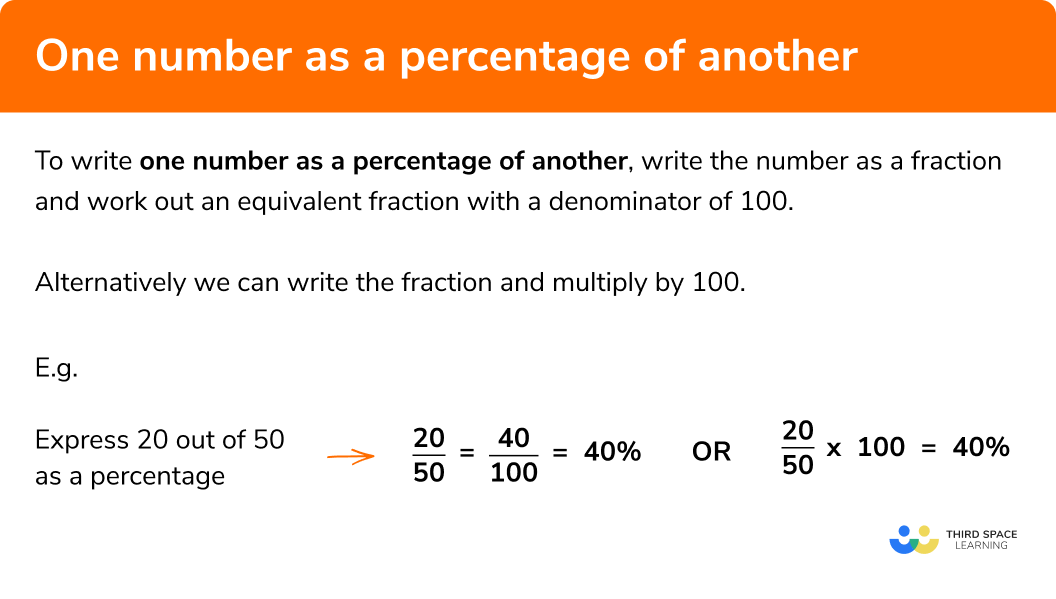
- Convert the percentage to a fraction: Place the percentage over 100 and simplify the fraction if possible. For instance, 25% becomes 25/100, which simplifies to 1/4.
- Multiply the fraction by the number: This yields the desired percentage of the number.
Formula: Percentage of Number = (Percent / 100) × Original Number (expressed as fractions)
Example: Allocating Budget Percentages
Suppose you’ve decided to allocate 10% of your $4,000 monthly income to an emergency fund.
- Convert 10% to a fraction: 10/100, which simplifies to 1/10.
- Multiply the fraction by your income: (1/10) × $4,000 = $400
You would allocate $400 to your emergency fund. This method is particularly useful when the percentage can be easily simplified to a common fraction (e.g., 25% = 1/4, 50% = 1/2).
Practical Financial Applications: Beyond Simple Calculations
The ability to calculate a percent of a number forms the basis for numerous critical financial calculations, extending far beyond basic discounts or interest.
Personal Finance: Budgeting, Savings, and Debt Management
- Budgeting: Allocating a fixed percentage of income to categories like housing (e.g., 30%), savings (e.g., 20%), and discretionary spending (e.g., 50%) requires constant percentage calculations to ensure adherence to financial plans.
- Savings Goals: Determining how much to save monthly to reach a specific goal, often expressed as a percentage of income or a target amount, involves these calculations. If you aim to save 15% of your $60,000 annual salary, that’s $9,000 per year, or $750 per month.
- Debt Management: Understanding the interest component of loan payments (mortgages, credit cards, auto loans) necessitates calculating percentages. For example, a credit card balance of $1,200 with an 18% APR means you’ll pay $216 in interest over a year if the balance remains constant (0.18 * $1,200).
Investing: Analyzing Returns and Portfolio Performance
- Return on Investment (ROI): A fundamental measure of an investment’s profitability. If you invest $10,000 and it grows to $11,500, your gain is $1,500. Your ROI is ($1,500 / $10,000) × 100% = 15%.
- Portfolio Allocation: Deciding what percentage of your portfolio to allocate to stocks, bonds, or other assets is a strategic decision that relies on percentages. For a $100,000 portfolio, a 60% allocation to stocks means $60,000 is invested in equities.
- Expense Ratios: Mutual funds and ETFs charge annual fees, known as expense ratios, expressed as a percentage of your investment. A 0.50% expense ratio on a $20,000 investment means you’re paying $100 in fees annually (0.0050 × $20,000).
Business Finance: Profit Margins and Growth Rates
- Gross Profit Margin: This vital metric shows the percentage of revenue remaining after subtracting the cost of goods sold. If a company has $1,000,000 in sales and a cost of goods sold of $600,000, its gross profit is $400,000. The gross profit margin is ($400,000 / $1,000,000) × 100% = 40%.
- Net Profit Margin: Represents the percentage of revenue left after all expenses, including taxes, have been deducted. It’s a key indicator of overall profitability.
- Revenue Growth Rate: Businesses track the percentage increase in revenue over a period to assess their expansion. If last year’s revenue was $500,000 and this year’s is $575,000, the growth rate is (($575,000 – $500,000) / $500,000) × 100% = 15%.
- Commission Structures: Sales professionals often earn a percentage commission on their sales. A 5% commission on a $10,000 sale yields $500.
Common Pitfalls and How to Avoid Them
While calculating percentages is fundamental, misinterpretations can lead to significant financial errors.
Misinterpreting Percentage Points vs. Percentage Change
A common mistake is confusing “percentage points” with “percentage change.” If an interest rate increases from 5% to 7%, it’s an increase of 2 percentage points. However, the percentage change is ((7 – 5) / 5) × 100% = 40%. Understanding this distinction is crucial when analyzing financial news, economic reports, or investment performance, as the two convey very different magnitudes of change.
Overlooking Compounding Effects
In finance, percentages often compound, especially with interest on savings, investments, or loans. A simple calculation of a percentage of a number provides a snapshot, but for multi-period financial analysis, the effect of compounding must be considered. Compounding means that interest is earned not only on the initial principal but also on the accumulated interest from previous periods, leading to exponential growth or debt accumulation. This is why financial literacy often emphasizes the “power of compounding” for investments and the “danger of compounding” for high-interest debt.
Leveraging Tools for Accuracy and Efficiency
While understanding the manual calculation is essential, various tools can enhance accuracy and efficiency for complex financial scenarios.
Spreadsheets for Complex Financial Models
Software like Microsoft Excel or Google Sheets are indispensable financial tools. They allow users to quickly apply percentage formulas across large datasets, model different scenarios (e.g., varying interest rates, discount percentages, budget allocations), and automate complex calculations for personal budgets, investment portfolios, and business financial statements. Functions like RATE, PV, FV, and simple multiplication by decimals make percentage calculations seamless.
Financial Calculators and Software
Dedicated financial calculators (both physical and app-based) and specialized financial planning software simplify complex calculations involving percentages, especially those with compounding. These tools are programmed to handle time value of money equations, which inherently rely on percentage-based interest rates and growth rates, providing instant answers for loan amortization, retirement planning, and investment projections.
The Importance of Mental Math
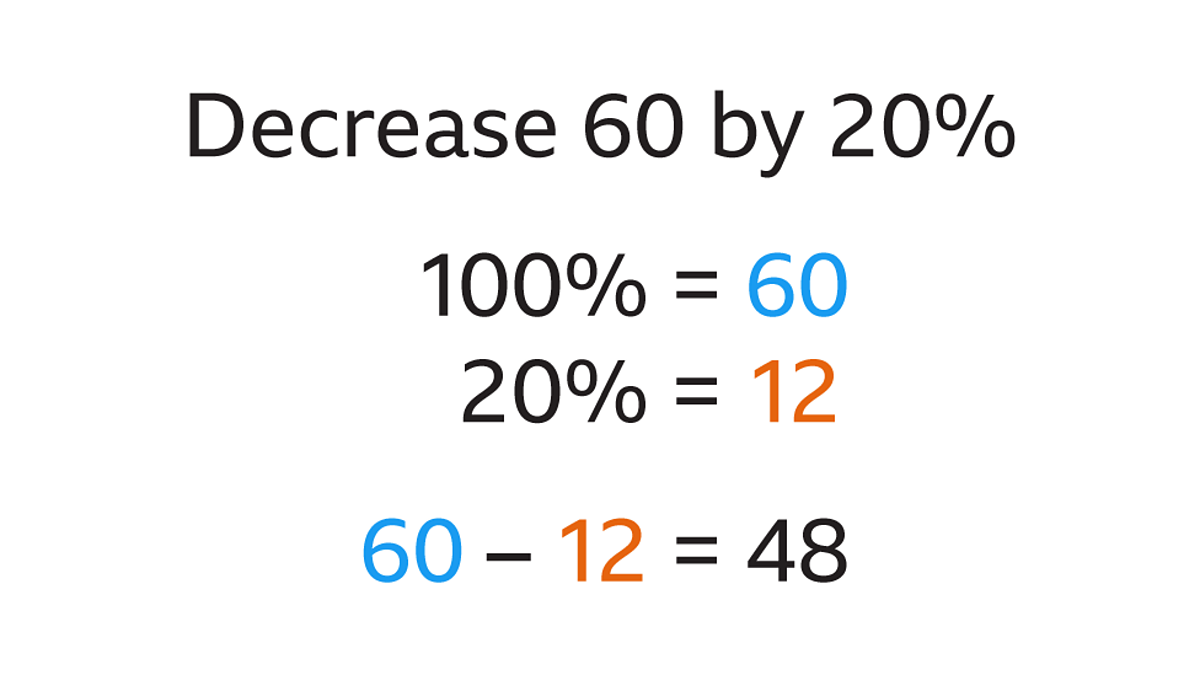
Even with advanced tools, developing a solid grasp of mental percentage calculations can be incredibly valuable for quick estimations and on-the-spot financial assessments. Being able to quickly estimate 10% of a number (move the decimal one place left) or 50% (divide by 2) empowers individuals to make rapid decisions, such as assessing a tip, verifying a discount, or performing a sanity check on a more complex calculation.
Mastering the calculation of a percent of a number is more than just an arithmetic exercise; it’s a critical component of financial literacy that unlocks a deeper understanding of monetary values, growth, and risk. By applying these methods diligently and understanding their financial implications, individuals and businesses can navigate their financial journeys with greater confidence and competence.
aViewFromTheCave is a participant in the Amazon Services LLC Associates Program, an affiliate advertising program designed to provide a means for sites to earn advertising fees by advertising and linking to Amazon.com. Amazon, the Amazon logo, AmazonSupply, and the AmazonSupply logo are trademarks of Amazon.com, Inc. or its affiliates. As an Amazon Associate we earn affiliate commissions from qualifying purchases.