
In the realm of personal and business finance, percentages are the primary language of progress. Whether you are calculating the return on a stock market investment, determining the interest rate on a mortgage, or evaluating the profit margins of a small business, understanding how to figure percentages is more than a basic math skill—it is a fundamental pillar of financial literacy. Percentages provide a standardized way to compare values, track growth, and assess risk across different scales. Without a firm grasp of these calculations, an investor or business owner is essentially flying blind, unable to interpret the data that drives sound decision-making.

The ability to manipulate these numbers allows you to look beyond raw figures and see the underlying health of your financial portfolio. A $1,000 gain means something very different for a $10,000 investment than it does for a $1,000,000 investment. By converting these figures into percentages, you gain the clarity needed to optimize your capital and secure your financial future.
The Fundamentals of Financial Percentages
Before diving into complex financial models, one must master the basic mechanics of percentage calculation. At its core, a percentage is a way of expressing a number as a fraction of 100. In financial terms, this usually involves comparing a “part” (such as a profit or a tax amount) to a “whole” (such as total revenue or gross income).
The Core Formula: Part over Whole
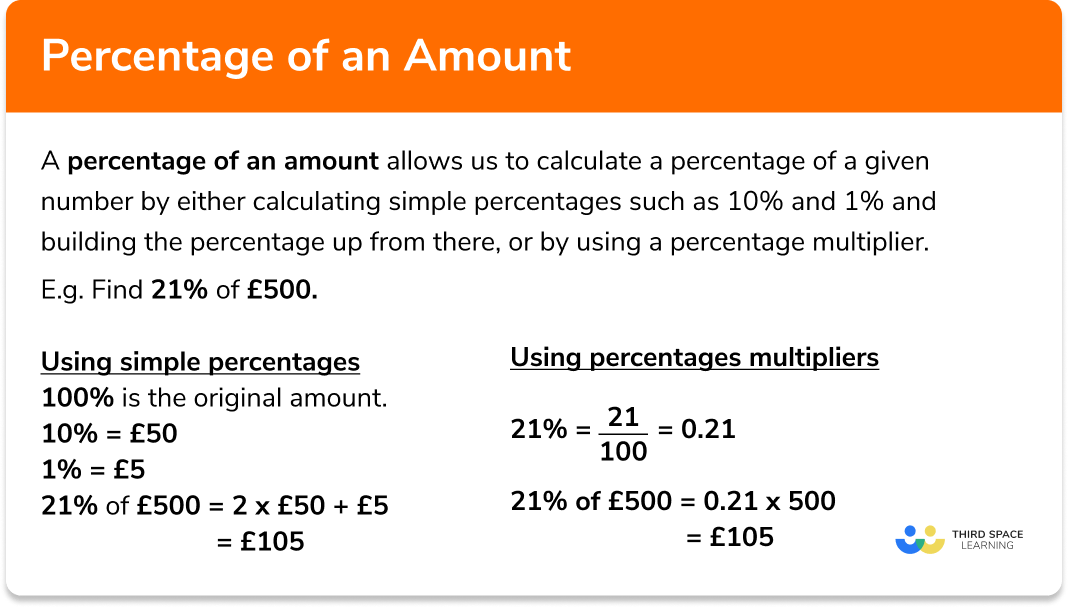
The most basic way to figure a percentage is to divide the part by the whole and then multiply by 100. The formula is expressed as:
(Part / Whole) x 100 = Percentage.
For example, if you earned $5,000 in dividends from a $50,000 portfolio, you would divide 5,000 by 50,000 to get 0.10. Multiplying this by 100 gives you a 10% yield. This simple calculation is the bedrock of almost every financial statement you will ever read. It allows you to normalize data, making it possible to compare the performance of a high-priced tech stock against a low-priced utility stock on an equal footing.
Decimal Conversions and Why They Matter
In professional finance and automated spreadsheets, you will rarely use the “100” multiplier in the middle of a calculation. Instead, you will work with decimals. Moving the decimal point two places to the left converts a percentage into a decimal (e.g., 7% becomes 0.07). This is crucial when calculating compounded growth or multi-stage interest. Understanding that “0.05” represents 5% is the first step toward using financial tools like Excel or specialized investment calculators effectively. When you are deep in a financial analysis, thinking in decimals streamlines the process and reduces the likelihood of “fat-finger” errors that can lead to significant fiscal miscalculations.
Percentages in Personal Finance and Budgeting
In personal finance, percentages act as the guardrails for your lifestyle. They help you determine if your spending is sustainable and if your savings rate is sufficient to meet your long-term goals. While raw dollar amounts tell you what you spent, percentages tell you how you are prioritizing your resources.
The 50/30/20 Rule: Allocating Your Income
One of the most popular frameworks in personal finance is the 50/30/20 rule. This strategy suggests that you should allocate your after-tax income into three specific percentage-based buckets: 50% for Needs (housing, utilities, groceries), 30% for Wants (dining out, travel, hobbies), and 20% for Savings and Debt Repayment.
Figuring these percentages requires you to calculate your net take-home pay first. If your net income is $4,000, you simply multiply $4,000 by 0.50 ($2,000 for needs), 0.30 ($1,200 for wants), and 0.20 ($800 for savings). Using percentages rather than fixed dollar amounts ensures that your budget scales automatically as your income increases, preventing “lifestyle creep” from eroding your financial security.
Savings Rates and Debt-to-Income Ratios
Your savings rate is perhaps the single most important percentage in your financial life. It is calculated by dividing your monthly savings by your gross monthly income. A high savings rate (upwards of 15-20%) is often a better predictor of long-term wealth than the size of your paycheck.
Conversely, the Debt-to-Income (DTI) ratio is a percentage used by lenders to measure your ability to manage monthly payments. To figure this, you divide your total monthly debt payments by your gross monthly income. A DTI ratio below 36% is generally considered healthy. If you find your DTI creeping toward 50%, the percentage math is signaling that you are overleveraged and at risk of financial instability should your income drop.
The Power of Percentage in Investing
For the investor, percentages are the yardstick of performance. They allow you to measure the efficiency of your capital and understand the true impact of market fluctuations. In this context, knowing how to figure percentages is the difference between emotional reacting and strategic acting.
ROI (Return on Investment) Calculations
Return on Investment (ROI) is the ultimate metric for any asset. To calculate ROI, you take the current value of the investment, subtract the original cost, and then divide that result by the original cost.
ROI = [(Current Value – Cost) / Cost] x 100.
If you bought a cryptocurrency for $1,000 and sold it for $1,500, your gain is $500. Dividing $500 by the original $1,000 gives you 0.50, or a 50% ROI. This percentage allows you to compare this high-risk play against a more stable S&P 500 index fund that might return 10% over the same period, helping you weigh the risk-to-reward ratio of your portfolio.
Compound Interest: The Percentage That Builds Wealth
Compound interest is often called the “eighth wonder of the world” because it involves earning a percentage on top of a percentage. To figure the future value of an investment with compounding, you apply the interest rate percentage to the principal plus the accumulated interest from previous periods.
A useful mental shortcut for this is the “Rule of 72.” By dividing 72 by your expected annual percentage return, you can estimate how many years it will take for your money to double. For instance, at a 6% return, your money doubles in 12 years (72 / 6 = 12). This simple use of percentage math provides a powerful long-term perspective that encourages disciplined, long-term investing.
Understanding Volatility and Drawdowns
It is also vital to understand the “asymmetry of loss” in percentages. If an investment drops by 50%, it does not only need a 50% gain to get back to even; it needs a 100% gain. For example, if $100 drops to $50, that is a 50% loss. But to get from $50 back to $100, you must double your money—a 100% increase. Mastering this specific area of percentage math helps investors understand why capital preservation and risk management are often more important than chasing the highest possible returns.
Business Finance and Profit Margins
In a corporate or entrepreneurial setting, percentages are used to determine the viability of a business model. Revenue is a “vanity metric,” but profit margins—the percentages—tell the “sanity” story of the business.
Gross vs. Net Profit Margins
Gross Profit Margin measures the percentage of revenue that exceeds the cost of goods sold (COGS). It is calculated as: [(Revenue – COGS) / Revenue] x 100. This tells you how efficiently a company produces its products.
However, the Net Profit Margin is the more critical figure. This accounts for all expenses, including taxes, interest, and operating costs. A company might have a massive 70% gross margin but a tiny 2% net margin if its overhead is too high. By figuring these percentages, business owners can identify exactly where their “leaks” are and whether they need to raise prices or cut administrative costs.
Markup vs. Margin: Avoiding Costly Errors
A common mistake for new business owners is confusing markup with margin. Markup is the percentage added to the cost to reach a selling price, while margin is the percentage of the selling price that is profit.
If an item costs $80 and you want a 20% margin, you cannot simply add 20% to the cost (which would be $96). If you sell it for $96, your profit is $16. Dividing $16 by the $96 selling price gives you only a 16.6% margin. To achieve a true 20% margin, you must divide the cost by the inverse of the margin (80 / 0.80), resulting in a $100 sale price. Understanding this nuanced percentage math is essential for maintaining profitability in competitive markets.
Navigating Taxes and Interest Rates
Finally, percentages play a massive role in how we interact with the government and financial institutions. Taxes and interest rates are almost always expressed as percentages, and misinterpreting them can lead to significant financial penalties or lost opportunities.
Effective Tax Rates vs. Marginal Tax Brackets
Many people mistakenly believe that if they “move into a higher tax bracket,” all of their income is taxed at that higher percentage. This is not how progressive tax systems work. To figure your true tax burden, you must calculate your Effective Tax Rate. This is your total tax paid divided by your total earned income. This percentage is usually much lower than your top marginal bracket because your income is taxed in “chunks” at different percentage levels. Knowing this percentage helps in tax planning and determining whether tax-advantaged accounts like a 401(k) or IRA are worth the contribution.

APR vs. APY: Evaluating Loans and Savings
When dealing with debt or savings accounts, you will encounter APR (Annual Percentage Rate) and APY (Annual Percentage Yield). While they look similar, the math differs based on compounding. APR is the simple interest rate, while APY accounts for the effect of compounding within the year.
If you are looking at a credit card, the APR is the percentage you pay on your balance. If you are looking at a High-Yield Savings Account, the APY is the percentage you earn. Because of compounding, APY is usually slightly higher than APR for the same rate. Being able to figure the difference between these two percentages ensures you are truly getting the best deal on a loan or the highest return on your cash reserves.
In conclusion, figuring percentages is not merely a classroom exercise; it is a vital survival skill in the world of money. From the simplicity of a household budget to the complexity of corporate margins and investment drawdowns, percentages provide the context necessary to turn data into actionable financial wisdom. By mastering these calculations, you move from being a passive observer of your finances to an active, informed architect of your wealth.
aViewFromTheCave is a participant in the Amazon Services LLC Associates Program, an affiliate advertising program designed to provide a means for sites to earn advertising fees by advertising and linking to Amazon.com. Amazon, the Amazon logo, AmazonSupply, and the AmazonSupply logo are trademarks of Amazon.com, Inc. or its affiliates. As an Amazon Associate we earn affiliate commissions from qualifying purchases.