
In the realm of personal finance, few skills are as immediately practical as the ability to calculate a percentage off. Whether you are navigating a seasonal clearance sale, negotiating a business contract, or trying to determine the true value of a promotional offer, understanding the “math of savings” is a cornerstone of financial literacy.
While modern smartphones have made us reliant on digital assistants, the ability to mentally process discounts allows for faster decision-making and a more intuitive grasp of your purchasing power. This guide explores the mechanics of calculating percentages, the psychological impact of discounting on consumer behavior, and how mastering these figures can lead to significant long-term wealth accumulation.

1. The Fundamental Math: How to Calculate a Discount
At its core, “percentage off” is a simple subtraction problem disguised as a multiplication problem. To truly master your money, you must understand both the manual formula and the mental shortcuts that make real-world shopping more efficient.
The Standard Formula
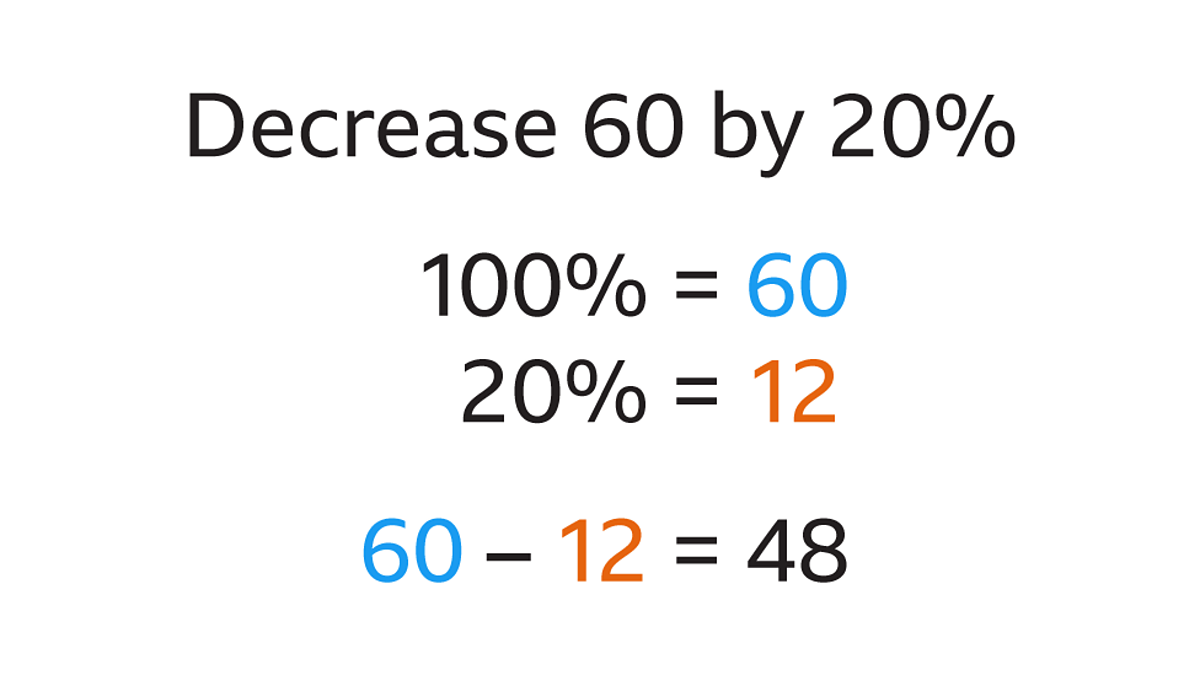
To find the sale price of an item, you follow a two-step process. First, you determine the “discount amount” by multiplying the original price by the percentage (expressed as a decimal). Second, you subtract that amount from the original price.
Example: If a coat costs $150 and is 30% off:
- Convert the percentage to a decimal: 30% becomes 0.30.
- Multiply: $150 × 0.30 = $45 (This is the amount you save).
- Subtract: $150 – $45 = $105 (This is your final price).
Alternatively, you can use the “Inverse Method.” If an item is 30% off, it means you are paying 70% of the original price (100% – 30% = 70%). By multiplying $150 by 0.70, you arrive directly at $105. This method is often preferred by financial professionals because it requires only one step.
The Mental Math Shortcut: The 10% Rule
When you are in a store or on a fast-moving auction site, you may not have time for decimals. The easiest way to calculate a percentage off in your head is to use the “10% Rule.”
To find 10% of any number, simply move the decimal point one place to the left.
- 10% of $80 is $8.00.
- 10% of $1,200 is $120.
Once you have 10%, you can find almost any other discount. To find 20%, double the 10% figure. To find 5%, cut the 10% figure in half. To find 15%, add the 10% figure to the 5% figure. This “building block” approach to math empowers you to evaluate deals on the fly without reaching for a calculator.
2. Advanced Scenarios: Taxes, Stacking, and Compound Savings
In the real world of business and personal finance, discounts are rarely isolated. Understanding how different variables interact is crucial for maintaining an accurate budget.
The Reality of “Stacked” Discounts
A common mistake in consumer finance is assuming that multiple discounts are additive. If a store offers 20% off all items and you have a coupon for an additional 10% off, many people believe they are receiving 30% off. This is incorrect.
Retailers almost always apply discounts sequentially. First, the 20% is taken off the original price. Then, the 10% is taken off the new, lower price.
- Original Price: $100
- 20% Off: $100 – $20 = $80
- 10% Off Remaining: $80 – $8 = $72
The actual total discount is 28%, not 30%. While the difference might seem negligible on a small purchase, when dealing with business inventories or high-ticket investments, these percentage points represent significant capital.

Incorporating Sales Tax
Finding the percentage off is only half the battle; the “out-the-door” price includes sales tax. To be financially prudent, you must calculate the discount first, then apply the tax. Sales tax is calculated on the final sale price, not the original price. Understanding this sequence ensures you don’t over-budget for your expenses.
3. The Psychology of the Percentage: How Brands Influence Your Spending
Money is as much about psychology as it is about math. Retailers and marketers use percentages strategically to make certain deals look more attractive than others. Being aware of these tactics allows you to remain objective about your spending.
The “Rule of 100”
In marketing and behavioral economics, the “Rule of 100” suggests how a discount should be framed to maximize its appeal.
- If an item costs less than $100, a percentage discount (e.g., 25% off) usually sounds more impressive than a dollar amount (e.g., $5 off a $20 shirt).
- If an item costs more than $100, a dollar amount (e.g., $500 off a $2,000 laptop) usually sounds more substantial than a percentage (e.g., 25% off).
When you are “figuring the percentage off,” always convert the number back to its counterpart. If you see “20% off” a $15 item, ask yourself if you would be equally excited about a “$3 discount.” Often, seeing the raw dollar amount helps strip away the marketing “glow” and reveals the actual value of the deal.
The Trap of “Anchoring”
Anchoring is a cognitive bias where the first price you see (the “Original Price”) serves as a mental anchor. When you see a “50% off” tag, your brain focuses on the $50 saved rather than the $50 spent. From a personal finance perspective, a discount is only a “saving” if you were already planning to buy the item. If the percentage off entices you to buy something you don’t need, the percentage off is actually a 100% loss of the money you spent.
4. Digital Tools and Financial Automation
While mental math is a vital skill, the modern investor and budgeter can leverage technology to ensure 100% accuracy. Integrating percentage calculations into your digital workflow can streamline business finance and personal record-keeping.
Utilizing Spreadsheet Formulas
For those managing business expenses or personal budgets, Excel and Google Sheets are indispensable. To automate “percentage off” calculations in a spreadsheet:
- To find the Sale Price:
=Price * (1 - Discount_Percentage) - Example: If Cell A2 is the price ($50) and B2 is the discount (20% or 0.2), the formula
=A2*(1-B2)will yield $40.
Setting up these formulas in a monthly budget tracker allows you to see the aggregate effect of your couponing and discount-hunting over time, providing a clearer picture of your financial health.
Mobile Finance Apps
Several apps are designed specifically to help consumers compare prices and calculate real-time discounts. Tools like “PriceGrabber” or built-in “Discount Calculators” on smartphones can handle complex multi-buy scenarios (e.g., “Buy 2, Get 1 at 40% Off”). However, the most savvy financial minds use these tools as a “double-check” rather than a crutch.
5. The Long-Term Impact: From Discounts to Wealth Building
The ultimate goal of knowing how to figure a percentage off is to optimize your cash flow. In the world of finance, every dollar saved through a calculated discount is a dollar that can be redirected toward wealth-generating assets.
The Opportunity Cost of Savings
If you consistently save 15% on your annual grocery bill of $6,000, you have effectively “earned” $900. In personal finance, we look at the “opportunity cost” of that money. If that $900 is invested in a low-cost index fund with an average annual return of 7%, over 20 years, that single year’s savings would grow to nearly $3,500.
When you look at a “percentage off” through the lens of compound interest, a simple 20% discount on a consumer good transforms into a significant contribution to your retirement or emergency fund.
Developing a “Margin” Mindset
Successful business owners and investors operate on margins. They understand that profit is the difference between the price paid and the value received. By mastering the ability to figure percentages off, you are training your brain to look for the “margin” in your daily life. Whether you are Negotiating a lower interest rate on a loan (a percentage off your cost of capital) or shopping for insurance, you are applying the same fundamental principles of percentage-based math to increase your net worth.
Conclusion
“How do you figure percentage off?” is a question that begins in a classroom but finds its true value in the marketplace. By understanding the basic formulas, recognizing the psychological tactics of retailers, and utilizing the right tools, you can transform a simple math problem into a powerful financial strategy.
In the journey toward financial independence, every percentage point matters. Mastering these calculations ensures that you are never at the mercy of a “sale” tag, but rather, you are an informed consumer and a disciplined steward of your own financial future. Remember: the goal isn’t just to spend less—it’s to understand the value of every cent you keep.
aViewFromTheCave is a participant in the Amazon Services LLC Associates Program, an affiliate advertising program designed to provide a means for sites to earn advertising fees by advertising and linking to Amazon.com. Amazon, the Amazon logo, AmazonSupply, and the AmazonSupply logo are trademarks of Amazon.com, Inc. or its affiliates. As an Amazon Associate we earn affiliate commissions from qualifying purchases.