
Understanding how to calculate a rate is one of the most fundamental skills in the world of personal and business finance. Whether you are a freelancer trying to determine what to charge a client, an investor looking at the potential yield of a bond, or a business owner calculating your burn rate, the “rate” is the pulse of your financial health. It represents a ratio—a relationship between two variables—that allows for comparison, planning, and optimization.
To figure out a rate effectively, you must first identify the context. In the realm of money, rates generally fall into three distinct categories: service-based pricing, interest and lending, and investment returns. Mastering the math and the strategy behind these figures ensures that you are neither undercharging for your time nor overpaying for your capital.
Determining Your Billable Rate: The Foundation of Service-Based Income
For freelancers, consultants, and service-based business owners, figuring out a rate is often the difference between a thriving enterprise and a hobby that costs money. The most common mistake is picking a number based on gut feeling or a quick glance at a competitor’s website. To build a sustainable financial future, you need a more rigorous approach.
The Cost-Plus Method
The most logical starting point for any service provider is the cost-plus model. This involves totaling all your expenses—both personal and professional—and adding a profit margin. Start by calculating your “Minimum Effective Hourly Rate” (MEHR). To do this, sum your annual desired salary, your business overhead (software, hardware, insurance, office space), and your tax obligations (which can often consume 20-30% of your gross income).
Once you have this total, divide it by your “billable hours.” It is a critical error to divide by 2,080 (the number of work hours in a standard 40-hour work week year). In reality, much of a freelancer’s time is spent on non-billable tasks like marketing, invoicing, and professional development. A realistic billable target is often closer to 1,000 to 1,200 hours per year. By dividing your total needed revenue by these realistic hours, you arrive at a base rate that ensures your costs are covered and your lifestyle is supported.
Market-Based vs. Value-Based Pricing
While the cost-plus method tells you what you need to earn, market-based and value-based pricing tell you what you can earn. Market-based pricing involves researching the standard rates for your specific niche and geographic location. However, value-based pricing is where the highest earners operate.
In value-based pricing, you figure out the rate based on the impact your work has on the client’s bottom line. If a consultant can help a company save $1 million in operational inefficiencies, charging a $50,000 flat fee (even if it only takes 20 hours of work) is a high value for the client and a high rate for the consultant. In this scenario, the “rate” is decoupled from time and attached to ROI.
Factoring in Overhead and Taxes
Many professionals forget to account for the “hidden” costs of being their own employer. When figuring out your rate, you must include the cost of health insurance, retirement contributions (like a SEP-IRA or Solo 401k), and the employer portion of social security taxes. If your rate doesn’t account for these, your net “take-home” pay will be significantly lower than that of a traditional employee earning the same gross amount.
Navigating Interest Rates: The Cost of Borrowing and the Reward of Saving
In the macro-economic sense, “rate” almost always refers to interest. Whether you are looking at a mortgage, a credit card, or a high-yield savings account, understanding how to figure out these rates determines how much wealth you lose to debt or gain through compounding.
Simple vs. Compound Interest Calculations
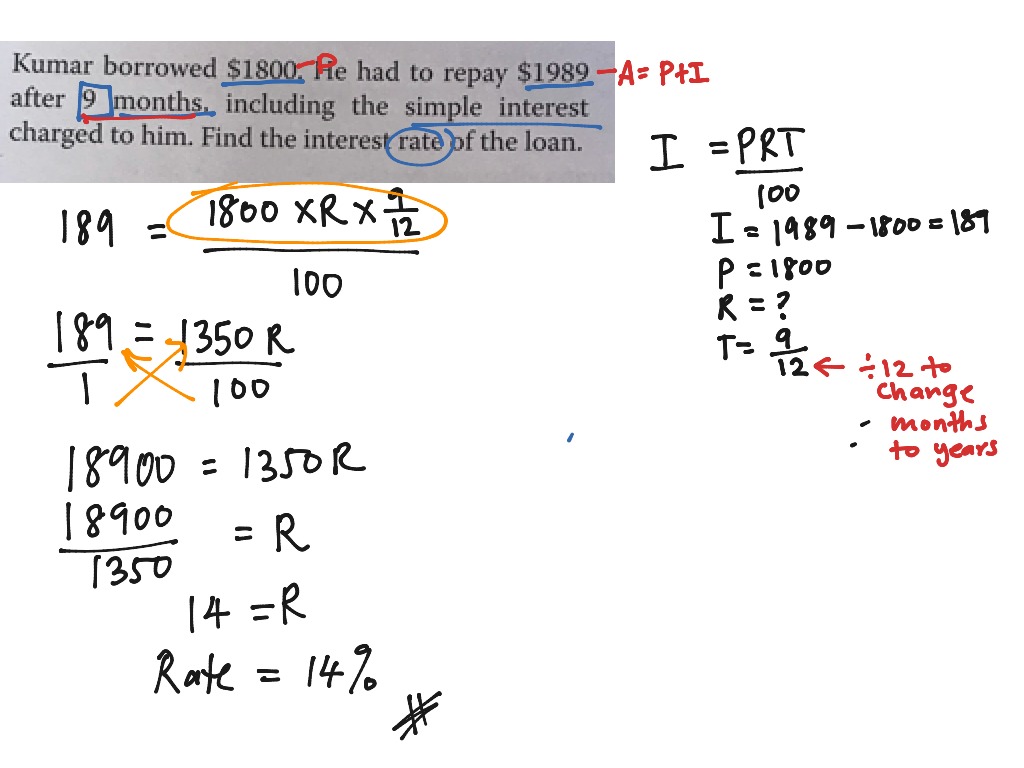
The simplest way to figure out a rate of interest is the formula: Principal × Rate × Time. However, in the real world, interest is rarely simple. Most financial products use compound interest, where interest is calculated on the initial principal and also on the accumulated interest of previous periods.
To figure out the true cost of a loan or the growth of an account, you must know the compounding frequency (daily, monthly, or annually). The “Rule of 72” is a quick mental shortcut used by investors to determine how long it will take for an investment to double at a fixed annual rate of interest. By dividing 72 by the annual rate of return, you get an estimate of the number of years required for the money to double.
Understanding APR and APY
One of the most confusing aspects of figuring out rates in finance is the distinction between Annual Percentage Rate (APR) and Annual Percentage Yield (APY). APR represents the annual cost of a loan to a borrower, including fees, but it does not account for the compounding of interest within that year.
Conversely, APY reflects the real rate of return on a savings account or investment, taking into account the effect of compounding interest. When you are borrowing money, you want the lowest APR. When you are saving money, you want the highest APY. Being able to convert between the two or at least recognize the difference prevents you from being misled by marketing materials that highlight the more “favorable” looking number.
External Factors: The Role of Central Banks
Figuring out why a rate is what it is often requires looking at the broader economy. Interest rates are heavily influenced by central bank policies, such as the Federal Reserve’s federal funds rate. When inflation is high, central banks typically raise rates to cool the economy. For the individual, this means the “rate” for a mortgage will increase, but the “rate” earned on a certificates of deposit (CD) will also likely rise. Keeping an eye on these trends allows you to time your large financial moves, such as refinancing a home or locking in a long-term investment rate.
Measuring Investment Performance: Calculating Rate of Return
For an investor, the rate is the ultimate metric of success. It allows for the comparison of disparate assets, such as comparing the performance of a tech stock against a real estate rental property.
Return on Investment (ROI)
The most basic calculation is the Return on Investment. To figure out this rate, take the current value of the investment, subtract the original cost, and divide that number by the original cost.
ROI = (Current Value – Cost) / Cost
While ROI is a great snapshot, it is flawed because it does not account for time. A 50% ROI is incredible if achieved in one year, but mediocre if it took twenty years to realize. This is why more sophisticated investors look toward annualized rates.
Compound Annual Growth Rate (CAGR)
The Compound Annual Growth Rate (CAGR) provides a smoothed annual rate of return over a specified period of time. It is the most accurate way to figure out the rate of an investment that fluctuates in value. CAGR tells you what your investment would have earned if it had grown at a steady rate each year with profits reinvested.
To calculate CAGR, you take the ending value of the investment, divide it by the beginning value, and then raise that result to the power of one divided by the number of years. Finally, subtract one. This formula is essential for comparing the long-term performance of mutual funds, ETFs, or private equity investments.
Adjusting for Risk and Inflation: The Real Rate of Return
A 10% return might look great on paper, but if inflation is running at 7%, your “real” rate of return is only 3%. The real rate of return is the nominal rate minus the inflation rate. Furthermore, sophisticated financial planning requires looking at “risk-adjusted” rates. If an asset offers a 12% return but has a high probability of dropping to zero, it may be less desirable than an asset offering a 5% guaranteed rate. Figuring out the “hurdle rate”—the minimum rate of return necessary to justify the risk of an investment—is a hallmark of professional wealth management.
Business Finance: Calculating Burn Rate and Growth Rate
In the corporate and startup world, “rate” takes on a diagnostic role. It tells leadership how fast they are spending money and how quickly they are acquiring value.
Monitoring the Runway: Monthly Burn Rate
For startups and small businesses, the “burn rate” is perhaps the most vital statistic. This is the rate at which a company uses up its supply of cash in a loss-making scenario. To figure out the net burn rate, you subtract your monthly operating expenses from your monthly revenue. If you have $100,000 in the bank and a net burn rate of $10,000 per month, your “runway” is ten months. Figuring out this rate accurately is a prerequisite for any capital raising or strategic pivot.
Efficiency Metrics: CAC and LTV Rates
Businesses also track the rate of customer acquisition. The Customer Acquisition Cost (CAC) tells you how much you spend to get one new customer. However, this must be weighed against the Lifetime Value (LTV) of that customer.
The LTV/CAC ratio is a rate that defines the efficiency of your marketing and sales engine. A healthy business typically aims for an LTV that is at least three times the CAC. If you figure out your rate and find that your CAC is higher than your LTV, your business model is fundamentally broken, regardless of how much revenue you are generating.

Synthesizing Rate Logic for Financial Success
Whether you are calculating an hourly wage, an interest payment, or a stock market gain, the process of figuring out a rate is about establishing a standard of measurement. By converting raw financial data into percentages and ratios, you gain the ability to make objective decisions.
In personal finance, this means knowing the rate of your debt vs. the rate of your investments. In business, it means knowing the rate of your growth vs. the rate of your spend. Ultimately, those who can accurately figure out their rates are the ones who can control their financial destiny, ensuring that every dollar spent, earned, or invested is performing at its highest possible potential. Professionalism in finance starts with the math, and the math always begins with the rate.
aViewFromTheCave is a participant in the Amazon Services LLC Associates Program, an affiliate advertising program designed to provide a means for sites to earn advertising fees by advertising and linking to Amazon.com. Amazon, the Amazon logo, AmazonSupply, and the AmazonSupply logo are trademarks of Amazon.com, Inc. or its affiliates. As an Amazon Associate we earn affiliate commissions from qualifying purchases.