
For many, purchasing a car is one of the most significant financial decisions they’ll make, second only to buying a home. The excitement of a new vehicle often comes with the practical reality of a monthly car payment. Understanding how this figure is calculated is not just about crunching numbers; it’s about empowering yourself to make informed decisions, negotiate effectively, and ensure your automotive investment aligns with your financial well-being. This guide will demystify the components of a car payment, explore essential calculation tools, and arm you with strategies to manage this crucial financial commitment.

The Core Components of a Car Payment
At its heart, a car payment is a calculation based on a few fundamental variables. Grasping these individual elements is the first step toward understanding the final monthly figure that lands in your budget.
Principal Loan Amount
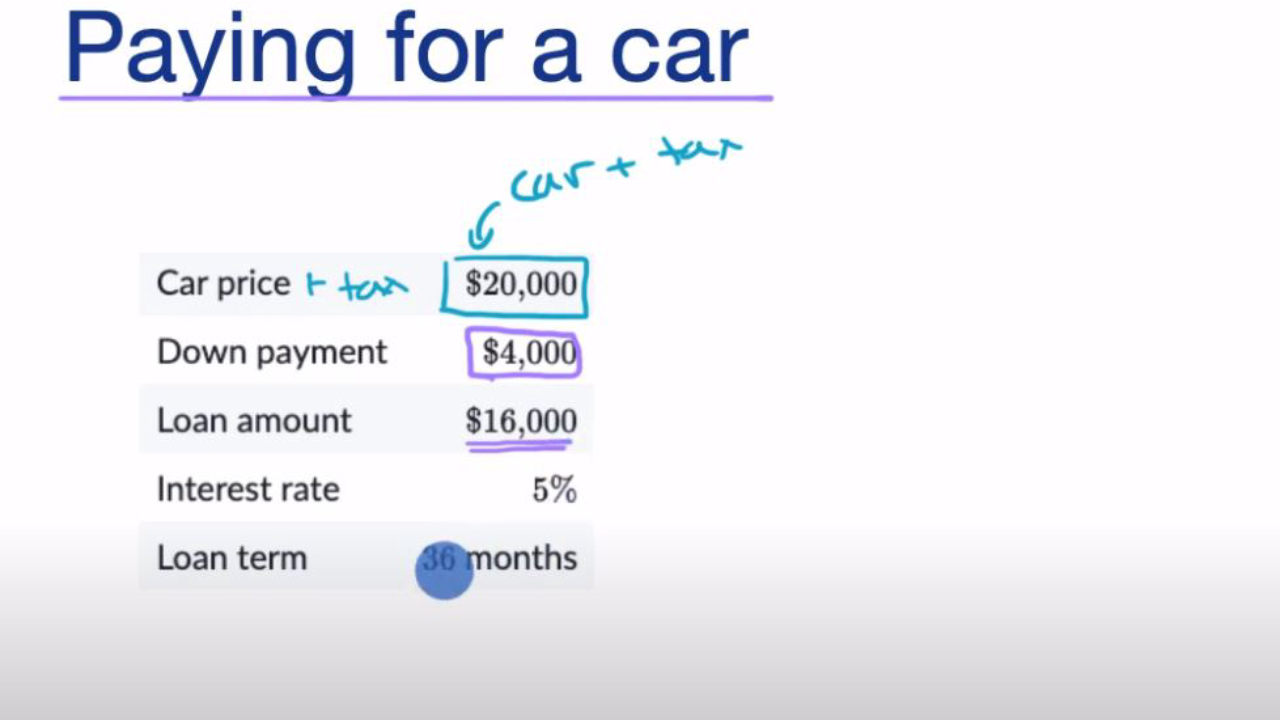
The principal is the actual amount of money you borrow to purchase the car. This isn’t necessarily the sticker price of the vehicle. Instead, it’s typically the agreed-upon sale price of the car, minus any down payment you make, and also minus the value of any trade-in vehicle you contribute. For instance, if a car costs $30,000, and you put down $5,000 and trade in a vehicle worth $3,000, your principal loan amount would be $22,000. A lower principal amount directly translates to a lower monthly payment and less interest paid over the life of the loan.
Interest Rate (APR)
The interest rate, often expressed as an Annual Percentage Rate (APR), is essentially the cost of borrowing money. It’s how the lender makes a profit. The APR is applied to the outstanding principal balance of your loan. A higher APR means more interest accrues over time, leading to higher monthly payments and a greater total cost for the vehicle. Your credit score is the single most significant factor influencing the interest rate you’ll be offered. Borrowers with excellent credit histories typically secure the lowest rates, while those with lower scores might face substantially higher rates, sometimes even in double digits. Market conditions and the lender’s risk assessment also play a role.
Loan Term
The loan term refers to the duration over which you agree to repay the loan, typically expressed in months (e.g., 36, 48, 60, 72, or even 84 months). The loan term has a direct and significant impact on your monthly payment. A longer loan term will result in lower monthly payments because you’re spreading the principal and interest over more installments. However, a longer term also means you’ll pay more interest overall, as the lender has more time to accrue interest on the outstanding balance. Conversely, a shorter loan term leads to higher monthly payments but a lower total interest cost over the life of the loan. It’s a critical balancing act between monthly affordability and total cost.
Sales Tax and Fees
Beyond the price of the car itself, several additional costs contribute to the total amount you might need to finance or pay upfront. Sales tax, which varies by state and even locality, is a significant component. Many states calculate sales tax on the full purchase price of the vehicle before any trade-in value is deducted, while others only tax the difference. Additionally, you’ll encounter various fees such as documentation fees (charged by the dealership for processing paperwork), registration fees, license plate fees, and title fees, all mandated by your state’s Department of Motor Vehicles (DMV) or equivalent agency. These costs can either be paid out of pocket or rolled into your loan, increasing the principal amount and, consequently, your monthly payments.
Essential Tools and Methods for Calculation
While the underlying math can seem complex, thankfully, several accessible tools and methods simplify the process of figuring out your car payment.
Online Car Payment Calculators
These are perhaps the most common and user-friendly tools available. Websites of banks, credit unions, automotive portals, and financial news outlets typically feature free car payment calculators. To use them, you’ll generally input the principal loan amount, the estimated interest rate (APR), and the desired loan term. The calculator instantly provides an estimated monthly payment. Some advanced calculators also allow you to input a down payment, trade-in value, sales tax, and other fees, offering a more precise estimate of the total financed amount and subsequent monthly payment. Their main benefit is speed and convenience, allowing for quick “what-if” scenarios to explore different loan structures.
Spreadsheet Formulas
For those comfortable with applications like Microsoft Excel or Google Sheets, a simple formula can accurately calculate car payments. The primary function used is the PMT (Payment) function.
The PMT function typically requires three main arguments:
- rate: The interest rate per period. If your annual APR is 6%, and payments are monthly, you would use 0.06 / 12.
- nper: The total number of payment periods in the loan. For a 60-month loan, this would be 60.
- pv: The present value, or the principal loan amount.
For example, PMT(0.06/12, 60, -22000) would calculate the monthly payment for a $22,000 loan at 6% APR over 60 months. The principal amount is entered as a negative number because it represents an outflow of cash from the lender. This method offers flexibility for detailed personal finance modeling and can be integrated into broader budgeting spreadsheets.
Manual Calculation (for understanding)
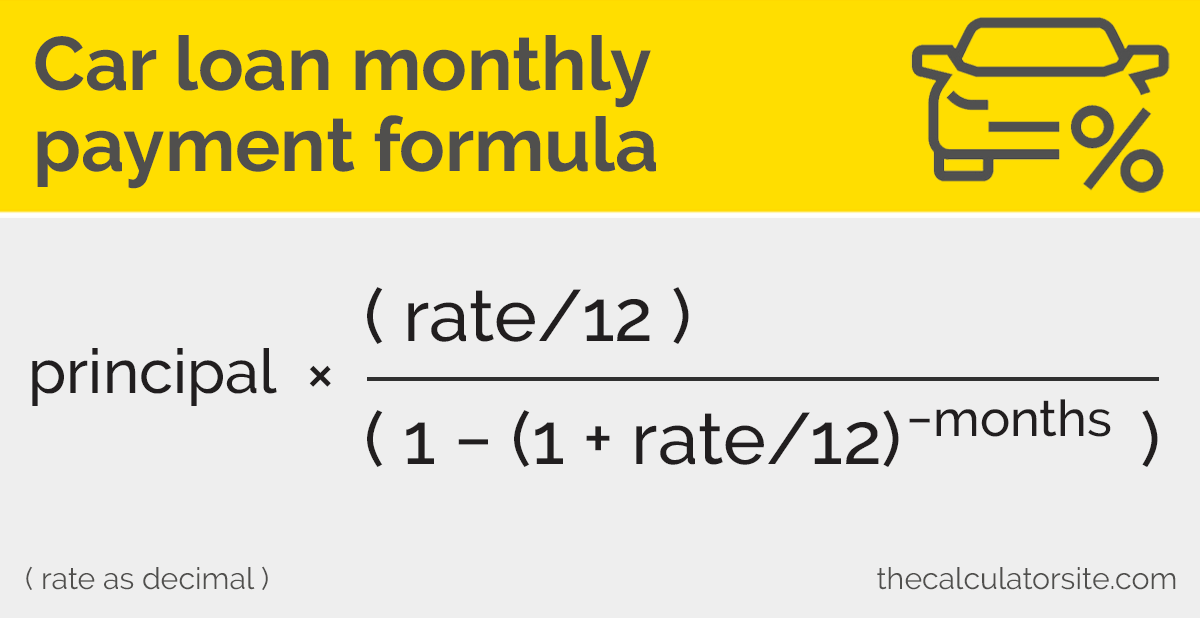
While less practical for everyday use, understanding the basic amortization formula can provide a deeper insight into how payments are structured. The formula for a fixed-rate amortizing loan payment is:
$M = P [ i(1 + i)^n ] / [ (1 + i)^n – 1]$
Where:
- M = Monthly payment
- P = Principal loan amount
- i = Monthly interest rate (annual rate / 12)
- n = Total number of payments (loan term in months)
This formula distributes the principal and interest over the loan term, with more interest paid in the early stages and more principal paid down later. While you’ll likely rely on calculators, knowing this formula reveals the mechanics behind why payments behave the way they do when you adjust different variables.
Factors That Influence Your Monthly Payment
Beyond the core components, several other variables play a critical role in shaping your final monthly car payment and the overall cost of your vehicle.
Down Payment
Making a down payment reduces the principal amount you need to borrow. This directly lowers your monthly payment because the loan amount is smaller. Furthermore, a larger down payment can reduce the total interest paid over the life of the loan, as less capital is subject to interest accrual. Lenders also often view borrowers with substantial down payments as lower risk, which can sometimes lead to more favorable interest rates. Financial advisors often recommend a down payment of at least 10-20% for new cars to avoid being “upside down” (owing more than the car is worth) early in the loan term.
Trade-in Value
If you have an existing vehicle, trading it in can act similarly to a down payment. The agreed-upon value of your trade-in is deducted from the new car’s purchase price, reducing the principal loan amount. This lowers your monthly payment and total interest. It’s wise to get an independent appraisal of your trade-in’s value from sources like Kelley Blue Book or Edmunds before heading to the dealership, to ensure you’re getting a fair offer.
Credit Score
Your credit score is arguably the most powerful determinant of the interest rate you’ll receive. Lenders use credit scores to assess your creditworthiness and the likelihood that you will repay the loan. A higher credit score (typically 700+) indicates a lower risk, translating into lower APRs and, consequently, lower monthly payments and total interest costs. Conversely, a lower credit score can result in significantly higher interest rates, making your car much more expensive over the loan term. It’s highly advisable to check your credit score and report well in advance of car shopping to identify any errors or areas for improvement.
Additional Products (Add-ons)
Dealerships often offer a variety of add-on products such as extended warranties, GAP (Guaranteed Asset Protection) insurance, service contracts, paint protection, or interior fabric treatments. While some of these might offer legitimate value, others can be overpriced or unnecessary. If you choose to roll the cost of these add-ons into your car loan, they increase the total principal amount, thereby inflating your monthly payment and the total interest you’ll pay over time. It’s crucial to evaluate each add-on carefully and consider whether it’s truly needed and if you could purchase it more affordably elsewhere.
Beyond the Monthly Payment: What Else to Consider
While the monthly payment is a primary concern, a holistic view of car ownership involves looking beyond that single figure. Smart financial planning requires considering the broader implications.
Total Cost of Ownership
The sticker price and monthly payment are just one piece of the puzzle. The total cost of ownership encompasses much more, including car insurance premiums, fuel costs, routine maintenance, unexpected repairs, and depreciation (the loss of value over time). A car with a low monthly payment might have high insurance costs, poor fuel efficiency, or expensive maintenance requirements for its specific make and model. Factoring in these ongoing expenses is crucial for a realistic assessment of a car’s true affordability in your budget.
Affordability vs. Approval
Just because a lender approves you for a loan doesn’t automatically mean the payment is genuinely affordable for your budget. Lenders assess your debt-to-income ratio and credit score, but they don’t always account for your specific lifestyle expenses, savings goals, or other discretionary spending. A common rule of thumb is the “20/4/10 rule”: aim for at least a 20% down payment, finance the car for no more than 4 years (48 months), and ensure your total monthly car expenses (payment, insurance, fuel) do not exceed 10% of your gross monthly income. Adhering to such guidelines helps prevent car ownership from becoming a financial burden.
Pre-approval vs. Dealership Financing
Securing pre-approval for a car loan from your bank or credit union before you even step onto a dealership lot offers significant advantages. It provides you with a concrete interest rate and maximum loan amount, giving you a clear benchmark for comparison. This knowledge transforms you into a cash buyer in the eyes of the dealership, allowing you to negotiate on the car’s price rather than getting sidetracked by monthly payment discussions. Dealership financing can sometimes offer competitive rates, but having a pre-approval in hand ensures you have leverage and a fallback option, helping you avoid higher interest rates or unfavorable terms.
The Impact of Early Payoff
If your loan agreement allows for it without prepayment penalties, making extra payments or paying off your car loan early can save you a substantial amount in interest over the life of the loan. Since interest is calculated on the outstanding principal balance, reducing that balance quicker means less interest accrues. Even an extra $50 or $100 per month can shave months or even years off your loan term and hundreds or thousands of dollars off your total cost.
Strategic Approaches to Lower Your Payment (and Total Cost)
Being proactive and strategic can significantly impact both your monthly car payment and the total amount you spend on your vehicle over time.
Improving Your Credit Score
Before you start car shopping, take steps to improve your credit score. Pay down existing debts, especially high-interest credit card balances. Make all payments on time. Correct any errors on your credit report. A higher credit score will open the door to lower interest rates, which is one of the most effective ways to reduce both your monthly payment and the total cost of the loan. Even a few points’ difference can save you hundreds, if not thousands, of dollars.
Negotiating the Car Price
Your monthly payment is directly tied to the car’s purchase price. Always negotiate the total price of the vehicle, not just the monthly payment. Dealerships often try to focus on the monthly payment to obscure the actual cost and add-ons. By negotiating the sale price first, you establish a lower principal loan amount, which cascades into lower payments and less interest regardless of other factors. Research market values and competitor pricing before you begin negotiations.
Shopping Around for Interest Rates
Don’t settle for the first loan offer you receive, especially from the dealership. Apply for pre-approval with multiple banks and credit unions. Each lender has different criteria and offers. By comparing several loan offers, you can secure the lowest possible interest rate. Even a slight reduction in APR can lead to significant savings over a multi-year loan term. This process also arms you with leverage when discussing financing options with the dealership.
Optimizing Loan Term
Carefully consider the loan term that best fits your financial situation. While a longer term (e.g., 72 or 84 months) offers lower monthly payments, it comes at the cost of significantly more interest paid over time. It also means you’re more likely to be upside down on your loan, especially with a new car’s rapid depreciation. Conversely, a shorter term has higher monthly payments but less total interest. Aim for the shortest term you can comfortably afford, balancing monthly budget constraints with the desire to minimize overall interest costs.
Making Extra Payments
As mentioned earlier, if your loan doesn’t have prepayment penalties, making extra payments whenever possible can substantially reduce the total interest you pay and shorten your loan term. You can round up your payment each month, make an extra payment once a year, or apply any unexpected windfalls (tax refunds, bonuses) directly to the principal. Even small, consistent extra payments can make a big difference in the long run.
Conclusion
Figuring out a car payment is more than just a simple calculation; it’s a critical exercise in financial literacy and strategic planning. By understanding the core components—principal, interest rate, and loan term—and leveraging available tools like online calculators and spreadsheet functions, you gain clarity on how your monthly obligation is derived. Furthermore, recognizing the impact of factors such as your down payment, trade-in, credit score, and additional products allows you to influence these costs proactively. Looking beyond the monthly figure to consider total cost of ownership and employing smart strategies like improving your credit, negotiating the car price, and shopping for the best interest rate will empower you to secure a car loan that is not only manageable but also aligns with your broader financial goals. Informed decisions today pave the way for a financially healthier automotive future.
aViewFromTheCave is a participant in the Amazon Services LLC Associates Program, an affiliate advertising program designed to provide a means for sites to earn advertising fees by advertising and linking to Amazon.com. Amazon, the Amazon logo, AmazonSupply, and the AmazonSupply logo are trademarks of Amazon.com, Inc. or its affiliates. As an Amazon Associate we earn affiliate commissions from qualifying purchases.