
In the world of finance, percentages are the universal language of progress, risk, and value. Whether you are calculating the return on a stock market investment, determining the impact of inflation on your purchasing power, or setting up a monthly budget, the ability to accurately determine and interpret percentages is a non-negotiable skill. At its core, a percentage is a way of expressing a number as a fraction of 100, but in the context of money, it represents the difference between a profit and a loss, or a sustainable lifestyle and financial instability.

Understanding how to determine the percentage of something allows you to strip away the noise of raw numbers and see the underlying trends. A $1,000 gain might sound impressive, but its significance changes entirely depending on whether it was earned from a $5,000 investment (a 20% return) or a $1,000,000 investment (a 0.1% return). This guide will walk you through the essential mathematical frameworks and practical applications of percentages within the realm of personal and business finance.
1. The Core Mechanics: Calculating Percentages in a Financial Context
Before diving into complex investment strategies, one must master the fundamental arithmetic that governs financial data. In money management, we rarely look at a percentage in isolation; we look at it as a measure of change or a component of a larger portfolio.
The Fundamental Percentage Formula
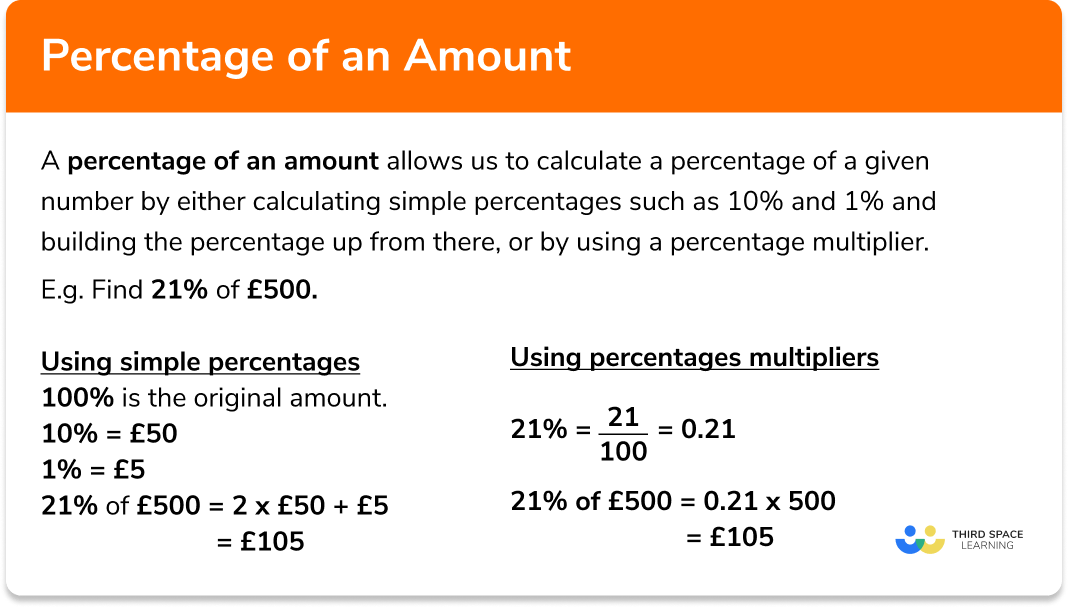
To find the percentage of a specific amount, the most basic formula is:
** (Part / Whole) × 100 = Percentage **
In a personal finance scenario, imagine you want to know what percentage of your $6,000 monthly income is being spent on housing. If your rent is $1,800, you divide 1,800 by 6,000 to get 0.3. Multiplying by 100 gives you 30%. This simple calculation is the bedrock of debt-to-income ratios and expense tracking.
Calculating Percentage Increase and Decrease
In investing, we are often more concerned with the change in value over time. To determine the percentage increase or decrease of an asset, use the following formula:
** [(New Value – Old Value) / Old Value] × 100 **
For example, if you bought a share of a tech company at $150 and it is now trading at $185, the calculation would be:
(185 – 150) / 150 = 0.233.
Multiplying by 100 results in a 23.3% gain. Conversely, if the stock dropped to $120, the result would be a negative percentage, indicating a 20% loss. Understanding this distinction is vital for accurately reporting capital gains and losses for tax purposes.
The Concept of Reverse Percentages
Sometimes, in financial planning, you need to work backward. If a high-yield savings account tells you that your current balance of $10,500 includes a 5% interest payment from the previous year, how do you find the original amount? You do not simply subtract 5% from the current total. Instead, you divide the total by (1 + the percentage decimal).
10,500 / 1.05 = $10,000.
Mastering reverse percentages ensures you can audit your bank statements and understand the “base” value of your assets before growth occurred.
2. Percentages in Personal Budgeting: The 50/30/20 Rule and Beyond
Once you understand how to calculate percentages, the next step is applying them to create a sustainable financial structure. Percentages are superior to fixed dollar amounts in budgeting because they scale as your income grows, preventing “lifestyle creep” from eroding your net worth.
The 50/30/20 Allocation Strategy
One of the most effective ways to determine the health of your finances is the 50/30/20 rule. This framework dictates that:
- 50% of your income should go to “Needs” (housing, utilities, groceries).
- 30% of your income should go to “Wants” (dining out, hobbies, travel).
- 20% of your income should be directed toward “Financial Goals” (debt repayment, emergency funds, retirement).
By determining the percentage of your income allocated to each category, you can quickly identify where your “leakage” is occurring. If your needs are consuming 70% of your income, you are “house-poor” or “car-poor,” and no amount of skipping lattes (a “want”) will solve the underlying structural issue.
Debt-to-Income (DTI) Ratios
Lenders use percentages to determine your creditworthiness. Your Debt-to-Income ratio is calculated by dividing your total monthly debt payments by your gross monthly income. Most mortgage lenders look for a DTI percentage of 36% or lower. If you are applying for a loan, knowing how to determine this percentage ahead of time allows you to pay down balances or increase income to meet the lender’s threshold before you ever step into their office.
The Impact of Inflation as a Percentage
Inflation is the percentage by which the cost of goods increases over time, effectively devaluing your cash. If the annual inflation rate is 3%, your money loses 3% of its purchasing power every year. To maintain your wealth, your income or investment returns must exceed this percentage. Determining the “real” percentage of your growth involves subtracting the inflation rate from your nominal return.
3. Investment Performance: Measuring Yield, ROI, and CAGR
In the world of investing, percentages are the only way to compare disparate assets. You cannot easily compare a $500 profit from a crypto trade to a $5,000 profit from a rental property without looking at the percentages involved.
Return on Investment (ROI)
ROI is the standard metric for determining the efficiency of an investment. The formula is:
** (Net Profit / Cost of Investment) × 100 **
While simple, ROI is the ultimate “truth-teller” in finance. It allows you to see if the time and capital you are committing to a side hustle or a stock portfolio are actually outperforming a passive index fund.
Compound Annual Growth Rate (CAGR)
Standard percentage growth doesn’t account for the “compounding” effect over many years. CAGR provides a smoothed annual rate of return, which is essential for long-term retirement planning. It helps you understand what constant percentage of growth would have been required to get from your starting balance to your ending balance, assuming the profits were reinvested. For investors, determining the CAGR is the best way to compare the performance of a volatile asset (like Bitcoin) against a stable asset (like Treasury bonds) over a 10-year horizon.
Dividend Yields and Expense Ratios
When evaluating stocks or Exchange-Traded Funds (ETFs), you will encounter two critical percentages:
- Dividend Yield: The percentage of a company’s share price that it pays out in dividends each year. A 4% yield on a $100 stock means you get $4 per share annually.
- Expense Ratio: The percentage of your investment that an investment fund charges for management. While a 1% fee sounds small, determining the percentage of your total lifetime wealth that a 1% fee consumes (due to lost compounding) can reveal that it may eat up to 25% or more of your final nest egg.
4. Business Finance: Profit Margins and Scalability
For entrepreneurs and business owners, determining the percentage of profitability is the difference between a thriving enterprise and a failing one. Revenue is a “vanity metric,” while percentage margins represent “sanity.”
Gross vs. Net Profit Margins
Determining your margins is critical for pricing products.
- Gross Profit Margin: (Revenue – Cost of Goods Sold) / Revenue. This tells you how much “room” you have to cover operating expenses.
- Net Profit Margin: (Total Revenue – Total Expenses) / Revenue. This is the actual percentage of every dollar that remains as profit after all taxes, interest, and bills are paid.
A business with $1 million in revenue and a 5% net margin is often more fragile than a business with $500,000 in revenue and a 20% net margin. High-margin businesses are more resilient to economic downturns because they have a larger percentage of “buffer.”
Markup vs. Margin
A common mistake in business finance is confusing markup with margin. If you buy a product for $80 and sell it for $100, your markup is 25% ($20 is 25% of $80). However, your margin is only 20% ($20 is 20% of $100). If you confuse these two, you might set prices too low and inadvertently lose money after factoring in overhead.
The Effective Tax Rate
Businesses and high-earners must also determine their effective tax rate, which is the actual percentage of their income they pay in taxes after deductions and credits. This is rarely the same as their “marginal” tax bracket. Knowing your effective tax rate allows for more accurate cash flow forecasting and ensures that you are setting aside the correct percentage of every invoice to satisfy the IRS.

Conclusion: The Strategic Power of Percentages
Determining the percentage of something is more than a mathematical exercise; it is a strategic necessity in the world of money. Percentages allow us to normalize data, compare apples to oranges, and make informed decisions about where to spend, save, and invest.
By mastering these calculations—from simple budget allocations to complex investment yields—you gain a clearer picture of your financial health. You move away from guessing and toward a precision-based approach to wealth building. Whether you are analyzing a 0.5% difference in mortgage rates or a 15% increase in your business’s quarterly revenue, your ability to think in percentages will ultimately determine your financial success. Remember, in finance, the raw numbers tell you where you are, but the percentages tell you where you are going.
aViewFromTheCave is a participant in the Amazon Services LLC Associates Program, an affiliate advertising program designed to provide a means for sites to earn advertising fees by advertising and linking to Amazon.com. Amazon, the Amazon logo, AmazonSupply, and the AmazonSupply logo are trademarks of Amazon.com, Inc. or its affiliates. As an Amazon Associate we earn affiliate commissions from qualifying purchases.