
In the intricate world of finance, numbers tell a story, but percentages provide the universal language to understand and compare these narratives. Whether you’re deciphering investment returns, evaluating loan interest rates, analyzing budget allocations, or assessing a discount, the ability to effortlessly convert raw numbers into percentages is not just a useful skill—it’s a foundational pillar of financial literacy. Without this mastery, navigating personal finance, making informed investment decisions, or understanding business performance becomes an uphill battle. This guide will demystify the process, demonstrating how a simple mathematical conversion can unlock deeper financial insights and empower you to take control of your financial future.

The Core Concept: Understanding Percentages and Their Financial Relevance
At its heart, a percentage is merely a way to express a number as a fraction of 100. The word “percent” originates from the Latin “per centum,” meaning “by the hundred.” This standardized representation makes percentages an invaluable tool across virtually all financial contexts, offering a clear and immediate understanding of proportion, change, and comparison.
What Exactly is a Percentage?
Imagine you have a pie, and you’re talking about a slice. Instead of saying you ate “one-quarter” or “0.25” of the pie, you could say you ate “25%” of the pie. All three convey the same proportion, but the percentage often feels more intuitive and universally understood. A percentage explicitly states how many parts out of a whole of 100 you are referring to. So, 25% means 25 out of every 100 parts. This simplification makes complex financial data digestible and relatable, allowing for quick assessments and comparisons across different scales.
Why Percentages Dominate the Financial World
Percentages are the lingua franca of finance for several compelling reasons:
- Comparability: They allow for apples-to-apples comparisons regardless of the absolute values involved. For instance, knowing that your stock portfolio grew by 10% is more insightful than knowing it gained $1,000, especially if you want to compare it to a different portfolio that gained $500 but started with a much smaller principal.
- Rate Expression: Interest rates, inflation rates, tax rates, growth rates—these are almost exclusively expressed as percentages. This convention provides a standardized metric for evaluating the cost of borrowing, the eroding power of inflation, or the potential for capital appreciation.
- Proportion and Allocation: When budgeting, you allocate a percentage of your income to housing, food, and savings. In business, profit margins are expressed as a percentage of revenue, and market share as a percentage of the total market. This clearly shows the relative importance or contribution of each component.
- Change Over Time: Percentages are crucial for illustrating growth or decline. A company’s revenue might increase by 15% year-over-year, or an investment might suffer a 5% loss. This standardized measure of change is vital for tracking performance and forecasting.
Understanding percentages isn’t just about calculation; it’s about interpreting the financial world through a powerful and universal lens.
The Fundamental Method: Converting Decimals to Percentages
The most straightforward path to converting any number to a percentage involves a simple two-step process: first, ensure your number is in decimal form, and then apply a basic multiplication.
Step-by-Step Guide: Decimal to Percentage
- Ensure the Number is a Decimal: If your starting number is already a decimal (e.g., 0.75, 1.25), you’re ready for step two. If it’s a whole number (e.g., 5), you can think of it as 5.0.
- Multiply by 100: Take your decimal number and multiply it by 100. This effectively shifts the decimal point two places to the right.
- Add the Percent Sign (%): Once multiplied, simply append the “%” symbol to the result.
Example:
- To convert 0.75 to a percentage: 0.75 * 100 = 75. Add the percent sign: 75%.
- To convert 1.25 to a percentage: 1.25 * 100 = 125. Add the percent sign: 125%.
- To convert 0.05 to a percentage: 0.05 * 100 = 5. Add the percent sign: 5%.
- To convert a whole number like 2 to a percentage: 2.0 * 100 = 200. Add the percent sign: 200%.
This method is the bedrock of all percentage conversions and will serve you well in countless financial calculations.
Practical Examples in Personal Finance
Let’s apply this fundamental method to everyday personal finance scenarios:
- Discounts: You see a shirt originally priced at $50 on sale for $40. The discount amount is $10. To find the percentage discount, you first express the discount as a decimal of the original price: $10 / $50 = 0.20. Then, convert to a percentage: 0.20 * 100 = 20% discount.
- Tax Rates: Your local sales tax is 6.5%. To use this in calculations (e.g., finding the tax on a $100 item), you convert 6.5% back to a decimal: 6.5 / 100 = 0.065. Then, $100 * 0.065 = $6.50 tax. This inverse operation is just as crucial.
- Savings Rate: If you save $500 from your $3,000 monthly income. Your savings rate as a decimal is $500 / $3,000 = 0.1666… Convert to a percentage: 0.1666 * 100 = 16.67% savings rate.
These examples underscore how frequently you’ll encounter the need for this simple conversion in managing your money.
Handling Fractions and Ratios: Another Path to Percentages
Not all numbers start as clean decimals. Often, financial data is presented as fractions or ratios, necessitating an extra step before the decimal-to-percentage conversion.
From Fraction to Decimal to Percentage
When you have a fraction, the first step is always to perform the division to convert it into a decimal. Once you have the decimal, you can proceed with the multiplication by 100 and the addition of the percentage sign.
Example:
- You earned $30 profit on an investment of $200. The profit as a fraction of the investment is 30/200.
- Divide: 30 / 200 = 0.15 (decimal form).
- Multiply by 100: 0.15 * 100 = 15.
- Add % sign: 15% profit.
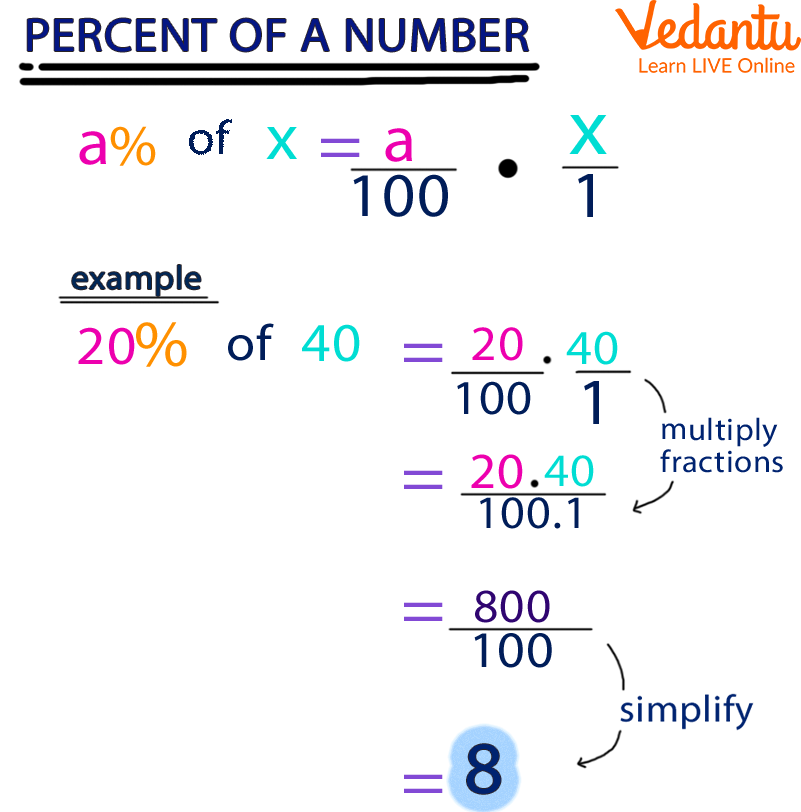
This method is essential when dealing with “parts of a whole” scenarios common in financial analysis.
Real-World Business Applications
Businesses constantly use fractions and ratios to derive critical percentages:
- Profit Margins: A company’s net income is $1 million, and its revenue is $10 million. The net profit margin is 1,000,000 / 10,000,000 = 0.10. Converted to a percentage, this is a 10% net profit margin, indicating that for every dollar of revenue, the company keeps 10 cents as profit.
- Market Share: If a company sells 2 million units in a market where 10 million units are sold annually, its market share is 2,000,000 / 10,000,000 = 0.20. As a percentage, this is 20% market share. This tells investors and management how dominant the company is in its industry.
- Growth Rates: A company’s sales grew from $5 million last year to $6 million this year. The absolute growth is $1 million. The growth rate is $1,000,000 / $5,000,000 (base year sales) = 0.20. This translates to a 20% growth rate. Understanding growth rates is crucial for valuing businesses and assessing their future potential.
These examples demonstrate the critical role of fractional and ratio conversions in understanding the health and performance of businesses.
Advanced Applications and Common Financial Scenarios
Beyond the basics, number-to-percentage conversion is integral to more complex financial concepts that directly impact your wealth and financial planning.
Investment Returns and Growth
Understanding investment performance is impossible without percentages.
- Return on Investment (ROI): If you invest $1,000 and it grows to $1,150, your profit is $150. Your ROI is $150 (gain) / $1,000 (initial investment) = 0.15, or 15%. This allows you to compare the profitability of different investments.
- Annualized Returns: For investments held over multiple years, calculating the annualized return (often using compound annual growth rate or CAGR) involves finding an average yearly growth percentage that smooths out volatility. The formula can be complex, but the output is always a percentage, allowing for comparison of long-term investment performance.
- Dividend Yield: If a stock pays a $2 annual dividend and costs $50 per share, the dividend yield is $2 / $50 = 0.04, or 4%. This percentage helps income investors assess the return they can expect from dividends relative to the stock price.
Budgeting and Expense Analysis
Percentages are fundamental to effective personal budgeting and expense tracking.
- Expense Categories: You earn $4,000 per month. If your rent is $1,200, it represents $1,200 / $4,000 = 0.30, or 30% of your income. If your food bill is $600, that’s $600 / $4,000 = 0.15, or 15%. By analyzing expenses as percentages, you can quickly see where your money is going and identify areas for adjustment to meet financial goals (e.g., aiming for 50/30/20 rule: 50% needs, 30% wants, 20% savings).
- Debt-to-Income Ratio (DTI): Lenders use your DTI to assess your ability to manage monthly payments and repay debts. If your total monthly debt payments are $1,000 and your gross monthly income is $4,000, your DTI is $1,000 / $4,000 = 0.25, or 25%. A lower DTI percentage indicates better financial health.
Loan Interest and Debt Management
Percentages are the very language of debt.
- Annual Percentage Rate (APR): This is the total cost of borrowing money, expressed as a yearly percentage. Understanding how to convert actual interest paid into an APR percentage is crucial for comparing different loan offers.
- Mortgage Rates: When a mortgage broker quotes a 6.5% interest rate, you need to understand that this percentage directly impacts your monthly payments and the total cost of your home over the loan term. Converting this percentage to a decimal (0.065) is the first step in calculating actual interest charges.
- Credit Card Interest: High credit card interest rates (e.g., 20%) mean that any outstanding balance will accrue interest rapidly. Knowing how to calculate the daily or monthly interest charge by converting this annual percentage back to a decimal is vital for managing credit card debt effectively.
Avoiding Common Pitfalls and Ensuring Accuracy
While the core conversion is simple, misinterpretations can lead to significant financial errors.
Double-Checking Your Work
Always take a moment to sanity-check your results. If you’re calculating a discount, and your percentage is over 100%, you’ve likely made a mistake. Use a calculator for precision, especially with recurring decimals. Many spreadsheet programs like Microsoft Excel or Google Sheets have built-in percentage formatting that automates the multiplication by 100, but it’s important to understand the underlying math. For instance, if you type “0.25” into a cell and then click the “%” button, it will correctly display “25%”. However, if you type “25” and then click “%”, it will incorrectly show “2500%” (as it interprets 25 as 25.0 and multiplies by 100). Always ensure your number is in decimal form before applying percentage formatting in software.
Understanding Basis Points and Percentage Points
In advanced financial discussions, particularly in institutional finance or when dealing with policy changes, you might encounter “basis points” and “percentage points.”
- Percentage Points: This refers to the arithmetic difference between two percentages. If an interest rate increases from 3% to 4%, it has increased by 1 percentage point.
- Basis Points (bps): A basis point is one-hundredth of a percentage point (0.01%). So, 100 basis points equals 1 percentage point. If an interest rate changes by 50 basis points, it means it has changed by 0.50 percentage points (e.g., from 3% to 3.5%). This granular measure helps avoid ambiguity, especially when dealing with very small changes in large financial values.
Understanding these nuances ensures you correctly interpret financial news and professional reports.
Conclusion
The seemingly simple act of changing a number to a percentage is far more than a basic arithmetic operation; it is an indispensable skill that underpins virtually every aspect of personal and business finance. From understanding investment returns and controlling budget allocations to deciphering loan rates and analyzing corporate performance, percentages provide the clarity and context necessary for informed decision-making. By mastering this fundamental conversion, you equip yourself with a powerful tool for financial literacy, enabling you to confidently navigate the complexities of the monetary world and steer your financial journey towards greater success and security. Embrace the power of percentages, and unlock a deeper understanding of your financial reality.
aViewFromTheCave is a participant in the Amazon Services LLC Associates Program, an affiliate advertising program designed to provide a means for sites to earn advertising fees by advertising and linking to Amazon.com. Amazon, the Amazon logo, AmazonSupply, and the AmazonSupply logo are trademarks of Amazon.com, Inc. or its affiliates. As an Amazon Associate we earn affiliate commissions from qualifying purchases.